
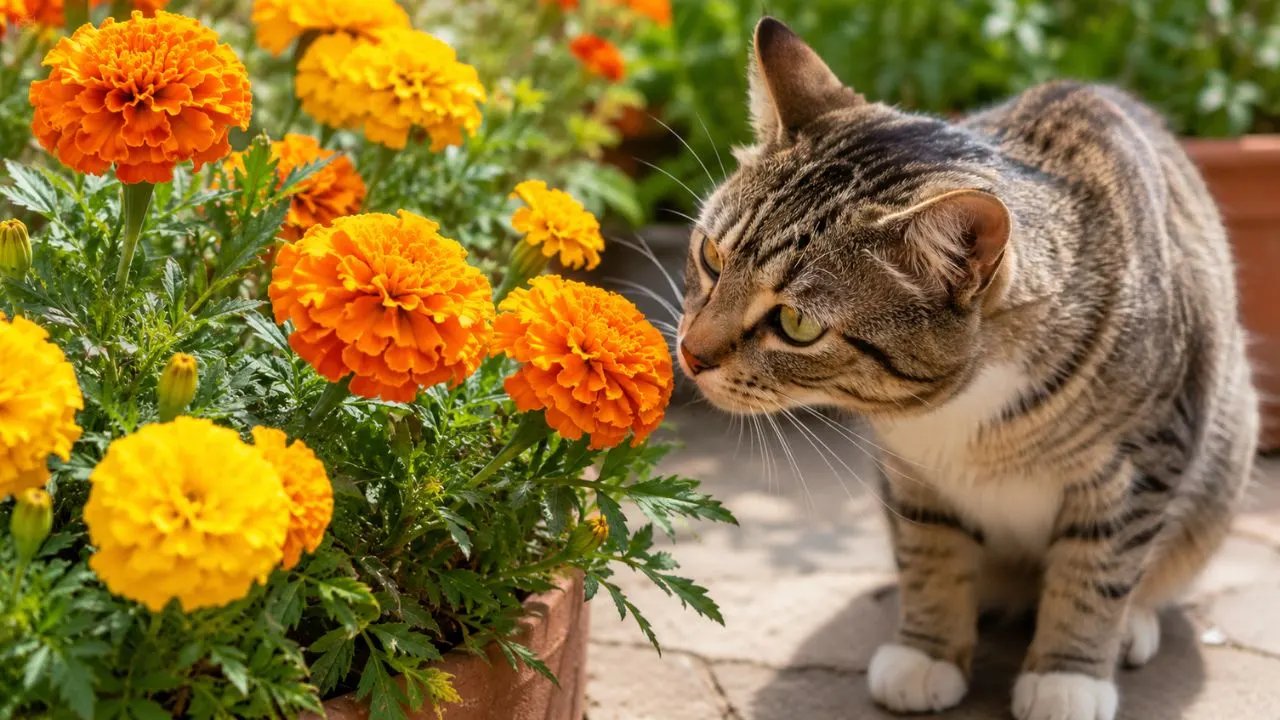

Marigolds are popular garden flowers known for their bright yellow, orange, and red blooms. Cat owners may understandably worry when a curious pet sniffs, touches, or chews one of these plants. The answer to whether marigolds are poisonous to cats depends mainly on the particular plant being called a marigold.
Pot marigold, scientifically known as Calendula officinalis, is generally considered non-toxic to cats. Many common bedding marigolds belong to the Tagetes genus, however, and may cause mild stomach upset or skin irritation. The shared common name creates confusion because these plants are related but not identical.
A cat that takes one small bite of a common marigold is unlikely to experience the severe poisoning associated with dangerous plants such as true lilies. Even so, eating leaves, flowers, stems, soil, or gardening chemicals can still cause discomfort. The amount consumed and the cat’s individual health can also affect its reaction.
This guide explains which marigolds are safer around cats, which varieties require caution, and what symptoms may follow exposure. It also covers what to do when a cat eats a marigold, when veterinary help is appropriate, and how to create a more cat-friendly home or garden.
The Quick Answer: Are Marigolds Toxic to Cats?
Not every flower called a marigold has the same safety profile. Calendula officinalis, often sold as pot marigold or garden marigold, is considered a cat-safe plant. It does not contain a recognized toxin known to cause serious poisoning in cats under normal exposure conditions.
Common French, African, and signet marigolds usually belong to the Tagetes genus. These plants are not generally associated with severe or life-threatening poisoning, but eating them may irritate a cat’s digestive system. Their sap may also irritate sensitive skin, the lips, or the mouth.
Another plant called marsh marigold belongs to the Caltha genus rather than Calendula or Tagetes. It is not a true garden marigold and should not be assumed safe because of its common name. Accurate plant identification is therefore essential before deciding how concerned you should be.
The safest summary is that common marigolds are usually a low-level risk rather than a major feline poison. However, no ornamental plant should be freely available for chewing. Even non-toxic flowers can cause vomiting, diarrhea, or choking when a cat eats enough plant material.
Why the Type of Marigold Matters
Common plant names are convenient, but they can refer to unrelated or only loosely related species. Two flowers may both be sold as marigolds even though their chemical composition and effects on cats differ. Looking at the botanical name provides a more reliable way to determine plant safety.
Calendula officinalis has rounded, daisy-like blooms and broader leaves than many traditional bedding marigolds. It is frequently called pot marigold, common marigold, or English marigold. This is the type most often identified as non-toxic to cats, dogs, and other household pets.
Tagetes marigolds include French marigolds, African marigolds, Mexican marigolds, and signet marigolds. They commonly have strongly scented, finely divided leaves and densely layered flowers. These plants may cause mild gastrointestinal irritation if a cat eats their petals, stems, or foliage.
Marsh marigolds typically grow in wet ground and produce glossy yellow flowers with rounded leaves. Despite their name, they belong to the buttercup family and are not the same as familiar ornamental marigolds. Pet owners should therefore avoid using appearance or a nursery label alone to judge safety.
Are Pot Marigolds Safe for Cats?
Pot marigold, or Calendula officinalis, is generally regarded as non-toxic to cats. A cat that briefly smells, brushes against, or takes a tiny bite from an untreated plant is unlikely to develop serious poisoning. This makes Calendula a more suitable choice for a cat-conscious garden.
Non-toxic does not mean that a cat should be encouraged to eat the plant. Cats are adapted to a meat-based diet, and their digestive systems may react poorly to leaves, stems, or large quantities of petals. Plant material can produce temporary vomiting or loose stools without containing a specific toxin.
The plant may also carry substances that create a separate risk. Insecticides, fungicides, weedkillers, fertilizer granules, slug pellets, and contaminated soil can be more dangerous than the Calendula itself. Cut flowers may have preservatives or chemical residues that should not be consumed.
Cats with allergies, digestive disorders, or chronic health conditions may react differently from healthy adult cats. Kittens are also small and may be affected by a lower quantity. Keeping even cat-safe flowers out of regular chewing range remains the most sensible approach.
Are French Marigolds Poisonous to Cats?
French marigolds are usually varieties of Tagetes patula. They are not commonly regarded as highly poisonous to cats, but they can cause mild irritation when eaten. A cat may develop digestive discomfort after chewing the flowers, aromatic leaves, or stems.
The plant’s sap and natural oils may also irritate the skin or mouth. A cat that brushes repeatedly against damaged stems may transfer the sap onto its coat and later lick it while grooming. Sensitive animals may develop redness, itching, or discomfort around exposed areas.
French marigolds have a strong smell that discourages many cats from eating them. However, kittens, bored indoor cats, and naturally curious pets may still investigate the plant. Falling petals and leaves can also become tempting play objects when they move across a floor or patio.
Because French marigolds present a possible irritation risk, place them where cats cannot chew them repeatedly. Raised planters and barriers may help, but they are not always dependable with athletic pets. A safer plant can be chosen when a cat persistently eats garden flowers.
Are African Marigolds Toxic to Cats?
African marigolds, scientifically classified as Tagetes erecta, produce large yellow or orange flower heads. Despite the name, the species originates from the Americas and belongs to the same genus as other common bedding marigolds. Its effects on cats are generally associated with irritation rather than severe poisoning.
Eating a small amount may lead to drooling, nausea, vomiting, or diarrhea. Symptoms are often mild and temporary, but the reaction can vary according to the quantity consumed. A large ingestion creates greater concern than touching or briefly tasting one petal.
The foliage tends to contain more strongly scented sap than the showy flower head. Cats that chew leaves or broken stems may therefore experience mouth or skin irritation. Sap on the fur should be removed gently so the cat does not swallow more while grooming.
African marigolds can still be grown in homes with cats when access is managed carefully. Observe whether your cat ignores the plants or repeatedly tries to eat them. Persistent chewing is a reason to relocate the flowers or replace them with a safer alternative.
What About Marsh Marigolds?
Marsh marigold is a misleading common name because the plant is not a true marigold. Species such as Caltha palustris and Caltha polypetala belong to the buttercup family. They often grow in damp soil, beside ponds, or in naturally wet garden areas.
These plants should be treated more cautiously than Calendula officinalis. Fresh buttercup-family plants may contain irritating compounds that can affect the mouth and digestive system. Contact with sap may also irritate exposed skin or tissue, particularly when the plant has been crushed.
A cat may experience drooling, pawing at the mouth, vomiting, diarrhea, or reduced appetite after chewing an irritating plant. The seriousness depends on the species, quantity, and individual animal. Plant identification becomes especially important when the flower was collected from a wet or wild area.
Do not assume a marsh marigold is safe because ordinary pot marigolds are considered non-toxic. Prevent access and contact a veterinarian when ingestion is known or suspected. Taking a clear photograph or plant sample can help a professional identify the likely exposure.
Why Cats Chew Marigolds and Other Plants
Cats may explore plants because their movement, texture, and scent stimulate natural curiosity. A dangling leaf can resemble prey, while loose soil provides an interesting place to dig. Kittens are especially likely to bite unfamiliar objects as they investigate their environment.
Some cats chew greenery because they enjoy the texture or instinctively seek plant material. Outdoor cats commonly nibble grass, and indoor cats may use ornamental plants as a substitute. This behavior does not necessarily mean that the cat has a nutritional deficiency.
Boredom can also increase plant chewing. A cat without enough play, climbing opportunities, scratching areas, or environmental stimulation may interact with household flowers for entertainment. Plants near windows can be especially attractive because they combine outdoor scents with movement and sunlight.
Occasional investigation may be harmless, but repeated chewing creates avoidable risks. The cat could encounter a genuinely toxic species, swallow fertilizer, or develop an intestinal blockage from fibrous material. Providing safe enrichment is more effective than relying only on verbal correction.
Symptoms After a Cat Eats Marigolds
A cat that eats a Tagetes marigold may develop mild gastrointestinal symptoms. Common signs can include drooling, lip licking, vomiting, loose stools, reduced appetite, or temporary discomfort. Symptoms may begin soon after chewing the plant or appear later as material moves through the digestive system.
Skin exposure to sap may cause redness, itching, or irritation. A cat may lick one area repeatedly, shake its head, rub its face, or seem uncomfortable when touched. Irritation can become worse when the cat continues licking sap from its coat.
Severe weakness, breathing difficulty, tremors, collapse, repeated vomiting, or seizures are not expected from a minor common-marigold exposure. These signs may indicate contact with another plant, a gardening chemical, or an unrelated medical emergency. Immediate veterinary assessment is appropriate in such circumstances.
Monitor the cat closely even when symptoms appear mild. Note the time of exposure, estimated amount eaten, plant type, and any changes in behavior. These details help a veterinarian decide whether home observation, an examination, or treatment is needed.
What to Do If Your Cat Eats a Marigold
Begin by moving the cat away from the plant and removing any loose pieces from the surrounding area. Check the mouth and fur for visible petals, leaves, or sap, but avoid forcing the mouth open. Prevent additional exposure while you identify the plant.
Take a clear photograph of the flowers, foliage, stem, and plant label. Record the botanical name when one is available, because the word “marigold” alone is not specific enough. Keep packaging from any fertilizer, pesticide, or flower treatment used nearby.
Do not induce vomiting or give milk, oil, salt, activated charcoal, or human medication unless a veterinarian instructs you to do so. Home treatments can create additional complications and may delay appropriate care. Cats require advice based on their weight, symptoms, and exact exposure.
Contact your veterinarian promptly if the plant is unknown, the cat ate a substantial amount, symptoms develop, or chemicals may be involved. Emergency care is warranted for breathing problems, collapse, tremors, severe lethargy, persistent vomiting, or any rapidly worsening condition.
When Should You Call a Veterinarian?
Call a veterinarian when you cannot confidently identify the plant. Several unrelated species share the marigold name, and photographs found through casual online searches may be misleading. A professional can help evaluate the likely risk using the plant’s appearance, location, and exposure history.
Veterinary advice is also appropriate when the cat is vomiting repeatedly, refusing food, drooling heavily, or developing ongoing diarrhea. A single mild episode may settle, but persistent symptoms can cause dehydration and may indicate a larger ingestion or different toxic substance.
Kittens, senior cats, pregnant cats, and animals with kidney, liver, or digestive disease deserve additional caution. Their smaller size or existing condition can make an otherwise minor exposure more difficult to tolerate. Contacting a clinic early allows the situation to be assessed before symptoms intensify.
Do not wait for symptoms when the cat may have eaten a marsh marigold, chemically treated plant, or unidentified garden material. Early advice is particularly important when pesticides, slug bait, fertilizer, or weedkiller could be involved. Bring the plant or product information to the clinic when it is safe to do so.
Can Touching Marigolds Harm a Cat?
Simply walking beside or smelling a pot marigold is unlikely to harm a cat. Calendula officinalis is not known as a major contact hazard. Normal garden exposure therefore presents little concern when the plant has not been treated with unsafe chemicals.
The sap of Tagetes plants may irritate sensitive skin, particularly after stems or leaves have been broken. A cat with sap on its paws or coat may then swallow the substance during grooming. Longer contact creates more opportunity for both irritation and ingestion.
Wash exposed fur or paws gently with lukewarm water when visible sap is present. Prevent the cat from licking the area until it has been cleaned. Avoid essential oils, household disinfectants, or heavily fragranced shampoos because these can create their own feline health risks.
Seek veterinary advice if redness, swelling, excessive licking, mouth discomfort, or eye exposure occurs. Eye irritation needs prompt attention because rubbing can damage the surface of the eye. Do not apply human creams or eye drops unless a veterinarian recommends the specific product.
Are Dried Marigolds Safe for Cats?
Drying a marigold does not automatically make every variety safe. Dried Calendula officinalis is used in some commercial and herbal products, but concentrated preparations may behave differently from a fresh petal. A product intended for humans should not automatically be given to a cat.
Dried flowers can also contain additional ingredients. Tea blends, decorative arrangements, potpourri, supplements, soaps, and skincare products may include essential oils, preservatives, fragrances, or other plants. The complete ingredient list matters more than the word “marigold” on the label.
Essential oils and concentrated extracts require particular caution around cats. Feline metabolism differs from human metabolism, and natural does not always mean pet-safe. Never apply a marigold extract, infused oil, or herbal preparation to a cat without veterinary guidance.
Small accidental contact with a plain dried Calendula petal is unlikely to cause severe poisoning, but deliberate feeding is unnecessary. Store herbal products securely and consult a veterinarian before using any supplement or topical treatment marketed for general wellness.
Are Marigold Bouquets Safe Around Cats?
A bouquet containing true Calendula flowers may be a lower-risk choice than one containing lilies or other highly toxic species. However, mixed arrangements commonly contain several flowers and types of foliage. Every component must be identified before the bouquet can be considered cat-safe.
The vase water may collect bacteria, plant sap, preservatives, and residues from multiple flowers. Cats sometimes drink from vases because the water is fresh and accessible. Covering the container or placing it in an inaccessible room reduces this avoidable exposure.
Fallen petals, floral wire, ribbon, plastic wrapping, and elastic bands create additional hazards. Cats may swallow string-like materials, which can become trapped in the digestive tract. Remove dropped material promptly and keep packaging out of reach.
Ask the florist for the exact names of all flowers and greenery when possible. Do not keep an arrangement in a cat-accessible area when it contains unidentified plants. A separate closed room is safer than relying on a high shelf that an agile cat may still reach.
Chemical Treatments May Be the Greater Risk
Garden plants are frequently treated with products designed to control insects, weeds, fungi, slugs, or plant disease. A flower that is naturally non-toxic can become dangerous after chemical treatment. Cats may ingest residues by chewing leaves or grooming contaminated paws.
Slug and snail products are particularly important to keep away from pets. Fertilizer granules, concentrated plant foods, compost additives, and insect-control products can also cause illness. Their effects depend on the active ingredient and amount consumed rather than the safety of the flower itself.
Follow every product label carefully and keep cats away during mixing, application, and the stated re-entry period. Store chemicals in their original containers inside a locked space. Transferring a product into an unlabelled bottle makes accidental exposure harder to identify and treat.
Organic or natural labels do not guarantee that a gardening product is safe for cats. Essential oils, concentrated plant extracts, and naturally derived pesticides may still cause irritation or poisoning. Choose pet-conscious garden practices and ask a veterinarian when uncertain about a product.
How to Keep Cats Away From Marigolds
Place marigolds in hanging baskets, enclosed growing areas, or planters that the cat cannot access comfortably. Physical separation is more dependable than using smells intended to repel animals. Avoid deterrents containing essential oils, pepper, mothballs, or chemicals that could harm a curious cat.
Indoor cats benefit from safe alternatives such as cat grass grown without pesticides. Providing a plant they are allowed to investigate may reduce interest in decorative flowers. Replace the cat grass regularly so it remains fresh and does not develop mold.
Increase daily enrichment with interactive play, climbing shelves, window perches, puzzle feeders, and scratching posts. A mentally and physically engaged cat is less likely to chew plants from boredom. Rotate toys rather than leaving the same items available continuously.
Watch how your cat responds when a new plant enters the home. Some cats ignore flowers entirely, while others immediately bite leaves or dig in soil. Removing a plant is the simplest option when repeated access cannot be prevented safely.
Cat-Safe Alternatives to Common Marigolds
Calendula can be considered when you want a colorful flower and can confirm the plant is Calendula officinalis. Even then, it should be grown without dangerous pesticides and positioned to discourage chewing. A cat-safe classification does not make the plant suitable food.
Other commonly selected cat-friendly flowers include zinnias, roses without chemical treatments, sunflowers, snapdragons, and certain orchids. Plant names should still be verified because nurseries sometimes use broad or confusing labels. Mixed pots may contain an unsafe companion plant.
Catnip and cat grass can provide purposeful greenery for feline enrichment. Catnip may stimulate playful behavior in some cats, while grass gives plant-chewing cats a safer option. Grow these plants in clean soil without toxic fertilizers or pest-control products.
The safest garden design combines suitable species with supervised access and secure chemical storage. No list can account for every cultivar, product, or individual cat. When a plant’s identity or safety remains uncertain, keep it outside the cat’s environment.
Common Myths About Marigolds and Cats
One myth is that all marigolds are poisonous to cats. This is inaccurate because Calendula officinalis is generally considered non-toxic. The confusion arises because several different plants share the marigold name and some cause more irritation than others.
Another myth is that a non-toxic plant can be eaten in unlimited amounts. Cats can still develop digestive upset from consuming large quantities of any plant material. Fibrous stems, soil, mold, and chemical residues may also create risks unrelated to natural plant toxins.
Some people assume a cat will instinctively avoid every dangerous plant. Cats can be selective, but curiosity, boredom, and playful behavior can lead them to chew harmful objects. Indoor cats may have fewer safe alternatives and can investigate whatever greenery is available.
It is also incorrect to assume that home remedies are harmless after plant exposure. Inducing vomiting or giving human medicines can worsen the situation. Accurate identification, observation, and professional veterinary advice provide a safer response than unproven treatments.
Final Thoughts on Marigolds and Cat Safety
The answer to “Are marigolds poisonous to cats?” depends on which marigold is involved. Pot marigold, or Calendula officinalis, is generally considered non-toxic. Common Tagetes marigolds may cause mild digestive upset or contact irritation rather than severe poisoning.
Marsh marigolds are different plants and should be treated cautiously. Common names alone are not reliable enough for pet-safety decisions. Check the scientific name on the label and consider the flower’s leaves, growth location, and appearance when identification is uncertain.
The plant itself is only part of the risk. Pesticides, fertilizers, slug products, vase preservatives, mixed bouquets, and string-like decorations can all threaten a cat. Keeping chemicals secured and plants supervised provides more protection than choosing flowers by name alone.
Contact a veterinarian when symptoms develop, the plant cannot be identified, or a significant amount was eaten. Prompt action is especially important for kittens, medically vulnerable cats, and suspected chemical exposure. Careful plant selection allows cats and colorful gardens to coexist more safely.
Frequently Asked Questions
What happens if my cat eats a marigold?
A small amount of Calendula is unlikely to cause serious harm. Eating a Tagetes marigold may cause drooling, vomiting, diarrhea, or mild mouth and stomach irritation.
Are French marigolds safe for cats?
French marigolds are Tagetes plants and should be used with caution. They are not usually severely poisonous, but their sap or plant material may irritate a cat’s skin or digestive system.
Is Calendula poisonous to cats?
Calendula officinalis, also known as pot marigold, is generally considered non-toxic to cats. However, eating a large amount of any plant can still cause temporary stomach upset.
Should I call a vet if my cat ate marigold petals?
Call a veterinarian if the plant type is unknown, a large amount was eaten, or your cat develops symptoms. Immediate help is appropriate for repeated vomiting, weakness, breathing difficulty, or suspected chemical exposure.
Can I keep marigolds in a house with cats?
Yes, particularly when the plant is confirmed as Calendula officinalis and has not been treated with unsafe chemicals. Keep it out of chewing range and monitor how your cat responds to it.



