
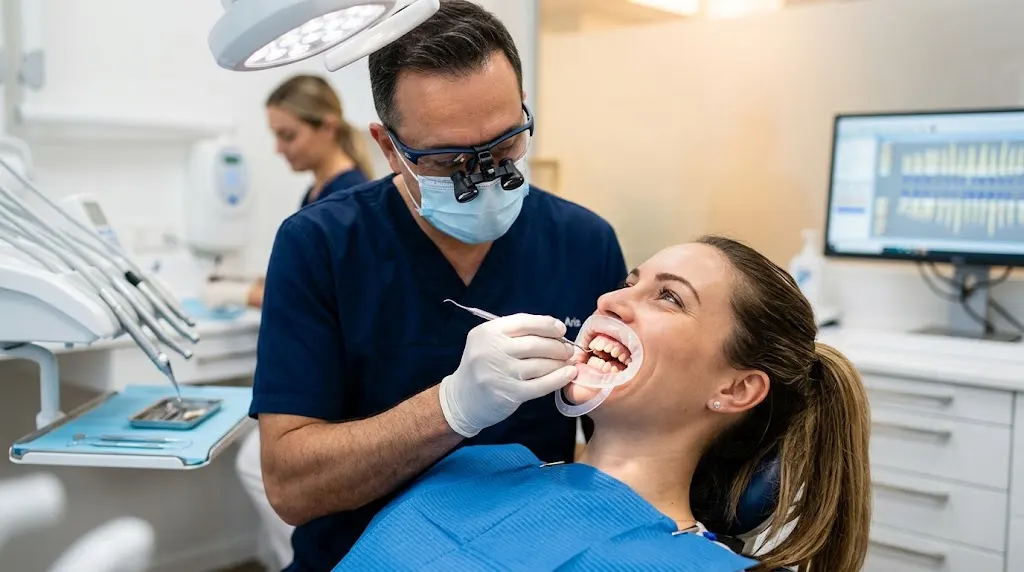

Dental Bonding: Cost, Benefits, Procedure & Lifespan
Dental bonding is a cosmetic and restorative dental procedure that uses tooth-colored composite resin to improve the appearance or function of a tooth. Dentists commonly use bonding to repair small chips, close minor gaps, reshape uneven teeth, conceal discoloration, and improve worn edges. Compared with veneers or crowns, bonding is usually less invasive because little or no healthy enamel needs to be removed. The treatment can often be completed during a single dental appointment. It is also generally more affordable than many laboratory-made cosmetic restorations. For people seeking relatively conservative improvements to their smile, dental bonding can therefore be an attractive option.
The procedure is sometimes called composite bonding, cosmetic bonding, or tooth bonding, although the exact terminology can depend on the purpose of treatment. A dentist selects a composite resin shade that closely matches the surrounding teeth and carefully shapes the material directly on the tooth. The resin is then hardened with a special curing light before being polished to produce a natural-looking finish. Because the dentist sculpts the restoration chairside, results can often be achieved without sending impressions to a dental laboratory. The process is usually straightforward and may require little or no anesthesia when decay or deeper damage is not involved.
Cost is one of the main reasons patients compare bonding with veneers, crowns, whitening, or orthodontic treatment. In the United States, dental bonding may commonly cost roughly $100 to $600 per tooth, although the actual amount can vary substantially according to the dentist, location, complexity, number of teeth, and reason for treatment. Simple repairs may cost less than extensive cosmetic reshaping. Dental insurance may contribute when bonding is needed to restore a damaged tooth, but purely cosmetic treatment is often not covered. Asking for a written treatment estimate before beginning makes costs easier to understand.
Dental bonding is versatile, but it is not appropriate for every cosmetic problem. Composite resin is strong enough for many everyday situations, yet it is not as durable or stain-resistant as porcelain. People who bite their nails, chew ice, grind their teeth, or use their front teeth to open packages may damage bonded areas more quickly. Large fractures, severe decay, significant bite problems, or major alignment concerns may require a different treatment. A dental examination helps determine whether bonding can provide a predictable result. Good treatment planning is particularly important when multiple front teeth are being changed.
This guide explains dental bonding cost, benefits, procedure, recovery, lifespan, maintenance, risks, and alternatives in practical language. It also covers how long composite bonding lasts, whether the treatment hurts, how bonded teeth can stain, and when repairs or replacement may be needed. Understanding both the advantages and limitations helps patients form realistic expectations before committing to cosmetic dental work. Bonding can provide impressive changes when used for the right problems and maintained carefully. However, no dental restoration lasts forever, and future touch-ups may eventually be necessary. The best results come from matching the treatment to the condition of the teeth, bite, lifestyle, and cosmetic goals.
What Is Dental Bonding?
Dental bonding is a procedure in which a dentist applies tooth-colored composite resin directly to the surface of a tooth and shapes it to achieve a desired result. Composite resin is a moldable dental material that can be matched closely to natural tooth color. The dentist can add small amounts of material exactly where additional length, width, volume, or coverage is needed. After shaping, the resin is hardened with a curing light and polished. The finished restoration becomes attached to the tooth surface through an adhesive bonding process. This allows relatively small cosmetic and functional changes without completely covering the tooth.
Bonding is frequently used on the visible front teeth because even small imperfections can strongly affect the appearance of a smile. A chipped incisor, irregular edge, narrow space between teeth, or minor shape difference may sometimes be corrected without veneers or crowns. Composite resin can also camouflage certain localized stains that do not respond well to whitening. In appropriate cases, a dentist may use bonding to make teeth appear slightly straighter or more symmetrical. However, bonding does not actually move teeth. Significant crowding or bite problems may still require orthodontic treatment rather than simply adding resin.
The term can also refer to restorative dental work in which composite material is bonded to a tooth after decay or damage is removed. Tooth-colored fillings rely on adhesive principles similar to cosmetic bonding. However, when patients discuss dental bonding as a cosmetic treatment, they usually mean adding resin primarily to change tooth appearance rather than filling a cavity. The distinction matters because treatment goals, insurance coverage, and preparation can differ. Cosmetic bonding may involve little or no drilling. Restorative bonding may require removal of damaged or decayed tooth structure before the material is placed.
One important advantage of direct composite bonding is that the dentist controls the shape during the appointment. Unlike porcelain veneers, which are typically manufactured outside the mouth after tooth preparation and impressions or digital scans, direct bonding is sculpted directly onto the tooth. The dentist can evaluate proportions, symmetry, bite, and appearance in real time. Adjustments can often be made immediately before the patient leaves. This direct workflow can reduce treatment time and cost. It also makes repairs relatively straightforward if a small area later chips or wears.
Dental bonding is generally considered a conservative treatment because healthy enamel can often be preserved. In some cosmetic cases, the surface only needs light preparation before adhesive is applied. Preserving enamel is valuable because natural tooth structure cannot regenerate once it has been permanently removed. However, conservative does not mean completely risk-free or maintenance-free. Composite resin can stain, chip, wear, or separate from the tooth over time. Patients should therefore consider both the immediate cosmetic improvement and the likely need for maintenance throughout the lifespan of the restoration.
What Problems Can Dental Bonding Fix?
One of the most common uses for dental bonding is repairing small chipped teeth. Front teeth can chip because of falls, sports injuries, biting hard foods, grinding, or ordinary wear over time. When the damage is minor and the remaining tooth is healthy, composite resin can often rebuild the missing edge and restore a more natural shape. The dentist matches the resin to the surrounding enamel so the repaired area blends visually. This approach may avoid more extensive treatment such as a crown. Larger fractures, however, require careful evaluation because deeper damage may affect the nerve or structural stability of the tooth.
Dental bonding can also help close small gaps between teeth. The dentist adds resin to the sides of neighboring teeth, creating the appearance of reduced spacing. This may work particularly well when the gap is relatively narrow and the surrounding teeth have proportions that can tolerate a slight increase in width. Wider gaps may require orthodontics because adding too much resin can make the teeth appear unnaturally broad. Bite relationships must also be considered. Cosmetic planning should focus on achieving proportions that look balanced rather than simply filling every available space.
Uneven, short, or irregularly shaped teeth may also benefit from composite bonding. A dentist can lengthen worn edges, soften sharp corners, or build up a tooth that appears smaller than neighboring teeth. These subtle modifications can improve smile symmetry without requiring extensive tooth preparation. Bonding may also help correct minor discrepancies created by developmental differences in tooth shape. When several teeth require reshaping, careful planning becomes more important because small changes can affect overall smile proportions. Photographs, digital simulations, or temporary mock-ups may sometimes be used to preview the intended appearance.
Localized discoloration is another possible indication. Tooth whitening works primarily by changing color within natural enamel, but some stains or enamel defects may not respond predictably. Composite resin can physically cover a discolored area and match it to adjacent teeth. However, composite itself does not whiten after it has been placed. If a patient intends to whiten surrounding teeth, whitening is generally better completed before choosing the final bonding shade. Otherwise, the natural teeth may become lighter while the bonded areas retain their original color.
Bonding can sometimes protect areas where enamel has worn or roots have become exposed, although the underlying cause should also be addressed. Tooth wear may result from grinding, acidic foods and drinks, reflux, aggressive brushing, or bite problems. Simply covering the worn area without controlling the cause can lead to repeated failure. A dentist may therefore recommend changes in brushing technique, dietary habits, bite management, or nighttime protection. Effective bonding treatment does more than improve appearance. It should consider why the original damage developed and how future wear can be reduced.
How Does the Dental Bonding Procedure Work?
The dental bonding procedure usually begins with an examination and discussion of the patient’s goals. The dentist evaluates the tooth structure, gums, bite, existing restorations, and overall oral health to determine whether composite bonding is appropriate. Photographs or X-rays may be taken when needed to understand damage or decay. The dentist also discusses the expected shape, color, and limitations of treatment. If several teeth are involved, treatment planning may become more detailed. Addressing cavities, gum inflammation, or significant bite problems before cosmetic bonding can improve the predictability of the final result.
Shade selection is an important early step because composite resin is available in many colors and translucencies. Dentists often compare shade guides with the natural teeth under appropriate lighting. Front teeth are not usually one completely uniform color, so sophisticated bonding may involve several composite shades or layers. The objective is to reproduce the way natural enamel and dentin interact with light. When treatment is primarily cosmetic, whitening should generally be considered before bonding if the patient wants brighter teeth. Once the composite has been placed, ordinary whitening products will not change its color in the same way they change natural enamel.
The tooth surface is then prepared for bonding. In many cosmetic cases, very little enamel removal is necessary. The dentist may roughen or condition the surface and apply an adhesive system that helps the composite attach securely. Different bonding systems follow slightly different clinical steps, but careful moisture control is important because contamination can interfere with adhesion. If decay or damaged material is present, it must be removed before restoration. Local anesthetic may be used when deeper tooth preparation is necessary, although simple cosmetic additions often require no numbing.
Composite resin is placed gradually and sculpted into the desired shape. The dentist considers tooth length, contour, surface texture, neighboring teeth, lip position, and bite while forming the restoration. A curing light is used to harden each portion of material. After the basic shape is complete, the dentist trims and refines the composite using specialized instruments. The bite is checked to ensure that the bonded area is not receiving excessive force. This step is particularly important on incisal edges because heavy contact can increase the risk of chipping.
Finally, the restoration is polished to create a smooth, natural-looking surface. Good polishing improves appearance and can reduce plaque retention and staining. The dentist may ask the patient to look at the tooth and confirm that the shape feels appropriate. Minor refinements can often be completed immediately. In straightforward cases, one bonded tooth may be finished in roughly 30 to 60 minutes, although extensive cosmetic work takes longer. Patients can usually return to normal daily activities immediately after treatment because there is generally little recovery time.
Does Dental Bonding Hurt?
Dental bonding is usually considered a minimally uncomfortable dental procedure, particularly when composite is simply being added to healthy enamel. Enamel itself does not contain nerves, so minor surface preparation may not produce pain. Many purely cosmetic bonding procedures are completed without local anesthesia. Patients may feel the dentist working, polishing, or checking their bite, but these sensations are typically manageable. The length of the appointment may be more noticeable than discomfort when several teeth are treated. People who experience dental anxiety can discuss strategies for staying comfortable before the appointment begins.
Anesthetic may be needed when bonding is being used to restore a tooth with decay, a deeper fracture, or sensitivity near the gumline. Removing damaged tooth structure can expose areas closer to dentin, which contains microscopic pathways connected with the nerve inside the tooth. Numbing medication allows the dentist to work comfortably in these situations. The need for anesthesia therefore depends less on the composite material itself and more on what must be done before placement. Patients should tell the dentist if they feel discomfort at any stage. Additional anesthesia can generally be provided when necessary.
Some people notice mild sensitivity after treatment, especially if the tooth was already sensitive or substantial restorative work was performed. The tooth may react temporarily to cold drinks, air, pressure, or biting. Mild sensitivity often settles as the tooth adjusts. However, persistent or worsening pain should not simply be ignored. Pain when biting can sometimes indicate that the restoration is contacting the opposing teeth too heavily. A dentist can often correct this problem with a small bite adjustment.
Gum tenderness can occur when bonding extends close to the gumline or when the tissues have been manipulated during treatment. The area may feel slightly irritated for a short period. Gentle brushing and normal oral hygiene are generally important because plaque accumulation can prolong inflammation. Patients should follow any specific instructions provided by their dentist. Significant swelling, spontaneous severe pain, or prolonged bleeding is not typical after simple cosmetic bonding. Symptoms that appear unusual should be evaluated rather than assumed to be part of normal recovery.
One advantage of dental bonding is that it usually has little downtime. Patients commonly return to work, school, or normal daily activities immediately. There is normally no surgical wound or lengthy healing process. If local anesthetic was used, patients should be cautious about biting the cheek or lip until numbness disappears. Eating may also feel awkward temporarily while the mouth remains numb. Once sensation returns, ordinary activities can generally resume unless the dentist has provided specific restrictions for the treated tooth.
How Much Does Dental Bonding Cost?
The cost of dental bonding varies considerably because the procedure can range from a tiny chip repair to extensive cosmetic reshaping across several teeth. In the United States, a commonly encountered range is roughly $100 to $600 per tooth, although some practices may charge outside this range. Complex cosmetic work performed by highly experienced cosmetic dentists may cost more. Geographic location also affects professional fees because operating costs differ between regions. Patients should therefore treat online averages as planning estimates rather than guaranteed prices. A personalized examination is the best way to obtain an accurate treatment quote.
The amount of composite required can influence cost, but clinical complexity matters just as much. Closing a small gap may require careful reshaping of two teeth to maintain symmetry. Rebuilding a worn incisal edge may require detailed layering and bite adjustment. A simple repair on one tooth can be completed relatively quickly, whereas a cosmetic smile enhancement across six or eight teeth may require considerably more planning. Dentists may charge per tooth or calculate fees according to the overall case. Asking what is included in the quoted price helps patients compare options fairly.
Insurance coverage depends largely on why the bonding is being performed. If composite resin is needed to repair damage, restore decay, or improve tooth function, a dental insurance plan may provide some coverage according to its terms. When bonding is performed solely for appearance, insurers frequently classify it as elective cosmetic dentistry. Cosmetic procedures are often excluded from standard dental plans. Deductibles, annual limits, waiting periods, and network status can also affect the patient’s final responsibility. Checking benefits before treatment can prevent unexpected bills.
Patients considering multiple cosmetic procedures should compare total long-term cost rather than only the first appointment. Bonding may have a lower initial price than porcelain veneers, but composite generally needs repair, polishing, or replacement sooner. A veneer may cost considerably more upfront but can remain visually stable longer when appropriately maintained. Neither option is automatically more economical for every person. Age, bite, cosmetic expectations, number of teeth, and willingness to maintain the restorations all influence long-term value. A dentist can explain which treatment offers the best balance for the specific situation.
Financing can make larger cosmetic bonding cases easier to manage. Some dental practices offer installment plans or work with third-party financing services, although interest and terms should be reviewed carefully. Health savings or flexible spending arrangements may apply to eligible dental treatment in certain situations, depending on applicable rules. Patients should ask for a written breakdown separating necessary restorative work from elective cosmetic work. This can make insurance and payment planning clearer. Cost matters, but choosing treatment purely on the lowest price can be risky if technique, materials, planning, or follow-up care are compromised.
What Are the Benefits of Dental Bonding?
One of the biggest benefits of dental bonding is that it preserves a large amount of natural tooth structure. Porcelain veneers and crowns often require some enamel removal so the restoration can fit properly, while direct composite can frequently be added with minimal preparation. This conservative approach can be particularly appealing to younger patients or people correcting relatively small imperfections. Preserving enamel also maintains more options for future dental treatment. Once significant tooth structure is removed, it cannot be restored naturally. Bonding therefore offers a way to make visible changes while remaining comparatively conservative.
Speed is another advantage. Many bonding procedures can be completed in a single appointment because the material is applied and shaped directly in the mouth. There is often no need for temporary restorations or a separate laboratory fabrication stage. A small chipped tooth may be repaired quickly, while several cosmetic changes can sometimes be completed in one longer visit. This makes bonding convenient for patients who want improvement without several appointments. The immediate transformation can be particularly satisfying when a visible front tooth has fractured unexpectedly.
Composite bonding is also highly repairable. If a small section chips later, the dentist may be able to add new composite to the existing restoration rather than replacing everything. Surface stains or roughness can sometimes be improved through professional polishing. This maintainability differs from certain ceramic restorations, where major fractures can require complete replacement. Repairability does not mean bonding will never need replacement, but it can reduce the impact of minor damage. Patients who understand this maintenance model can plan more realistically for long-term care.
Another benefit is versatility. The same material can close gaps, repair chips, improve contours, lengthen teeth, cover small discolorations, and restore worn areas. Dentists can modify subtle aspects of tooth shape without changing the entire smile. Composite resin also comes in numerous shades, opacities, and translucencies, allowing skilled clinicians to reproduce natural optical characteristics. Modern materials can produce attractive results when properly layered and polished. The quality of the final appearance depends heavily on treatment planning and the dentist’s ability to shape and finish the material.
Affordability compared with many porcelain restorations is another important advantage. Bonding can allow patients to improve several teeth while keeping the initial financial commitment lower than a comparable veneer case. This does not make composite a budget substitute for every ceramic treatment because the materials have different strengths and limitations. Instead, it creates another option on the cosmetic treatment spectrum. For the right patient, bonding can provide a meaningful aesthetic improvement without aggressive preparation or very high initial cost. Matching expectations with material performance is the key to satisfaction.
What Are the Risks and Disadvantages of Dental Bonding?
The main disadvantage of composite bonding is that it is generally less resistant to chipping and fracture than porcelain. Composite performs well for many small and moderate restorations, but it can be damaged by excessive bite forces. Biting ice, chewing pens, opening packages with the teeth, or biting directly into very hard foods can increase the likelihood of fracture. Front-edge bonding is particularly exposed to these forces. People who grind or clench their teeth may place repeated stress on restorations while sleeping. A protective nightguard may sometimes be recommended when bruxism is present.
Staining is another limitation. Composite resin can absorb or accumulate discoloration over time, particularly around the surface and margins. Coffee, tea, red wine, tobacco, and deeply pigmented foods may contribute to visible staining. Good polishing and oral hygiene can help, but composite generally does not maintain color exactly like high-quality porcelain. Bonded material also does not respond to conventional tooth whitening. If surrounding natural teeth are whitened substantially after bonding, a color mismatch may develop. The bonded areas may then require polishing, resurfacing, or replacement to match the new shade.
Surface wear can gradually change the shape and shine of dental bonding. Chewing, brushing, diet, and oral habits continuously affect composite restorations. Small irregularities may develop at the edges, or the material may lose some of its original polish. Routine dental visits allow these changes to be identified before they become more significant. Minor refinishing can sometimes restore smoothness and appearance. Larger deterioration may require adding new material or replacing the restoration. Patients should view bonding as maintainable dental work rather than a permanent one-time treatment.
Bonding can occasionally contribute to gum irritation when margins are rough, overcontoured, or difficult to clean. Composite placed between teeth must allow appropriate flossing and should not create unnecessary plaque traps. If material extends too far toward the gums, it can interfere with healthy tissue contours. Careful finishing is therefore essential. Patients also need to brush and floss consistently after treatment. Persistent gum bleeding around bonded teeth should be evaluated because inflammation may indicate plaque accumulation, an overhanging restoration, or another oral health issue.
Finally, bonding cannot solve every dental problem. Trying to use composite to disguise severe crowding, large fractures, significant decay, or structurally weak teeth can lead to disappointing results. A heavily damaged tooth may require a crown, while major spacing or alignment issues may respond better to orthodontics. Treating the wrong problem with bonding simply because it is faster or less expensive can create repeated repairs. Proper diagnosis should come before cosmetic preference. The strongest dental treatment is the one suited to both appearance and long-term function.
How Long Does Dental Bonding Last?
The lifespan of dental bonding is commonly around three to ten years, although some restorations may fail sooner and others can last longer. There is no exact expiration date because longevity depends heavily on the size and location of the bonding. A tiny repair protected from heavy chewing forces may remain intact for many years. A large restoration extending across the biting edge of a front tooth experiences much greater stress. Material quality, placement technique, bite relationship, and oral habits all influence durability. Regular dental care can help identify problems early and extend useful service life.
The patient’s bite is one of the strongest influences on bonding longevity. Teeth contact one another thousands of times during ordinary chewing and speaking. If a bonded edge receives excessive force every time the jaw closes, repeated stress may eventually cause a crack or chip. Dentists therefore check the bite carefully after treatment. Some people naturally have bite relationships that make certain cosmetic changes more challenging. Orthodontic correction or alternative restorative designs may sometimes provide better long-term stability than repeatedly repairing overloaded composite.
Grinding and clenching can significantly shorten the lifespan of bonding. These habits, collectively associated with bruxism, can generate forces much greater than ordinary chewing. Patients may not realize they grind because much of the activity happens during sleep. Flattened teeth, jaw muscle soreness, headaches, and repeated restoration fractures can provide clues. When appropriate, a dentist may recommend a custom nightguard to distribute forces and protect both natural teeth and restorations. A nightguard does not stop every grinding habit, but it may reduce direct damage.
Maintenance also affects how long bonded teeth remain attractive. Regular brushing and flossing help prevent decay around restoration margins. Dental examinations allow clinicians to inspect for cracks, stains, wear, or changes in the bite. Professional polishing can sometimes refresh the surface before replacement becomes necessary. Patients should avoid using bonded teeth as tools and should be cautious with especially hard objects. These simple behaviors can make a meaningful difference in how frequently repairs are needed.
Eventually, some dental bonding will require replacement even when it has been cared for well. Composite ages under constant exposure to moisture, temperature changes, chewing forces, food pigments, and oral bacteria. The replacement process is often relatively conservative because the dentist can remove worn material and rebuild the restoration. However, repeated repairs should prompt investigation into why failure keeps occurring. An untreated grinding habit or unfavorable bite may need attention. Long-term success depends on maintaining both the restoration and the conditions around it.
How to Care for Bonded Teeth
Caring for bonded teeth begins with the same foundation required for natural teeth: consistent brushing and interdental cleaning. Brush twice daily with a fluoride toothpaste and a soft-bristled toothbrush, using gentle pressure rather than aggressive scrubbing. Floss or use another dentist-recommended interdental cleaner daily to remove plaque between teeth. Composite bonding does not protect the underlying tooth from decay. Cavities can still develop at restoration margins when plaque remains undisturbed. Healthy gums also improve the appearance of cosmetic dental work by maintaining clean, stable tissue around the teeth.
Dietary habits can influence both appearance and durability. Foods and beverages with strong pigments may gradually discolor composite, especially when consumed frequently. Coffee, tea, dark sauces, and tobacco are common contributors to staining. Rinsing with water after strongly colored drinks may help reduce prolonged exposure, although it cannot eliminate all staining. Acidic foods and beverages deserve moderation because repeated acid exposure can weaken natural enamel around restorations. A balanced approach is more realistic than avoiding every potentially staining food permanently.
Avoid chewing very hard objects with bonded front teeth. Ice, hard candy, pens, fingernails, and packaging can generate concentrated forces that composite was not designed to withstand. Even natural teeth can crack under these habits, and bonded edges may be particularly vulnerable. Foods such as very hard nuts or crusty items do not necessarily need to be eliminated, but chewing technique may need adjustment when extensive front-tooth bonding is present. Cutting hard foods into smaller pieces can reduce unnecessary stress. Patients should follow any personalized dietary advice from their dentist.
Routine dental examinations remain important after cosmetic bonding. Dentists can inspect restoration margins, check the bite, evaluate gum health, and identify early wear. Professional cleanings also help remove deposits and some surface discoloration. Hygienists should know which teeth contain bonding because polishing methods may be adapted to protect composite surfaces. If a bonded tooth suddenly feels rough or sharp, an edge may have chipped. Early evaluation can sometimes allow a simple repair before damage becomes larger.
Patients who grind or clench should discuss protective strategies. A custom nightguard may help protect bonded teeth from repeated nighttime forces. Stress management and awareness of daytime clenching can also be useful for some people. However, jaw pain or suspected sleep-related grinding should be properly evaluated rather than self-treated with random appliances. The goal is to reduce harmful loading while maintaining a comfortable bite. Protecting bonding is ultimately part of protecting the natural teeth underneath it.
Dental Bonding vs Veneers
Dental bonding and veneers can both improve tooth color, shape, size, and symmetry, but the treatments differ substantially. Bonding uses composite resin applied directly to the tooth, usually during one appointment. Porcelain veneers are thin ceramic restorations that cover the front surface of teeth and are typically fabricated using impressions or digital scans. Veneers generally require more planning and may require some enamel preparation. Bonding is usually more conservative and initially less expensive. Veneers generally provide greater stain resistance and can maintain their appearance longer when appropriately designed and cared for.
Durability is an important distinction. High-quality porcelain is strong, smooth, and resistant to many common stains. Composite resin is easier to repair but tends to wear and discolor more readily. For patients seeking a long-lasting transformation of several front teeth, veneers may provide more stable aesthetics. For someone correcting a small chip or minor gap, veneers may represent unnecessary treatment. The choice should depend on the scale of the problem rather than assuming one material is universally superior. Conservative dentistry generally favors the least invasive option that can reliably achieve the intended result.
Tooth preparation can also influence the decision. Many bonding procedures preserve nearly all existing enamel, which provides flexibility if the patient wants different treatment later. Traditional porcelain veneers often require permanent alteration of the tooth surface, although the amount varies according to the case. Once meaningful enamel has been removed, the tooth will likely continue to need some form of restoration. Younger patients may therefore value the reversibility or reduced preparation associated with bonding. However, poorly planned large composite restorations can also create future maintenance.
Aesthetic expectations matter because porcelain can reproduce natural enamel with exceptional translucency, texture, and color stability. Skilled composite bonding can also look highly natural, particularly for small to moderate corrections. However, large multi-tooth cases demand significant artistic skill from the treating dentist. Composite is shaped entirely chairside, making technique particularly influential. Patients seeking extremely precise long-term color stability may prefer ceramic restorations. Those prioritizing conservatism, repairability, and lower upfront cost may prefer bonding.
Neither treatment should be selected from photographs or price alone. The dentist needs to assess enamel thickness, bite, tooth position, gum health, existing fillings, and cosmetic goals. In some cases, orthodontics or whitening before restoration can reduce the amount of dental work required. A patient may even use a combination of treatments. Good cosmetic dentistry focuses on creating a stable result with the least unnecessary intervention. The best choice is therefore individualized rather than based on a universal ranking between bonding and veneers.
Dental Bonding vs Crowns
Dental crowns and bonding differ even more significantly in the amount of tooth they cover. Dental bonding usually adds composite to selected areas of a tooth, while a crown surrounds most of the visible tooth structure. Crowns are typically used when a tooth has experienced substantial decay, fracture, weakening, or previous restorative treatment. Because more tooth preparation is involved, crowns are not usually the first choice for correcting a tiny cosmetic defect. Bonding may be better when the tooth is structurally healthy and only a limited area requires change. Preserving healthy tissue is an important treatment principle.
Crowns provide greater structural coverage when a tooth is severely compromised. A large crack, extensive filling, or major loss of tooth structure may make a small bonded repair unreliable. Covering the tooth can distribute forces more broadly and protect vulnerable remaining structure. However, crowns require removal of enough tooth material to create room for the restoration. This makes them a more invasive treatment. Dentists balance the need for protection against the importance of preserving as much healthy structure as possible.
Cost also differs. Composite bonding generally has a lower initial fee than a laboratory-made ceramic crown. However, comparing prices without considering the condition of the tooth can be misleading. A severely damaged tooth may repeatedly break if treated with inadequate bonding, eventually resulting in additional appointments and expense. Conversely, placing a crown on a tooth needing only a tiny cosmetic correction would unnecessarily increase treatment. Value comes from choosing the restoration capable of handling the actual clinical situation. The cheapest option is not necessarily the most economical long term.
The expected lifespan can also differ. Crowns can often remain functional for many years when the underlying tooth stays healthy and the bite is favorable. Composite bonding generally requires more frequent maintenance, particularly on heavily loaded areas. Nevertheless, neither crowns nor bonding are permanent. Decay can develop around restoration margins, and gum recession or tooth changes can alter appearance over time. Excellent oral hygiene and routine dental care are essential regardless of restoration type. Long-term success depends on the health of both the restoration and the natural tooth.
A dentist may occasionally use bonding as an interim treatment before a future crown or another restoration. For example, a younger patient with a damaged tooth may benefit from a conservative composite repair while dental development continues. Later, a more comprehensive restoration may become appropriate. Treatment planning should therefore consider both present needs and likely future options. Dentistry does not always require choosing the most extensive restoration immediately. A staged approach can preserve tooth structure while still addressing current functional and cosmetic concerns.
Who Is a Good Candidate for Dental Bonding?
A good candidate for cosmetic bonding generally has healthy teeth and gums with relatively minor cosmetic concerns. Small chips, narrow gaps, mildly uneven contours, limited discoloration, and worn edges are common indications. The tooth should have enough sound enamel or tooth structure to support reliable adhesion. Oral hygiene should also be reasonably good because plaque and untreated gum inflammation can compromise the appearance and longevity of cosmetic work. When underlying dental disease exists, it should normally be treated first. Cosmetic treatment works best on a stable, healthy foundation.
Patients with realistic expectations are also better candidates. Composite bonding can produce significant improvements, but it does not behave exactly like natural enamel or porcelain. The material can stain and may require occasional repair or polishing. Someone expecting a permanent, maintenance-free restoration may be disappointed even when the clinical result is excellent. Dentists should therefore discuss likely lifespan, staining potential, and behavior under chewing forces before treatment. Understanding these limitations helps patients decide whether the convenience and conservative nature of bonding outweigh its maintenance requirements.
Bite conditions must be evaluated carefully. People with deep bites, edge-to-edge tooth contact, or severe grinding may place excessive force on bonded areas. This does not always eliminate bonding as an option, but the design may need modification. A nightguard, orthodontic treatment, or alternative restoration could sometimes provide greater durability. Repeated previous fractures are an important clue that force management should be addressed. Cosmetic improvement should never ignore how teeth contact during function.
Patients with severe crowding or large spacing may be better served by orthodontic treatment. Adding composite can visually disguise small position differences, but it cannot move roots or correct the underlying bite. Attempting to mask major misalignment may create overly bulky tooth shapes that are difficult to clean. Modern orthodontic options can sometimes reposition teeth first, allowing minimal bonding afterward for finishing touches. Combining treatments can preserve more natural structure and create more balanced proportions. The objective is a healthy smile, not merely a quick visual correction.
A consultation is ultimately the best way to determine candidacy. Dentists can examine enamel, existing restorations, decay, gum levels, tooth color, bite, and smile proportions before recommending treatment. Patients should explain which features bother them rather than asking immediately for a specific procedure. There may be several ways to achieve the desired result. Whitening, orthodontics, contouring, veneers, bonding, or combinations of these treatments can solve different problems. A good plan begins with the desired outcome and selects the least invasive predictable approach.
When Should Dental Bonding Be Repaired or Replaced?
A visible chip or fracture in dental bonding is an obvious reason to schedule an evaluation. Small chips may sometimes be repaired by adding composite to the damaged area. Larger fractures may require removal and replacement of more material so the dentist can restore proper shape and strength. Patients should avoid repeatedly testing a chipped edge with their tongue or biting on the tooth. Sharp composite can irritate soft tissue, while continued loading may enlarge the fracture. Even if there is no pain, damaged bonding deserves timely assessment.
Noticeable staining can also prompt refinishing or replacement. Surface discoloration may improve through professional polishing when the underlying composite remains sound. Deeper color changes cannot always be polished away. If neighboring teeth have changed shade after whitening, old composite may also appear darker despite remaining structurally intact. Replacement can then improve color matching. Patients should remember that whitening products do not bleach composite resin effectively. Planning future whitening before replacing bonding can help establish a more stable final shade.
Roughness or irregular edges deserve attention because they can trap plaque or irritate the tongue. Composite surfaces gradually change as they experience brushing, chewing, and dietary exposure. A dentist may be able to smooth and polish minor surface defects without replacing the entire restoration. However, roughness caused by underlying cracking requires a different approach. Professional examination distinguishes harmless surface wear from structural deterioration. Patients should avoid attempting to file or smooth dental bonding at home because this can damage both the composite and natural enamel.
Decay around the margins is a more serious reason for replacement. Bonding itself cannot develop a cavity, but the natural tooth beside or beneath it can. Decay may begin where plaque accumulates around an imperfect margin. Treatment generally involves removing the affected composite and decayed tooth structure before placing a new restoration. Depending on how much tooth has been lost, a larger filling, veneer, or crown may eventually be required. Consistent hygiene and routine dental examinations help detect these problems earlier.
Repeated bonding failures suggest that the underlying cause should be investigated rather than simply repaired indefinitely. The restoration may be experiencing excessive bite force, nighttime grinding, poor adhesion, or a design that is too thin for the location. Sometimes a different restorative material is more appropriate. In other cases, adjusting the bite or using a nightguard can improve longevity. Dental treatment should evolve when circumstances show that an earlier approach is not performing reliably. Repeated repair is useful only when the reason for failure is understood and manageable.
Conclusion
Dental bonding is a versatile treatment that uses tooth-colored composite resin to repair small damage and improve the appearance of teeth. It can address chips, gaps, uneven edges, minor shape differences, and some forms of discoloration. Because the resin is applied directly to the tooth, many cases can be completed during a single appointment. Little or no enamel removal may be required for straightforward cosmetic applications. This conservative approach makes bonding particularly attractive when only modest changes are needed. It can provide a noticeable improvement without immediately committing the tooth to a more invasive restoration.
The cost of dental bonding varies with location, complexity, number of teeth, and treatment purpose. In the United States, many procedures fall somewhere around $100 to $600 per tooth, although actual fees may be lower or higher. Insurance is more likely to contribute when bonding restores damage or decay than when treatment is purely cosmetic. Patients considering multiple teeth should request an individualized estimate. Long-term maintenance should also be included when comparing costs with veneers or crowns.
The procedure itself is generally comfortable and relatively quick. Dentists prepare the surface, apply adhesive, place composite resin, sculpt the desired shape, harden it with a curing light, and polish the final restoration. Local anesthesia may not be necessary when healthy enamel is being treated. Most patients can return to normal daily activities immediately. The artistry and technical precision of placement strongly influence both appearance and durability. Careful bite adjustment is especially important when resin is added to the edges of front teeth.
Composite bonding commonly lasts several years, with a general lifespan often ranging from approximately three to ten years depending on the situation. Staining, wear, chipping, grinding, bite forces, and oral hygiene can affect longevity. Bonded teeth may occasionally need polishing, repair, or replacement. Avoiding hard objects and maintaining regular dental care can help protect the restoration. People who grind their teeth may benefit from professional evaluation and possibly a protective appliance. Good maintenance can significantly influence how long the result remains attractive.
Ultimately, dental bonding works best when it is selected for the right problem. Small to moderate cosmetic corrections often respond beautifully to this conservative technique, while severely damaged or heavily misaligned teeth may require alternatives. A dentist can compare bonding with whitening, orthodontics, veneers, or crowns based on individual needs. Patients should consider appearance, durability, cost, invasiveness, and future maintenance together. When treatment is properly planned and carefully maintained, composite bonding can offer a practical balance between natural-looking aesthetics and preservation of healthy tooth structure.
Frequently Asked Questions About Dental Bonding
How long does dental bonding last?
Dental bonding commonly lasts around three to ten years, although durability varies according to the size and location of the restoration, bite forces, oral habits, and maintenance. Small protected restorations may last longer, while bonding on heavily loaded front edges may need earlier repair.
How much does dental bonding cost per tooth?
In the United States, dental bonding may commonly cost roughly $100 to $600 per tooth, although individual fees vary widely. Treatment complexity, geographic location, dentist experience, and whether the procedure is restorative or cosmetic can all affect the final cost.
Does dental bonding damage your natural teeth?
Cosmetic bonding usually requires little or no removal of healthy enamel, making it one of the more conservative cosmetic dental treatments. Some preparation may still be necessary depending on existing damage, decay, tooth shape, or the type of restoration being completed.
Can bonded teeth be whitened?
Traditional whitening treatments can lighten natural tooth enamel but generally do not significantly change the color of existing composite bonding. If you want whiter teeth, whitening is often completed before bonding so the dentist can match the composite to the new shade.
Can dental bonding fall off or chip?
Yes, composite bonding can chip, crack, wear, or detach, particularly when exposed to heavy biting forces, nail biting, ice chewing, or teeth grinding. Small failures can often be repaired without replacing the entire restoration.