
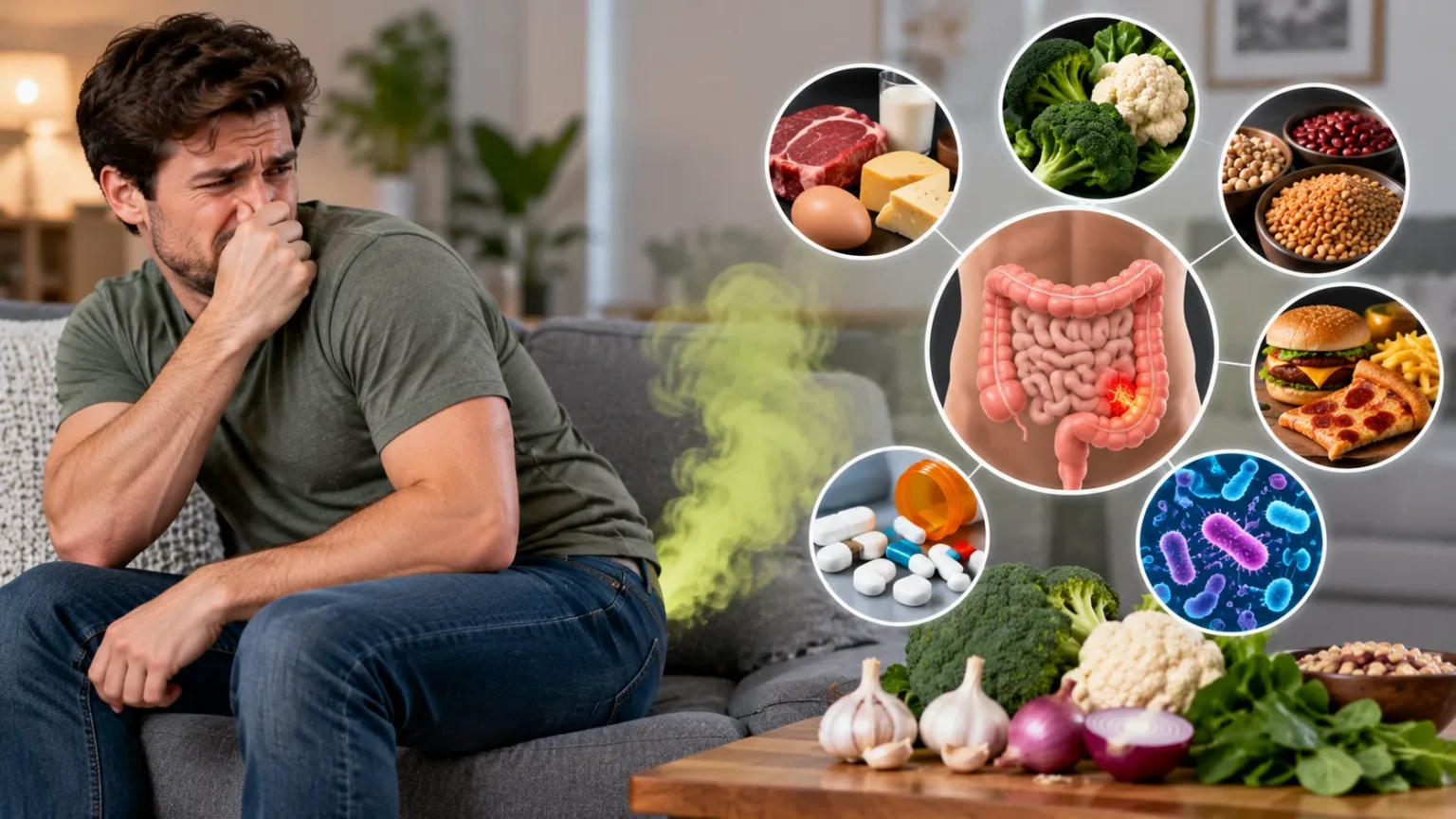

Why Do My Farts Smell Like Rotten Eggs? 7 Causes
Passing gas is a normal part of digestion, but sometimes the odor can become unusually strong and smell similar to rotten eggs. That distinctive smell usually comes from sulfur-containing gases produced when bacteria in the large intestine break down certain foods and compounds. Hydrogen sulfide is one of the gases most commonly associated with the rotten-egg smell, even though it is usually present in relatively small amounts compared with other intestinal gases. In many cases, smelly gas is temporary and connected to something you recently ate. However, persistent foul-smelling gas can sometimes be linked with digestive problems, food intolerances, infections, or changes in gut bacteria. Understanding the pattern and any other symptoms can help you decide whether simple diet changes are enough or medical advice is appropriate.
Many people become worried when their farts suddenly smell much worse than usual, but odor alone does not always mean something is seriously wrong. Foods rich in sulfur, high-protein meals, certain vegetables, constipation, and changes in gut bacteria can all increase unpleasant-smelling flatulence. At the same time, digestive conditions such as lactose intolerance, celiac disease, or an intestinal infection can also change gas production and stool patterns. The important question is whether the odor occurs by itself or comes with symptoms such as abdominal pain, persistent bloating, diarrhea, fever, unexplained weight loss, or blood in the stool. This guide explains seven common causes of rotten-egg-smelling gas, foods that can trigger it, ways to reduce the odor, and warning signs that deserve professional attention.
Why Can Gas Smell Like Rotten Eggs?
Most intestinal gas has little or no smell because much of it consists of gases such as nitrogen, oxygen, carbon dioxide, hydrogen, and methane. The strong odor people notice comes from much smaller amounts of sulfur-containing compounds produced during digestion. Hydrogen sulfide is particularly well known because even tiny amounts can produce the characteristic smell of rotten eggs. Other sulfur-containing gases may also contribute to foul-smelling flatulence. These compounds form when intestinal bacteria break down proteins and sulfur-containing substances that reach the colon. Therefore, very smelly gas does not necessarily mean you are producing dramatically more gas; sometimes the chemical composition of the gas has simply changed.
The digestive tract contains trillions of microorganisms that help break down food your body cannot fully digest on its own. When carbohydrates, proteins, and fibers reach the large intestine, gut bacteria ferment or metabolize them and produce different gases as by-products. The exact gases produced depend on what you eat, your gut microbiome, how quickly food moves through your digestive system, and how effectively nutrients are absorbed. Two people can therefore eat the same meal and experience very different levels of bloating and odor. This individual variation explains why one person may tolerate beans or broccoli easily while another experiences noticeably stronger gas after eating them.
Sulfur is a normal nutrient found in many healthy foods, including eggs, meat, fish, dairy foods, cruciferous vegetables, garlic, and onions. The body needs sulfur-containing amino acids for important functions, so sulfur itself is not something that should automatically be avoided. Problems usually arise when certain foods are consumed in amounts that produce more sulfur-containing gas than a person’s digestive system comfortably handles. High-protein diets can sometimes contribute because proteins contain sulfur-containing amino acids that intestinal bacteria can metabolize. However, people should avoid assuming that every strong odor means they need to eliminate protein. Looking at the entire dietary pattern is more useful than blaming one nutrient.
The speed at which food moves through the intestines can also influence gas odor. Constipation, for example, allows stool and food residues to remain in the colon for longer periods, giving bacteria more time to ferment and break them down. This prolonged process can increase both gas accumulation and unpleasant odor. On the other hand, very rapid intestinal transit caused by diarrhea can also alter digestion and bacterial activity. Changes in stool frequency can therefore provide useful clues when foul-smelling gas appears. If your gas becomes stronger at the same time your bowel habits change significantly, the two symptoms may be related.
Occasional rotten-egg-smelling gas after a particular meal is generally less concerning than a major unexplained change that continues for weeks. Keeping track of meals, bowel movements, bloating, pain, and other symptoms can help identify patterns. For example, symptoms that consistently occur after milk may suggest a different issue from symptoms that appear after eating broccoli or eggs. Frequent diarrhea with foul-smelling gas may also point toward a different cause than constipation with strong gas. People do not need to obsessively monitor every bowel movement, but recognizing recurring patterns can make conversations with a healthcare professional more productive. Persistent symptoms deserve evaluation rather than endless food restriction.
7 Common Causes of Rotten-Egg-Smelling Farts
1. Sulfur-rich foods are one of the most common and harmless reasons your farts may smell like rotten eggs. Foods such as eggs, red meat, poultry, fish, garlic, onions, broccoli, cauliflower, cabbage, and Brussels sprouts contain sulfur compounds or sulfur-containing amino acids. When these substances reach intestinal bacteria, they may be converted into hydrogen sulfide and other strong-smelling compounds. The effect varies greatly from person to person depending on digestion and gut microbiota. Eating these foods does not mean they are unhealthy, and many provide valuable vitamins, minerals, protein, and fiber. If odor appears mainly after specific meals and you otherwise feel well, dietary sulfur may be the simplest explanation.
2. A high-protein diet can sometimes increase particularly strong-smelling flatulence, especially when protein intake rises suddenly. Meat, eggs, dairy products, protein powders, and some supplements provide amino acids that may eventually reach bacteria in the colon. When bacteria break down sulfur-containing amino acids, they can create compounds with a strong rotten-egg odor. People following bodybuilding diets or very high-protein eating plans sometimes notice this change even when their digestive system is otherwise healthy. The solution is not necessarily to stop eating protein, because adequate protein is important for muscle, tissue repair, and many biological functions. Adjusting portion sizes, fiber intake, meal balance, and protein sources may be more practical.
3. Food intolerances can also lead to foul-smelling gas when certain carbohydrates are not absorbed properly. Lactose intolerance is a common example because people with low lactase activity may not fully digest lactose in milk and some dairy foods. Undigested lactose reaches the colon, where bacteria ferment it and produce gas, bloating, abdominal discomfort, and sometimes diarrhea. Other fermentable carbohydrates can produce similar symptoms in sensitive individuals. The odor may vary depending on the person’s gut bacteria and the foods eaten at the same meal. A consistent relationship between a specific food and symptoms can be useful, but eliminating several food groups without guidance may create unnecessary nutritional restrictions.
4. Constipation can make intestinal gas smell stronger because digestive material remains in the colon for a longer time. Bacteria have additional time to ferment food residues and produce odorous compounds before stool is passed. People may also feel more bloated because gas can become trapped behind hard or slow-moving stool. Constipation can occur because of low fiber intake, inadequate fluid intake, inactivity, medication effects, stress, travel, or changes in routine. Improving regularity may reduce odor when constipation is the primary cause. However, new severe constipation, especially with significant pain, vomiting, or inability to pass gas, should be evaluated rather than managed only with home remedies.
5. Changes in the gut microbiome may influence both the amount and smell of intestinal gas. Antibiotics, illness, major dietary changes, infections, and other factors can temporarily alter the populations of bacteria living in the digestive tract. Different bacteria produce different metabolic by-products, including varying amounts of hydrogen, methane, and sulfur compounds. This means your gas may suddenly smell different even if you have not dramatically changed your diet. The microbiome often shifts naturally over time, so a temporary change is not necessarily harmful. Persistent digestive symptoms after antibiotics or illness, however, may deserve professional assessment, especially when accompanied by ongoing diarrhea, pain, or fever.
6. Intestinal infections or digestive disorders can sometimes cause unusually foul-smelling gas along with diarrhea, abdominal cramps, nausea, bloating, or changes in stool. Certain gastrointestinal infections interfere with digestion and alter the balance of microorganisms inside the intestine. Malabsorption conditions can also leave more undigested nutrients available for bacterial fermentation, creating stronger odors. The smell itself cannot tell you which condition is present because many digestive problems produce overlapping symptoms. Recent travel, contaminated food exposure, new medications, or contact with someone who has gastrointestinal illness may provide additional clues. Persistent or severe symptoms should be assessed by a healthcare professional rather than diagnosed from odor alone.
7. Malabsorption conditions such as celiac disease can sometimes produce persistent foul-smelling gas and stools because nutrients are not being absorbed normally. Celiac disease is an immune-mediated condition triggered by gluten in genetically susceptible individuals and can cause diarrhea, bloating, abdominal discomfort, fatigue, nutritional deficiencies, or weight changes. Other conditions affecting digestion or absorption can create similar symptoms, so foul-smelling gas does not specifically diagnose celiac disease. Starting a strict gluten-free diet before testing can also make medical evaluation more difficult. Anyone with persistent symptoms, nutritional deficiencies, unexplained weight loss, or a family history of celiac disease should discuss proper testing with a healthcare professional.
Foods That Can Make Your Farts Smell Worse
Eggs are often blamed first when gas smells like rotten eggs because they naturally contain sulfur-containing compounds. However, the connection is not as simple as eating eggs and immediately producing hydrogen sulfide. Proteins are digested primarily in the stomach and small intestine, but some protein-related material may reach the colon and become available to bacteria. Depending on your gut microbiome, this process may generate stronger sulfur odors. Some people can eat eggs every day without noticeable changes, while others experience more smell after larger portions. If eggs seem to trigger symptoms consistently, reducing the serving temporarily can help determine whether they play a meaningful role without eliminating them unnecessarily.
Cruciferous vegetables such as broccoli, cabbage, cauliflower, Brussels sprouts, kale, and bok choy can also contribute to stronger-smelling gas. These vegetables contain sulfur compounds as well as fermentable carbohydrates and fiber that intestinal bacteria break down. The fermentation process may increase gas production while sulfur compounds influence its odor. Despite this effect, cruciferous vegetables are highly nutritious and provide fiber, vitamins, minerals, and beneficial plant compounds. People should generally avoid removing them completely simply because they cause some gas. Smaller portions, gradual increases in fiber, and different cooking methods may improve tolerance while preserving their nutritional benefits.
Garlic and onions are other common contributors to digestive gas because they contain sulfur compounds and fermentable carbohydrates called fructans. Some people digest these foods comfortably, while others develop significant bloating and gas after eating even moderate amounts. Fructans can be particularly troublesome for individuals who are sensitive to certain fermentable carbohydrates. Cooking may change the digestive experience but does not necessarily eliminate all trigger compounds. If garlic or onion consistently causes severe symptoms, a healthcare professional or registered dietitian can help determine whether broader carbohydrate intolerance may be involved. Removing them permanently without understanding the cause may unnecessarily restrict an otherwise healthy diet.
Beans, lentils, chickpeas, and other legumes are famous for causing gas because they contain carbohydrates that humans do not completely digest in the small intestine. Gut bacteria ferment these compounds in the colon, producing gases that can lead to bloating and flatulence. Legumes themselves are not especially responsible for sulfur odor in every person, but combining them with sulfur-rich foods may produce more noticeable smells. Gradually increasing legume intake can help some digestive systems adapt to the additional fiber. Rinsing canned beans and preparing dried beans properly may also improve tolerance. Their protein, fiber, minerals, and other nutrients make them valuable foods worth adapting to when possible.
Dairy foods can produce strong-smelling gas in people who have difficulty digesting lactose. Milk, ice cream, soft cheeses, and certain other dairy foods contain varying amounts of lactose that require the enzyme lactase for digestion. When lactose is not adequately broken down, it travels into the colon and becomes fermented by bacteria. This process can create bloating, cramping, gas, and loose stools within several hours of eating dairy. Hard cheeses and lactose-free products may be easier for some people because they contain less lactose. If symptoms repeatedly follow dairy consumption, a structured assessment can be more informative than assuming all dairy foods need to be avoided forever.
When Smelly Gas May Be a Sign of a Digestive Problem
Rotten-egg-smelling gas by itself is usually not enough to identify a disease. The more important question is whether other digestive or general symptoms occur alongside it. Persistent diarrhea, significant abdominal pain, repeated vomiting, fever, blood in the stool, black stools, unexplained weight loss, or severe fatigue deserve more attention than odor alone. These symptoms can occur with infections, inflammation, malabsorption, bleeding, or other medical conditions. People should not delay evaluation because they feel embarrassed discussing gas or bowel habits. Healthcare professionals regularly deal with digestive symptoms, and specific details about stool changes and discomfort can help them determine what testing may be necessary.
Persistent diarrhea combined with unusually foul-smelling gas may suggest that food is moving through the digestive system abnormally or that nutrients are not being absorbed efficiently. Infections, medication effects, lactose intolerance, celiac disease, and several other conditions can produce this combination. Dehydration becomes an additional concern when diarrhea is frequent, particularly in children, older adults, and people with chronic illnesses. Signs of dehydration may include dizziness, very dark urine, reduced urination, dry mouth, or unusual weakness. Severe diarrhea lasting more than a short period should not simply be treated by removing random foods. The underlying cause may need to be identified and managed appropriately.
Weight loss that occurs without trying is another symptom that should not be ignored when digestive changes persist. Intestinal disorders can sometimes interfere with nutrient absorption or reduce appetite because eating becomes uncomfortable. Serious illnesses can also cause changes in digestion and body weight, although many less dangerous explanations are possible. The key is that unexplained weight loss represents a broader change than ordinary flatulence. Keeping track of how much weight has changed and over what period can be helpful during medical evaluation. People should avoid self-diagnosing based on one online symptom combination because similar symptoms can occur in many different conditions.
Blood in the stool requires particular attention, especially when bleeding is repeated, substantial, or accompanied by pain, weakness, or dizziness. Bright red blood can come from relatively common problems such as hemorrhoids, but bleeding can also originate from other parts of the digestive tract. Black or tarry stools may indicate bleeding higher in the gastrointestinal system and deserve prompt medical assessment. Gas odor cannot determine whether bleeding is serious. Anyone experiencing significant gastrointestinal bleeding, fainting, severe weakness, or intense abdominal pain should seek urgent medical care. In this situation, trying probiotics, elimination diets, or supplements before evaluation is not an appropriate substitute for diagnosis.
Severe abdominal swelling, repeated vomiting, and inability to pass stool or gas can also signal an urgent intestinal problem. These symptoms are very different from occasional bloating after a heavy meal. Intestinal obstruction and other serious conditions can prevent normal movement through the digestive tract and require immediate medical evaluation. Likewise, severe abdominal pain that suddenly worsens should not be dismissed as ordinary gas. People generally become familiar with their normal digestive patterns over time, so a dramatic departure from those patterns matters. When foul-smelling gas appears together with severe or escalating symptoms, the focus should shift from controlling odor to identifying the underlying problem safely.
How to Stop Rotten-Egg-Smelling Farts
The first practical step is to identify whether a particular food consistently makes the odor worse. Rather than removing many foods at once, keep a simple record for several days of meals, major symptoms, bowel movements, and timing. If rotten-egg-smelling gas repeatedly occurs after the same food, try reducing that food temporarily and observe whether symptoms improve. This approach provides more useful information than adopting an extremely restrictive diet based on a general list of gas-producing foods. Healthy foods such as broccoli, legumes, eggs, and dairy products do not need to be eliminated unless they genuinely cause problems. Dietary changes should be targeted rather than fear-driven.
Eating more slowly may reduce overall intestinal gas because swallowing air contributes to gas accumulation. Rapid eating, drinking through straws, chewing gum, smoking, and frequently consuming carbonated beverages can increase the amount of air swallowed. This type of gas does not directly create the sulfur odor, but reducing total gas may make symptoms less noticeable and uncomfortable. Eating smaller meals may also help people who experience significant bloating after very large meals. Chewing food thoroughly supports the normal digestive process before food reaches the stomach. These simple habits are not cures for digestive disease, but they can reduce everyday gas for many people.
If constipation appears to be contributing, improving bowel regularity may reduce both bloating and strong odors. Adequate fluids, regular movement, and gradually increasing dietary fiber can support normal bowel function for many adults. Fiber should be increased gradually because suddenly eating much more fiber can temporarily produce additional gas. Foods such as oats, fruits, vegetables, whole grains, beans, and seeds can contribute useful types of fiber. Individual fluid requirements vary, so there is no need to force excessive amounts of water solely to treat gas. Persistent constipation, especially when new or accompanied by significant pain or bleeding, should be evaluated.
People who suspect lactose intolerance may benefit from comparing symptoms after regular dairy foods with lactose-free alternatives. Lactase enzyme products can also help some individuals digest lactose, although they are not necessary for everyone. The goal is to determine whether lactose is actually responsible rather than eliminating all dairy products automatically. Yogurt and hard cheeses are often better tolerated because they may contain less lactose than milk or ice cream. Anyone avoiding dairy long term should consider alternative sources of calcium, protein, and vitamin D. A dietitian can help maintain nutritional adequacy if multiple foods cause digestive symptoms.
Probiotics are frequently marketed for gas and digestive health, but results vary because different strains have different effects and the gut microbiome is highly individual. Some people notice improvements in bloating or bowel regularity, while others experience no benefit or even temporary increases in gas. A probiotic should not be expected to treat every cause of foul-smelling flatulence. More important first steps include identifying dietary triggers, treating constipation, evaluating persistent diarrhea, and addressing diagnosed digestive conditions. People with weakened immune systems or serious illnesses should ask a healthcare professional before using certain probiotic products. Supplements are most useful when chosen for a specific reason rather than because of broad gut-health marketing.
How to Support Healthier Digestion and Prevent Excess Gas
A varied diet generally supports healthier digestion better than repeatedly eliminating entire categories of foods. Gut bacteria depend heavily on what you eat, and dietary diversity exposes them to different types of fiber and nutrients. Fruits, vegetables, whole grains, legumes, nuts, seeds, and adequate protein can all contribute to a balanced eating pattern. However, people with sensitive digestive systems may need to increase high-fiber foods gradually instead of making dramatic changes overnight. A sudden jump from very little fiber to large amounts can cause significant fermentation and bloating. Long-term digestive health is usually better supported by gradual, sustainable habits than aggressive cleanses or restrictive diets.
Regular physical activity can support bowel motility and may reduce constipation-related bloating. Even walking after meals can help some people feel less heavy or uncomfortable. Exercise also supports overall metabolic and cardiovascular health, making it useful beyond digestion. People do not need intense workouts solely to improve bowel function; consistent daily movement can still be valuable. Those with significant gastrointestinal disease may need to adjust activity according to symptoms and medical advice. If gas occurs primarily during long periods of inactivity or constipation, increasing movement is a reasonable lifestyle factor to consider alongside diet.
Stress can influence digestion through communication between the brain and gastrointestinal tract. Some people experience more bloating, abdominal discomfort, diarrhea, or constipation during periods of psychological stress. Stress does not mean digestive symptoms are imaginary; changes in gut movement and sensitivity can be physically real. Regular sleep, relaxation techniques, exercise, structured meals, and mental health support can help when stress clearly affects digestive patterns. However, significant symptoms should not automatically be blamed on anxiety without appropriate evaluation. Physical and psychological factors can exist together, and treating one should not prevent investigation of the other when necessary.
Meal patterns may also affect how comfortable digestion feels. Very large meals can create more digestive work at once and may increase bloating in people who are sensitive. Some individuals feel better eating moderate portions at regular intervals, while others tolerate larger meals without difficulty. There is no single meal schedule that prevents gas for everyone. Paying attention to individual response is more helpful than following rigid internet rules about when digestive foods must be eaten. People should also notice whether alcohol, carbonated beverages, artificial sweeteners, or very fatty meals consistently worsen symptoms. Identifying repeatable patterns allows changes to remain practical and personalized.
Finally, avoid relying on products that promise to “detox” the gut or eliminate all intestinal gas. Gas production is a normal consequence of digestion and bacterial fermentation, so completely stopping it is neither realistic nor necessary. The goal is to reduce excessive discomfort, identify unusual changes, and maintain regular bowel function. Activated charcoal, digestive enzymes, herbal mixtures, and other products are sometimes marketed for odor, but usefulness depends on the underlying cause and evidence for the specific product. Taking several supplements simultaneously can also make it difficult to know what is helping. Sustainable digestion usually depends more on diet, bowel habits, medical evaluation when needed, and individualized treatment than on quick fixes.
Frequently Asked Questions About Rotten-Egg-Smelling Gas
Why do my farts suddenly smell like rotten eggs?
A sudden rotten-egg smell is often caused by sulfur-rich foods, high-protein meals, constipation, or temporary changes in gut bacteria. If the change persists or comes with significant pain, diarrhea, fever, blood in the stool, or weight loss, medical evaluation is appropriate.
What gas causes the rotten-egg smell?
Hydrogen sulfide is one of the main intestinal gases associated with a rotten-egg odor. Other sulfur-containing compounds produced by gut bacteria can also contribute to foul-smelling flatulence.
Do eggs make your gas smell like rotten eggs?
Eggs contain sulfur-containing amino acids, so they can contribute to stronger-smelling gas in some people. However, many people digest eggs without any noticeable change, so individual response matters.
Why do my farts smell bad after eating meat?
Meat is rich in protein, including sulfur-containing amino acids that intestinal bacteria can metabolize into odorous compounds. Large portions or sudden increases in protein intake may make this effect more noticeable in some people.
Can lactose intolerance cause smelly gas?
Yes. Poorly digested lactose can reach the colon, where bacteria ferment it and produce gas, bloating, cramps, and sometimes diarrhea.
Can constipation make farts smell worse?
Yes. When stool remains in the colon longer, bacteria have more time to break down digestive material and produce strong-smelling compounds.
Can probiotics stop rotten-egg-smelling farts?
Probiotics may help certain digestive symptoms in some people, but they are not a guaranteed treatment for sulfur-smelling gas. The best approach depends on whether the cause is diet, constipation, intolerance, infection, or another digestive problem.
Should I stop eating sulfur-rich foods?
Not automatically. Many sulfur-rich foods, including eggs and cruciferous vegetables, are nutritious, so it is usually better to identify specific triggers and adjust portions rather than eliminating an entire category without reason.
When should I worry about foul-smelling gas?
Seek medical advice when persistent foul-smelling gas occurs with ongoing diarrhea, unexplained weight loss, blood in the stool, fever, severe abdominal pain, repeated vomiting, or major changes in bowel habits. Severe pain with abdominal swelling or inability to pass stool or gas may require urgent evaluation.
Can smelly gas be a sign of celiac disease?
It can occur with celiac disease because poor nutrient absorption may contribute to bloating and foul-smelling gas or stools. However, these symptoms have many possible causes, so diagnosis requires proper medical testing rather than symptom recognition alone.



