
Breathing is something we do naturally every day, but the way we breathe can influence our comfort, relaxation, and overall well-being. Many people develop shallow breathing patterns during stressful situations or periods of physical tension. Learning a gentle breathing technique can help you become more aware of your body and develop comfortable breathing habits.
A diaphragmatic breathing exercise, also known as belly breathing or abdominal breathing, focuses on using the diaphragm effectively during inhalation and exhalation. This simple technique encourages relaxed breathing movements and may help reduce unnecessary tension in the chest and shoulders. It is commonly included in relaxation practices, respiratory rehabilitation, and certain physical therapy programs.
Understanding how diaphragmatic breathing works can help you practice the technique safely and comfortably. This guide explains its benefits, proper techniques, common mistakes, and important safety considerations. Whether you are exploring breathing exercises for relaxation or learning about respiratory health, these practical tips can help you get started.
What Is Diaphragmatic Breathing?
Diaphragmatic breathing is a breathing technique that encourages the natural movement of the diaphragm, the primary muscle responsible for breathing. The diaphragm is a dome-shaped muscle located beneath the lungs. When you inhale, it contracts and moves downward, allowing the lungs to expand. During exhalation, the diaphragm relaxes and moves upward again.
This technique is commonly called belly breathing because the abdomen gently rises during inhalation and falls during exhalation. The movement occurs as the diaphragm changes position, rather than because air enters the stomach. Paying attention to this natural motion can help people become more aware of their breathing patterns and reduce unnecessary muscular effort.
Diaphragmatic breathing is often practiced while lying down or sitting comfortably. Unlike exercises that require special equipment, it can be learned using simple body awareness and gentle breathing movements. The goal is not to force unusually large breaths but to develop a relaxed, controlled breathing pattern that feels comfortable and sustainable.
How Does Diaphragmatic Breathing Work?
The diaphragm plays an essential role in normal breathing by changing the space available inside the chest. During inhalation, it contracts and moves downward, allowing air to enter the lungs as the chest cavity expands. The abdominal wall moves outward naturally to accommodate this movement, creating the familiar rising sensation associated with belly breathing.
During exhalation, the diaphragm relaxes and returns toward its resting position. The lungs and chest wall naturally recoil, allowing air to move outward. When breathing remains gentle, this process usually requires little conscious effort. Diaphragmatic breathing exercises simply encourage awareness of these movements while minimizing unnecessary tension in surrounding muscles.
The neck, shoulders, and upper chest contain muscles that can assist breathing when necessary. However, relying heavily on these muscles during relaxed breathing may contribute to unnecessary effort. Practicing comfortable diaphragmatic movement can encourage more efficient breathing mechanics, although the results depend on individual health, physical condition, and breathing patterns.
Benefits of Diaphragmatic Breathing for Relaxation
One of the most recognized benefits of diaphragmatic breathing is its ability to encourage relaxation. Slow, comfortable breathing may help reduce feelings of tension and support a calmer physical state. The technique gives people a simple activity to focus on when they feel overwhelmed by daily responsibilities or stressful situations.
Breathing patterns often change when someone experiences stress or nervousness. Breaths may become faster, shallower, or less regular without conscious awareness. Gently slowing the breathing rhythm can provide an opportunity to relax the shoulders and notice physical tension. However, breathing exercises should not be treated as a replacement for professional mental health support.
Regular practice may also help some people become more aware of the relationship between breathing and physical comfort. This awareness can be useful during quiet breaks, relaxation sessions, or demanding workdays. The benefits vary between individuals, and the most helpful approach is one that feels natural rather than forcing a particular breathing rhythm.
How Diaphragmatic Breathing Supports Respiratory Health
Diaphragmatic breathing exercises may help improve awareness of breathing mechanics and reduce unnecessary effort during respiration. The diaphragm normally performs much of the work involved in breathing. Learning to use it comfortably can help some individuals develop a more efficient breathing pattern, particularly when recommended by a respiratory healthcare professional.
People with certain respiratory conditions may receive breathing exercises as part of a broader treatment or rehabilitation plan. For example, diaphragmatic breathing is sometimes used alongside other techniques for people managing chronic obstructive pulmonary disease. However, its usefulness depends on the person’s symptoms, disease severity, and individual treatment needs.
Breathing exercises do not cure asthma, COPD, or other underlying lung conditions. They are supportive techniques that may help some people manage aspects of breathing discomfort when used appropriately. Anyone experiencing persistent breathlessness, wheezing, or unexplained respiratory symptoms should seek medical evaluation rather than relying on breathing exercises alone.
Diaphragmatic Breathing and Pelvic Floor Coordination
The diaphragm and pelvic floor muscles work together during normal breathing and movement. As the diaphragm moves downward during inhalation, pressure changes within the abdomen influence the pelvic floor. During exhalation, these structures adjust again. This natural coordination helps support breathing, abdominal pressure management, and everyday physical activities.
Gentle diaphragmatic breathing may be included in pelvic floor physical therapy programs to encourage awareness and muscle coordination. Some people find the technique helpful when learning to reduce unnecessary abdominal or pelvic muscle tension. However, pelvic floor conditions differ, so breathing exercises should be adapted to the individual’s symptoms and clinical needs.
It is important not to force the abdomen outward or deliberately push downward against the pelvic floor. Comfortable breathing should involve natural movement rather than excessive pressure. Individuals experiencing pelvic pain, urinary symptoms, or difficulty relaxing pelvic muscles may benefit from guidance provided by a qualified pelvic health professional.
How to Prepare for a Diaphragmatic Breathing Exercise
Preparing for diaphragmatic breathing begins with choosing a comfortable and supportive environment. A quiet location can make it easier to notice the body’s natural breathing movements without unnecessary distractions. You can practice while lying on a bed, reclining comfortably, or sitting in a supportive chair with relaxed shoulders.
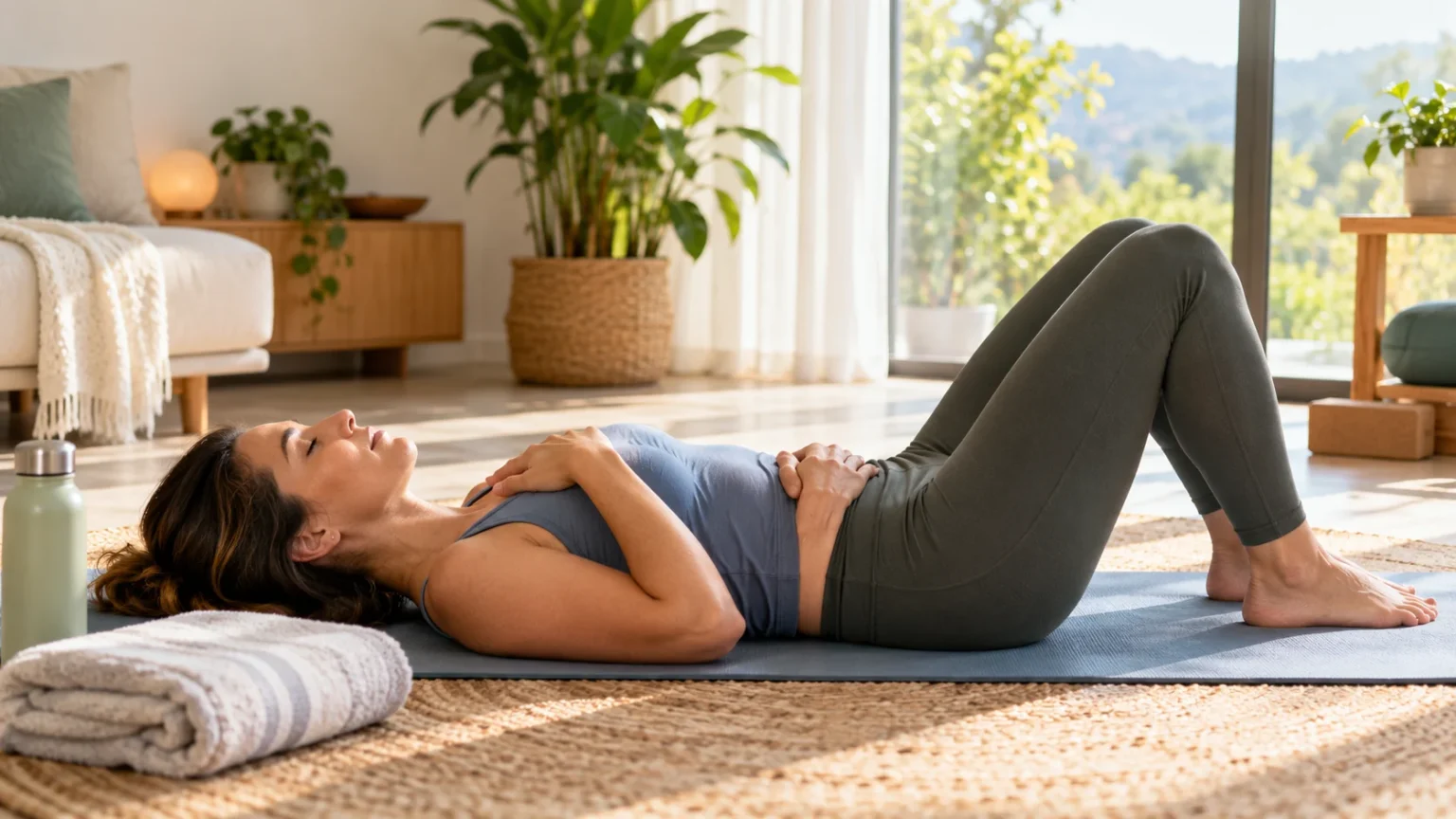
Wear clothing that allows your abdomen and chest to move freely during normal respiration. Tight clothing around the waist may make it difficult to notice gentle abdominal movement. If you prefer, place one hand on your upper chest and the other on your abdomen to observe how your body moves as you breathe.
Before beginning, allow your body to settle into a comfortable position and avoid forcing an unusually deep breath. The exercise should feel calm and manageable rather than physically demanding. If you already experience breathing difficulties, dizziness, or a medical condition affecting respiration, ask a healthcare professional whether this technique is appropriate for you.
How to Practice Diaphragmatic Breathing While Lying Down
Lying down is often a comfortable starting position for learning diaphragmatic breathing. Lie on your back with your knees slightly bent and your head supported by a pillow if needed. Place one hand on your upper chest and another over your abdomen, just below the rib cage, to notice your breathing movements.
Breathe in gently through your nose, allowing your abdomen to rise naturally beneath your hand. Your upper chest may move slightly, but try to keep your neck and shoulders relaxed. Avoid pulling in more air than feels comfortable. The movement should remain smooth rather than becoming an exaggerated or forceful inhalation.
Allow your breath to flow outward slowly and comfortably, noticing your abdomen return toward its resting position. You may exhale through relaxed lips or gently pursed lips if that feels natural. Repeat for a few comfortable breaths before returning to your usual breathing pattern. Stop if you develop dizziness, discomfort, or unusual breathlessness.
How to Practice Diaphragmatic Breathing While Sitting
Once you feel comfortable practicing while lying down, diaphragmatic breathing can also be performed in a seated position. Choose a supportive chair and place your feet comfortably on the floor. Keep your shoulders relaxed and your back supported without forcing an unusually rigid posture. This position allows breathing practice during ordinary daily routines.
Place one hand over your abdomen and another on your upper chest if you find touch helpful. Inhale gently through your nose and notice the natural outward movement of your abdominal area. Your shoulders should remain relaxed rather than lifting with every breath. Avoid trying to make the movement larger than your body comfortably allows.
Exhale slowly without straining or pushing the air out forcefully. Allow the abdomen to soften as your breathing returns to its natural rhythm. A short practice session during a quiet break may help build familiarity with the technique. Gradually increase your practice only when the exercise continues to feel comfortable.
Common Diaphragmatic Breathing Mistakes to Avoid
One common mistake is trying to take the deepest possible breath with every inhalation. Excessively large or frequent breaths can cause discomfort, lightheadedness, or symptoms associated with overbreathing. Diaphragmatic breathing should remain gentle, with attention placed on natural movement rather than the amount of air entering the lungs.
Another mistake is tightening the abdomen or deliberately pushing the stomach outward. Although the belly should move naturally, the technique does not require forceful muscular effort. Holding tension in the shoulders, neck, or jaw can also make the exercise less comfortable and interfere with the relaxed breathing pattern being practiced.
Some people become overly focused on counting breaths or following strict timing rules. While gentle rhythm exercises can be useful, there is no need to force a breathing schedule that causes discomfort. The goal is to encourage awareness and ease. Comfortable breathing is more important than completing a predetermined number of repetitions.
Safety Tips and When to Stop Breathing Exercises
Diaphragmatic breathing is generally a gentle activity, but it may not feel comfortable for everyone. People with respiratory disorders, recent surgery, significant pain, or other medical concerns should seek individualized guidance when appropriate. A healthcare professional can help determine whether breathing exercises should be modified or included in a treatment plan.
Stop practicing if you experience dizziness, tingling, increasing breathlessness, chest discomfort, or unusual fatigue. Return to your normal breathing pattern and sit or rest comfortably. If symptoms continue or repeatedly occur during practice, contact a healthcare professional. Severe chest pain or sudden, serious difficulty breathing requires emergency medical attention.
Avoid using breathing exercises to ignore persistent symptoms or delay medical treatment. Someone with asthma, COPD, or another respiratory condition should continue following their prescribed care plan. Gentle breathing techniques may complement professional treatment, but they cannot replace medications, respiratory assessments, or emergency care when these are needed.
How to Make Diaphragmatic Breathing Part of Your Daily Routine
Developing a comfortable breathing routine is easier when practice fits naturally into everyday activities. You might begin with a few gentle breaths while sitting quietly in the morning or during a relaxing evening break. Short sessions can help you learn the technique without creating pressure to practice for long periods.
Consistency is usually more valuable than trying to complete lengthy sessions immediately. Some people gradually work toward several minutes of comfortable breathing practice, while others prefer shorter periods. There is no universal duration suitable for everyone. Adjust the frequency and length of each session according to your comfort and any professional recommendations.
Diaphragmatic breathing can also be combined with other gentle wellness activities, such as relaxation exercises or quiet mindfulness practices. Focus on maintaining a natural rhythm rather than achieving perfect technique. Over time, increased breathing awareness may make it easier to recognize unnecessary tension and return to a comfortable breathing pattern.
Conclusion
A diaphragmatic breathing exercise is a simple technique that encourages awareness of the diaphragm and its role in normal respiration. By focusing on gentle abdominal movement and relaxed breathing, individuals may experience greater physical comfort and relaxation. The practice can be performed while lying down or sitting, making it accessible in different everyday settings.
Potential benefits include improved breathing awareness, reduced unnecessary muscular effort, and support for relaxation. Diaphragmatic breathing may also be included in respiratory rehabilitation or pelvic floor therapy when appropriate. However, benefits vary, and the technique should not replace medical treatment for breathing difficulties or other health conditions.
The safest approach is to begin gently, avoid forcing deep breaths, and pay attention to how your body responds. Stop if the exercise causes dizziness, discomfort, or worsening symptoms. With appropriate guidance when needed, diaphragmatic breathing can become a comfortable addition to a broader routine focused on well-being and healthy breathing habits.
Frequently Asked Questions (FAQs)
What is a diaphragmatic breathing exercise?
A diaphragmatic breathing exercise is a technique that encourages the natural movement of the diaphragm during breathing. It involves gentle inhalation, comfortable abdominal expansion, and relaxed exhalation to promote breathing awareness and relaxation.
What are the main benefits of diaphragmatic breathing?
Potential benefits include improved breathing awareness, reduced unnecessary muscular tension, and greater relaxation. The technique may also support respiratory rehabilitation for certain individuals when recommended as part of an appropriate healthcare plan.
How long should you practice diaphragmatic breathing?
Beginners can start with a few comfortable breaths and gradually increase their practice duration. Some people work toward sessions lasting several minutes, but the appropriate length depends on individual comfort and health needs.
Can diaphragmatic breathing help with stress and anxiety?
Gentle diaphragmatic breathing may support relaxation and help some people manage physical tension associated with stress. However, it is not a replacement for professional assessment or treatment when anxiety symptoms are persistent or disruptive.
Is diaphragmatic breathing safe for everyone?
Diaphragmatic breathing is generally gentle, but individuals with certain medical conditions may need professional guidance. Stop if you experience dizziness, chest discomfort, or worsening breathlessness, and seek medical attention when symptoms are concerning.