
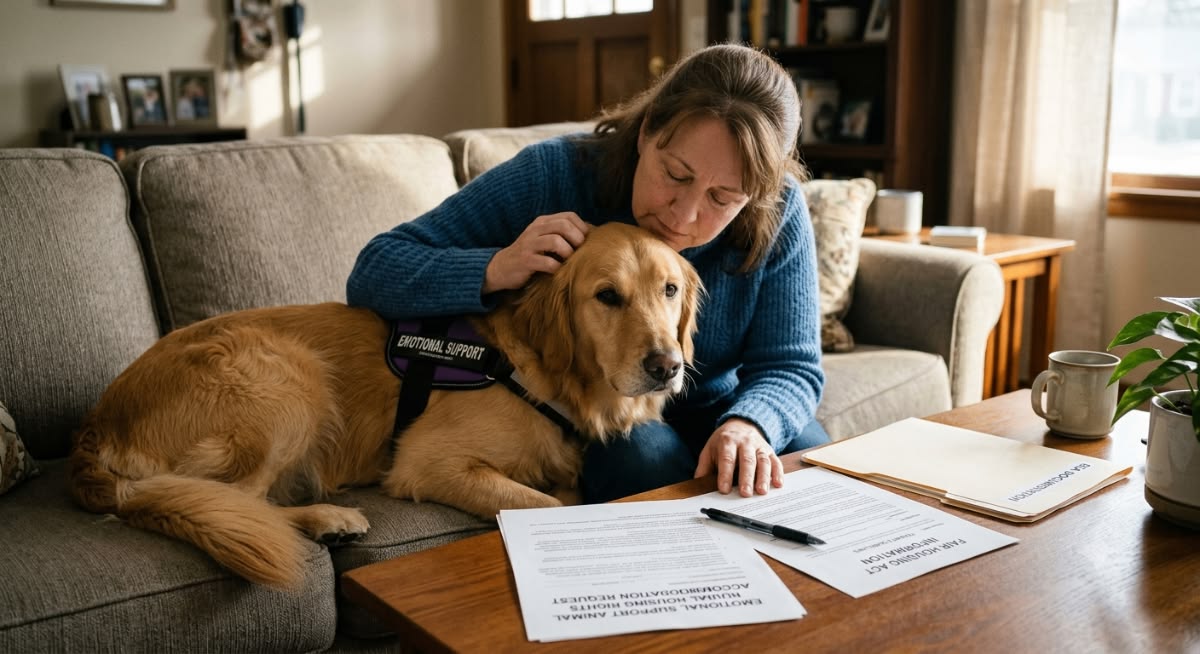

Many people assume that certification is required to give a pet legal emotional support animal (ESA) status. However, this isn’t the case under the eyes of the law. The Fair Housing Act (FHA), the main law that protects ESAs and gives them housing rights federally, makes it clear that certification is not mandatory.
The document that is actually needed is something known as an ESA letter.
While not a legal requirement, an emotional support animal certificate can still bring benefit and value to those with ESAs, but only if you work with the right provider and have a valid ESA letter first.
We understand how easy it is to get lost in all the misinformation. In this complete guide, we’ll discuss ESA letters, how they differ from certification, and the actual benefits of emotional support animal certification.
How Does an Emotional Support Animal Differ From a Pet
Both emotional support animals and pets can promote emotional well-being in their owners. However, what distinguishes them is the extent and the specific benefits they bring.
An emotional support animal supports those with mental health disabilities, and their presence and companionship provide significant relief from symptoms like low mood, panic attacks, racing thoughts, and loneliness. They are a vital part of their owner’s stability and overall well-being.
In short: They are relied upon. A pet can still make you happy and brighten your days, but you do not require their presence to live your day-to-day life. The data backs this too. A recent cross-sectional online survey, made in collaboration with The Assistance Dog Center, found the following results:
- 98.93% of ESA dog owners who completed the survey reported an increased zest for life
- 98.58% reported improved motivation in daily life
- 94.4% reported reduced generalized anxiety
Participants also noted a reduction in panic attacks, an improved capacity to work, and felt better equipped to manage compulsive thoughts and acts.
Since their presence is a necessity for their owner, the law grants ESAs reasonable accommodation in housing. Under the FHA, ESAs have the right to live with their owners even in housing that typically does not allow pets. They cannot be subjected to other pet-related policies, such as pet rent and breed bans.
How Do I Get an Emotional Support Animal Legally?
To get an emotional support animal, your eligibility and disability-related needs must be carefully assessed by a licensed mental health professional (LMHP).
To start the process, first verify if you are eligible. You must have a mental health condition that has been officially diagnosed. It should be recognized by the DSM-5 manual and must affect a major part of your everyday life. Common conditions that qualify for an ESA include depression, anxiety disorders, eating disorders (e.g., anorexia), and bipolar disorder.
The next stage is to book an ESA evaluation with a state-licensed LMHP. Your medical history, symptoms, and disability-specific needs will be carefully assessed during the evaluation.
After your evaluation, the LMHP will confirm whether they feel an ESA should be a part of your disability’s treatment plan. If approved, they will write and sign an ESA letter for you. This letter acts as legal proof that you have been prescribed an ESA. Crucially, it is the only documentation that can entitle you to the FHA’s housing legal protections.
What Is an Emotional Support Animal Certificate?
An ESA certificate is purely a supplementary piece of documentation that some third-party providers offer ESA owners. It has no legal bearing on its own, and it cannot be used as a replacement for an ESA letter.
While emotional support animal certification isn’t mandatory, it can bring benefits outside of the legal domain. According to the team at US Service Animals, many of their clients reportedly seek ESA certification because of the peace of mind it provides them.
Their clients have noted interactions with misinformed individuals who have questioned the validity of their ESA letter, but backed off when shown a certificate that further confirms the ESA’s status.
Most reputable ESA certificate providers also add your animal’s details to an online database, with the corresponding identification number added to the certificate. This gives you the means to quickly access your ESA’s details, even if you don’t have the actual letter on hand.
Do I Need an Emotional Support Animal Certificate?
No. You do not need an emotional support animal certificate to get an ESA. The only document that is essential is an ESA letter, and this must be prescribed following an ESA evaluation with a state-licensed mental health practitioner.
What a certificate does do, however, is provide additional perks that can make life with an ESA more manageable. This includes additional evidence of your ESA’s status, an easy way to quickly access their key information, and a way to resolve disputes with misinformed people. You can find out more information about certification in this ESA certification online guide.



