
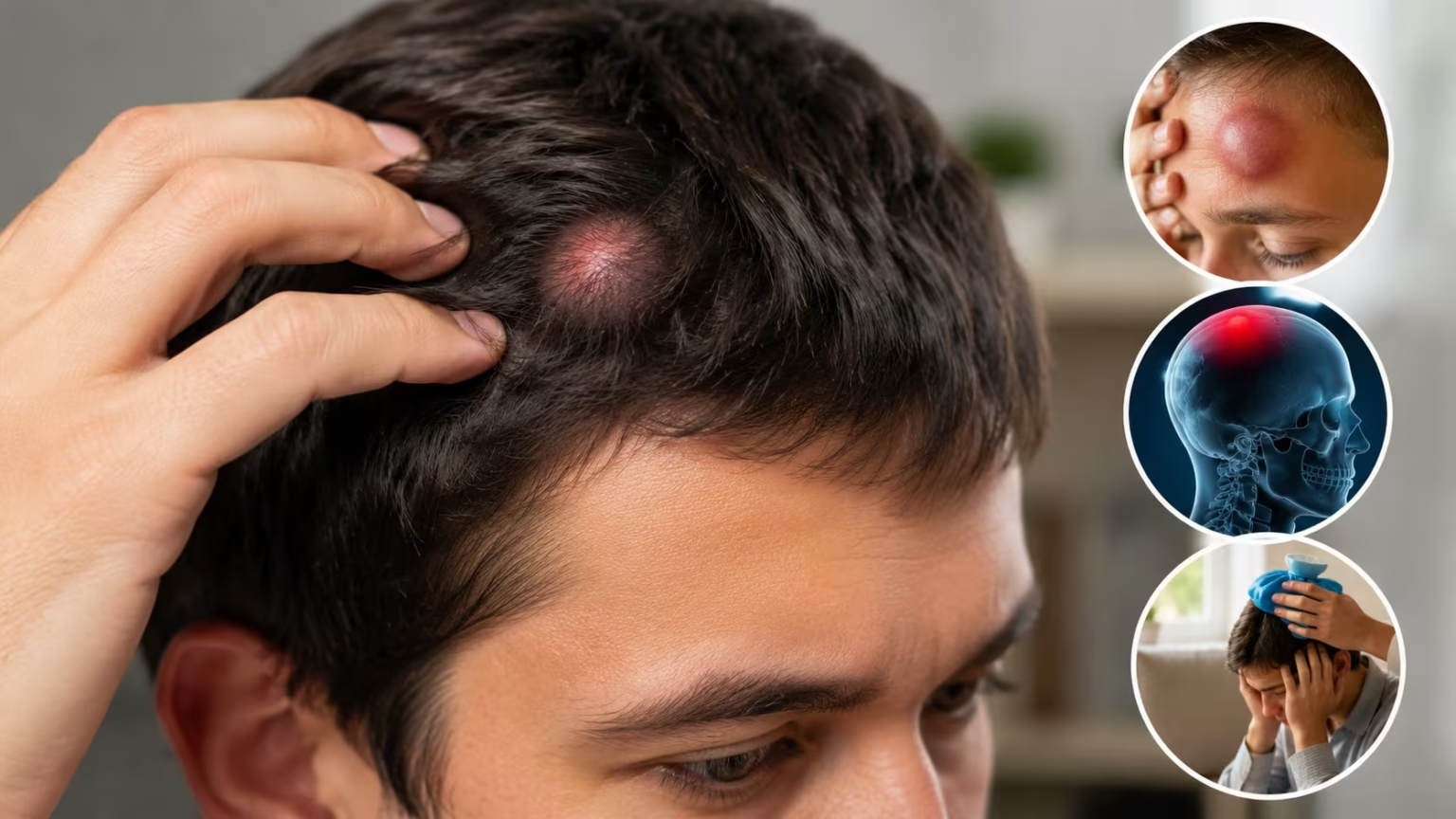

Bump on Head: Causes, Warning Signs and What to Do
Discovering a bump on your head can be worrying, whether it appeared after hitting a cabinet or seemed to develop without an injury. Many head bumps are minor scalp swellings, cysts or irritated hair follicles. However, a visible lump does not always reveal whether the brain has also been affected.
The scalp contains many blood vessels, so even a relatively minor impact can create noticeable swelling. This swollen area is commonly called a goose egg and may look dramatic despite being limited to the tissues outside the skull. At the same time, a small external mark can occasionally accompany a more serious head injury.
The symptoms occurring alongside the bump are therefore more important than its size alone. A worsening headache, repeated vomiting, confusion, unusual sleepiness, weakness or a seizure requires urgent medical attention. Concussion symptoms can also appear gradually, sometimes hours or days after the original injury.
This guide explains common causes of a lump on the head, head injury warning signs, safe first-aid steps and when to contact a healthcare professional. It is intended to support informed decisions rather than diagnose an injury. When symptoms seem serious or unusual, seeking medical care is the safest response.
What Does a Bump on the Head Mean?
A bump on the head is an area of swelling, thickening or raised tissue on the scalp or beneath the skin. It may develop suddenly after an impact or appear gradually because of a cyst, infection or benign growth. The texture, location and speed of development can offer useful clues about the cause.
A sudden painful bump after hitting the head is often a scalp hematoma. Small blood vessels beneath the skin break, allowing blood and fluid to collect in the surrounding tissue. This produces a raised, tender area that may later change colour like an ordinary bruise.
A bump that develops without trauma may come from the skin, a hair follicle or the fatty tissue beneath the scalp. Common possibilities include pilar cysts, epidermoid cysts, lipomas, folliculitis and boils. These lumps usually behave differently from swelling caused by a recent head injury.
A hard area may also be part of the natural shape of the skull, particularly when it is symmetrical and has never changed. Nevertheless, a new lump should not be assumed to be normal without examination. A growing, persistent, painful or unusual scalp bump should be assessed by a healthcare professional.
Common Causes of a Bump After Hitting Your Head
A scalp hematoma is the most common explanation for a goose egg after a bump or fall. Because the scalp has a rich blood supply, damaged vessels can quickly produce visible swelling. The lump may feel firm or soft and can remain tender for several days while the body absorbs the collected blood.
A scalp bruise can develop without forming a large raised lump. The area may initially look red and later become blue, purple, green or yellow as it heals. Bruising can appear less obvious on darker skin, so tenderness, swelling and changes in texture may be more noticeable than colour.
A cut or scalp laceration can also create swelling around the injury. Scalp wounds sometimes bleed heavily because of the number of blood vessels close to the surface. Direct pressure with a clean cloth may help control bleeding, but a deep, gaping or contaminated wound may require professional cleaning and closure.
More forceful injuries can cause a skull fracture, concussion or bleeding inside the skull. These conditions cannot be ruled out by examining the external bump. The mechanism of injury, neurological symptoms, medicines and overall health help determine whether emergency assessment or brain imaging may be necessary.
Can a Large Goose Egg Be Harmless?
A large goose egg can sometimes result from a relatively minor injury because loose scalp tissues allow fluid to accumulate. The size of the swelling does not automatically show the severity of damage inside the skull. A person may have a prominent bump while remaining alert, comfortable and neurologically normal.
The opposite can also occur. Someone with a serious brain injury may have little external swelling, particularly when the force affected deeper structures rather than the scalp. For this reason, judging a head injury only by the visible lump can create false reassurance or unnecessary panic.
Pay attention to how the person feels and behaves after the impact. Mild local tenderness may be expected, but confusion, memory loss, balance problems, vomiting or increasing drowsiness suggest more than an ordinary scalp bruise. Symptoms should be monitored carefully even when the initial injury looked minor.
Children can develop especially noticeable goose eggs because their scalp tissues swell easily. Although many of these injuries are minor, age, fall height, behaviour and symptoms must be considered. Babies and very young children should be assessed with a lower threshold because they cannot reliably describe how they feel.
Causes of a Head Bump Without an Injury
Pilar cysts are smooth lumps that commonly develop from hair follicles on the scalp. They are usually round, firm and slow-growing, and they may move slightly beneath the skin. A pilar cyst is often painless unless it becomes inflamed, infected or repeatedly irritated by brushing and hair care.
An epidermoid cyst is another closed sac beneath the skin that contains keratin and dead skin cells. It may have a small opening in the centre and can gradually increase in size. When infected, the cyst may become red, warm, swollen and painful or release thick material.
A lipoma is a benign growth made from fatty tissue. It usually feels soft or rubbery, grows slowly and moves slightly when pressed. Lipomas are generally painless, although their location or size can occasionally cause discomfort and make them noticeable when washing or styling the hair.
Other possibilities include insect bites, acne, folliculitis, boils, warts and benign skin growths. Less commonly, a changing or non-healing lump can represent skin cancer or another tumour. A clinician should examine any bump that enlarges, bleeds, crusts, changes colour or remains unexplained.
Scalp Folliculitis, Boils and Infected Bumps
Scalp folliculitis occurs when hair follicles become inflamed or infected. It often causes clusters of small red bumps or pus-filled spots around individual hairs. The area may itch, sting or feel tender, especially when touched, brushed or covered by tight headwear.
A boil develops when an infection extends deeper around a hair follicle and forms a painful pus-filled lump. It may begin as a firm red bump and become softer as fluid collects. Several connected boils can create a larger infected area that requires medical treatment.
Avoid squeezing, cutting or puncturing an infected scalp bump. Doing so can spread bacteria, worsen inflammation and create scarring. Gentle washing and a warm compress may help a small boil drain naturally, but severe pain, spreading redness or fever requires professional assessment.
Recurrent scalp infections may be associated with friction, sweating, shaving, skin conditions or bacterial carriage. A dermatologist can determine whether the problem is folliculitis, acne, fungal infection or another condition. Treatment may include medicated shampoo, topical therapy, oral medicine or drainage when appropriate.
What Is a Concussion?
A concussion is a mild traumatic brain injury caused by a bump, blow or jolt that affects how the brain works. It can happen even when the person does not lose consciousness. A direct impact to the head is common, but a forceful movement of the body can also cause the brain to move inside the skull.
Concussion symptoms may affect physical comfort, thinking, emotions and sleep. Common signs include headache, dizziness, nausea, blurred vision, sensitivity to light or noise and balance difficulties. Some people describe feeling foggy, slowed down or unusually tired after the injury.
Memory and concentration problems can also occur. The person may forget events immediately before or after the impact, struggle to answer questions or take longer to complete familiar tasks. Irritability, anxiety, sadness and emotional sensitivity may become noticeable during the following hours or days.
A concussion cannot always be identified through a routine brain scan because it primarily changes how the brain functions. A healthcare professional usually makes the diagnosis by reviewing symptoms, examining neurological function and considering how the injury happened. Imaging may be used when there is concern about bleeding or a fracture.
Head Injury Warning Signs That Need Emergency Care
Seek emergency help when a person loses consciousness and does not wake up, cannot remain awake or becomes increasingly difficult to rouse. A seizure, severe confusion or unusual agitation is also an emergency. These symptoms may indicate significant disruption of brain function or bleeding inside the skull.
A headache that becomes progressively worse, repeated vomiting or rapidly declining behaviour should not be monitored at home. New weakness, numbness, poor coordination, slurred speech or difficulty walking can indicate pressure or damage affecting the brain. One pupil appearing larger than the other is another serious warning sign.
Clear fluid or blood coming from the ears or nose after an injury requires urgent assessment. Bruising behind the ears or around both eyes without a direct facial impact may suggest a skull fracture. A visible dent, deep wound or object penetrating the head must also be treated as an emergency.
Call emergency services after a high-impact collision, a substantial fall or any injury causing severe neck pain and neurological symptoms. Keep the person still unless they are in immediate danger. Avoid moving the head or neck unnecessarily because a spinal injury may also be present.
When Blood Thinners Make a Head Bump More Concerning
Blood-thinning medicines can increase the risk of bleeding inside the skull after a head injury. These include prescribed anticoagulants and some antiplatelet medicines. A person taking them may need urgent medical advice even when the impact seemed minor and no immediate symptoms are present.
Internal bleeding can develop slowly, particularly in older adults. Headache, confusion, unusual sleepiness, balance problems or personality changes may appear hours or days after the injury. Family members should not dismiss these changes as ordinary ageing or tiredness when a recent fall has occurred.
Bleeding disorders and low platelet levels can create similar concerns. Tell the healthcare team about all medicines, diagnosed blood conditions and previous brain injuries. Bring the medication list or containers when possible because the specific drug and dose can influence medical decisions.
Never stop a prescribed blood thinner independently after hitting your head. Suddenly discontinuing treatment may create a risk of stroke or another serious complication. Contact an emergency service, doctor or appropriate medical helpline for individualized instructions based on the injury and medication.
What to Do Immediately After Bumping Your Head
First, stop the activity and move to a safe place. Check whether the injured person is conscious, breathing normally and able to answer simple questions. Ask what happened, where they are and whether they have headache, nausea, dizziness, neck pain or visual changes.
Apply a cold pack wrapped in a thin towel to the swollen area for approximately 10 to 20 minutes. Do not place ice directly on the skin because this can cause tissue damage. The cold pack can be reapplied periodically during the first day if it remains comfortable.
If the scalp is bleeding, apply steady pressure with clean gauze or a cloth. Do not press directly onto a visible skull deformity or embedded object. Seek medical care when the wound is deep, contaminated, will not stop bleeding or has edges that remain widely separated.
Arrange for a responsible adult to remain with the injured person during the early monitoring period. Watch for worsening headache, vomiting, confusion or changes in movement and speech. Emergency symptoms should prompt immediate action rather than waiting to see whether the swelling improves.
What Not to Do After a Head Injury
Do not return immediately to sport, heavy exercise or an activity that could cause another blow. A second head injury before the brain has recovered can be dangerous. Athletes with suspected concussion should leave play immediately and should not return on the same day.
Avoid alcohol and recreational drugs while symptoms remain. These substances can worsen balance and judgement, interfere with recovery and make neurological changes harder to recognize. Sedating medicines should only be taken when a healthcare professional has confirmed they are appropriate.
Do not massage, repeatedly press or attempt to drain a goose egg. The swelling represents injured tissue and damaged blood vessels, not fluid that should be squeezed out. Manipulating the area can increase pain and may restart bleeding beneath the skin.
Avoid driving, operating machinery or making important decisions when dizziness, slowed thinking or vision problems are present. Screen time, bright lights and loud noise may also worsen symptoms for some people. Reduce activities that clearly increase symptoms without remaining completely inactive for many days.
Can You Sleep After Bumping Your Head?
It is generally acceptable to sleep after a minor head injury when the person is alert, behaving normally and has no emergency warning signs. Sleep itself does not cause the injury to worsen. Rest can be helpful, especially when the person has been medically assessed and given home-care instructions.
The concern is not sleeping but becoming abnormally difficult to wake. A responsible adult should monitor the person and follow any instructions provided by a clinician. Seek urgent help if the person cannot be awakened normally, becomes confused on waking or develops breathing changes.
There is usually no need to force someone to stay awake throughout the night after every minor bump. Repeatedly preventing sleep can increase fatigue and make concussion symptoms feel worse. However, a clinician may provide specific waking or monitoring instructions based on the injury and individual risks.
Do not rely on sleep as a way to avoid evaluating concerning symptoms. A person with worsening headache, repeated vomiting, seizure, weakness or altered consciousness needs emergency care before being allowed to sleep at home. When uncertain, contact an urgent medical service for advice.
Pain Relief and Home Care for a Minor Head Bump
Paracetamol, also known as acetaminophen, is commonly used for a mild headache after a minor head injury. Follow the package instructions and avoid exceeding the recommended amount. Check combination cold or pain medicines because they may contain the same ingredient.
Ask a healthcare professional before using aspirin, ibuprofen or other anti-inflammatory medicines when there is concern about bleeding. Advice can vary according to the person’s age, medicines and medical history. Children should only receive pain medicine that is appropriate for their age and weight.
Continue using a wrapped cold pack for short periods during the first 24 to 48 hours if swelling remains uncomfortable. Keep the head slightly elevated when resting, provided this does not worsen neck discomfort. Avoid tight hats or anything that places pressure on the injured area.
Eat light meals, drink enough water and allow time for recovery. Mild symptoms should gradually improve rather than become more intense. Contact a clinician when pain remains significant, the lump continues growing or new symptoms appear after the person initially seemed well.
Bump on a Baby’s or Child’s Head
Falls and minor collisions are common as children learn to sit, crawl, walk and play. Many result in a small scalp bump without serious injury. Even so, children can be difficult to assess because they may not recognize or clearly describe headache, dizziness or confusion.
Observe whether the child is interacting, walking, talking and feeding normally for their age. Changes such as persistent crying, repeated vomiting, unusual irritability, poor balance or refusal to eat can indicate a problem. A child who appears unusually floppy or difficult to wake requires emergency help.
In babies, concerning signs include a bulging soft spot, poor feeding, repeated vomiting, seizures or a high-pitched cry. A large scalp swelling in a young infant also deserves prompt medical advice. The threshold for evaluation should be lower because infants cannot communicate their symptoms.
Any child with suspected concussion should stop sports and active play that could cause another impact. They should not return to competition on the same day, even if they begin feeling better. A healthcare professional can guide a gradual return to school, physical activity and sport.
When Should You See a Doctor for a Scalp Lump?
Arrange a medical appointment when a non-traumatic lump remains for several weeks, continues growing or repeatedly becomes inflamed. A cyst or lipoma may be harmless, but an examination is needed to confirm what it is. Do not rely solely on photographs or comparisons with online images.
A hard, fixed or irregular lump should be evaluated, particularly when it changes rapidly. Bleeding, crusting, colour changes, an open sore or hair loss over the bump are additional reasons to seek assessment. These signs do not automatically mean cancer, but they should not be ignored.
See a clinician when the bump becomes hot, red, increasingly painful or starts draining pus. Fever, spreading redness or swollen glands may indicate infection. Treatment could involve antibiotics, drainage or testing, depending on the underlying cause.
Medical advice is also appropriate when a scalp lump causes persistent headache, pressure, numbness or difficulty wearing protective equipment. Removal is not necessary for every benign lump, but it may be considered when the bump is painful, recurrently infected, growing or interfering with daily life.
How Doctors Evaluate a Bump on the Head
The healthcare professional will ask when the bump appeared, whether an injury occurred and how it has changed. For trauma, they may ask about loss of consciousness, memory gaps, vomiting, medicines and the force of impact. The answers help determine the likelihood of concussion, fracture or internal bleeding.
A physical examination may assess the lump’s size, texture, mobility, warmth and tenderness. The clinician may also check the scalp for cuts or signs of infection. When a head injury is involved, the examination can include pupils, strength, balance, speech, memory and coordination.
A CT scan may be ordered when risk factors suggest bleeding, swelling or a skull fracture. It is not routinely required for every concussion or minor bump. The decision is based on clinical findings, age, symptoms, medicines and the way the injury happened.
For a persistent skin lump, ultrasound, dermoscopy or biopsy may occasionally be needed. A dermatologist may remove a cyst or growth and send the tissue for laboratory analysis. These tests help distinguish common benign lumps from less frequent conditions requiring different treatment.
How Long Does a Bump on the Head Last?
A minor goose egg often starts improving within a few days, although tenderness and discolouration may remain longer. Larger scalp hematomas can take several weeks to flatten completely. The swelling should gradually decrease rather than expand or become increasingly painful.
Bruising may change colour as the body breaks down and absorbs trapped blood. This colour progression can be part of normal healing. Persistent redness, warmth, drainage or worsening tenderness is less typical and may indicate infection or another complication.
Concussion symptoms often improve within days or a few weeks, but recovery varies. Headache, tiredness, concentration problems and sensitivity to light may continue after the external bump has disappeared. A healthcare professional should review symptoms that persist, worsen or interfere with daily life.
Cysts and lipomas usually do not disappear like an injury-related swelling. They may remain stable for years or slowly enlarge. A clinician can confirm whether observation is appropriate or whether treatment should be considered because of pain, infection, growth or uncertainty about the diagnosis.
Returning to Work, School and Exercise
After a possible concussion, a short period of relative rest may be helpful. This means reducing demanding physical and mental activities without remaining in a dark room or bed for an extended period. Light daily activity can usually resume gradually when it does not significantly worsen symptoms.
Adults may need temporary changes such as shorter workdays, additional breaks or reduced screen exposure. Children can often return to school with accommodations, including rest periods, less homework and extra time for assignments. Prolonged complete absence is not always necessary and may delay normal recovery.
Returning to sport requires more caution than returning to ordinary activities. An athlete should first manage school, work and daily tasks without significant symptoms. A gradual, supervised return-to-play process should then increase physical demands step by step.
Stop and return to the previous stage if headache, dizziness, nausea or concentration problems return. Contact sports should not resume until an appropriate healthcare professional has cleared the athlete. Helmets reduce some injuries but cannot prevent every concussion.
How to Prevent Future Head Injuries
Wear an appropriate, properly fitted helmet for cycling, motorcycling, skating and activities where head protection is recommended. Replace a damaged helmet according to the manufacturer’s instructions. A helmet reduces injury risk but does not make unsafe behaviour harmless.
Prevent falls by improving lighting, securing loose rugs and keeping stairs free from clutter. Install handrails and use non-slip surfaces where needed. Older adults should discuss balance problems, vision and medicines that cause dizziness with a healthcare professional.
Use age-appropriate car seats, seat belts and safe play equipment for children. Secure heavy furniture and televisions that could tip over. Window guards and stair gates can reduce falls in homes with babies and toddlers.
In sport, follow rules designed to reduce dangerous contact and report concussion symptoms honestly. Continuing to play while symptomatic increases the possibility of another injury. A culture that prioritizes recovery over immediate performance protects athletes at every level.
Final Thoughts on a Bump on the Head
A bump on the head may be a simple scalp bruise, a goose egg from an impact or a non-traumatic lump such as a cyst or lipoma. The external appearance alone cannot determine whether the brain has been injured. Symptoms and changes in behaviour deserve careful attention.
Emergency warning signs include worsening headache, repeated vomiting, seizure, confusion, weakness, unequal pupils and increasing difficulty staying awake. Clear fluid from the ears or nose, severe bleeding and signs of a skull fracture also require urgent medical treatment.
For a minor injury, a wrapped cold pack, rest and careful monitoring may be sufficient. Avoid alcohol, risky activity and attempts to squeeze or drain the swelling. Concussion symptoms can appear later, so continue watching for changes after the initial bump.
A persistent, growing or unexplained scalp lump should be examined even when it does not hurt. Most lumps are benign, but proper identification provides reassurance and prevents delayed treatment. When uncertain about a head injury, seeking professional advice is safer than relying on the bump’s size.
Frequently Asked Questions
When should I worry about a bump on my head?
Seek emergency care if the bump follows an injury and you develop worsening headache, repeated vomiting, confusion, seizure, weakness, unequal pupils or difficulty waking. A growing or persistent lump without injury should also be examined.
How long should a goose egg last?
A minor goose egg usually begins shrinking within several days, but larger swellings may take a few weeks to disappear. Seek medical advice if it continues enlarging, becomes hot or painful, or does not gradually improve.
Can I sleep after hitting my head?
You can usually sleep after a minor injury when you are alert and have no warning signs. Someone should monitor you, and emergency care is needed if you become unusually difficult to wake or develop worsening symptoms.
Should I put ice on a bump on my head?
Yes, apply a cold pack wrapped in a towel for around 10 to 20 minutes at a time. Never place ice directly on the scalp, and stop if the cold causes significant pain or skin changes.
Why do I have a hard bump on my head without an injury?
Possible causes include a pilar cyst, epidermoid cyst, lipoma, skin growth or natural skull shape. A clinician should examine a new lump that grows, becomes painful, changes appearance or remains unexplained.



