
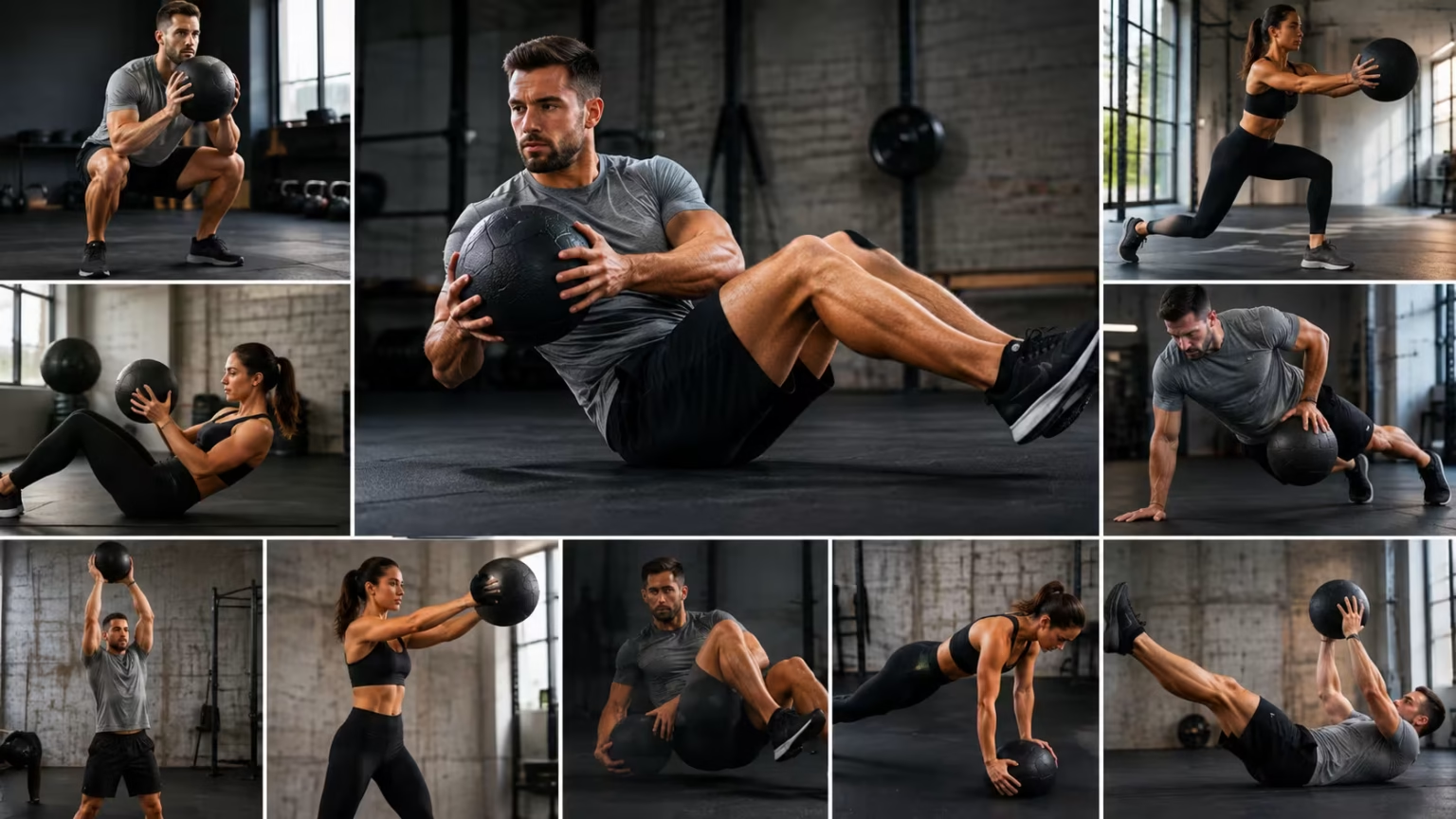

Medicine Ball Exercises: 12 Moves for Full-Body Strength
Medicine ball exercises offer a practical way to build strength, power, coordination and core stability without using complicated gym equipment. A single weighted ball can support lower-body movements, upper-body training, rotational exercises and fast-paced conditioning, making it useful for both home and gym workouts.
Unlike many traditional weights, a medicine ball can be lifted, carried, passed and, when designed for impact, thrown or slammed. This versatility allows you to train the body through several movement patterns instead of isolating one muscle at a time. The result is a functional workout that can translate well to sports and everyday activities.
The best medicine ball workout is not necessarily the one that uses the heaviest weight. Good form, controlled movement and an appropriate exercise selection matter more than lifting a ball you cannot manage safely. Beginners can gain significant benefits by starting light and gradually increasing resistance.
The following 12 medicine ball exercises target the legs, glutes, chest, shoulders, back, arms and abdominal muscles. Each move includes clear form guidance, common mistakes and practical ways to adjust the difficulty so you can build a balanced full-body strength routine.
What Are Medicine Ball Exercises?
Medicine ball exercises are movements performed with a weighted ball that may be soft, firm, rubber-coated or designed to bounce. Medicine balls are available in different sizes and weights, allowing people to use them for resistance training, explosive power drills, rehabilitation exercises and athletic conditioning.
Some exercises involve slow and controlled strength movements, such as squats, lunges and overhead presses. Others use faster actions, including slams and throws, to train explosive strength. The right style depends on your goals, experience level and the type of medicine ball you own.
A medicine ball can also make familiar bodyweight exercises more challenging. Holding the ball during a squat increases resistance, while reaching it during a Russian twist places more demand on the core. These variations allow you to progress without needing several machines or heavy dumbbells.
Not every medicine ball is suitable for throwing or slamming. Some balls bounce strongly, while others are made to absorb impact. Always check the product instructions and use a sturdy wall or floor that can safely withstand repeated contact before performing explosive medicine ball drills.
Benefits of a Full-Body Medicine Ball Workout
Medicine ball training can strengthen several muscle groups in one movement. Exercises such as the squat-to-press engage the legs, glutes, core, shoulders and arms at the same time. Compound movements can make a workout efficient while improving coordination between the upper and lower body.
Rotational medicine ball exercises train the core differently from standard crunches. Instead of only bending the torso forward, they challenge the abdominal muscles to rotate, transfer force and resist unwanted movement. This can support better control during lifting, walking, running and sports.
Explosive drills such as medicine ball slams and chest passes may help develop power when performed with proper technique. Power is the ability to produce force quickly, which matters when jumping, sprinting, changing direction or reacting to a sudden movement in daily life.
Medicine ball workouts can also be adapted for different fitness levels. A beginner may perform slow squats while holding a light ball, whereas an experienced athlete may use rotational throws or faster circuits. The equipment remains simple even as the exercises become more demanding.
How to Choose the Right Medicine Ball Weight
Choose a medicine ball that allows you to complete every repetition with stable posture and controlled movement. The ball should feel challenging near the end of a set, but it should not pull your body out of position or force you to shorten the range of motion.
Many beginners do well with a relatively light ball while learning technique. Upper-body throws and fast power exercises generally require less weight than controlled squats or carries. A lighter ball allows you to move quickly without placing unnecessary stress on the shoulders, back or wrists.
The best weight also depends on the exercise. You may comfortably hold a heavier ball during a squat but need a lighter option for overhead movements or Russian twists. There is no requirement to use the same resistance for every exercise in the workout.
Reduce the weight when your back begins to round, your knees collapse inward or you can no longer control the ball. Progress by adding a few repetitions, slowing the lowering phase or improving your range of motion before automatically moving to a heavier medicine ball.
Warm Up Before Medicine Ball Training
Begin with five to ten minutes of light movement to gradually raise your heart rate. Brisk walking, marching, cycling or gentle jogging can increase circulation and prepare the muscles for more demanding work. The warm-up should leave you feeling ready rather than tired.
Continue with dynamic movements that resemble the exercises in your workout. Bodyweight squats, reverse lunges, arm circles, hip hinges and gentle torso rotations can prepare the joints and reinforce the movement patterns you will soon perform with resistance.
Practice the first few repetitions of each new medicine ball exercise with a lighter load or without weight. This rehearsal allows you to check your balance, posture and surroundings before increasing the intensity. It is especially useful before throws, slams and overhead movements.
Make sure the workout area is clear of people, pets, furniture and breakable objects. Wear supportive footwear and maintain enough distance from the wall when performing rebounds. Stop warming up if you experience sharp pain, dizziness or unusual shortness of breath.
1. Medicine Ball Goblet Squat
Stand with your feet approximately shoulder-width apart and hold the medicine ball close to your chest. Keep your elbows near your sides, lift your chest and brace your abdominal muscles. Your toes can point slightly outward if that position feels more natural for your hips.
Push your hips backward and bend your knees as though you are sitting into a chair. Lower as far as you can while keeping your heels down and your spine controlled. Press through the middle of your feet to stand and squeeze your glutes at the top.
The medicine ball goblet squat strengthens the quadriceps, hamstrings, glutes and core. Holding the weight in front of your body also encourages an upright torso, which may make the squat easier to learn than a variation that places resistance behind the shoulders.
Complete 8 to 15 repetitions for two or three sets. Avoid allowing your knees to collapse inward or your heels to lift. Beginners can squat to a chair, while more experienced exercisers can slow the lowering phase or use a heavier ball.
2. Medicine Ball Squat to Press
Hold the ball at chest height with your feet slightly wider than hip-width apart. Set your shoulders down, brace your core and keep your gaze forward. Begin the exercise by lowering into a controlled squat without allowing the ball to drift away from your body.
Drive through your feet to stand while pressing the medicine ball overhead. Finish with your arms extended but not forcefully locked, keeping the ribs from flaring forward. Lower the ball back to your chest before beginning the next squat.
This full-body medicine ball exercise combines lower-body strength with an overhead press. It works the legs and glutes during the squat, then challenges the shoulders, triceps and core as the ball moves above the head.
Perform 8 to 12 controlled repetitions. Choose a weight that does not make you lean backward during the press. People with shoulder discomfort can press the ball forward at chest height or perform the squat without the overhead portion.
3. Medicine Ball Reverse Lunge With Rotation
Stand tall while holding the medicine ball in front of your chest. Step your right foot backward and lower into a reverse lunge. Keep most of your weight through the front foot and maintain a stable position through your hips and knees.
As you lower, rotate your torso and the ball toward the side of your front leg. Return your chest to the centre, push through the front foot and step back to the starting position. Repeat the movement on the opposite side.
The reverse lunge strengthens the glutes, quadriceps and hamstrings, while the rotation engages the obliques and deeper core muscles. Combining these patterns also challenges balance and coordination, making the movement useful for functional fitness and athletic training.
Complete 6 to 10 repetitions on each side. Rotate through your upper back rather than forcing the lower back to twist. Reduce the range of the lunge or remove the rotation if you cannot maintain stable alignment.
4. Medicine Ball Romanian Deadlift
Stand with your feet hip-width apart and hold the medicine ball in front of your thighs. Soften your knees, brace your core and draw your shoulders gently backward. Keep the ball close to your legs throughout the exercise.
Push your hips behind you while lowering the ball toward your shins. Maintain a long, neutral spine and stop when you feel tension through the backs of your thighs. Drive your hips forward to stand without leaning backward at the top.
The medicine ball Romanian deadlift targets the hamstrings, glutes and muscles that support the spine. It also teaches the hip-hinge pattern used when lifting objects safely from the floor and performing many traditional strength exercises.
Aim for 10 to 15 repetitions with a slow lowering phase. Avoid turning the movement into a squat by bending the knees excessively. Practice the hip hinge without weight if your back rounds or you struggle to feel the hamstrings working.
5. Medicine Ball Glute Bridge
Lie on your back with your knees bent and feet flat on the floor. Place the medicine ball securely over your hips and hold it with both hands. Keep your feet about hip-width apart and bring your heels comfortably close to your body.
Brace your abdomen and press through your heels to lift your hips. Raise them until your shoulders, hips and knees form a controlled line. Squeeze your glutes briefly, then lower your hips toward the floor without dropping them suddenly.
The weighted glute bridge strengthens the glutes, hamstrings and core while placing less load on the knees than many standing exercises. Strong glutes help support hip stability, posture and efficient movement during walking, running and lifting.
Perform 12 to 20 repetitions for two or three sets. Keep the ribs controlled instead of overextending the lower back. Use a padded medicine ball or place a folded towel beneath it if the pressure feels uncomfortable.
6. Medicine Ball Push-Up
Place the medicine ball on a stable, non-slippery surface. Begin in a high plank with one hand on the ball and the other on the floor. Position your feet slightly wider than usual to create a more stable base.
Bend your elbows and lower your chest while keeping your body in a straight line from head to heels. Press back up without allowing the hips to twist. Complete the planned repetitions before changing the ball to the other hand.
This push-up variation works the chest, shoulders and triceps while increasing the demand on the core. The uneven hand position requires the trunk to resist rotation, making it more challenging than a standard push-up performed on the floor.
Begin with 5 to 10 repetitions per side. Place your knees on the floor to reduce the difficulty, or elevate your hands on a sturdy bench. Avoid this variation if the ball moves unpredictably or causes wrist or shoulder pain.
7. Medicine Ball Chest Pass
Stand facing a sturdy wall with the medicine ball held at chest height. Keep your feet in a balanced stance, bend your knees slightly and brace your core. Leave enough distance for the ball to return without striking your face or body.
Push the ball forcefully toward the wall by extending your arms from the chest. Catch it with soft elbows, absorb the return and reset your posture before the next throw. The movement should be powerful but controlled.
Medicine ball chest passes train explosive upper-body strength through the chest, shoulders and triceps. They can also increase reaction speed and hand-eye coordination when the ball rebounds consistently from the wall.
Complete 6 to 12 throws for three sets, resting enough to maintain power. Do not use a slam ball that is not designed to bounce. A training partner can receive the pass when a suitable wall is unavailable.
8. Medicine Ball Overhead Slam
Stand with your feet shoulder-width apart and hold a slam-safe medicine ball with both hands. Raise the ball overhead while keeping your ribs controlled and knees soft. Avoid arching your lower back as your arms move upward.
Drive the ball toward the floor by engaging your core, bending your hips and pulling your arms downward. Allow your knees to bend naturally as you follow through. Pick up the ball with a squat or hip hinge rather than rounding your back.
Medicine ball slams develop full-body power and can quickly raise the heart rate. The movement involves the shoulders, back, abdominal muscles, hips and legs, making it useful for strength and conditioning workouts.
Perform 6 to 15 repetitions with strong technique. Choose a ball specifically designed for slamming and confirm that the floor can tolerate impact. Do not catch a ball that bounces quickly toward your face.
9. Medicine Ball Russian Twist
Sit on the floor with your knees bent and hold the ball close to your chest. Lean backward slightly while keeping your spine long and chest lifted. Keep your feet on the floor until you can maintain balance without rounding your back.
Rotate your torso and move the ball toward one hip, then return through the centre and rotate to the opposite side. Control the motion rather than swinging the ball with your arms. Your eyes and chest should follow the direction of the rotation.
Russian twists target the obliques and challenge the core to control rotational movement. They can improve trunk endurance, although they should be performed carefully because fast or excessive twisting may irritate the lower back.
Complete 8 to 15 repetitions per side. Use a lighter ball or sit more upright if your back feels strained. Lifting the feet increases difficulty but should only be attempted when you can maintain stable posture.
10. Medicine Ball Dead Bug
Lie on your back with your knees lifted above your hips and your arms extended toward the ceiling. Hold the medicine ball between your hands, or gently press it between your hands and knees for an isometric variation.
Slowly lower one heel toward the floor while keeping your lower back comfortably supported. Return the leg to the starting position and repeat on the opposite side. Move only as far as you can without losing abdominal control.
The dead bug strengthens the deep core muscles that stabilise the spine and pelvis. It teaches you to move the arms and legs while resisting excessive arching through the lower back, making it a valuable core stability exercise.
Perform 6 to 12 slow repetitions per side. Reduce the range of motion if your back lifts away from the floor. More advanced exercisers can extend the opposite arm and leg while holding a light ball.
11. Medicine Ball Wood Chop
Stand with your feet wider than hip-width and hold the ball near one shoulder. Keep your knees soft and your core engaged. Allow your hips and upper back to rotate together rather than twisting only through the lower spine.
Move the ball diagonally across your body toward the opposite hip while bending your knees slightly. Reverse the movement with control and return the ball to the starting shoulder. Complete the set before changing directions.
Medicine ball wood chops train the obliques, shoulders, hips and legs through a diagonal movement pattern. They can improve rotational strength and coordination for activities such as lifting, throwing, swinging and changing direction.
Complete 8 to 12 repetitions on each side. Begin with a light ball and moderate speed. Keep the movement controlled if you have a history of lower-back discomfort, or replace the rotation with an anti-rotation core exercise.
12. Medicine Ball Bear-Hug Carry
Hold the medicine ball firmly against your chest using both arms. Stand tall with your shoulders relaxed, ribs controlled and abdominal muscles gently braced. Choose a weight that feels challenging without forcing you to lean backward.
Walk forward using slow, even steps while maintaining an upright posture. Keep the ball close to your body and breathe normally instead of holding your breath. Turn carefully and continue until you reach the planned distance or time.
The bear-hug carry strengthens the arms, upper back, core, hips and legs. It also develops grip endurance and teaches the body to remain stable while moving under load, which can support everyday carrying tasks.
Walk for 20 to 60 seconds and repeat two or three times. Use a shorter distance if your posture begins to change. Advanced exercisers can increase the load or perform controlled marching steps without rushing.
How to Build a Medicine Ball Workout
Beginners can choose six exercises that cover the main movement patterns. A balanced session might include goblet squats, Romanian deadlifts, chest passes, dead bugs, bear-hug carries and glute bridges. This combination trains the lower body, upper body and core.
Perform two sets of each movement with 8 to 12 repetitions, resting for 45 to 90 seconds as needed. For timed exercises such as carries, begin with 20 to 30 seconds. Focus on learning the correct technique before trying to complete the workout quickly.
Intermediate exercisers can perform eight to ten movements in a circuit. Complete one exercise after another with short rest periods, then rest for two minutes at the end of the round. Two or three rounds can provide an effective full-body conditioning session.
Power exercises should usually come near the beginning of the workout, after the warm-up, when you are fresh enough to move quickly. Slams and throws become less effective when fatigue prevents you from producing force or maintaining safe control.
Sample Full-Body Medicine Ball Routine
Begin with medicine ball slams for three sets of eight repetitions, followed by chest passes for three sets of ten. Rest for approximately one minute between sets so each repetition remains powerful rather than slow and poorly controlled.
Continue with goblet squats, Romanian deadlifts and reverse lunges. Perform three sets of 10 to 12 repetitions for the squats and deadlifts, then complete eight lunges per side. Use a steady tempo and keep your posture consistent.
Move to medicine ball push-ups and wood chops for upper-body and rotational strength. Perform six to ten push-ups per side and ten wood chops in each direction. Reduce the resistance whenever you cannot maintain a stable spine.
Finish with dead bugs and bear-hug carries. Complete ten dead bugs per side, followed by a 30- to 45-second carry. Repeat this finishing combination twice while breathing steadily and avoiding rushed movements.
Common Medicine Ball Training Mistakes
Using a ball that is too heavy is one of the most common mistakes. Excessive resistance can make a person round the back, lose balance or move too slowly during power drills. A lighter weight often produces better technique and more effective training.
Another mistake is relying on momentum instead of muscular control. Swinging through Russian twists, dropping rapidly into squats or jerking the ball overhead can place unnecessary stress on the joints. Controlled movement should come before speed.
Poor surroundings can also make medicine ball training unsafe. Throwing near windows, exercising on a slippery surface or using a strongly bouncing ball for slams increases the risk of injury. Check your equipment and training space before starting.
Finally, some people repeat only abdominal exercises because they associate medicine balls with core workouts. A more effective routine includes squatting, hinging, pushing, carrying and rotational patterns so the entire body receives balanced training.
How Often Should You Do Medicine Ball Exercises?
Most people can include medicine ball strength training two or three times per week. Leave enough recovery time between challenging full-body sessions, particularly when the workout includes explosive throws, high repetitions or unfamiliar movements.
You do not need to perform all 12 exercises every time. Selecting six to eight movements can create a complete session without unnecessary fatigue. Rotate exercises across the week to add variety and train different movement patterns.
Medicine ball drills can also complement other training. You might use slams before a strength workout, add Russian twists after lifting or perform a short medicine ball circuit on a conditioning day. The total workload should match your recovery ability.
Muscle soreness can occur when starting a new routine, but sharp pain is not a normal goal. Reduce the volume if soreness affects your movement for several days, and seek professional advice for persistent joint, back or shoulder pain.
Who Should Be Careful With Medicine Ball Workouts?
People recovering from surgery, injury or a long period of inactivity should speak with a qualified healthcare or exercise professional before beginning. The right exercise selection will depend on the affected area, current strength and stage of recovery.
Overhead exercises and throwing drills may not be appropriate for everyone with shoulder or neck problems. Rotational movements may also need modification for people with certain back conditions. Painful movements should be adjusted rather than forced.
Pregnant people may need to change exercises as pregnancy progresses, especially movements performed flat on the back or drills that increase the risk of falling. Individual medical advice is important because exercise tolerance and pregnancy-related considerations vary.
Stop exercising and seek appropriate care if you experience chest pain, faintness, severe breathlessness or sudden weakness. Normal muscle effort should feel different from sharp, spreading or worsening pain that affects your ability to move safely.
Final Thoughts on Medicine Ball Exercises
Medicine ball exercises can provide an effective combination of strength, power, balance and core training. With one piece of equipment, you can perform controlled resistance movements, explosive drills and conditioning exercises that engage the entire body.
The 12 moves in this guide cover the major patterns needed for a balanced workout. Squats and lunges train the legs, deadlifts and bridges target the posterior chain, while passes, push-ups and slams strengthen the upper body.
Russian twists, dead bugs and wood chops challenge the core in different ways. Carries connect upper-body strength with posture and movement, helping the body learn to remain stable while managing an external load.
Start with a manageable weight, prioritise technique and progress gradually. Consistent, well-controlled training will produce better results than using the heaviest ball or rushing through a workout with poor form.
Frequently Asked Questions
Are medicine ball exercises good for losing weight?
Medicine ball exercises can increase activity and support calorie expenditure, especially when performed in a circuit. Lasting weight loss also depends on overall nutrition, daily movement, sleep and workout consistency.
What weight medicine ball should a beginner use?
A beginner should choose a ball that can be controlled through every repetition without losing posture. A lighter ball is generally better for throws and overhead exercises, while lower-body movements may allow slightly more resistance.
Can you build muscle with a medicine ball?
Yes, medicine ball exercises can build strength and muscle when the resistance, repetitions and progression are challenging enough. However, heavier dumbbells or barbells may eventually offer more precise loading for advanced muscle growth.
Can I do medicine ball exercises every day?
Daily light technique work may be manageable, but intense full-body sessions require recovery. Most people benefit from two or three weekly strength workouts with rest or lighter activity between sessions.
Are medicine ball slams safe for beginners?
Medicine ball slams can be beginner-friendly when performed with a slam-safe ball, proper hip and core control, and enough open space. Start with a light weight and learn the movement before increasing speed.