

How Do Greenhouse Gases Warm the Earth?
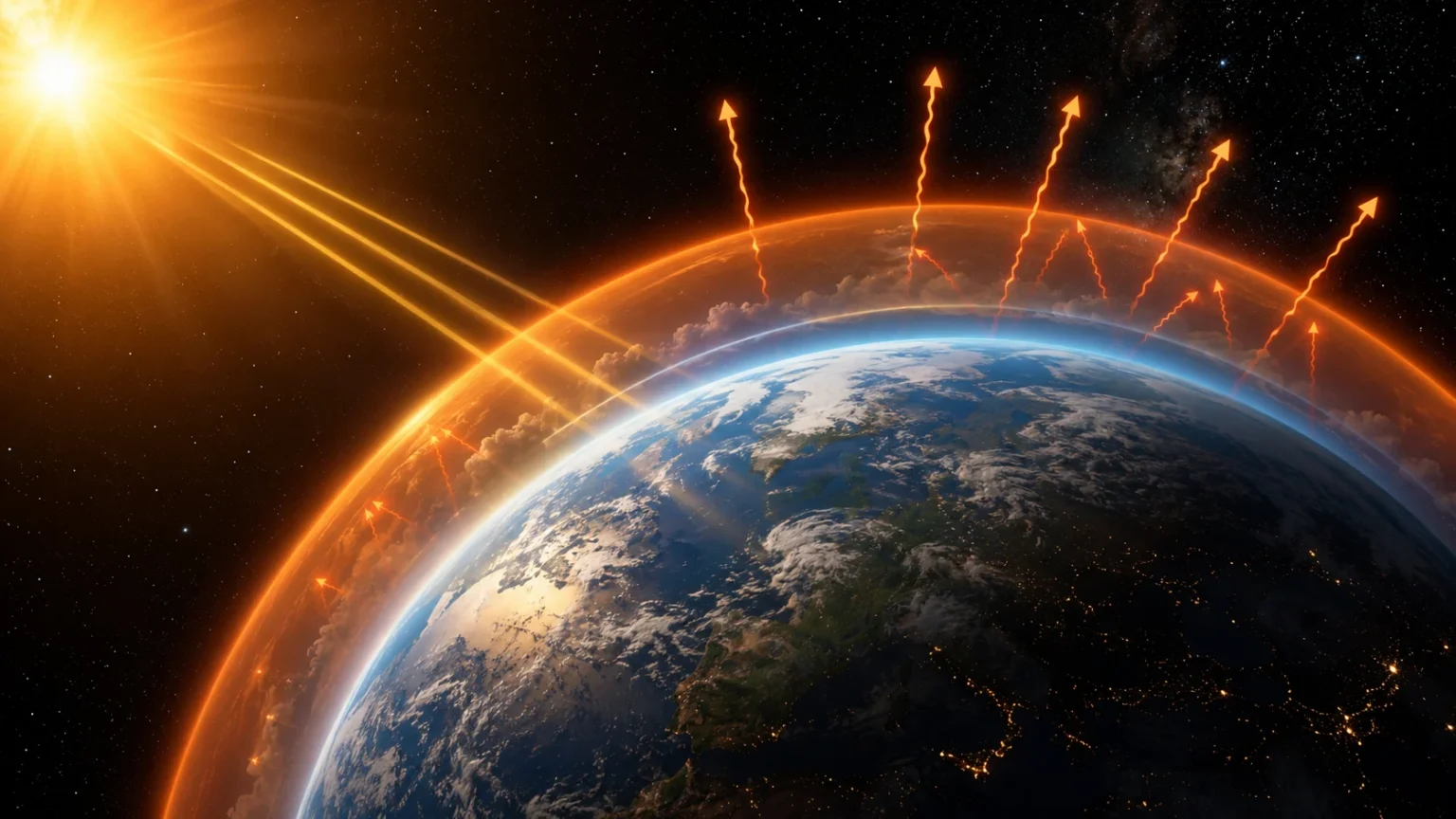
Earth receives a constant flow of energy from the Sun, and that energy is essential for life. Some sunlight is reflected back into space, while the rest is absorbed by land, oceans, and the atmosphere. Once Earth’s surface warms, it releases energy upward as infrared radiation. Greenhouse gases absorb some of this outgoing heat and keep part of it within the lower atmosphere.
So, how do greenhouse gases warm the Earth? They interact with infrared radiation emitted by the planet’s surface and atmosphere. Molecules such as carbon dioxide, methane, and water vapor can absorb specific wavelengths of this heat energy. They then release energy in different directions, including back toward Earth’s surface, slowing the rate at which heat escapes into space.
This process is called the greenhouse effect, and it is a natural part of Earth’s climate system. Without greenhouse gases, the planet would be dramatically colder and much less suitable for most forms of life. The problem arises when human activities add extra heat-trapping gases to the atmosphere, strengthening the natural greenhouse effect and increasing Earth’s average temperature.
Understanding the relationship between greenhouse gases, infrared radiation, atmospheric warming, carbon dioxide emissions, methane, and climate change makes the science easier to follow. The basic idea is straightforward: sunlight enters the climate system relatively easily, but greenhouse gases make it harder for some outgoing heat to leave. The resulting energy imbalance gradually warms the planet.
What Are Greenhouse Gases?
Greenhouse gases are atmospheric gases that can absorb and emit infrared radiation. The most important naturally occurring and human-influenced greenhouse gases include carbon dioxide, methane, nitrous oxide, water vapor, and ozone. Several human-made gases, including certain fluorinated gases, can also trap heat very effectively even when they exist in relatively small atmospheric concentrations.
Not every gas in the atmosphere behaves this way. Nitrogen and oxygen make up most of Earth’s atmosphere, but their molecular structures do not absorb terrestrial infrared radiation as strongly as major greenhouse gases do. Carbon dioxide and other heat-trapping gases have molecular properties that allow them to interact with particular wavelengths of infrared energy leaving Earth.
Different greenhouse gases remain in the atmosphere for different amounts of time and influence warming differently. Carbon dioxide can affect the climate for a very long period because portions of emitted CO2 remain within the atmosphere-ocean-land system for centuries or longer. Methane has a shorter atmospheric lifetime but produces a stronger warming effect per molecule over shorter time periods.
The term “greenhouse gas” describes how these gases influence Earth’s energy balance rather than suggesting that the atmosphere works exactly like a glass greenhouse. A physical greenhouse mainly stays warm because glass restricts air movement, while atmospheric greenhouse gases affect radiation. Despite the imperfect comparison, the term remains useful for explaining how certain gases help retain heat.
What Is the Greenhouse Effect?
The greenhouse effect begins with incoming solar radiation. Sunlight travels through the atmosphere and reaches Earth’s surface, where oceans, soil, vegetation, buildings, and other features absorb part of that energy. This absorbed solar energy warms the surface, which then releases heat upward in the form of longwave infrared radiation.
If the atmosphere contained no heat-absorbing gases, much more of this infrared energy would escape directly into space. Greenhouse gases intercept some of the outgoing radiation because their molecules absorb specific infrared wavelengths. Once energized, these molecules can transfer energy through collisions with surrounding air molecules or emit infrared radiation again.
Some re-emitted infrared radiation travels upward, while some travels downward toward Earth’s surface and lower atmosphere. This does not mean greenhouse gases create energy. Instead, they slow the rate at which thermal energy leaves the climate system, requiring Earth to reach a warmer temperature before outgoing energy once again balances incoming solar energy.
The natural greenhouse effect keeps Earth’s average surface temperature far warmer than it would otherwise be. It creates conditions in which liquid water and ecosystems can exist across much of the planet. Climate change occurs when additional greenhouse gases alter this natural balance and produce extra warming beyond the conditions to which modern societies and ecosystems have adapted.
How Does Sunlight Heat the Earth?
The Sun delivers energy mainly through visible light, ultraviolet radiation, and shorter-wave infrared radiation. Much of this incoming solar energy passes through the atmosphere because major greenhouse gases do not strongly absorb visible sunlight. Clouds, airborne particles, ice, and bright surfaces reflect part of the energy directly back into space before it can warm Earth.
The energy that is not reflected can be absorbed by the atmosphere or Earth’s surface. Darker oceans, forests, and soils generally absorb more solar radiation than highly reflective surfaces such as snow and ice. Once these surfaces absorb sunlight, their molecules gain energy, and the surface temperature rises as that energy is converted into heat.
A warmer surface then releases energy through infrared radiation. This outgoing radiation has longer wavelengths than most incoming sunlight, and those wavelengths interact differently with atmospheric gases. Greenhouse gases are particularly important because they can absorb portions of this longwave radiation that would otherwise move upward toward space.
Earth’s climate therefore depends on a balance between energy arriving from the Sun and energy eventually leaving the planet. If incoming and outgoing energy remain equal over time, global temperatures are relatively stable. If additional greenhouse gases reduce the amount of heat immediately escaping, the planet accumulates energy until a warmer climate restores the balance.
How Does Carbon Dioxide Trap Heat?
Carbon dioxide, commonly written as CO2, is one of the most important greenhouse gases influenced by human activity. Its molecules can absorb infrared radiation at specific wavelengths associated with heat emitted by Earth. When CO2 absorbs this energy, the molecule becomes temporarily excited before transferring or re-emitting the energy within the atmosphere.
Adding more carbon dioxide increases the atmosphere’s ability to absorb infrared radiation. This changes the altitude from which heat can efficiently escape into space. Because temperatures generally decrease with altitude through much of the lower atmosphere, radiation escaping from higher, colder levels carries less energy unless the climate system warms.
The surface and lower atmosphere therefore warm until outgoing radiation once again becomes sufficient to balance the incoming solar energy. This is one reason even a relatively small percentage of carbon dioxide in the atmosphere can meaningfully influence climate. A gas does not need to be the most abundant atmospheric component to have an important radiative effect.
Human activities increase atmospheric CO2 primarily through burning coal, oil, and natural gas, as well as cement production and deforestation. Oceans and vegetation absorb substantial amounts of these emissions, but not all of them. The remaining carbon dioxide accumulates in the atmosphere, increasing the greenhouse effect and contributing to long-term global warming.
How Does Methane Warm the Planet?
Methane is another powerful greenhouse gas and is commonly represented as CH4. It absorbs infrared radiation in wavelength regions that allow it to interfere with heat leaving Earth. Although methane is much less abundant than carbon dioxide, each methane molecule can have a relatively strong warming influence over the period it remains in the atmosphere.
Sources of methane include both natural processes and human activities. Wetlands naturally release methane when organic matter decomposes without much oxygen. Human-related sources include livestock digestion, rice cultivation, landfills, coal mining, oil and gas operations, and leaks from fossil fuel production and transportation infrastructure.
Methane remains in the atmosphere for a much shorter time than a substantial portion of carbon dioxide emissions, but it can cause strong warming during that period. Eventually, atmospheric chemical reactions remove most methane, producing other compounds, including carbon dioxide and water. Reducing methane emissions can therefore slow warming relatively quickly compared with some longer-lived climate pollutants.
Methane also affects atmospheric chemistry beyond its direct heat-trapping properties. Its presence contributes to the formation of ground-level ozone, which is itself a greenhouse gas and air pollutant. For this reason, controlling methane emissions can provide both climate benefits and improvements in air quality, particularly when major leaks or avoidable emissions are reduced.
What Role Does Water Vapor Play in Global Warming?
Water vapor is the most abundant greenhouse gas in Earth’s atmosphere and plays a major role in the natural greenhouse effect. It absorbs infrared radiation across many wavelengths and helps keep the lower atmosphere warm. However, water vapor behaves differently from carbon dioxide because its atmospheric concentration responds strongly to temperature.
Warm air can contain more water vapor than cold air. When carbon dioxide, methane, or another factor initially warms the climate, evaporation increases and the atmosphere can hold additional moisture. That extra water vapor strengthens the greenhouse effect, causing additional warming. Scientists describe this process as a positive climate feedback.
Water vapor therefore acts mainly as an amplifier of warming rather than the primary long-term trigger of modern climate change. If temperatures fall, atmospheric water vapor generally decreases through condensation and precipitation. If temperatures rise, atmospheric moisture increases, reinforcing the temperature change initiated by longer-lived greenhouse gases.
This distinction is important because people sometimes ask why carbon dioxide matters if water vapor produces a larger portion of the natural greenhouse effect. Longer-lived gases such as CO2 help set the underlying temperature conditions that determine how much water vapor can remain in the atmosphere. Water vapor then magnifies the warming produced by those gases.
How Does Nitrous Oxide Affect Earth’s Temperature?
Nitrous oxide, or N2O, is another long-lived greenhouse gas that contributes to global warming. Its atmospheric concentration is much lower than carbon dioxide, but individual molecules can absorb infrared radiation very effectively. Because nitrous oxide also remains in the atmosphere for many decades, emissions can continue influencing climate long after they enter the air.
Agriculture is a major human source of nitrous oxide. When nitrogen fertilizers are applied to soils, microorganisms can convert some of that nitrogen into N2O through natural biological processes. Livestock manure management, certain industrial activities, combustion, and land-use changes can also contribute to nitrous oxide emissions.
Like other greenhouse gases, N2O alters Earth’s radiation balance by reducing the efficiency with which some infrared energy escapes into space. Over time, increasing concentrations add to the warming influence produced by carbon dioxide, methane, and other heat-trapping gases. Climate change therefore results from the combined effects of multiple atmospheric compounds.
Nitrous oxide also affects the stratospheric ozone layer after it eventually reaches higher levels of the atmosphere and undergoes chemical reactions. This gives it importance beyond climate warming alone. Strategies that improve fertilizer efficiency and nitrogen management can help reduce emissions while potentially lowering agricultural costs and limiting unnecessary nutrient loss.
Why Are Some Greenhouse Gases Stronger Than Others?
Greenhouse gases differ in how effectively they absorb infrared radiation. Their warming influence depends partly on which wavelengths they absorb and whether those wavelengths overlap with radiation already absorbed by other atmospheric gases. Molecules with strong absorption in relatively transparent parts of the infrared spectrum can have particularly significant warming effects.
Atmospheric lifetime is another major factor. A gas that disappears quickly may create intense warming for a limited period, while a long-lived gas can influence temperatures for generations. Carbon dioxide is especially important because its effects persist throughout the interconnected atmosphere, ocean, vegetation, and geological carbon cycle for very long periods.
Scientists often use a measurement called global warming potential to compare how much heat different greenhouse gases trap over a selected time horizon relative to carbon dioxide. The comparison commonly considers both radiative efficiency and atmospheric lifetime. The value changes depending on whether researchers examine a 20-year, 100-year, or another period.
However, no single number captures every climate effect perfectly. Short-lived gases can strongly influence near-term warming, while long-lived carbon dioxide largely determines the eventual scale of persistent global temperature change. Understanding both properties helps policymakers and researchers develop strategies that address immediate warming as well as long-term climate stabilization.
Why Does More CO2 Cause Additional Warming?
Some people assume that because carbon dioxide already absorbs certain infrared wavelengths, adding more should stop having an effect. In reality, the atmosphere is layered, and radiation moves through gases under changing temperatures and pressures. Additional CO2 broadens and strengthens infrared absorption and changes the levels from which energy can effectively escape to space.
As carbon dioxide concentrations increase, the effective altitude from which some infrared radiation escapes shifts upward. Higher parts of the troposphere are generally colder, so they emit less energy than warmer layers below. This temporarily reduces outgoing energy relative to incoming sunlight, creating a radiative imbalance.
Earth responds to that imbalance by warming. As the surface and atmosphere become warmer, they emit more infrared energy. Eventually, outgoing radiation again approaches the amount of incoming solar energy, but the balance is restored at a higher average global temperature than before the increase in greenhouse gases.
The relationship between CO2 concentration and warming is approximately logarithmic rather than perfectly linear. This means each doubling of carbon dioxide produces a broadly similar additional radiative forcing rather than warming increasing in direct proportion to the number of CO2 molecules. Even so, continued emissions keep pushing temperatures upward.
What Is Radiative Forcing?
Radiative forcing is a scientific concept used to describe changes in Earth’s energy balance. A positive radiative forcing tends to warm the planet because it increases incoming energy or reduces outgoing energy. A negative forcing tends to cool the climate by increasing reflection or making it easier for energy to leave the system.
Increasing greenhouse gas concentrations create positive radiative forcing because additional heat is retained within Earth’s climate system. Carbon dioxide is the largest contributor to long-term human-caused greenhouse gas forcing, while methane, nitrous oxide, and fluorinated gases add further warming influences.
Other factors can have cooling effects. Certain airborne particles reflect sunlight back into space or make clouds brighter, producing negative radiative forcing. Volcanic eruptions can temporarily cool the climate when large amounts of reflective particles reach the upper atmosphere. These effects can partially mask greenhouse warming for limited periods.
Scientists use radiative forcing to compare different climate drivers on a common physical basis. By examining how various gases, particles, land-surface changes, and solar influences alter Earth’s energy budget, researchers can determine why global temperatures change and estimate how the climate may respond to future emissions.
How Human Activities Strengthen the Greenhouse Effect
The natural greenhouse effect existed long before humans and is essential for maintaining habitable temperatures. Modern climate change is occurring because human activities are increasing concentrations of several greenhouse gases faster than natural systems can fully remove them. This additional heat-trapping influence is often called the enhanced greenhouse effect.
Burning fossil fuels is the largest source of human carbon dioxide emissions. Coal, oil, and natural gas contain carbon that was stored underground for millions of years. Combustion combines this carbon with oxygen and releases CO2 into the atmosphere, adding carbon to the active climate system that would otherwise have remained largely underground.
Deforestation contributes in two ways. Removing forests releases some of the carbon stored in trees and soils while also reducing the amount of CO2 vegetation can absorb through photosynthesis. Agriculture, waste management, fossil fuel extraction, and industrial processes additionally release methane, nitrous oxide, and fluorinated greenhouse gases.
As atmospheric concentrations rise, Earth’s energy balance changes. More heat remains within the climate system, warming the atmosphere, oceans, and land while contributing to melting ice and rising sea levels. These changes demonstrate why greenhouse gas emissions affect far more than the temperature measured in the air on any individual day.
Where Does the Extra Heat Go?
Only a portion of the extra energy caused by greenhouse gases remains directly in the atmosphere. Most accumulated heat enters the oceans because water can store enormous amounts of thermal energy. This ocean heat content is an important indicator of long-term climate change and demonstrates that warming affects the entire Earth system.
Some additional energy warms the land and atmosphere, while another portion melts glaciers, ice sheets, and sea ice. Melting land ice contributes to sea-level rise, while declining snow and ice can reduce Earth’s reflectivity. Darker land or ocean surfaces then absorb more sunlight, creating another feedback that can amplify warming.
Warmer oceans also expand physically, which contributes to rising sea levels even without additional melting ice. Ocean warming can influence marine ecosystems, coral reefs, weather patterns, and the amount of oxygen dissolved in seawater. These effects show that greenhouse warming is not simply an increase in average surface air temperature.
Tracking where energy accumulates gives scientists a more complete understanding of climate change. Short-term atmospheric temperatures can vary because of weather patterns and natural climate cycles, but heat stored in the oceans provides strong evidence of the persistent energy imbalance caused by increased greenhouse gas concentrations.
What Is the Connection Between Greenhouse Gases and Climate Change?
Global warming describes the long-term increase in Earth’s average temperature, while climate change includes the broader effects resulting from that warming. Rising greenhouse gas concentrations are the primary driver of modern global warming, and the resulting temperature increase influences rainfall, oceans, ice, ecosystems, and extreme weather conditions.
A warmer atmosphere can hold more moisture, changing the intensity and distribution of precipitation. Some regions may experience heavier rainfall, while others face greater evaporation and drought risk. Climate impacts differ geographically, which means warming does not produce exactly the same weather changes everywhere.
Higher temperatures also increase the likelihood and intensity of extreme heat events. Heat waves that were once uncommon can occur more frequently as average temperatures rise. Warmer oceans can provide additional energy and moisture to certain storms, while changing atmospheric circulation can influence weather patterns in complex ways.
Climate change therefore involves interconnected consequences rather than one simple effect. Greenhouse gases alter Earth’s energy balance, warming changes the atmosphere and oceans, and those changes affect environmental systems worldwide. The exact outcome in any location depends on geography, natural variability, emissions levels, and the response of the broader climate system.
Do Greenhouse Gases Cause the Ozone Hole?
The greenhouse effect and ozone depletion are different environmental processes, although some gases can influence both. Greenhouse gases primarily affect Earth’s temperature by absorbing infrared radiation. Ozone depletion involves chemical reactions in the stratosphere that destroy ozone molecules responsible for blocking much of the Sun’s harmful ultraviolet radiation.
Certain manufactured chemicals historically used in refrigeration, aerosols, and industrial applications contributed significantly to ozone depletion. Many of these substances are also extremely powerful greenhouse gases. International efforts to phase out ozone-depleting chemicals have therefore provided benefits for both the ozone layer and the global climate.
Carbon dioxide does not cause the ozone hole in the same way these chemicals do. CO2 mainly contributes to climate change through infrared absorption. Changes in greenhouse gas concentrations can still affect stratospheric temperatures and atmospheric chemistry, creating interactions between climate and ozone that scientists continue to monitor.
Understanding the distinction prevents two important environmental issues from being confused. Protecting the ozone layer limits harmful ultraviolet exposure, while reducing greenhouse gas emissions addresses global warming. Both require atmospheric science, international cooperation, and careful management of chemicals released through human activities.
Do Clouds Increase or Reduce Global Warming?
Clouds can both cool and warm Earth depending on their height, thickness, type, and location. Bright clouds reflect sunlight back into space, reducing the amount of solar energy absorbed by the planet. This reflective effect tends to cool the climate, particularly for thick, low-level clouds.
Clouds also absorb infrared radiation emitted from Earth’s surface and lower atmosphere. High, cold clouds can be especially effective at reducing outgoing heat while allowing substantial sunlight to enter. Under these conditions, their greenhouse effect may outweigh their ability to reflect incoming solar radiation.
As the climate warms, cloud patterns may change in ways that either amplify or reduce the initial temperature increase. Overall cloud feedback is considered an important component of climate sensitivity, and scientists use satellite observations, physical theory, and advanced climate models to understand these changing interactions.
Cloud uncertainty does not mean scientists are unsure whether greenhouse gases warm the planet. The infrared properties of greenhouse gases are well understood through laboratory measurements, observations, and fundamental physics. Cloud feedback mainly affects estimates of exactly how strongly the climate will respond over particular time periods and warming levels.
What Are Climate Feedback Loops?
A climate feedback occurs when an initial change triggers additional effects that either strengthen or weaken the original change. Positive feedbacks amplify warming, while negative feedbacks reduce it. Feedbacks are important because greenhouse gases initiate changes that can influence other parts of Earth’s climate system.
Water vapor is one of the best-known positive feedbacks. Initial warming allows the atmosphere to contain more moisture, and because water vapor is itself a greenhouse gas, additional moisture increases heat trapping. This produces more warming than would occur from carbon dioxide changes alone.
Ice and snow produce another positive feedback through changes in reflectivity. Bright frozen surfaces reflect substantial sunlight back into space. When warming melts ice and snow, darker ocean or land becomes exposed, absorbing more solar energy and increasing local and global warming.
Earth also has stabilizing processes. A warmer planet emits more infrared radiation into space, which acts as an important negative feedback that eventually helps restore energy balance. The final climate response depends on the interaction between this stabilizing effect and feedbacks involving water vapor, clouds, ice, vegetation, and the carbon cycle.
Why Doesn’t Heat Simply Escape Into Space?
Heat is constantly escaping from Earth into space, even while greenhouse warming occurs. The important question is how quickly that energy leaves compared with how much solar energy enters. Greenhouse gases do not form an impenetrable blanket; instead, they absorb and re-emit particular wavelengths of infrared radiation, slowing energy loss.
Some infrared wavelengths pass through the atmosphere relatively easily, while others are strongly absorbed by greenhouse gases. Scientists sometimes describe a relatively transparent range as an atmospheric window. Changes in gas concentrations, clouds, and humidity can influence how much energy escapes through different portions of the infrared spectrum.
Eventually, energy absorbed within the atmosphere is emitted again, and some of it reaches space. However, increasing greenhouse gas concentrations cause the effective emission to space to occur from higher and typically colder atmospheric layers. Because colder objects emit less energy, the climate system initially loses heat less efficiently.
Warming continues until temperatures increase enough to restore the balance between incoming and outgoing energy. Therefore, global warming is not caused because heat permanently stops escaping. It occurs because more greenhouse gases temporarily disrupt Earth’s energy balance and require a warmer planet to radiate enough energy back to space.
How Do Scientists Know Greenhouse Gases Cause Warming?
The warming properties of greenhouse gases are based on physics that can be measured directly. Scientists can observe which infrared wavelengths carbon dioxide, methane, water vapor, and other molecules absorb in laboratories. These absorption patterns match changes observed in radiation moving through Earth’s atmosphere.
Satellites can measure infrared energy leaving the planet and detect the spectral fingerprints associated with greenhouse gases. Instruments at Earth’s surface can also observe downward infrared radiation from the atmosphere. Together, these measurements provide direct evidence of the mechanisms predicted by greenhouse physics.
Researchers additionally study ancient climates using ice cores, ocean sediments, tree rings, corals, and other natural records. These records help show relationships among greenhouse gas concentrations, temperatures, ice coverage, and climate conditions over long periods. Modern instrumental observations provide even more detailed measurements of recent atmospheric and temperature changes.
Climate models then combine these physical laws with observations of solar changes, volcanic activity, aerosols, greenhouse gases, oceans, and other influences. Models reproduce the observed long-term warming far better when human greenhouse gas emissions are included. Natural factors alone cannot adequately explain the magnitude and pattern of recent global temperature increases.
Can Reducing Greenhouse Gases Slow Global Warming?
Reducing greenhouse gas emissions can slow the rate at which additional heat accumulates within Earth’s climate system. Carbon dioxide is particularly important because continued CO2 emissions add to cumulative warming. Reaching net-zero carbon dioxide emissions is therefore central to eventually stabilizing human-caused global temperature increases.
Methane reductions can also make a meaningful difference, especially over shorter time horizons. Because methane is powerful but relatively short-lived, cutting emissions from fossil fuel leaks, waste, agriculture, and other sources can reduce its atmospheric concentration more quickly than reductions in long-lived carbon dioxide.
Energy efficiency, renewable electricity, cleaner transportation, reduced deforestation, improved industrial processes, methane leak prevention, and better land management can all contribute to reducing emissions. Carbon removal may also help address residual emissions, although it does not eliminate the need for substantial reductions at the source.
The climate will not instantly return to earlier conditions after emissions decline because oceans, ice sheets, and carbon cycles respond slowly. However, limiting additional greenhouse gas accumulation directly limits future warming. The amount of warming avoided depends heavily on how quickly and how deeply global emissions fall.
Final Thoughts
Understanding how greenhouse gases warm the Earth begins with Earth’s energy balance. Sunlight warms the surface, the surface emits infrared radiation, and greenhouse gases absorb some of that outgoing heat. By slowing the rate at which thermal energy reaches space, these gases keep the planet warmer than it would otherwise be.
The natural greenhouse effect is essential for life, but human activities have strengthened it by adding large amounts of carbon dioxide, methane, nitrous oxide, and other heat-trapping gases to the atmosphere. This increased concentration creates an energy imbalance that warms the atmosphere, land, oceans, and the broader climate system.
The consequences extend beyond higher average temperatures. Increased greenhouse warming affects sea level, rainfall patterns, glaciers, ecosystems, extreme heat, oceans, and many other environmental systems. Feedbacks involving water vapor, ice, and clouds can further influence how strongly temperatures respond to increasing greenhouse gas concentrations.
The basic physics is therefore both simple and powerful: greenhouse gases make it harder for some of Earth’s infrared energy to escape directly into space. Reducing emissions limits the strength of this additional heat-trapping effect, making greenhouse gas management one of the most important tools available for limiting future climate change.
Frequently Asked Questions
Why are greenhouse gases called greenhouse gases?
They are called greenhouse gases because they help keep Earth warm by reducing the rate at which infrared heat escapes into space. The atmospheric process differs from how a glass greenhouse physically retains warm air.
Which greenhouse gas causes the most human-driven warming?
Carbon dioxide is the largest contributor to long-term human-caused warming because humans emit it in large quantities and some of its climate influence persists for centuries or longer.
Is the greenhouse effect natural or caused by humans?
The greenhouse effect is a natural process that makes Earth habitable. Human activities strengthen it by increasing atmospheric concentrations of carbon dioxide, methane, nitrous oxide, and other gases.
Why does carbon dioxide warm the atmosphere?
Carbon dioxide molecules absorb particular wavelengths of infrared radiation emitted by Earth and re-emit that energy. Increasing CO2 therefore changes Earth’s energy balance and raises global temperatures.
What happens if greenhouse gas emissions keep increasing?
Continued emissions would strengthen the greenhouse effect and lead to additional global warming. This would increase climate-related changes involving heat extremes, oceans, ice, rainfall patterns, and sea levels.