
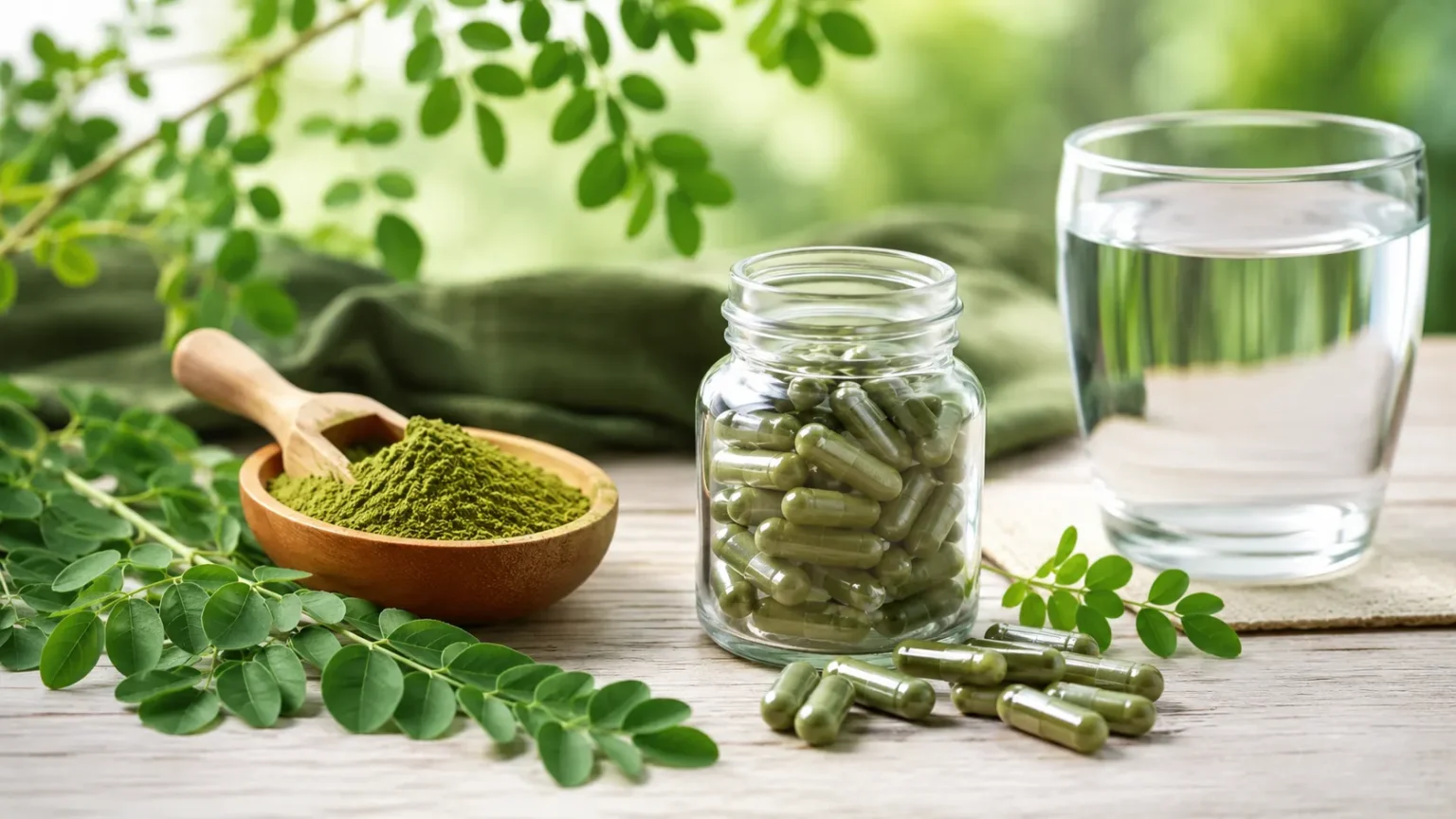

Moringa Supplement: Benefits, Uses & Side Effects
Moringa supplements are made primarily from the leaves of Moringa oleifera, a nutrient-rich tree traditionally used as both food and herbal medicine in parts of South Asia, Africa, and other tropical regions. The plant is sometimes called the drumstick tree, horseradish tree, or miracle tree because different parts have historically been used for nutrition and traditional remedies. Modern supplements usually come as moringa leaf powder, capsules, tablets, extracts, teas, or blended greens products. Moringa leaves provide vitamins, minerals, polyphenols, carotenoids, and plant compounds that have attracted interest for possible antioxidant, metabolic, and anti-inflammatory effects. However, concentrated supplements should not be assumed to provide the same benefits as eating the leaves as food, and many health claims remain based on preliminary evidence.
Research into moringa has explored blood sugar control, cholesterol, inflammation, nutrition, blood pressure, and other health outcomes, but human studies remain relatively small compared with research supporting established medical treatments. Some findings are promising, particularly around post-meal glucose and certain metabolic markers, while others are inconsistent or insufficient to support strong claims. Moringa supplements can also cause digestive side effects, interact with medications, and vary substantially in quality between manufacturers. Root, bark, and other non-leaf preparations may carry different safety concerns and should not automatically be treated like ordinary leaf powder. The most sensible approach is to view moringa as an optional dietary supplement rather than a cure for diabetes, high cholesterol, inflammation, or another medical condition.
What Is a Moringa Supplement?
A moringa supplement is typically produced from dried and powdered leaves of the Moringa oleifera tree. The leaves can be harvested, cleaned, dried at controlled temperatures, and ground into a green powder that can be sold directly or placed into capsules and tablets. Some manufacturers create concentrated extracts designed to provide larger quantities of specific plant compounds in smaller servings. Others mix moringa with spirulina, wheatgrass, turmeric, matcha, or other ingredients in greens powders. Because the production methods differ, two supplements labeled “moringa” may provide very different amounts of actual leaf material or extract. Reading the ingredient list and serving information is therefore important when comparing products.
Moringa leaves are edible foods in many cultures and are sometimes cooked similarly to spinach or added to soups, sauces, stews, and curries. The nutritional profile includes protein, fiber, beta-carotene, vitamin C in fresh leaves, vitamin K, calcium, potassium, iron, and various antioxidant compounds. Drying changes the concentration and stability of certain nutrients, so powdered moringa is not nutritionally identical to fresh leaves. Vitamin C, for example, can decline during drying and storage, while minerals and some plant compounds become more concentrated by weight because water has been removed. A supplement label should therefore be interpreted according to the actual processed product rather than assuming it contains everything found in fresh moringa.
The leaves also contain plant chemicals such as flavonoids, phenolic acids, glucosinolates, and isothiocyanate-related compounds. These substances are being studied because they can influence antioxidant systems, inflammation-related signaling, and metabolism in laboratory experiments. Human physiology is much more complex than a cell culture or animal model, however, and a promising mechanism does not automatically translate into a meaningful clinical benefit. Supplement advertising sometimes takes a laboratory observation and presents it as if the outcome has already been confirmed in people. A more accurate interpretation is that moringa contains biologically active compounds whose long-term health effects are still being investigated.
Not every part of the moringa plant has the same safety profile. Leaves are the part most commonly consumed as food and used in mainstream supplements. Seeds are also eaten or processed in some contexts, but concentrated seed products have been studied far less thoroughly. Roots and bark contain different compounds and may present greater safety concerns, particularly in pregnancy. Herbal products that simply say “whole moringa” without clearly identifying the plant part can therefore be harder to evaluate. Consumers should know whether they are buying leaf powder, leaf extract, seed oil, seed extract, or another preparation rather than assuming all moringa products are interchangeable.
Moringa supplements are generally marketed as dietary supplements rather than medicines. This distinction matters because supplements do not need to prove that they treat disease before being sold in the same way prescription drugs do. Product purity and concentration can also vary, especially when testing and sourcing are weak. A supplement may contain the expected moringa leaf material while another may include fillers, contaminants, or different concentrations of active compounds. Choosing reputable manufacturing and treating health claims skeptically is therefore just as important as understanding what moringa might theoretically do. “Natural” describes the source, not the certainty of effectiveness or safety.
Potential Benefits of Moringa Supplements
One of the most frequently discussed benefits of moringa involves its antioxidant content. Normal metabolism produces reactive molecules that participate in cell signaling and immune activity, but excessive oxidative stress can damage proteins, fats, and other cellular structures. Moringa leaves contain polyphenols and other plant compounds capable of interacting with oxidative processes in laboratory research. Small human studies have also reported changes in antioxidant-related measurements after moringa consumption. However, increasing one laboratory antioxidant marker does not automatically translate into fewer chronic diseases or longer life. The strongest practical conclusion is that moringa is a plant-derived source of antioxidant compounds, while the long-term clinical significance of supplementing them remains uncertain.
Moringa is also frequently promoted for anti-inflammatory effects. Plant compounds found in the leaves can influence inflammatory pathways in laboratory and animal studies, providing a biological reason for researchers to investigate the plant further. Human evidence is less developed, and there is not yet a standardized moringa treatment for arthritis, autoimmune disease, chronic pain, or another inflammatory condition. Inflammation is also not universally harmful because normal inflammatory responses help fight infection and repair injuries. The goal in medical care is not to eliminate inflammation completely but to control inappropriate or excessive activity when necessary. Moringa may eventually prove useful in selected contexts, but current evidence does not justify replacing established anti-inflammatory treatments.
Nutritional supplementation is another potential use, particularly in areas where fresh moringa leaves are traditionally eaten. The leaves contain several vitamins and minerals, making them a useful food when incorporated into a balanced diet. Powdered moringa can add nutrients to smoothies, soups, sauces, or other meals, although the actual contribution depends on serving size. A teaspoon of powder does not provide the same nutritional impact as eating a large serving of leafy vegetables. Someone with a diagnosed iron, vitamin, or protein deficiency should also not assume moringa alone will correct it. Deficiencies often require identifying the cause and using appropriately dosed treatment rather than relying on generalized superfood claims.
Early research has explored whether moringa may influence blood pressure. Plant compounds in the leaves could theoretically affect vascular function, oxidative stress, or other pathways involved in cardiovascular health. Human trials, however, remain too limited and inconsistent to establish moringa as a reliable blood-pressure treatment. Someone taking antihypertensive medication should be particularly cautious about adding supplements promoted for lowering blood pressure because combined effects could potentially cause dizziness or hypotension. Routine blood-pressure monitoring provides much more useful information than assuming the supplement is working based on how someone feels. Lifestyle and prescribed treatment remain the foundation for hypertension management.
Moringa is sometimes marketed for energy, immunity, skin health, weight loss, digestion, and “detoxification.” Some of these claims are based loosely on its nutrient or antioxidant content rather than direct clinical evidence showing a meaningful effect. There is no strong evidence that moringa dramatically increases energy in healthy people or causes rapid fat loss independent of calorie intake. Likewise, the liver and kidneys already perform the body’s primary detoxification functions. A supplement does not need to remove vaguely defined “toxins” to be useful nutritionally. Consumers are better served by focusing on specific measurable outcomes rather than broad wellness language that can mean almost anything.
Moringa and Blood Sugar Control
Blood sugar is one of the more actively studied areas of moringa research. Several small human trials have examined whether adding moringa leaf powder to meals can influence fasting glucose or the rise in blood sugar after eating. Some studies have reported modest improvements, particularly in post-meal glucose responses, while others have found limited or inconsistent effects. The mechanism may involve fiber, polyphenols, isothiocyanate-related compounds, or changes in carbohydrate digestion and insulin activity. These findings are scientifically interesting but are not strong enough to establish moringa as a standard diabetes treatment. Larger and longer clinical trials are still needed.
People with type 2 diabetes may be particularly interested in moringa because the condition often requires lifelong management of glucose, cardiovascular risk, body weight, and other metabolic factors. A supplement that modestly improves one glucose measurement could theoretically be helpful as an adjunct, but the magnitude and reliability of that effect matter. Diabetes complications develop over years, so researchers need to know whether moringa produces sustained improvements rather than temporary changes after one meal. They also need to determine which doses and formulations work consistently. Until those questions are answered, moringa should be considered experimental support rather than a replacement for medication, nutrition planning, activity, and glucose monitoring.
Medication interactions are an important concern because someone taking insulin or glucose-lowering drugs may already be at risk of hypoglycemia. If moringa genuinely lowers glucose in a particular individual, combining it with medication could potentially push levels lower than intended. Symptoms of low blood sugar can include sweating, shaking, hunger, dizziness, confusion, weakness, and rapid heartbeat. People who decide to try moringa while using diabetes medication should discuss it with their healthcare professional and monitor glucose rather than adjusting medication independently. Supplements that influence the same physiological target as prescription drugs deserve more caution, not less, simply because they are sold without a prescription.
Moringa should also not be used to justify eating a high-sugar or heavily refined diet. Some marketing suggests that taking a glucose-support supplement can offset poor food choices, but metabolism does not work that simply. A balanced eating pattern, adequate fiber, appropriate carbohydrate portions, physical activity, sleep, and weight management have much stronger evidence for metabolic health. Adding moringa to a sugary drink or dessert does not transform the meal into a diabetes treatment. The overall diet remains far more important than one herbal ingredient. Supplements can only complement foundational habits when they provide a genuine additional benefit.
People without diabetes generally do not need to take moringa specifically to keep normal glucose levels normal. The body regulates blood sugar through insulin, glucagon, liver metabolism, muscle uptake, and several other systems. Healthy people gain much more from regular activity, balanced meals, sufficient sleep, and maintaining a suitable body weight than from chasing small changes in glucose with supplements. Moringa can still be consumed as a food or optional supplement, but it should not be promoted as necessary metabolic protection. A normal laboratory result does not become meaningfully healthier simply because it decreases slightly within the normal range.
Moringa and Cholesterol, Heart Health and Weight
Moringa has also been investigated for possible effects on cholesterol and triglycerides. Animal research has produced several favorable results, and some small human studies suggest that moringa leaf preparations may modestly influence lipid levels. However, the human evidence remains far less extensive than the evidence supporting medications such as statins when those drugs are indicated. Cholesterol management is important because cardiovascular risk depends not only on total cholesterol but also on LDL, HDL, triglycerides, blood pressure, diabetes, smoking, age, and other factors. One supplement cannot address every component of cardiovascular risk. Moringa should therefore not be considered a substitute for a complete prevention strategy.
If future studies confirm a modest LDL-lowering effect, moringa might eventually serve as an adjunct for some people. The clinical usefulness would depend on how large the reduction is, whether it remains stable over time, and whether it actually lowers cardiovascular events. Many substances can move laboratory numbers slightly without meaningfully changing heart-attack or stroke risk. Medical recommendations prioritize treatments with proven patient-centered outcomes rather than only biochemical mechanisms. Someone with very high LDL, established cardiovascular disease, or familial hypercholesterolemia should not delay proven treatment while experimenting with moringa. High-risk cholesterol disorders often require much stronger intervention than an herbal supplement can provide.
Weight-loss claims are even less established. Moringa contains plant compounds and some fiber, but taking capsules does not create a meaningful calorie deficit automatically. Body fat decreases when long-term energy intake remains below energy expenditure, although hormones, medications, sleep, illness, and behavior can influence how difficult that process feels. Some animal studies suggest moringa may affect fat metabolism, but human evidence does not support describing it as a powerful fat-burning supplement. Products promising rapid weight loss from moringa alone should therefore be treated cautiously. Sustainable weight management remains based on diet, activity, sleep, behavioral support, and medical treatment when appropriate.
Moringa powder can still fit into a weight-management diet because it contains relatively few calories in ordinary serving sizes and can be added to nutrient-dense foods. For example, a small amount can be mixed into soup, yogurt, or a smoothie containing protein and whole-food ingredients. However, a smoothie with moringa can still become calorie-dense when loaded with juice, sweeteners, nut butter, and other ingredients. The presence of a green powder does not override the rest of the recipe. People trying to lose weight should look at overall meal composition rather than classifying foods as automatically slimming because they contain a superfood.
Heart health also depends on habits that supplements cannot replace. Avoiding smoking, exercising regularly, maintaining healthy blood pressure, controlling diabetes, eating sufficient fiber, and following prescribed therapy have far stronger evidence than moringa alone. The supplement may eventually prove to offer small supportive effects, but it should sit relatively low on the priority list. Someone deciding between spending money on moringa and consistently buying nutritious staple foods would usually gain more from the food. Supplements work best when foundational health behaviors are already in place rather than being used to compensate for their absence.
How to Take Moringa Supplements
Moringa supplements are available as powders, capsules, tablets, liquid extracts, teas, and blended nutritional products. Powder provides the closest format to dried whole leaves and can be stirred into smoothies, soups, yogurt, sauces, or water. Capsules offer convenience and reduce exposure to the plant’s strong earthy flavor. Extracts may provide a more concentrated amount of selected plant compounds but can differ substantially depending on solvent and manufacturing method. A serving of extract should not be assumed equivalent to the same weight of leaf powder. Product-specific labeling is therefore essential when determining how much is being consumed.
There is no universally established therapeutic dosage that has been proven optimal for every health goal. Human studies use different amounts of moringa leaf powder and extracts, often for relatively short periods. Supplement labels may recommend several hundred milligrams in capsules or multiple grams of powder, but these recommendations are product directions rather than medically established doses. Starting with a modest serving can help identify gastrointestinal intolerance before larger quantities are consumed. More is not automatically better because plant compounds and minerals increase along with dose. The ideal amount, if any, depends on formulation, reason for use, diet, medications, and individual tolerance.
Taking moringa with food may reduce nausea or stomach discomfort in people who find capsules irritating on an empty stomach. Powder can also be easier to tolerate when mixed into a meal instead of consumed in concentrated water. The taste is often described as earthy, grassy, or slightly bitter, so blending it with yogurt, fruit, spices, or savory dishes may improve palatability. Adding large amounts solely to hide the flavor can make the meal unpleasant and encourage inconsistent use. A supplement only provides potential benefits when someone can use it comfortably and safely. There is no reason to force moringa into the diet if the taste or digestive effects are bothersome.
Timing is not strongly established. Some products recommend morning use because they are marketed for energy, while others suggest taking doses with meals for metabolic support. These instructions often reflect marketing or convenience more than strong clinical evidence. Someone using moringa should choose a consistent schedule that fits the product’s directions and minimizes side effects. If it appears to affect blood glucose or blood pressure, timing relative to medications and meals may become more important and should be discussed with a clinician. Randomly increasing frequency throughout the day can create unnecessary exposure without proving additional benefit.
Moringa should not replace prescribed medicine unless a healthcare professional specifically changes the treatment plan. Someone seeing an improvement in glucose, cholesterol, or blood pressure after beginning a supplement may be tempted to reduce medication independently. This can be dangerous because one favorable reading does not prove that the underlying condition is controlled reliably. Medical decisions usually depend on trends and validated targets. Supplements can also vary between batches, making their effect less predictable than standardized medication. Any change to prescription treatment should therefore be guided by the clinician responsible for managing the condition.
Moringa Side Effects and Safety Concerns
Digestive symptoms are among the most likely moringa supplement side effects. Some people experience nausea, abdominal discomfort, gas, loose stools, or diarrhea, particularly when starting with a large quantity of powder or concentrated extract. The leaf naturally contains fiber and numerous plant compounds, which can change gastrointestinal activity. Symptoms may improve after reducing the dose or taking the supplement with food. Persistent vomiting, severe abdominal pain, blood in stool, or significant dehydration should not be blamed automatically on ordinary supplement intolerance. Those symptoms warrant medical evaluation because many other conditions can cause them.
Moringa may potentially lower blood glucose in some people, which can become a safety issue when combined with insulin or diabetes medication. The same principle applies to blood pressure if the supplement produces a meaningful lowering effect. Dizziness, weakness, faintness, or unusually low readings can indicate that the combined effect is too strong. Someone should not simply increase salt, sugar, or medication doses at home to compensate. The supplement and prescription regimen need to be reviewed together. Herbal products capable of changing physiological measurements can create clinically meaningful interactions even when the interaction information on the package is limited.
Allergic reactions are possible with almost any plant product, although severe moringa allergy does not appear to be among the most commonly reported supplement reactions. Symptoms might include itching, hives, swelling, wheezing, vomiting, or other unexpected responses after use. Difficulty breathing, swelling of the lips or tongue, fainting, or rapidly progressing symptoms require emergency care. Someone with known allergy to moringa or a clear previous reaction should avoid re-exposure without medical guidance. Blended greens powders can make identifying the trigger more difficult because they may contain dozens of herbs, grasses, fruits, and additives.
Contamination represents another potential safety issue. Plants can accumulate heavy metals from soil, and poorly controlled supplements may also become contaminated with bacteria, pesticides, or undeclared ingredients during manufacturing. This risk varies dramatically between products and suppliers. A powder sold online at an unusually low price may not have undergone the same quality controls as a supplement produced by a reputable manufacturer with third-party testing. Country of origin alone does not determine quality, but transparent sourcing and contaminant testing are useful. Supplements intended for daily long-term use deserve particularly careful quality selection because small contaminants can accumulate over time.
Liver injury from herbal and dietary supplements is a broader concern even when a particular ingredient is not widely recognized as a common cause. Moringa leaf products appear generally well tolerated in typical food-like amounts, but concentrated extracts contain more plant chemicals and may be used alongside several other supplements. Anyone who develops yellowing of the skin or eyes, very dark urine, severe unexplained fatigue, persistent nausea, or right-upper abdominal pain after starting a supplement should stop using it and seek medical advice. Combining numerous herbal extracts makes it harder to identify which substance caused a reaction. Simpler supplement routines are easier to evaluate and manage safely.
Who Should Avoid Moringa or Use It Carefully?
Pregnant people should be particularly cautious with moringa supplements, especially products containing root, bark, flowers, or poorly identified whole-plant extracts. Certain compounds from non-leaf parts have historically raised concerns about effects on the uterus, and concentrated herbal preparations are not necessary during pregnancy. Moringa leaf is consumed as food in some cultures, but a concentrated supplement is a different exposure from ordinary culinary use. Pregnancy also changes nutrient requirements and medication safety considerations. Someone who wants to use moringa during pregnancy should discuss the exact product with an obstetric healthcare professional rather than relying on broad claims that the plant is natural.
Breastfeeding requires similar caution because high-quality information about concentrated supplements and infant exposure remains limited. A traditional food consumed in normal portions may have a different safety profile from several grams of powder or a concentrated extract taken daily. Supplements marketed for increasing milk production should not automatically be assumed effective or harmless. Low milk supply can result from feeding technique, hormonal problems, infant factors, medication, stress, or other causes that deserve appropriate assessment. A lactation professional or clinician can help determine whether a supplement is useful or whether it might distract from a more important problem.
People taking diabetes or blood-pressure medication should review moringa use with their healthcare professional because of the possibility of additive effects. Those taking thyroid medication, anticoagulants, or medicines with narrow therapeutic ranges may also want professional guidance because reliable interaction data for moringa are incomplete. Absence of a documented interaction does not necessarily prove no interaction exists; it may simply mean the combination has not been studied thoroughly. Pharmacists can often assess the known risks of the complete medication and supplement list. Bringing the actual bottle or a photograph of its ingredient panel is more useful than simply saying “I take an herbal powder.”
People with chronic kidney or liver disease should also use supplements conservatively. These organs are involved in processing and eliminating many compounds, and serious disease can change how the body handles nutrients and plant chemicals. Some moringa products may contain substantial minerals that complicate individualized kidney diets. A person with reduced kidney function may have specific restrictions for potassium, phosphorus, or fluids depending on disease stage. Liver disease creates different concerns involving metabolism and vulnerability to supplement-associated injury. Medical diets and treatments should take priority over generalized superfood recommendations.
Children should not be given concentrated moringa supplements casually simply because the leaves are nutritious. Pediatric nutrient requirements depend on age, body size, growth, and overall diet. A child with poor growth, anemia, or nutritional deficiency should be evaluated so the actual cause can be identified. Adding a green powder may not provide enough of the missing nutrient and can create a false sense that the problem is being treated. When moringa leaves are used traditionally as food, portion and preparation differ from concentrated supplementation. Parents should discuss regular supplemental use with an appropriate healthcare professional.
How to Choose a Quality Moringa Supplement
Start by identifying exactly which plant part the product contains. For most general wellness uses, moringa leaf powder or a clearly labeled leaf extract is easier to evaluate than products containing unspecified mixtures of roots, bark, seeds, and leaves. The label should state the scientific name Moringa oleifera and identify the amount per serving. Avoid products that rely mainly on phrases such as “proprietary miracle blend” without explaining how much moringa is actually present. Transparency allows consumers and healthcare professionals to compare exposure meaningfully. A supplement should not require guessing what plant material is inside the capsule.
Third-party testing can provide additional confidence in identity, purity, and contaminant screening. Independent certification does not prove that moringa lowers cholesterol or improves health, but it can help verify that the product contains what the label claims and has been tested for selected contaminants. Heavy-metal testing is particularly relevant for plant powders because soil conditions influence what plants absorb. Microbiological testing is also valuable when dried plant material is consumed without cooking. Reputable manufacturers are often willing to provide certificates of analysis or quality information when asked. Vague claims of “laboratory tested” mean less when no details are available.
Avoid products that promise to cure multiple unrelated diseases. Claims that one moringa supplement can reverse diabetes, eliminate cancer, cure arthritis, detoxify the liver, restore eyesight, melt fat, and permanently normalize blood pressure should be considered major warning signs. Real clinical effects are usually narrower and more modest. A responsible manufacturer should distinguish nutritional support from disease treatment and avoid implying that supplements can replace professional medical care. Exaggerated marketing also makes it harder for consumers to understand the genuine research questions surrounding moringa. Products do not become more effective because their advertisements sound more dramatic.
Check whether the supplement contains additional ingredients. Capsules may include cellulose, rice flour, magnesium stearate, or other common manufacturing aids, while flavored powders can contain sweeteners and artificial flavors. Combination greens products may include dozens of botanical ingredients, caffeine sources, probiotics, or digestive enzymes. A person who specifically wants to evaluate moringa is usually better using a single-ingredient product initially. If side effects occur after a twenty-ingredient blend, identifying the responsible substance becomes difficult. Simpler formulations make both effectiveness and tolerability easier to judge.
Finally, consider whether the supplement adds anything meaningful to your existing diet and health plan. Someone already eating a varied diet rich in vegetables, fruits, legumes, whole grains, and adequate protein may receive little practical benefit from another green powder. A person with limited access to nutrient-dense foods may find moringa more useful as a dietary ingredient, particularly when culturally familiar. Cost matters as well because long-term supplementation can become expensive. Moringa is optional rather than essential. Buying a high-quality supplement only makes sense when the expected benefit justifies the cost and it does not replace more important nutrition or medical priorities.
What are the main benefits of moringa supplements?
Moringa supplements provide plant nutrients and antioxidant compounds and are being studied for possible effects on blood sugar, cholesterol, oxidative stress, inflammation, and metabolic health. Human evidence is promising in some areas but remains too limited to treat moringa as a proven therapy for chronic disease.
Can moringa lower blood sugar?
Some small studies suggest moringa leaf may modestly reduce fasting or post-meal blood glucose in certain people. Anyone using insulin or glucose-lowering medication should be cautious because combining effects could potentially increase the risk of low blood sugar.
What are the side effects of moringa?
Possible side effects include nausea, abdominal discomfort, gas, loose stools, diarrhea, allergic reactions, and potentially low blood sugar or blood pressure in susceptible people. Risks also depend on the product’s purity, plant part, concentration, and other ingredients.
Is moringa safe to take every day?
Moringa leaf products appear generally well tolerated by many adults in modest amounts, but there is no universal daily dose proven ideal for long-term use. People who are pregnant, breastfeeding, taking medications, or living with kidney, liver, blood-pressure, or glucose problems should discuss regular supplementation with a healthcare professional.
Is moringa powder better than capsules?
Neither form is automatically better. Powder provides dried whole-leaf material and is easy to add to food, while capsules are more convenient and hide the strong flavor; the best option depends on product quality, dose, personal preference, and how consistently it can be used.



