
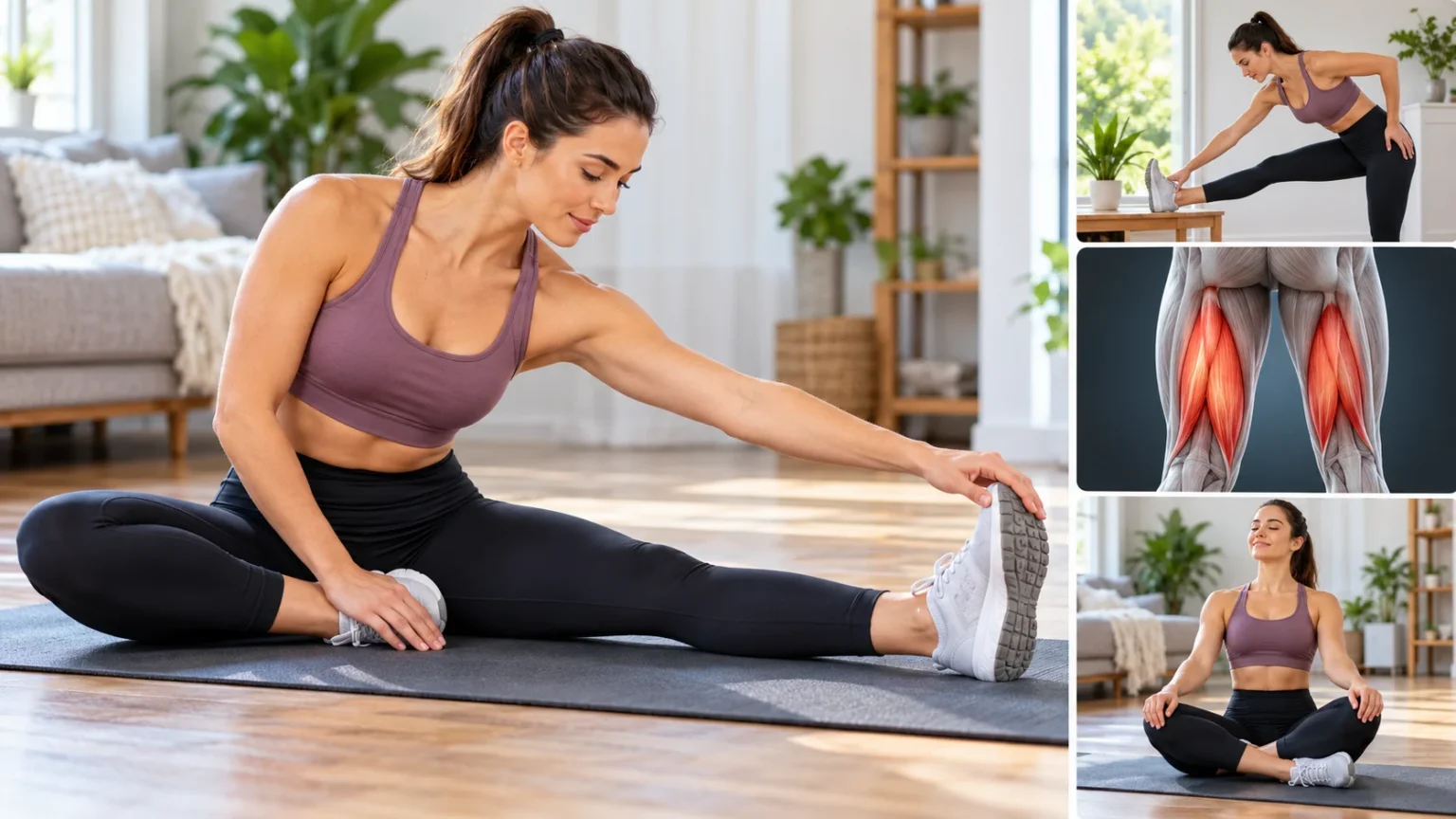

A hamstring stretch is one of the simplest ways to improve flexibility in the muscles running along the back of your thighs. These muscles play an important role in walking, running, bending, lifting, and controlling movement around the hips and knees. When the hamstrings feel tight, everyday movements may become uncomfortable and exercise technique can feel more restricted.
Regular hamstring stretching can help improve range of motion, reduce feelings of stiffness, and support easier lower-body movement. However, stretching works best when it is performed with control rather than by forcing the muscles into an uncomfortable position. Understanding proper technique, useful variations, common mistakes, and realistic benefits can help you include hamstring stretches more effectively in your routine.
What Is a Hamstring Stretch?
A hamstring stretch is a movement designed to gently lengthen the muscles at the back of the thigh. The hamstring group includes the biceps femoris, semitendinosus, and semimembranosus muscles. These muscles cross the hip and knee joints, helping extend the hip and bend the knee during many everyday and athletic movements.
Because the hamstrings influence both the hips and knees, their flexibility can affect how comfortably you bend forward, straighten the leg, and move through certain exercises. A stretch generally places the hip and knee in positions that create mild tension through the back of the thigh without causing sharp pain.
Hamstring stretches can be performed standing, sitting, or lying down depending on your mobility and comfort. Some variations are better suited for warm-ups, while others work well after exercise or during dedicated mobility sessions. The best stretch is usually the one you can perform with proper alignment and controlled breathing.
How to Do a Basic Hamstring Stretch
One beginner-friendly option is the seated hamstring stretch. Sit on the floor with one leg extended in front of you and the other leg comfortably bent. Keep your spine relatively tall and gently hinge forward from your hips toward the extended leg until you feel mild tension through the back of the thigh.
Avoid rounding your entire back simply to reach farther toward your toes. The goal is not to touch your foot but to create a controlled stretch in the hamstring. Keep the knee relaxed but generally straight, and stop if the stretch produces sharp, burning, or nerve-like pain.
Hold the position for approximately 20 to 30 seconds while breathing normally, then slowly return to the starting position. Repeat on the opposite side. Depending on your flexibility and goals, you can perform two or three rounds on each leg without bouncing or forcing the range.
What Muscles Does a Hamstring Stretch Target?
The primary target is the hamstring muscle group along the back of the thigh. These muscles work together during running, walking, jumping, climbing stairs, and movements that involve extending the hip. Stretching them can temporarily increase flexibility and may make certain lower-body movements feel less restricted.
Depending on the variation, you may also feel tension around the glutes, calves, or tissues behind the knee. This is partly because the lower-body muscles and connective tissues work together across multiple joints. A stretch should still feel concentrated mainly through the back of the thigh rather than as sharp discomfort elsewhere.
The position of your ankle and pelvis can change where you feel the stretch. Pulling the toes strongly toward you may increase tension farther down the leg, while rounding the spine can shift stress away from the intended area. Small adjustments can help you find a comfortable position that targets the hamstrings more directly.
Key Benefits of Hamstring Stretching
One of the main benefits of hamstring stretching is improved flexibility. Regular stretching can increase the range through which the muscles comfortably lengthen, making movements such as bending, stepping, or straightening the leg feel easier. Improved flexibility can be particularly useful for people who spend long periods sitting or perform activities requiring good hip mobility.
Hamstring stretching may also help reduce feelings of muscular stiffness after periods of inactivity or demanding exercise. A gentle stretch can create temporary relief when the back of the thighs feels tight. However, stretching should not be considered a complete treatment for persistent pain, weakness, or injuries involving the hamstrings.
Another benefit is improved movement comfort during certain exercises. Greater hamstring flexibility may make movements such as deadlifts, yoga poses, or mobility drills easier to perform within an appropriate range. Flexibility works best alongside strength because muscles need both mobility and control to support healthy movement.
Standing Hamstring Stretch
A standing hamstring stretch is convenient because it requires little space and no equipment. Place one heel on a low step, bench, or stable surface while keeping the leg mostly straight. Keep your chest lifted and hinge slightly forward from the hips until you feel tension behind the raised thigh.
Avoid bending excessively through the lower back. Moving from the hips helps keep the stretch focused on the hamstrings rather than simply creating the appearance of reaching farther. You can keep your hands on your hips or place them lightly on the supporting thigh for balance.
Choose a surface that is low enough to maintain good control. Raising the foot too high can make the stretch uncomfortable and may encourage poor posture. Hold the position gently and avoid locking the knee or forcing your body toward the raised foot.
Lying Hamstring Stretch
The lying hamstring stretch is often comfortable for people who struggle with balance or seated stretching. Lie on your back with both legs initially extended or one knee bent. Lift one leg toward the ceiling and support it behind the thigh or with a strap placed around the foot.
Keep the pelvis relaxed against the floor as you gently bring the leg toward you. Straighten the knee only as far as comfortably possible without creating sharp pain. The stretch should be felt along the back of the raised thigh, not as intense pulling behind the knee.
Using a towel or resistance strap can make the movement easier because you do not need to reach your leg with your hands. This variation also gives you better control over the amount of stretch. It can be useful after exercise or during a dedicated flexibility routine.
Dynamic Hamstring Stretching Before Exercise
Dynamic stretching uses controlled movement rather than holding one position for an extended period. Before running or strength training, movements such as gentle leg swings or walking hamstring reaches can help prepare the legs. These exercises gradually move the hamstrings through a comfortable range while increasing overall body temperature.
Dynamic hamstring stretches should remain controlled and should not involve aggressive kicking. Swing the leg only as high as you can while maintaining stable posture and smooth movement. The purpose is to prepare the muscles for activity rather than to test maximum flexibility before a workout.
Long static stretches immediately before explosive exercise may not always be necessary, particularly when performance is the priority. A gradual warm-up that combines light movement with dynamic mobility is often more practical. Static stretching can then be used later when you are focusing specifically on flexibility.
Common Hamstring Stretching Mistakes
One common mistake is forcing the stretch too far. More discomfort does not necessarily produce better flexibility, and aggressive stretching can irritate muscles or surrounding tissues. Aim for mild to moderate tension that you can comfortably maintain while continuing to breathe normally.
Another mistake is bouncing repeatedly at the end of the stretch. Fast bouncing can make the movement harder to control and may increase the risk of irritating the muscle. For standard static stretching, move gradually into position, remain still, and come out of the stretch slowly.
Rounding the lower back excessively is also common, particularly during seated stretches. This can create the illusion that you are reaching farther without significantly improving the hamstring stretch. Focus on hinging from the hips and maintaining a comfortable spinal position rather than trying to touch your toes at all costs.
How Long Should You Hold a Hamstring Stretch?
For general flexibility, holding a static hamstring stretch for approximately 20 to 30 seconds is a practical starting point. Some people may benefit from slightly longer holds, but there is usually no need to remain in one position for several minutes. Consistency is generally more important than performing extremely long stretches occasionally.
Two or three repetitions on each side can be enough for many flexibility routines. The total amount of stretching needed depends on your mobility, training goals, and how tight the muscles feel. People participating in sports or rehabilitation programs may follow more specific guidelines based on their individual needs.
Avoid using discomfort as the measure of whether a stretch is working. You should feel steady tension that gradually becomes easier rather than increasing pain. If the muscle begins to shake, cramp, or feel sharply painful, reduce the intensity or stop the stretch.
How Often Should You Stretch Your Hamstrings?
Hamstring stretching can be performed several times per week, and some people comfortably include gentle stretching in their daily routine. The ideal frequency depends on your current flexibility and goals. Short, regular sessions often work better than occasional intense stretching sessions that leave the muscles irritated.
People who sit for long periods may find brief mobility breaks helpful throughout the day. Walking, changing position, and gently stretching can reduce the feeling of stiffness that develops after prolonged sitting. Stretching alone, however, cannot fully compensate for spending many hours without movement.
If you already perform yoga, mobility work, or exercises involving large ranges of motion, you may not need extensive additional stretching. Consider your full exercise routine rather than focusing on one muscle group in isolation. Balanced mobility and strength training usually provide more useful results than stretching the hamstrings excessively.
Hamstring Stretching for Runners and Athletes
Runners rely heavily on the hamstrings during each stride, particularly as the leg swings forward and the hip extends. Gentle stretching can be part of an overall mobility routine when the hamstrings feel restricted. However, athletic performance also depends on hamstring strength, endurance, and coordination rather than flexibility alone.
Athletes should avoid using stretching to ignore pain that may indicate an injury. A hamstring strain can cause tenderness, weakness, bruising, or sharp discomfort, and aggressive stretching may irritate healing tissue. Returning to training should focus on gradual loading and appropriate strengthening rather than simply trying to restore flexibility quickly.
Combining hamstring exercises with glute, calf, and core strengthening can support better lower-body function. Exercises such as bridges, deadlift variations, and controlled hamstring curls can improve strength when appropriate. Stretching is most useful when it forms one part of a balanced training program rather than becoming the only strategy.
Can Hamstring Stretching Help With Lower Back Tightness?
Tight hamstrings can sometimes contribute to a feeling of stiffness around the hips and lower back, particularly when sitting or bending. Stretching them may temporarily improve comfort in some people by allowing easier movement around the pelvis. However, lower back pain has many possible causes and cannot always be explained by hamstring tightness.
If stretching provides relief, combine it with movement and strengthening rather than relying on flexibility work alone. Core control, hip strength, regular walking, and appropriate exercise can all influence how the lower back feels. Improving multiple aspects of movement may be more effective than repeatedly stretching one muscle group.
Persistent, severe, or worsening back pain should be evaluated by a healthcare professional. Numbness, weakness, pain traveling down the leg, or changes in bladder or bowel function require particular attention. These symptoms may involve nerves or other structures that need assessment rather than simple hamstring stretching.
When Should You Avoid Hamstring Stretching?
Avoid aggressive hamstring stretching when you have a recent strain, significant bruising, or sharp pain in the back of the thigh. Stretching an injured muscle too strongly during the early stages of recovery can worsen irritation. A healthcare professional or physical therapist can guide you on when and how to reintroduce flexibility exercises.
You should also stop if a stretch produces tingling, numbness, burning, or electric-like pain traveling down the leg. These symptoms may indicate nerve involvement rather than ordinary muscular tightness. Forcing through nerve-related symptoms is unlikely to improve flexibility and may make discomfort worse.
People recovering from surgery or significant hip, knee, or back injuries may need modified stretches. The appropriate position and range depend on the condition being treated. When in doubt, choose gentle movement and professional guidance rather than pushing into a stretch that feels unusually painful or unstable.
Conclusion
Hamstring stretching can be a useful way to improve flexibility, reduce feelings of stiffness, and support comfortable lower-body movement. The hamstrings play a major role in movements involving the hips and knees, so maintaining an appropriate range of motion can benefit exercise and everyday activities.
Good technique matters more than how far you can reach. Use a controlled hip hinge, avoid bouncing, maintain steady breathing, and stop at mild to moderate tension rather than forcing pain. Standing, seated, lying, and dynamic variations can all be useful depending on your mobility and workout goals.
Stretching works best when combined with regular movement and strength training. Strong, flexible hamstrings are generally more useful than flexibility alone. If stretching causes sharp pain, nerve-like symptoms, or discomfort related to an injury, stop and seek professional guidance before continuing.
FAQs
How long should I hold a hamstring stretch?
Holding a hamstring stretch for about 20 to 30 seconds is a practical starting point for general flexibility. You can repeat it two or three times per side while keeping the stretch comfortable and controlled.
Should I stretch my hamstrings every day?
Gentle daily stretching can be appropriate for many people, but it is not required. A few regular sessions each week may be enough, especially when combined with walking, mobility work, and strength training.
Why are my hamstrings always tight?
Hamstrings may feel tight because of prolonged sitting, training load, weakness, limited mobility, or individual anatomy. Persistent tightness accompanied by pain or nerve symptoms may require assessment to determine the underlying cause.
Is it better to stretch hamstrings before or after exercise?
Dynamic hamstring movements are generally better suited to warm-ups, while longer static stretches can be used after exercise or during separate mobility sessions. The best approach depends on your activity and flexibility goals.
Can hamstring stretches help prevent injury?
Stretching may improve flexibility, but injury prevention depends on several factors including strength, training progression, recovery, and movement demands. Hamstring stretches should therefore be combined with appropriate strengthening and overall conditioning.



