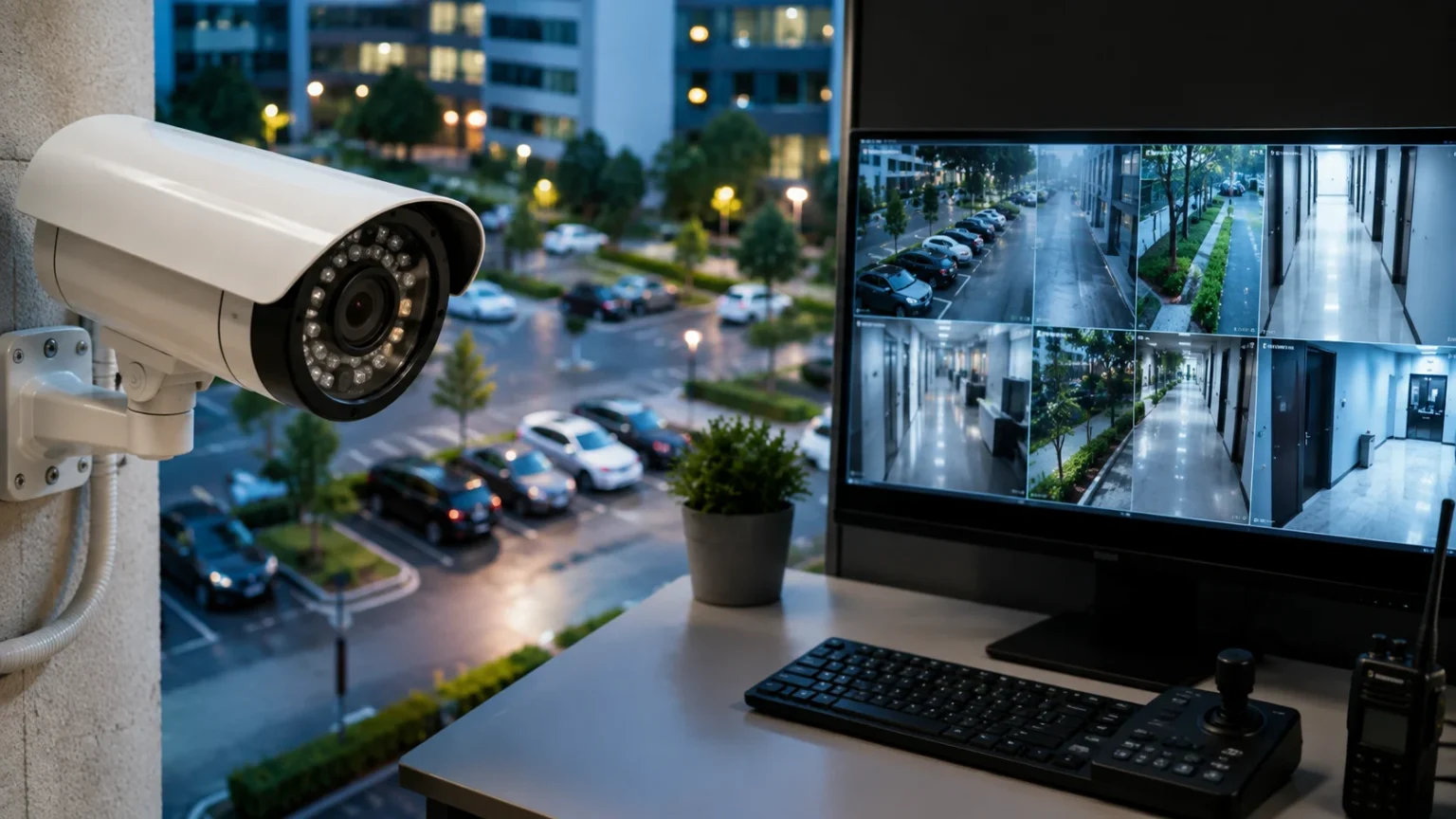

What Is CCTV? How Surveillance Cameras Work
CCTV, short for closed-circuit television, is a video surveillance system that uses cameras to capture activity and transmit footage to a limited group of monitors, recorders, or authorized users. Unlike traditional broadcast television, CCTV does not normally send video openly to the public, which is why the system is described as a closed circuit. CCTV cameras are widely used in homes, offices, shops, warehouses, schools, parking areas, transportation hubs, and public spaces. Modern systems can record continuously, activate after detecting movement, and send alerts when unusual activity occurs. Many systems also allow authorized users to watch live or recorded video remotely through smartphones and computers. These capabilities have transformed CCTV from a simple recording tool into a broader security and monitoring technology.
Early CCTV systems relied primarily on analog cameras connected directly to monitors and video recorders through physical cables. These systems could provide useful evidence, but recordings were often lower in quality and difficult to search efficiently. Modern surveillance technology increasingly uses digital or IP cameras capable of producing high-resolution video and communicating across computer networks. Depending on the system, footage can be stored on a DVR, NVR, local memory card, server, or cloud-based storage platform. Some cameras can also identify motion, distinguish people from vehicles, record audio where permitted, and capture usable images in low light. The basic goal, however, remains the same: observe an area and provide visual information about what happened there.
Understanding how CCTV works is easier when you think of it as a chain connecting four basic activities. A camera first captures light from the scene and converts it into an electrical or digital video signal. That signal is then transmitted through cable, a local network, or a wireless connection to another part of the security system. A recorder or storage platform saves the footage so it can be reviewed later, while monitors or apps allow people to watch live video. Additional software can analyze the footage and trigger alerts based on predefined rules. Each stage influences the system’s video quality, reliability, security, and usefulness.
CCTV is often associated with crime prevention, but surveillance cameras serve many other purposes. Businesses may use them to monitor entrances, investigate workplace incidents, protect inventory, or understand activity around restricted areas. Homeowners often install outdoor cameras near doors, garages, driveways, and gardens to check visitors and receive motion alerts. Industrial organizations can monitor machinery or hazardous locations without requiring employees to remain nearby. Transportation operators may use cameras to improve passenger safety and investigate accidents. Because CCTV applications differ so widely, there is no single camera or recording setup that is best for every environment.
The effectiveness of a CCTV system depends on more than simply installing the largest possible number of cameras. Placement, image resolution, field of view, lighting, storage capacity, network security, and legal considerations can all determine whether footage is genuinely useful. A high-resolution camera aimed in the wrong direction may provide less value than a carefully positioned lower-cost camera. Similarly, recording video without enough storage can cause important footage to be overwritten before anyone reviews it. Modern surveillance also raises legitimate privacy questions, particularly when cameras capture employees, customers, neighbors, or public areas. Understanding both the technology and its responsible use is therefore essential when considering CCTV.
What Is CCTV?
CCTV means closed-circuit television, a term originally used to describe television signals transmitted within a private or restricted system rather than broadcast to everyone. In a traditional setup, one or more cameras send video to designated monitors and recording equipment. Only people connected to or authorized for the system are generally able to access the footage. This closed distribution model distinguishes CCTV from television broadcasting, even though both technologies involve capturing and displaying moving images. Modern CCTV may use internet-based networks rather than a completely isolated circuit, but the term remains widely used. In everyday language, CCTV usually refers to fixed or networked security-camera systems used for monitoring and recording specific locations.
A typical CCTV system contains cameras, a method of transmitting video, storage equipment, viewing software, and some form of display. These components may exist as separate physical devices or be combined into compact consumer equipment. For example, a traditional business system might use several cameras connected to an NVR and dedicated monitor. A home camera may instead combine the lens, image sensor, processor, microphone, wireless networking, and local storage inside one device. The footage can then be accessed through an app. Although these systems look different, both perform the same fundamental tasks of capturing, transmitting, storing, and displaying video.
CCTV systems can operate continuously or according to specific triggers. Continuous recording captures video all day and night, which provides a complete timeline but requires significant storage space. Motion-based recording saves footage when the camera or associated software detects movement, reducing storage requirements. Some systems combine both approaches by recording continuously at lower quality and saving higher-quality clips when an event occurs. Scheduled recording can also be configured so cameras record only during specific hours. The ideal method depends on the security risk, available storage, network capacity, and importance of maintaining uninterrupted evidence.
Modern CCTV is increasingly connected to broader security ecosystems. Cameras can work alongside alarms, access-control systems, door sensors, intercoms, and smart-home devices. A camera may begin recording when a door opens, while an access-control system can associate video with a specific entry event. Businesses can also integrate cameras with centralized monitoring software that manages multiple buildings from one location. These integrations can improve response times because video provides context that a simple alarm cannot offer. However, greater connectivity also means network security becomes an important part of protecting the surveillance system itself.
The term CCTV is sometimes used interchangeably with video surveillance, but the second phrase is broader. Video surveillance can include traditional closed systems, internet-connected cameras, body-worn cameras, video doorbells, and cloud-managed security platforms. CCTV remains especially common when discussing permanent security cameras installed around buildings or public areas. Regardless of terminology, the technology should be selected based on a defined purpose rather than simply because surveillance equipment is available. Knowing whether the goal is deterrence, incident investigation, real-time monitoring, access verification, or another function helps determine what kind of system is appropriate.
How Does CCTV Work?
A CCTV camera begins by collecting light reflected from people, objects, and surfaces within its field of view. The lens focuses that light onto an electronic image sensor inside the camera. Modern cameras commonly use digital sensors that convert incoming light into electronic information representing individual parts of the image. The camera’s internal processor then adjusts factors such as exposure, color, contrast, and noise before producing a video stream. Resolution determines how many pixels are used to create each frame, while frame rate influences how smoothly motion appears. These processes happen continuously whenever the camera is operating.
After the image has been processed, the video must travel from the camera to a recorder, monitor, or software platform. Analog CCTV cameras traditionally transmit video through coaxial cable to a digital video recorder. IP cameras convert footage into network data and send it through Ethernet or wireless connections. Some wired IP cameras use Power over Ethernet, commonly called PoE, which allows the same cable to carry both network data and electrical power. Wireless cameras still require power unless they operate on batteries. The transmission method influences installation complexity, network requirements, reliability, and how far cameras can be placed from recording equipment.
The next stage is video recording and storage. A DVR converts and saves signals received from compatible analog cameras, while an NVR typically receives already-digital video streams from IP cameras. Security systems may store footage on hard drives designed for continuous recording because surveillance workloads can involve writing data around the clock. Smaller cameras may use microSD cards for local storage, while cloud-based platforms can upload selected footage to remote servers. The amount of storage required depends on resolution, frame rate, compression, number of cameras, and retention period. Higher-quality footage generally consumes more space.
Once video is stored, authorized users need a practical way to retrieve it. Traditional CCTV installations often include a monitor connected directly to the recorder. Modern systems usually offer computer software, web interfaces, or mobile apps that allow users to view several cameras at once. Search tools may let someone select a specific camera, date, and time instead of manually reviewing hours of footage. Event markers can make this process even faster by identifying moments when movement or another trigger occurred. Remote viewing is particularly useful for businesses with multiple locations and homeowners who want to check their property while away.
Analytics can add another layer to the basic CCTV workflow. Instead of treating every change in the image as equally important, modern software can analyze patterns and attempt to identify particular types of activity. A system might distinguish a person from a vehicle, detect when someone crosses a virtual boundary, or alert staff when movement occurs in a restricted area. More advanced systems may support object tracking, occupancy analysis, or other specialized functions. These features can reduce the need for someone to watch monitors constantly. Their accuracy, however, depends on camera placement, lighting, software quality, and environmental conditions.
Main Components of a CCTV System
The camera is the most visible part of any CCTV installation, but choosing a camera requires more than comparing resolution numbers. Different lenses provide different fields of view, which affects how much of the scene is visible and how large important subjects appear. A wide-angle lens can cover a large room but may show faces at a smaller size. A narrower lens can provide more useful detail at a specific entrance or distant target. Fixed-lens cameras maintain one view, while varifocal cameras allow installers to adjust the viewing angle. Some advanced cameras can mechanically pan, tilt, and zoom.
The recording device is another central component. In many conventional systems, cameras send their footage to a DVR or NVR containing one or more hard drives. These recorders organize video streams, manage storage, provide playback tools, and often support remote access. They may also generate motion alerts or run basic analytics. Recording devices are normally sized according to the number and type of cameras they must support. Selecting a recorder with sufficient channels, processing capacity, and storage expansion can make future upgrades easier.
Storage determines how long recorded footage remains available before older video is deleted or overwritten. A system recording eight high-resolution cameras continuously may require significantly more disk space than a two-camera system that records only on motion. Video compression technologies reduce file sizes by removing redundant visual information, allowing more footage to fit within the available capacity. Retention requirements differ according to how the system is used. A homeowner might need only several days of footage, while a business may require longer retention for operational or regulatory reasons. Storage planning should therefore occur before cameras are installed.
Cables, switches, and network infrastructure connect the individual parts of many surveillance systems. Analog cameras often use coaxial cable, while IP systems generally rely on Ethernet networking. A PoE switch can simplify IP-camera installations because it supplies both data connectivity and power to compatible cameras. Network bandwidth matters when many high-resolution cameras stream video simultaneously. Poorly designed networks can cause delays, dropped frames, or unreliable remote viewing. Separating surveillance traffic appropriately and using secure network configurations can improve both performance and cybersecurity.
Displays and management software complete the human side of the system. Security personnel may use dedicated monitors showing multiple live camera feeds, while managers might access the same system from a workstation or phone. Good software makes it easier to change camera views, find recorded incidents, export clips, manage user permissions, and respond to alerts. Large organizations may use video management systems capable of controlling hundreds or thousands of cameras across several sites. User access should be carefully managed because surveillance footage can contain sensitive information. Technical functionality should therefore be balanced with strong authentication and appropriate privacy controls.
Types of CCTV Cameras and Systems
Analog CCTV cameras remain in use because they can provide a relatively straightforward and cost-effective option for existing wired installations. Traditional analog cameras transmit video signals through coaxial cable to a DVR, where the footage is converted into digital files for storage. Modern high-definition analog formats can provide substantially better image quality than older standard-definition CCTV. Businesses with existing coaxial cabling may therefore upgrade cameras without completely replacing their infrastructure. Analog systems can also be simpler to isolate from general computer networks. However, they typically provide less network flexibility than fully IP-based camera systems.
IP cameras, also known as network cameras, capture and digitize video inside the camera itself. They then transmit the resulting video stream across an IP network to an NVR, server, or cloud service. These cameras can support high resolutions, advanced analytics, flexible network deployment, and remote management. Many commercial IP cameras use PoE, reducing the need for separate electrical connections at each location. Because they are network devices, they can also be configured and updated through software. Their connectivity makes strong passwords, firmware updates, encryption, and network security particularly important.
Dome cameras are named for their rounded housing and are commonly installed on ceilings or walls. Their shape can make the exact viewing direction less obvious, which may provide a deterrent effect in some environments. Bullet cameras have a more elongated housing and are often used outdoors because their visible direction makes them suitable for monitoring driveways, building perimeters, or entrances. Turret-style cameras offer another compact design that can provide flexible positioning. The housing style itself does not determine image quality. Lens, sensor, lighting performance, weather resistance, and installation position generally matter more.
PTZ cameras provide pan, tilt, and zoom functionality that allows operators or automated software to change the viewing direction. These cameras can cover large areas and zoom in on events that require closer inspection. They are often used in locations such as parking areas, industrial sites, stadiums, and transportation facilities. A PTZ camera does not necessarily replace several fixed cameras because it can look in only one direction at a particular moment. Many security designs therefore combine fixed cameras for continuous coverage with PTZ units for active monitoring. Automated tours can also move the camera through predefined positions.
Specialized surveillance cameras exist for particular environments. Thermal cameras detect infrared energy associated with heat rather than relying entirely on visible light, making them useful for certain perimeter and industrial applications. Fisheye cameras use extremely wide-angle lenses to provide broad coverage from a central position. License-plate cameras are optimized to capture readable vehicle plates under challenging conditions. Doorbell cameras combine surveillance with intercom functionality for residential entrances. Choosing among these options should begin with the security problem that needs solving rather than selecting technology simply because it offers more features.
CCTV Recording: DVR, NVR and Cloud Storage
A DVR, or digital video recorder, is most commonly associated with analog CCTV systems. Analog cameras transmit video signals to the DVR, which performs much of the digital conversion and recording work. The cameras are usually connected individually to recorder channels through compatible cabling. DVR systems remain practical for many homes and businesses, particularly when suitable coaxial cable is already installed. Their relative simplicity can make installation and troubleshooting straightforward. However, adding cameras may require additional direct cable runs to the recorder, which can limit flexibility in larger environments.
An NVR, or network video recorder, is designed primarily for IP-camera systems. Because IP cameras already convert video into digital network data, the NVR receives and stores those digital streams rather than digitizing analog signals. Cameras may connect through a network switch instead of running directly to the recorder, making network layouts more flexible. NVR systems can support high-resolution video, remote configuration, analytics, and centralized management. They may also work with cameras located across different network segments or buildings. Compatibility between cameras, recording software, and network standards should still be confirmed before equipment is purchased.
Local hard-drive storage offers several advantages. Video can remain available even when an internet connection fails, and organizations can maintain direct control over where footage is physically stored. Continuous high-bitrate recording may also be more economical locally than uploading every camera stream to cloud servers. The main limitations involve hardware maintenance, physical security, and the risk that a recorder could be damaged or stolen. Redundant drives or backup procedures can reduce some of these risks. Critical systems may use multiple storage methods rather than relying on one device.
Cloud CCTV storage sends footage or selected events to remote data centers operated by a service provider. This model can make video accessible from almost anywhere and may simplify management for organizations with many locations. Cloud platforms can also handle software updates, user management, notifications, and analytics centrally. However, cloud recording depends more heavily on internet connectivity and recurring subscription costs. Upload bandwidth can become important when several high-resolution cameras send video simultaneously. Organizations should also understand where data is stored, how long it is retained, and what security controls protect it.
Hybrid systems combine local recording with cloud access or backup. A camera or NVR might keep continuous video locally while uploading important motion events to the cloud. This approach can preserve evidence if local equipment is damaged while avoiding the bandwidth requirements of sending every second of footage remotely. Some cameras also contain memory cards that continue recording during temporary network outages. Once connectivity returns, footage may synchronize with another system depending on the design. Using multiple storage layers can improve resilience, but additional complexity should be justified by the level of security required.
CCTV Features: Night Vision, Motion Detection and Smart Analytics
Night vision allows surveillance cameras to continue capturing useful footage when visible light is limited. Many security cameras include infrared LEDs that illuminate a scene using wavelengths people cannot easily see. The camera switches into a mode capable of detecting this infrared light, often producing a black-and-white image. The effective range depends on the strength of the infrared illumination, lens, sensor, and surrounding environment. Reflective walls or objects positioned too close to the camera can sometimes create glare. Proper placement is therefore important for achieving clear nighttime footage.
Some modern cameras use low-light sensors or supplemental white lighting to capture color video at night. Color can provide valuable details such as clothing, vehicle appearance, or object identification that may be lost in monochrome infrared footage. However, stronger lighting may be visible to people in the area and could affect neighbors or wildlife. The best night-vision approach depends on the location and security objective. A dark warehouse may require a different solution from a residential driveway with nearby streetlights. Testing the camera under actual nighttime conditions is preferable to relying only on daytime installation views.
Motion detection helps reduce unnecessary recording and alerts by identifying changes within the camera image. Traditional systems may compare one frame with the next and trigger whenever enough pixels change. This can produce false alerts from moving trees, shadows, rain, insects, or headlights. Newer cameras can use more advanced algorithms to distinguish people, vehicles, animals, or other categories. Detection zones can also limit alerts to important portions of the image. A homeowner, for example, may monitor a doorway while ignoring motion on a busy road in the background.
Smart video analytics extend this idea further by interpreting events rather than merely detecting movement. A system may create an alert when someone crosses a virtual boundary, remains in an area longer than expected, or enters a restricted zone. Retail environments can use video analytics for occupancy measurements, while industrial facilities may monitor access around dangerous equipment. Object search can help investigators locate specific types of activity across large quantities of footage. These tools can save significant time. They are still not perfect and should be configured and reviewed with realistic expectations.
Remote alerts connect CCTV monitoring with smartphones and other devices. A user may receive a notification when a camera detects a person at the front door or activity occurs after business hours. Tapping the alert can open live video or a recorded event clip. This changes surveillance from a passive recording system into a tool that can support faster responses. Too many notifications, however, can lead users to ignore alerts entirely. Effective configurations focus on events that genuinely require attention rather than notifying users about every minor movement.
Where Is CCTV Used?
Homes are one of the fastest-growing environments for video surveillance because compact internet-connected cameras have made installation more accessible. Homeowners may place cameras near front doors, driveways, garages, gardens, and side entrances. Indoor cameras can also monitor selected areas when a property is unoccupied, although privacy should be carefully considered. Video doorbells provide a combination of camera, motion sensor, microphone, and communication functions. Remote access allows residents to check activity while traveling or working. Residential systems are most effective when cameras cover meaningful entry points without unnecessarily capturing private neighboring spaces.
Retailers use CCTV to monitor customer areas, entrances, stockrooms, loading zones, and cash-handling locations. Recorded video may help investigate theft, disputes, accidents, or suspicious transactions. Managers can also use appropriately deployed cameras to understand general movement patterns or operational problems. Surveillance should not replace good store design, staff training, access controls, or inventory management. Instead, cameras form one layer within a broader loss-prevention strategy. Clear policies about who can view footage and how long it is retained are important when employees and customers are recorded.
Offices and commercial buildings use cameras around lobbies, elevators, parking areas, hallways, loading facilities, and restricted rooms. CCTV can complement electronic access control by providing visual evidence of who entered an area. Security staff can monitor several locations from a central control room rather than physically standing at every entrance. Cameras may also assist investigations following accidents or property damage. However, workplace surveillance can affect employee privacy and trust if used excessively. Organizations should have a legitimate purpose and follow applicable laws when monitoring staff.
Factories, warehouses, and industrial sites often use surveillance for both security and operational awareness. Cameras can cover large storage areas, loading docks, equipment zones, and remote parts of a facility. Operators may monitor hazardous processes from safer locations or review footage after an incident to understand what happened. Specialized cameras can work in difficult lighting or outdoor conditions. Video may also support safety investigations when combined with other sensor data. Industrial CCTV should be installed so that security goals do not interfere with emergency exits, worker safety, or operational equipment.
Public infrastructure is another major CCTV application. Transportation stations, airports, roads, government facilities, campuses, and public spaces may use cameras to support security and incident management. Operators can monitor crowd movement, investigate accidents, or respond to suspicious activity. Large systems may include thousands of cameras connected to centralized video-management platforms. Public surveillance also raises significant questions about data retention, access, identification technologies, and civil privacy. Effective governance is therefore as important as camera performance when surveillance extends across public environments.
Benefits, Limitations and Privacy Considerations of CCTV
One of the most obvious benefits of CCTV is the ability to create a visual record of events. If theft, vandalism, an accident, or another incident occurs, footage can help reconstruct the sequence of activity. Clear images may identify people, vehicles, actions, or timing that witnesses did not notice. Cameras can also support faster verification when an alarm activates. Instead of responding blindly, security personnel may be able to see whether the alert reflects a genuine problem. These capabilities can make surveillance a valuable part of a wider security strategy.
Visible cameras may also deter some unwanted behavior because people know their actions could be recorded. The strength of this effect varies according to the environment, visibility of cameras, and type of activity being considered. CCTV should therefore not be treated as a guarantee that crime or misconduct will stop. Determined offenders may conceal their identity or choose locations outside camera coverage. A camera also cannot physically prevent someone from entering an unlocked building. Locks, lighting, access control, alarms, procedures, and trained personnel remain important.
Poor camera placement is one of the most common limitations of surveillance systems. A camera may technically record an incident without capturing enough detail to identify what happened. Bright backlighting, darkness, rain, glare, dirty lenses, vegetation, or objects blocking the view can all reduce image usefulness. Extremely wide views may show a large area while making faces too small to recognize. Regular maintenance and testing are therefore essential. Security teams should review actual recorded footage rather than assuming a camera works simply because a live image appears on a monitor.
Cybersecurity has become another important consideration as cameras increasingly connect to networks and cloud platforms. Default passwords, outdated firmware, exposed remote-access services, or poorly configured networks can create opportunities for unauthorized access. Strong unique passwords, software updates, secure network design, encrypted connections, and limited user privileges can reduce these risks. Organizations should also remove accounts belonging to people who no longer require access. Surveillance footage deserves protection because it may reveal routines, property layouts, employees, customers, or other sensitive information. Physical security technology should not create unnecessary digital vulnerabilities.
Privacy and legal compliance should be considered before cameras are installed. Rules regarding video recording, audio recording, workplace monitoring, facial recognition, and public surveillance vary between jurisdictions. Recording someone in a place where they reasonably expect privacy can create serious ethical and legal concerns. Businesses may need signs, policies, retention schedules, or other safeguards depending on local requirements. Audio recording can be regulated more strictly than video in some places. Responsible CCTV use means collecting only what is genuinely needed and protecting the resulting footage from inappropriate access.
How to Choose the Right CCTV System
Start by defining exactly what the cameras need to accomplish. A system designed to detect general movement across a warehouse requires different equipment from one expected to identify faces at a doorway. Consider whether the main goal is deterrence, live monitoring, incident investigation, vehicle identification, remote access, or operational oversight. The required level of image detail depends heavily on this objective. Buying the highest-resolution camera available does not automatically solve every security problem. Matching the technology to a specific purpose usually produces better results and more predictable costs.
Camera placement should be planned before deciding how many devices to purchase. Identify entrances, exits, blind spots, restricted areas, valuable assets, and routes people or vehicles are likely to use. Then consider mounting height, viewing angle, lighting, and the distance between the camera and the important subject. Overlapping coverage may be appropriate in critical locations so one obstruction does not eliminate all visual evidence. Outdoor cameras also need suitable weather resistance. A site survey can reveal practical installation problems before cables and hardware are purchased.
Resolution is important, but it should be evaluated together with field of view and storage needs. A 4K camera can capture substantial detail when properly installed, but it also creates larger video streams than a lower-resolution camera. If the lens covers an extremely wide area, subjects may still appear too small for identification. Frame rate also influences storage and video smoothness. Security footage does not always require cinematic frame rates to be useful. Balancing detail, bandwidth, storage capacity, and cost is usually more sensible than maximizing every specification.
Consider how long footage needs to remain available. This retention period determines much of the required storage capacity. A small household system that records only motion clips may function well with modest local or cloud storage. A business recording dozens of cameras continuously may require multiple surveillance-grade drives or centralized servers. Remote backup may be justified when losing local equipment would create unacceptable risk. Whatever system is selected, users should know what happens when storage becomes full and whether old footage is automatically overwritten.
Finally, evaluate the security and long-term support of the system itself. Choose products that receive firmware updates and provide clear methods for changing passwords, managing user accounts, and securing remote access. Think about whether replacement cameras will remain compatible with the recorder and whether storage can be expanded later. Businesses should also consider who will maintain the system and respond when a camera fails. A CCTV installation is not a one-time purchase that can be ignored indefinitely. Routine testing, maintenance, software updates, and policy reviews help ensure the system continues providing useful surveillance when it is actually needed.
Frequently Asked Questions About CCTV
What does CCTV stand for?
CCTV stands for closed-circuit television. It describes a video system in which camera footage is transmitted to a limited set of recorders, monitors, or authorized users rather than being publicly broadcast.
Does CCTV work without the internet?
Yes, many CCTV systems can record locally to a DVR, NVR, memory card, or server without an internet connection. Internet access is mainly required for features such as remote viewing, cloud storage, off-site alerts, and some online services.
What is the difference between CCTV and an IP camera?
Traditional CCTV commonly refers to analog cameras connected to a DVR, while an IP camera digitizes video itself and sends it across a computer network. IP systems generally offer greater networking flexibility and can support advanced digital features, although modern analog CCTV can also provide high-definition video.
How long does CCTV footage last?
The retention period depends on storage capacity, number of cameras, video resolution, compression settings, frame rate, and whether recording is continuous or motion-based. Once available storage is full, many systems automatically overwrite the oldest recordings unless footage has been protected or exported.
Can CCTV cameras see in the dark?
Many CCTV cameras can capture video in darkness using infrared illumination, low-light image sensors, or supplemental lighting. Image quality depends on the camera technology, distance, environmental conditions, and how well the camera has been positioned for nighttime monitoring.