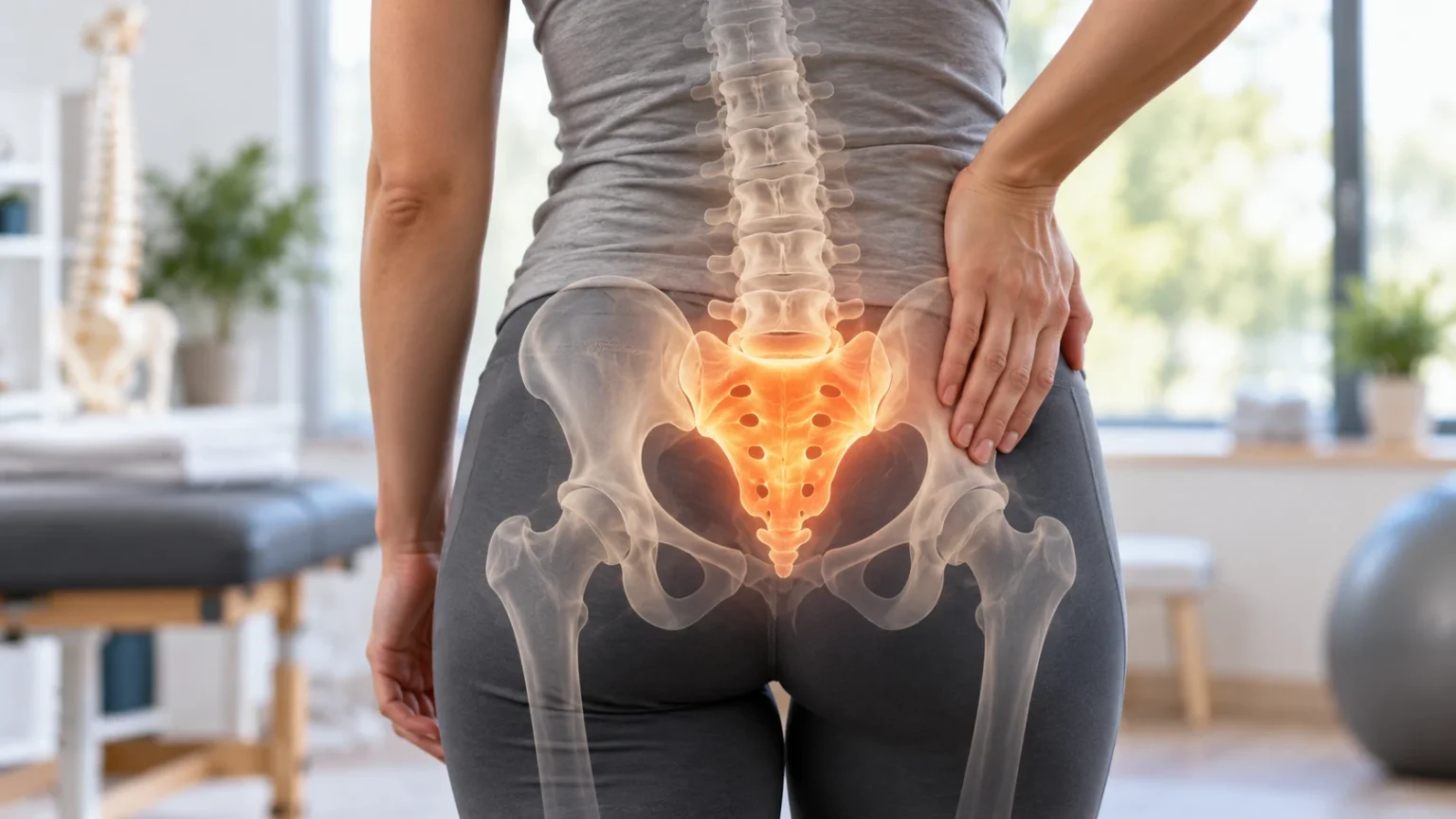

The sacrum is an important bone at the base of the spine that helps connect your upper body to your pelvis. Although many people have heard the term during conversations about lower back pain, they may not know exactly where the sacrum is located or what role it plays. Understanding this area can make common back, hip, and pelvic symptoms easier to understand.
The sacrum supports body weight, contributes to pelvic stability, and forms important joints with the pelvis and lower spine. It also protects nerves that travel through the lower part of the spinal column. Because of its central location, problems around the sacrum can sometimes produce discomfort that feels like lower back pain, buttock pain, or pain near the hips.
Knowing where the sacrum is and how it works can help you better understand your anatomy and recognize when pain may involve this region. The sacrum works together with muscles, ligaments, nerves, the lumbar spine, and the pelvic bones to help you stand, walk, bend, and transfer force between your upper and lower body.
Where Is the Sacrum Located in the Body?
The sacrum is located at the bottom of the spine, directly below the lumbar vertebrae and above the tailbone, which is known as the coccyx. It sits between the two halves of the pelvis and forms the back portion of the pelvic ring. If you place your hand over the center of your lower back just above the buttocks, you are roughly over the sacral region.
From the front, the sacrum sits deep inside the pelvis rather than close to the skin. Its upper border connects with the fifth lumbar vertebra, commonly called L5, while its lower tip connects with the coccyx. This position makes the sacrum an important bridge between the movable spinal column and the strong pelvic structure beneath it.
The sacrum also connects to the right and left pelvic bones through the sacroiliac joints, commonly called SI joints. These joints sit on either side of the sacrum and help transfer body weight from the spine into the legs. Because these structures are closely connected, sacral discomfort can sometimes be confused with lower back, hip, or SI joint pain.
What Does the Sacrum Look Like?
The sacrum is a large, triangular-shaped bone that is wider at the top and narrower toward the bottom. Its broad upper portion is called the base, while the lower pointed portion is called the apex. This wedge-like shape allows the bone to fit securely between the left and right sides of the pelvis.
Adults usually have five sacral vertebrae that have fused together to form one solid bone. During childhood and adolescence, these vertebrae begin as separate bones and gradually join as the skeleton matures. The fused structure provides strength while helping the pelvis support the weight coming down through the lumbar spine.
Small openings called sacral foramina can be seen on both the front and back surfaces of the sacrum. These openings allow important spinal nerves and blood vessels to pass through the area. The back surface also contains ridges created by the fusion of vertebral structures, giving the bone a textured and uneven appearance.
What Is the Main Function of the Sacrum?
One of the sacrum’s most important functions is transferring body weight from the spine into the pelvis. When you stand or walk, weight travels down through the lumbar spine and reaches the sacrum before being distributed through the pelvic bones. This system allows force to move efficiently toward the hips and lower limbs.
The sacrum also provides stability to the back of the pelvis. Its triangular shape fits securely between the hip bones, while strong ligaments help prevent excessive movement. This stability is especially important during walking, running, lifting, and other activities where forces repeatedly travel between the upper and lower portions of the body.
Another important function involves protection. The sacrum surrounds part of the sacral canal, which contains nerve structures extending from the lower spinal region. These nerves contribute to movement, sensation, and the function of several structures within the pelvis and lower body, making protection of this area particularly important.
How Does the Sacrum Connect to the Spine?
The top of the sacrum connects with the lowest lumbar vertebra, known as L5. Together, these structures form the lumbosacral junction, an area that experiences significant mechanical stress during everyday movement. Bending, lifting, twisting, sitting, and standing all place forces through this transition between the flexible lumbar spine and the more stable sacrum.
The joint between L5 and the sacrum includes an intervertebral disc that helps absorb pressure and allows controlled movement. Facet joints and strong supporting ligaments also contribute to stability in this region. Because the lumbosacral area carries substantial body weight, problems involving discs, joints, or surrounding tissues can sometimes cause lower back discomfort.
Below the sacrum sits the coccyx, which is commonly called the tailbone. The connection between the sacrum and coccyx is known as the sacrococcygeal joint. Although this joint allows only a small amount of movement, its location becomes important in situations involving falls, prolonged sitting, childbirth, or direct injuries to the tailbone region.
What Are the Sacroiliac Joints?
The sacroiliac joints are located where the sacrum meets the right and left iliac bones of the pelvis. You have one SI joint on each side of the sacrum. These joints are designed primarily for stability, but they still allow a small amount of movement that helps absorb and transfer forces during normal daily activities.
Strong ligaments surround the SI joints and help prevent excessive motion. The irregular surfaces of the sacrum and pelvis also fit together in a way that increases stability. This design is useful because the SI joints must withstand significant loads when you walk, climb stairs, run, lift objects, or change from sitting to standing.
Pain around the sacroiliac region can sometimes be mistaken for pain coming directly from the sacrum or lower back. SI joint discomfort may be felt near one side of the lower back, upper buttock, or back of the hip. A healthcare professional may use physical examination and other tests to determine which structure is contributing to symptoms.
What Muscles and Ligaments Surround the Sacrum?
Several strong ligaments help stabilize the sacrum and connect it to the pelvis and surrounding structures. These include the sacroiliac ligaments, sacrotuberous ligament, and sacrospinous ligament. Together, they limit excessive movement while helping maintain the alignment and stability of the pelvic ring during weight-bearing activities.
Important muscles also attach near or around the sacral region. The gluteal muscles, multifidus, piriformis, and parts of the erector spinae system contribute to movement and stability near the lower spine and pelvis. These muscles help control posture, hip movement, spinal motion, and the way forces travel through the trunk and lower limbs.
Muscle tightness or weakness around this area can sometimes affect how the lower back and pelvis move. For example, prolonged sitting, repetitive lifting, or sudden increases in physical activity may leave surrounding muscles irritated or fatigued. Improving strength, mobility, and movement control can help support the structures around the sacrum during everyday activities.
What Nerves Pass Through the Sacrum?
The sacrum contains several openings that allow spinal nerves to leave the spinal canal and travel into the pelvis and lower body. These nerves are known as the sacral spinal nerves. They contribute to sensation and muscle control in areas including the buttocks, parts of the legs, feet, pelvic floor, and several pelvic organs.
The sacral nerve roots also contribute to a larger network called the sacral plexus. This nerve network helps form major nerves that serve the lower extremities, including portions of the sciatic nerve. Because nerve structures are located close to the sacrum, certain spinal or pelvic problems may sometimes cause pain, tingling, numbness, or weakness.
Not every symptom near the sacrum means a nerve is involved. Muscle strain, ligament irritation, joint problems, and other mechanical conditions can produce localized pain without neurological symptoms. New weakness, significant numbness, changes in bladder or bowel control, or numbness around the groin require prompt medical attention because they can indicate serious nerve compression.
What Can Cause Pain Around the Sacrum?
Pain around the sacrum can develop for several reasons, including muscle strain, ligament irritation, prolonged sitting, falls, or repetitive physical stress. Activities involving frequent bending, heavy lifting, twisting, or sudden changes in exercise intensity may place extra demand on the lower back and pelvic region. Sometimes the pain develops gradually rather than after one obvious injury.
Sacroiliac joint irritation is another possible source of pain near the sacrum. Because the SI joints sit directly beside the sacral bone, discomfort can feel as though it comes from the center of the lower back or upper buttock. Symptoms may become more noticeable during prolonged standing, walking, climbing stairs, or transitioning between sitting and standing.
Other potential causes include arthritis, fractures, disc-related problems, inflammatory conditions, or less common medical conditions. Sacral stress fractures can occur in certain people after repeated loading or weakened bone. Persistent, severe, unexplained, or worsening pain should be evaluated rather than assuming the problem is simply a minor muscle strain.
How Can You Tell Sacrum Pain From Lower Back Pain?
Sacral pain is often felt lower than typical lumbar back pain, usually near the center of the body just above the tailbone or around the upper buttocks. However, the boundaries are not always clear because several joints, muscles, and ligaments overlap in this region. Pain from one structure may also spread into nearby areas.
Lumbar spine pain often occurs higher in the lower back and may sometimes travel into the leg when nerves become irritated. Sacroiliac pain often affects one side more than the other and can be felt near the back of the hip or buttock. Sacral pain may remain central, although symptoms depend heavily on the specific cause.
Location alone cannot reliably determine the source of pain. Healthcare professionals may examine spinal movement, hip motion, strength, sensation, tenderness, and SI joint responses to better understand the problem. Imaging or other investigations may be considered when symptoms follow significant trauma, persist unexpectedly, or suggest a condition requiring further assessment.
How Can You Keep the Sacral Area Healthy?
Regular movement can help maintain strength and mobility around the lower spine, pelvis, and hips. Walking, appropriate resistance training, and exercises that strengthen the gluteal and core muscles may improve support around the sacral region. Exercise should progress gradually, particularly when returning after inactivity or recovering from previous lower back discomfort.
Good movement habits are also helpful during lifting and repetitive physical work. Keeping loads close to your body, avoiding sudden twisting under heavy resistance, and using the hips and legs effectively can reduce unnecessary strain. Frequently changing position during long periods of sitting may also help prevent stiffness around the lower back and pelvis.
Recovery matters as well. Adequate sleep, sensible training volume, and allowing irritated tissues time to recover can support musculoskeletal health. If certain movements repeatedly create pain near the sacrum, modifying those activities and seeking guidance from a qualified healthcare professional may be more useful than repeatedly trying to push through worsening discomfort.
When Should Sacral Pain Be Checked by a Doctor?
Mild discomfort after unusual activity may improve with temporary activity modification and gentle movement. However, pain that lasts for several weeks, repeatedly returns, or interferes with walking, sleep, work, or daily activities deserves professional evaluation. A clinician can determine whether symptoms are likely coming from muscles, joints, nerves, bone, or another nearby structure.
Medical assessment is also important after significant trauma, such as a hard fall onto the buttocks or a vehicle accident. Severe tenderness, inability to comfortably bear weight, rapidly worsening pain, or known problems with bone strength may require earlier evaluation. Imaging may sometimes be needed when a fracture or other structural injury is suspected.
Seek urgent medical attention for lower back or sacral pain accompanied by new bowel or bladder problems, severe leg weakness, numbness around the groin or inner thighs, fever, or rapidly worsening neurological symptoms. These warning signs are uncommon, but they can indicate a serious condition that needs prompt medical investigation.
Conclusion
The sacrum is a triangular bone located at the base of the spine between the two sides of the pelvis. It sits below the lumbar spine and above the coccyx, creating an important connection between the spinal column and pelvic structure. Its location allows it to support and distribute forces throughout the body.
Beyond providing structural support, the sacrum contributes to pelvic stability, protects important nerves, and forms the sacroiliac joints on either side. Muscles and ligaments surrounding the sacrum further help control movement and maintain stability during standing, walking, running, bending, and lifting.
Pain near the sacrum can come from many different structures, so location alone does not reveal the exact cause. Mild symptoms may improve with sensible movement and recovery, while persistent, worsening, traumatic, or neurological symptoms should be professionally assessed. Understanding where the sacrum is can make it easier to describe symptoms and understand how the lower spine and pelvis work together.
FAQs
Where exactly is the sacrum located?
The sacrum is located at the base of the spine between the left and right sides of the pelvis. It sits below the fifth lumbar vertebra and directly above the coccyx or tailbone.
Is the sacrum part of the spine or pelvis?
The sacrum is considered part of the vertebral column while also forming an important part of the pelvis. It connects the lumbar spine with the pelvic bones through the sacroiliac joints.
Can you feel your sacrum from the outside?
You can roughly identify the sacral region by touching the center of your lower back just above the buttocks. However, much of the sacrum lies deep beneath muscles, ligaments, and other tissues.
Why does my sacrum hurt when sitting?
Pain near the sacrum during sitting can involve muscle tension, SI joint irritation, posture, prolonged pressure, or nearby structures. Persistent or worsening pain should be assessed to identify the actual source.
What is the difference between the sacrum and coccyx?
The sacrum is a larger triangular bone formed from five fused vertebrae, while the coccyx is the smaller tailbone directly beneath it. Both contribute to the structure of the lower spine and pelvis.