
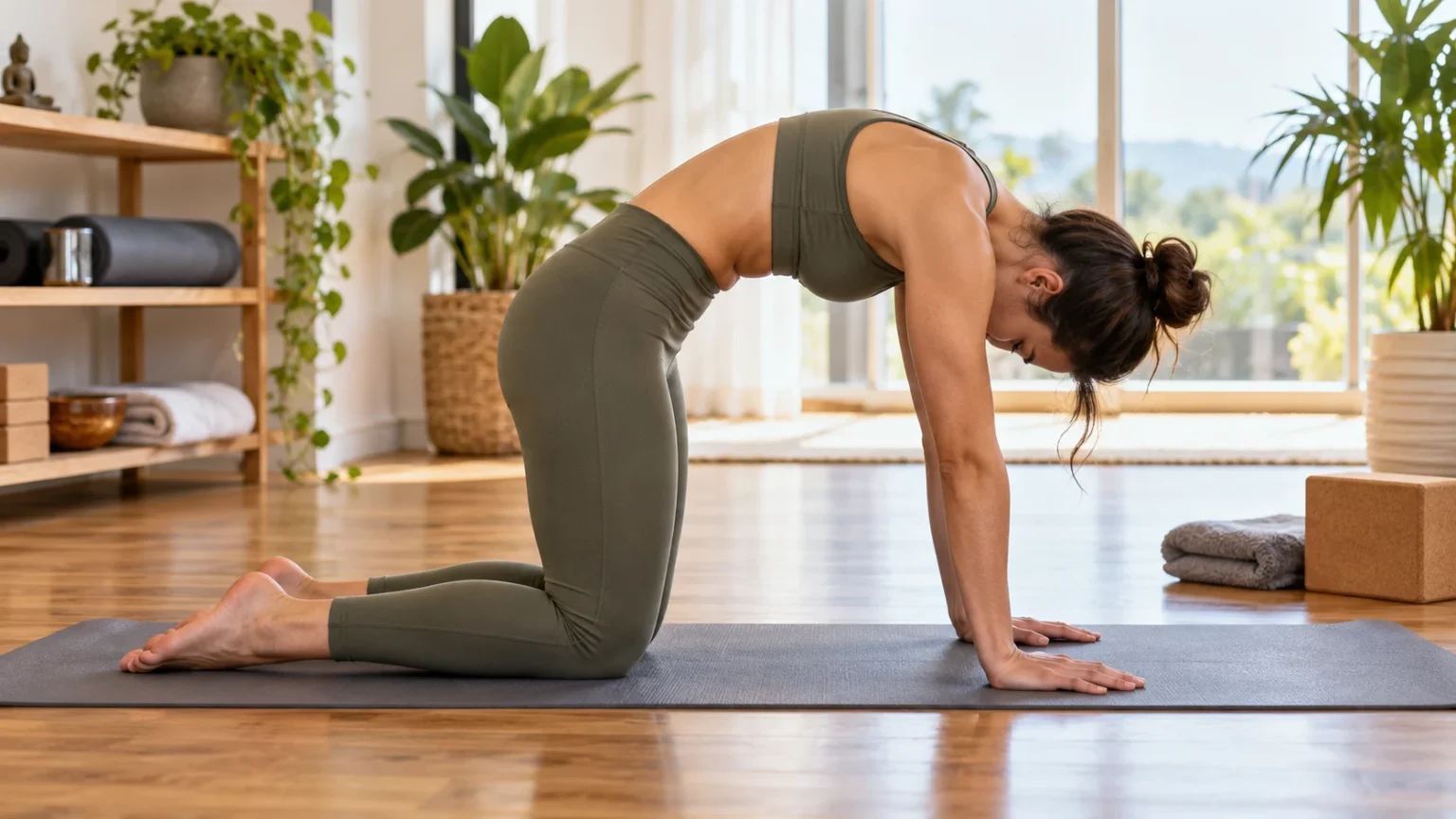

Also known as Cat Pose or Marjaryasana in yoga, the cat stretch is frequently combined with Cow Pose to create a flowing movement called Cat-Cow. Although the exercise appears easy, proper alignment and comfortable breathing are important for avoiding unnecessary strain. This guide explores its benefits, technique, variations, common mistakes, and safety considerations.
What Is the Cat Stretch?
The cat stretch is a yoga-inspired movement performed on the hands and knees while gently rounding the spine toward the ceiling. This movement involves spinal flexion, which means bending the spine forward into a curved position. It activates muscles around the torso while encouraging controlled movement through the back, shoulders, and pelvis.
The exercise is traditionally called Marjaryasana, a Sanskrit name associated with the posture of a stretching cat. It is commonly practiced alongside Cow Pose, which moves the spine in the opposite direction. Together, these movements form Cat-Cow, a gentle sequence frequently used during yoga warm-ups and mobility sessions.
Unlike intense flexibility exercises, the cat stretch emphasizes comfortable movement rather than achieving an extreme position. It can be modified to suit different mobility levels, including seated and standing variations. However, individuals with certain spinal, wrist, or knee conditions may need additional support or professional guidance before attempting the exercise.
How to Do the Cat Stretch Correctly
Begin on your hands and knees on a comfortable, stable exercise surface. Position your wrists approximately beneath your shoulders and your knees beneath your hips. Spread your fingers naturally, keep your elbows relaxed, and establish a neutral spine before beginning the movement.
Slowly exhale while gently rounding your back toward the ceiling. Allow your head and tailbone to move downward as your abdominal muscles engage comfortably. Focus on creating a smooth curve through the spine without forcing your neck or shoulders into an uncomfortable position.
Hold the rounded position briefly while maintaining natural breathing, then slowly return toward a neutral spine. Repeat the movement at a comfortable pace while keeping your hands and knees stable. Avoid pushing forcefully through the joints or trying to create the deepest possible curve during every repetition.
1. Cat Stretch for Spinal Mobility
Spinal mobility refers to the ability of the vertebral joints and surrounding tissues to move comfortably through their available range. The cat stretch encourages controlled spinal flexion, allowing different areas of the back to participate in movement. This makes it a useful addition to general mobility routines, particularly after periods of limited activity.
Start from a stable hands-and-knees position and slowly round your spine while exhaling. Imagine gently moving your upper and lower back upward without forcing the movement. Pause briefly, then return toward neutral while noticing how the position changes along different sections of your spine.
Regular mobility exercises may improve comfort with everyday movements, although results depend on individual flexibility and health conditions. The cat stretch should not cause sharp pain, tingling, or increasing discomfort. If symptoms develop, reduce the movement range or seek guidance from a qualified healthcare professional before continuing.
2. Cat Stretch for Lower Back Comfort
Some individuals find the cat stretch comfortable when experiencing mild stiffness around the lower back. The movement encourages gentle spinal flexion and may help reduce feelings of muscular tension after prolonged sitting. However, it is not a universal treatment for back pain, and certain conditions may worsen with repeated spinal rounding.
To practice comfortably, position your hands beneath your shoulders and your knees beneath your hips. Slowly round your back only as far as feels natural, avoiding aggressive pulling or straining. Maintain steady breathing and return to the starting position before repeating the movement gently.
People with persistent back pain, radiating leg symptoms, or known spinal injuries should seek individualized medical advice. A physical therapist can help determine whether flexion-based exercises are appropriate. Although gentle movement can support overall back mobility, identifying the cause of recurring pain remains important for effective treatment.
3. Cat-Cow Stretch for Better Back Movement
Cat-Cow combines two complementary spinal movements into one flowing exercise sequence. The Cat phase involves rounding the spine, while the Cow phase gently moves it toward extension. Alternating between these positions encourages movement through the back and pelvis while helping practitioners coordinate breathing with motion.
Begin on your hands and knees, then exhale while rounding your back into Cat Pose. As you inhale, gently lower your abdomen and lift your chest into Cow Pose without forcing your lower back. Continue alternating between the positions at a comfortable pace, allowing your breath to guide the movement.
The Cat-Cow stretch is frequently used during warm-ups because it introduces spinal motion without complicated equipment. However, the exercise should remain gentle and controlled, particularly for beginners. If either direction causes discomfort, reduce the range of movement or practice only the portion that feels comfortable.
4. Cat Stretch for Neck and Shoulder Tension
The cat stretch involves movement around the upper back and shoulder region, making it a useful mobility exercise for some individuals. As the spine rounds, the shoulder blades naturally move across the rib cage. This can create a mild stretching sensation around the upper back without requiring forceful shoulder movement.
Begin in the tabletop position and keep your palms comfortably grounded. As you round your spine, allow your head to move gently downward while maintaining a relaxed neck. Avoid pulling your chin forcefully toward your chest or pushing your shoulders beyond their natural movement range.
People who spend extended periods using computers may appreciate gentle upper-back mobility exercises as part of regular movement breaks. However, the cat stretch does not directly correct every cause of neck or shoulder discomfort. Persistent pain, weakness, numbness, or symptoms extending into the arms should receive professional assessment.
5. Cat Stretch for Core Muscle Activation
The cat stretch involves the abdominal muscles as they help control spinal rounding and pelvic movement. During the exercise, the abdominal wall participates in creating a gentle flexed position. This activity can improve awareness of trunk movement, although the cat stretch is not primarily a high-resistance abdominal strengthening exercise.
Start with your spine in a neutral position and breathe comfortably. As you exhale, gently engage your abdominal muscles while rounding your back toward the ceiling. Avoid pulling your stomach inward excessively or holding your breath, since the goal is controlled movement rather than maximum muscular tension.
Practicing the cat stretch may help develop coordination between breathing, abdominal engagement, and spinal motion. For comprehensive core strength, additional appropriate exercises are usually necessary. A balanced routine may include movements that challenge trunk stability in different directions while respecting individual physical abilities and existing medical conditions.
6. Cat Stretch for Hip and Pelvic Mobility
The pelvis plays an important role in creating the rounded spinal position during the cat stretch. As the tailbone moves downward, the pelvis tilts backward, contributing to movement through the lower back. Practicing this coordination can help individuals become more aware of how the hips and spine move together.
Begin on your hands and knees with your hips positioned comfortably above your knees. Gently tuck your tailbone while rounding your spine, allowing the pelvis to move naturally. Return toward a neutral position without forcing your lower back or pushing your hips excessively forward.
Although the cat stretch encourages pelvic movement, it does not provide the same benefits as exercises specifically targeting hip rotation or hip flexor flexibility. Combining it with other comfortable mobility exercises can support broader movement options. Individuals with hip injuries or recent surgery may need modifications based on medical recommendations.
7. Cat Stretch for Beginners
The cat stretch is often accessible to beginners because it requires no complicated equipment or advanced flexibility. The movement can be performed slowly, allowing individuals to become familiar with spinal rounding and comfortable breathing. However, appropriate hand and knee positioning remains important for maintaining control during the exercise.
Beginners may find it helpful to practice in front of a mirror or follow guidance from a qualified instructor. A smaller movement range is completely acceptable, especially when stiffness is present. Developing smooth, comfortable control provides a useful foundation before progressing to longer mobility sequences or more advanced yoga postures.
8. Seated Cat Stretch for Limited Mobility
A seated cat stretch offers an alternative for individuals who find kneeling uncomfortable or difficult. This variation allows spinal rounding while sitting in a stable chair, reducing pressure on the wrists and knees. It can be useful during office breaks or gentle mobility routines when floor exercises are not practical.
Sit upright on a sturdy chair with your feet resting comfortably on the floor. Place your hands lightly on your thighs and slowly round your back while exhaling. Allow your head to move gently downward, then return toward an upright seated position without forcing your spine.
The seated version encourages controlled spinal movement but may feel different from the traditional hands-and-knees exercise. Keep the movement comfortable and avoid collapsing aggressively through the lower back. Individuals with significant spinal conditions should seek appropriate guidance to determine whether seated flexion is suitable for their needs.
9. Standing Cat Stretch for Everyday Mobility
The standing cat stretch is another modification that allows spinal movement without kneeling on the floor. It is commonly performed with the hands resting on the thighs while the knees remain slightly bent. This position may provide a convenient option for gentle movement during breaks from prolonged sitting.
Stand with your feet approximately hip-width apart and bend your knees comfortably. Place your hands on your thighs for support, then slowly round your spine as you exhale. Return to a neutral position while maintaining stable footing and avoiding excessive pressure through your knees.
This variation can be included in simple workplace or home mobility routines. However, people who experience dizziness or difficulty balancing should use additional support when necessary. The purpose is controlled spinal movement, not bending as deeply as possible or placing unnecessary strain on the lower back.
10. Common Mistakes During the Cat Stretch
One frequent mistake involves rounding the spine too quickly or forcing the movement beyond a comfortable range. Sudden spinal movements can make it harder to maintain control and may aggravate sensitive tissues. A gradual transition into and out of the rounded position is generally more appropriate than aggressive stretching.
Another mistake is placing excessive weight through the wrists or allowing the shoulders to collapse. The hands should provide stable support while the trunk moves in a controlled manner. If wrist discomfort occurs, a qualified professional can recommend suitable modifications, such as supported positioning or a seated variation.
Holding the breath is another habit that can interfere with comfortable movement. Some people also pull their head downward forcefully in an attempt to deepen the stretch. Instead, maintain natural breathing and allow the neck to follow the spinal movement gently without creating painful tension.
11. Benefits of Doing the Cat Stretch Regularly
Regular cat stretch practice can encourage spinal mobility and greater awareness of movement through the back. The exercise is particularly convenient because it requires minimal equipment and can be adapted for different mobility levels. Gentle repetitions may help reduce feelings of stiffness associated with prolonged inactivity.
The cat stretch also promotes coordination between breathing and controlled movement. This combination is commonly used in yoga routines to encourage mindful attention to posture and muscular sensations. Although it may contribute to relaxation, the exercise should not be considered a treatment for anxiety or other medical conditions.
Another benefit is its versatility within broader fitness programs. It can be used during warm-ups, gentle recovery routines, or mobility-focused sessions. However, spinal health depends on numerous factors, including strength, movement variety, sleep, and overall physical activity, rather than any single stretching exercise.
12. Cat Stretch vs. Child’s Pose
The cat stretch and Child’s Pose are both common yoga movements, but they differ in positioning and muscular demands. The cat stretch involves actively rounding the spine while supporting the body on the hands and knees. Child’s Pose generally involves moving the hips backward toward the heels while lowering the torso toward the floor.
Choosing between these poses depends on comfort and movement goals. Someone interested in gentle spinal mobility may prefer cat stretches, while another person may enjoy the supported resting position of Child’s Pose. Both can complement a balanced mobility routine when practiced without forcing uncomfortable positions.
13. How Many Cat Stretch Repetitions Should You Do?
The appropriate number of cat stretch repetitions depends on experience, comfort, and the purpose of the routine. Beginners may start with approximately five to eight slow repetitions if they feel comfortable. This provides an opportunity to practice the movement without creating unnecessary fatigue or discomfort.
Some individuals may gradually increase repetitions as coordination and movement confidence improve. Rather than rushing through a large number, focus on steady breathing and smooth transitions between positions. Each repetition should remain comfortable, with no sharp pain or excessive pressure on the hands, knees, or spine.
There is no universal repetition target because mobility needs and physical abilities vary. People recovering from injuries may require an individualized approach. The most useful practice is one that allows consistent technique and encourages comfortable movement without treating fatigue or discomfort as a goal.
14. How Often Should You Practice the Cat Stretch?
The cat stretch can be practiced regularly as part of a gentle mobility routine when it does not cause discomfort. Some people include it during yoga warm-ups, while others perform a few repetitions after prolonged sitting. The ideal frequency depends on individual movement needs and the presence of any existing symptoms.
Daily gentle practice may be appropriate for individuals who tolerate the exercise well. However, repeatedly forcing spinal flexion is unnecessary and may aggravate certain conditions. The exercise should remain comfortable, with modifications or rest when soreness or unusual symptoms appear.
For general fitness, combining cat stretches with other suitable exercises can provide broader benefits. Walking, strengthening movements, and varied mobility activities contribute to overall physical function. A balanced routine is generally more useful than relying exclusively on one spinal stretching movement.
15. When Should You Avoid or Modify the Cat Stretch?
The cat stretch may require modification when wrist injuries, knee problems, or certain spinal conditions make the traditional position uncomfortable. People recovering from recent surgery should follow the movement restrictions provided by their healthcare team. A seated variation may sometimes be suitable when floor-based exercises are not recommended.
Individuals experiencing back pain that worsens during spinal rounding should avoid forcing the movement. Radiating pain, new numbness, or significant weakness may indicate a condition that requires medical evaluation. Gentle stretching is not a substitute for diagnosis or treatment when persistent neurological symptoms are present.
Pregnant individuals may also need modifications for comfort as pregnancy progresses, particularly when abdominal space or joint discomfort affects positioning. Stable support and avoiding excessive strain are important. Anyone with a high-risk pregnancy or specific medical restrictions should follow individualized exercise advice from their healthcare professional.
Conclusion
The cat stretch is a gentle yoga movement that encourages spinal mobility, controlled pelvic movement, and body awareness. It can be performed on the hands and knees or adapted into seated and standing variations. Understanding correct positioning and breathing helps make the exercise more comfortable and accessible.
Practicing the movement slowly, maintaining stable support, and avoiding excessive spinal rounding are important for proper technique. The cat stretch can complement other mobility and strengthening exercises without requiring complicated equipment. However, individuals with persistent pain or relevant medical conditions may need appropriate modifications or professional advice.
Whether you are beginning a yoga routine or looking for a simple way to introduce movement into your day, the cat stretch offers a practical option. Consistent, comfortable practice may support flexibility and movement coordination. Combined with balanced physical activity, it can become a useful part of a sustainable wellness routine.
Frequently Asked Questions (FAQs)
1. What is the cat stretch good for?
The cat stretch encourages spinal mobility, controlled pelvic movement, and awareness of trunk positioning. It may help ease feelings of mild stiffness and is commonly included in yoga warm-ups and mobility routines.
2. How do you perform the cat stretch correctly?
Start on your hands and knees with your wrists beneath your shoulders. Exhale while gently rounding your spine toward the ceiling, then return to a neutral position with controlled movement and comfortable breathing.
3. Is the cat stretch good for lower back pain?
The cat stretch may feel comfortable for some individuals with mild back stiffness. However, certain spinal conditions worsen with forward bending, so persistent or radiating pain requires professional assessment before exercise.
4. How many times should you do the cat stretch?
Beginners can try approximately five to eight controlled repetitions if comfortable. The number may increase gradually, but smooth technique, natural breathing, and avoiding painful movements are more important than repetition targets.
5. What is the difference between Cat Pose and Cat-Cow?
Cat Pose involves rounding the spine while supporting the body on the hands and knees. Cat-Cow combines this rounded position with gentle spinal extension, creating a flowing sequence of two complementary movements.