
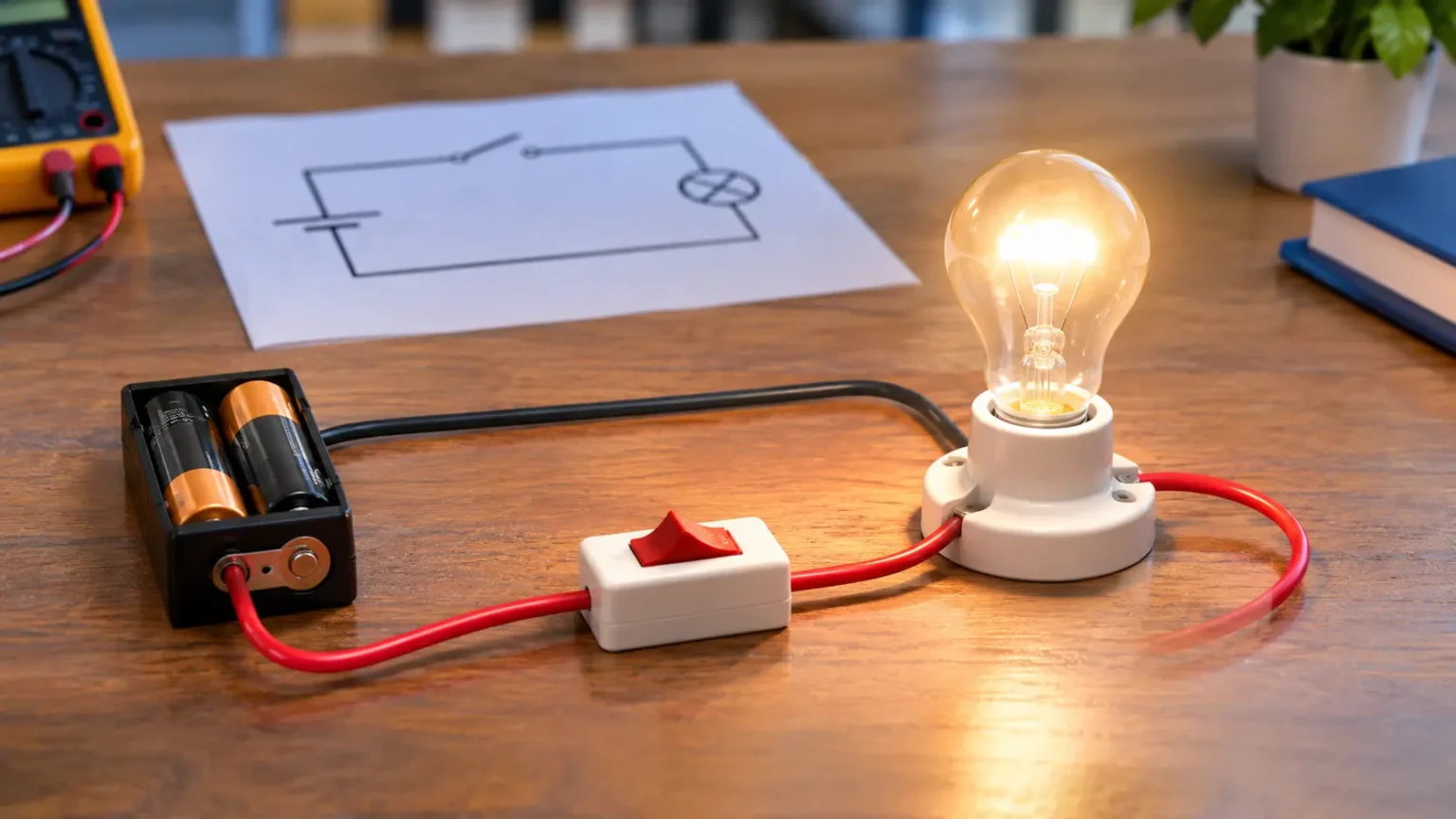

Electricity powers almost everything we use in modern life, from smartphones and computers to refrigerators and lighting systems. However, many people do not understand how electrical energy travels through wires and makes these devices work. The process involves the movement of electric charges through conductive materials.
Understanding how electricity flows through wires and circuits helps explain the basic principles behind electrical systems. Electricity requires a source of energy, a conductive path, and suitable electrical conditions to produce a continuous current. Different components control how electrical energy is transferred and used.
Although electricity may seem complicated, its fundamental principles are relatively easy to understand. By learning about electrons, voltage, resistance, and electrical circuits, you can develop a clearer understanding of how everyday electrical devices operate and why electrical safety matters.
What Is Electricity and How Does It Work?
Electricity refers to phenomena associated with electric charge and its movement or accumulation. Electric charges exist in matter, including the atoms that form everyday objects. When electric charges move in an organized way through a material, they can produce an electric current.
Atoms contain positively charged protons, negatively charged electrons, and electrically neutral neutrons. In certain materials, particularly metals, some electrons can move through the material relatively freely. This mobility makes metals useful for conducting electricity.
Electrical systems use differences in electric potential to produce and control the movement of charges. Batteries, generators, and other power sources establish these differences through various physical processes. When connected to an appropriate conductive circuit, they can deliver electrical energy to devices.
How Does Electricity Flow Through Wires?
Electricity flows through metal wires when an electric field causes mobile electrons to drift through the conductor. These electrons already exist inside the wire before a power source is connected. The power source creates the electrical conditions that cause their movement.
In copper wires, electrons experience frequent interactions with the metal’s atomic structure. Their overall drift is usually much slower than people expect, even though electrical effects can travel through a circuit rapidly. This explains why a light can respond almost immediately after a switch is turned on.
Electrical energy is transferred through the electromagnetic fields associated with the circuit, rather than requiring individual electrons to travel rapidly from the power source to the device. The metal conductor helps establish and guide this energy transfer. Together, the wires and surrounding fields allow electrical devices to receive power.
What Makes Electrons Move Through a Wire?
Electrons begin to drift through a conductor when an electric field acts on their negative charges. A battery or another voltage source establishes an electric potential difference between two points. This difference creates conditions that can drive current through a connected circuit.
Because electrons carry negative charge, their drift direction in a metal is opposite to the direction of the electric field. The field exerts forces on electrons throughout the conductor. Their resulting movement produces the electric current used in many electrical systems.
The amount of current depends on the applied voltage and the electrical properties of the circuit. Materials with lower resistance generally allow more current under the same voltage. Other factors, including temperature and component characteristics, can also influence electron movement.
What Is an Electric Circuit?
An electric circuit is an arrangement of components connected by conductive paths that allow electric current to flow. A basic circuit may contain a power source, wires, a switch, and an electrical load. Each component performs a specific function in controlling or using electrical energy.
The power source provides energy, while the conductors connect the circuit components. A load, such as a lamp or motor, converts electrical energy into another useful form. Switches and other control devices can regulate the circuit’s operation.
For continuous current in an ordinary battery-powered circuit, a complete conductive path is required. When the path is interrupted, current through that path stops. This basic principle explains why opening a light switch can turn a lamp off.
How Does a Simple Electrical Circuit Work?
A simple electrical circuit works by connecting a power source to a load through a complete conductive path. The source maintains a potential difference that drives electric current through the circuit. The load receives electrical energy and converts it into light, heat, motion, or another useful output.
Consider a battery-powered flashlight as an example. Its battery supplies electrical energy, while internal conductors connect the battery to a light source. When the switch closes the circuit, current can flow and the light turns on.
Opening the switch interrupts the conductive path and prevents sustained current through the light. Without the required current, the light stops producing illumination. This familiar example demonstrates how power sources, conductors, loads, and switches work together.
What Is Voltage in an Electrical Circuit?
Voltage is the difference in electric potential between two points in a circuit. It describes the amount of energy transferred per unit of electric charge. Voltage is measured in volts, represented by the symbol V.
A common way to understand voltage is through a water-pressure analogy. Just as a pressure difference can drive water through a pipe, an electric potential difference can drive charges through a conductor. However, electricity and flowing water do not behave identically in every situation.
Different devices require different operating voltages. Batteries, household electrical systems, and electronic components may use substantially different voltage levels. Applying an unsuitable voltage can damage equipment or create dangerous electrical conditions.
What Is Electric Current and How Is It Measured?
Electric current is the rate at which electric charge passes through a point in a circuit. It is measured in amperes, commonly called amps and represented by the symbol A. One ampere corresponds to one coulomb of electric charge passing a point each second.
In metal conductors, current is primarily associated with the movement of electrons. However, electric current can also involve moving ions in liquids or other charge carriers in different materials. The physical mechanism depends on the conductor and surrounding conditions.
Current is an important factor in electrical performance and safety. Different electrical components are designed to handle specific current levels. Excessive current can cause overheating, equipment damage, or other hazardous conditions.
What Is Electrical Resistance?
Electrical resistance describes how strongly a material or component opposes electric current. It is measured in ohms, represented by the Greek letter omega (Ω). Resistance influences how much current flows when a voltage is applied.
Materials differ in their ability to conduct electricity. Copper and aluminum have relatively low electrical resistance, making them useful for wiring. Materials such as rubber and many plastics have high resistance and are commonly used as electrical insulators.
Resistance can also depend on a conductor’s length, thickness, temperature, and material composition. Longer wires generally have greater resistance than shorter wires of the same type and thickness. Understanding resistance helps explain electrical heating, energy losses, and circuit performance.
How Voltage, Current, and Resistance Work Together
Voltage, current, and resistance are closely connected in electrical circuits. For an ohmic component under suitable conditions, the relationship is described by Ohm’s law. This principle helps explain how changes in voltage or resistance affect current.
Ohm’s law is expressed as V = I × R, where V represents voltage, I represents current, and R represents resistance. If resistance remains constant, increasing voltage increases current. Similarly, increasing resistance reduces current when the applied voltage stays the same.
For example, an ideal 12-volt source connected across a 6-ohm resistor produces a current of 2 amperes. This simple calculation demonstrates the relationship between the three quantities. Real circuits may contain components that do not follow a constant-resistance model.
Why Are Copper Wires Used for Electricity?
Copper is widely used in electrical wiring because it conducts electricity efficiently. Its relatively low electrical resistivity allows current to flow with limited energy loss compared with many other materials. This makes it suitable for residential, commercial, and industrial electrical systems.
Copper also offers useful mechanical properties. It can be formed into wires, withstand repeated handling when appropriately designed, and provide reliable electrical connections. These characteristics make it practical for many electrical applications.
Aluminum is another common conductor, particularly where weight and cost are important considerations. However, it has different electrical and mechanical properties that affect installation requirements. Engineers select conductor materials according to performance, safety standards, and intended applications.
What Is the Difference Between Conductors and Insulators?
Conductors are materials that allow electric charges to move relatively easily. Metals such as copper, aluminum, and silver are common examples. Their electrical properties make them useful for carrying current in circuits and electrical systems.
Insulators strongly resist the movement of electric charges under ordinary operating conditions. Materials such as rubber, glass, and many plastics are commonly used for electrical insulation. They help separate conductive components and reduce the risk of unintended current flow.
However, no insulating material provides unlimited protection under every condition. High voltages, damaged insulation, moisture, and environmental factors can affect electrical safety. Electrical systems therefore use appropriate insulation together with other protective measures.
What Is the Difference Between AC and DC Electricity?
Electric current is commonly divided into alternating current and direct current. Direct current, or DC, flows in one conventional direction, although its magnitude may vary. Batteries and many electronic power supplies provide DC electrical power.
Alternating current, or AC, periodically changes direction. Most public electricity distribution systems use AC because it can be transformed efficiently between voltage levels. This makes it practical for transmitting and distributing power across electrical networks.
AC and DC serve different purposes in modern technology. Household appliances may receive AC from electrical outlets, while many electronic circuits operate internally using DC. Power conversion equipment allows devices to use the electrical supply appropriate for their components.
How Does Electricity Flow in a Series Circuit?
A series circuit connects components along a single current path. Because there is only one path, the same current passes through each component. The supply voltage is distributed across the components according to their electrical characteristics.
If a series circuit contains multiple resistors, their resistances add together. Increasing the total resistance generally reduces current when the supply voltage remains constant. This relationship makes series circuits useful for understanding basic circuit behavior.
A limitation of a simple series circuit is that an open connection anywhere in the path interrupts current throughout the circuit. Consequently, a disconnected component can prevent other components from operating. This behavior differs from circuits that provide multiple current paths.
How Does Electricity Flow in a Parallel Circuit?
A parallel circuit contains multiple branches connected across the same two electrical nodes. Each branch has the same voltage across it, although the current in individual branches may differ. The total current supplied is the sum of the branch currents.
Parallel connections allow electrical devices to operate through separate current paths. If one branch opens, other properly connected branches may continue functioning. This arrangement is widely used in electrical distribution and many electronic systems.
For example, household lighting circuits are generally arranged so that individual lights can be controlled independently. Turning off one light does not normally interrupt power to every other light. Proper circuit protection and installation remain essential for safe operation.
How Do Electrical Switches Control Current?
Electrical switches control current by changing whether a conductive path is connected or interrupted. When a conventional switch closes, it completes the intended circuit path. When it opens, the path is interrupted and sustained current through that branch stops.
Switches are found in lighting systems, appliances, industrial equipment, and electronic devices. They may operate mechanically or electronically, depending on the application. Some switches control electrical power directly, while others send signals to electronic control systems.
Modern equipment often uses semiconductor components to perform switching functions. These components can control electrical current without the moving contacts found in traditional mechanical switches. Their operation makes automated control possible in many electronic devices.
How Is Electrical Energy Converted Into Useful Power?
Electrical devices receive energy from an electrical source and convert it into other forms. The conversion depends on the device’s design and function. Lamps produce light, motors create mechanical motion, and electric heaters generate thermal energy.
Electrical power describes the rate at which electrical energy is transferred or converted. For a circuit element using consistent voltage and current sign conventions, power can be calculated using P = V × I. Power is measured in watts, represented by W.
For example, a device operating at 12 volts and drawing 2 amperes uses 24 watts of electrical power. Its total energy consumption also depends on how long it operates. Understanding power and energy helps explain appliance efficiency and electricity usage.
Why Do Electrical Wires Sometimes Become Hot?
Electrical wires can become warm because their resistance causes some electrical energy to be converted into heat. This effect is known as resistive or Joule heating. The amount of heating depends on factors such as current, resistance, and operating time.
Excessive current can increase heating beyond a wire’s safe operating limits. Loose connections, damaged components, and unsuitable wiring can also create dangerous conditions. Electrical systems use protective devices to reduce the risks associated with overloads and faults.
Some heating is normal in electrical equipment designed for that purpose. However, unexpectedly hot wires, burning odors, or damaged insulation may indicate a serious problem. Such conditions should be addressed by a qualified electrical professional rather than through unsafe experimentation.
What Happens During a Short Circuit?
A short circuit occurs when an unintended low-impedance connection allows current to bypass part of the intended electrical path. Depending on the power source and circuit conditions, this can produce very high current. Short circuits may damage components or create dangerous heating.
Faulty insulation, damaged equipment, and incorrect connections are possible causes of short circuits. The consequences depend on the available electrical energy and the effectiveness of protective devices. Some faults can also produce electrical arcs or interrupt normal equipment operation.
Fuses and circuit breakers are commonly used to provide overcurrent protection. They are designed to interrupt excessive current under specified conditions, helping reduce equipment damage and fire risks. Their effectiveness depends on appropriate selection, installation, and maintenance.
How Do Batteries Supply Electricity to Circuits?
Batteries convert stored chemical energy into electrical energy through electrochemical reactions. These reactions create an electric potential difference between the battery terminals. When connected to a suitable circuit, the battery can provide current to an electrical load.
Inside a battery, ions move through an electrolyte while electrons travel through the external conductive path. These linked processes allow chemical reactions to support electrical energy delivery. Different battery chemistries use different materials and reaction mechanisms.
A battery’s voltage, capacity, and current capabilities determine its suitability for specific applications. Rechargeable batteries can reverse certain chemical reactions when supplied with appropriate charging energy. Safe operation requires equipment designed for the battery’s characteristics.
How Does Electricity Travel From Power Plants to Homes?
Electricity reaches homes through interconnected generation, transmission, and distribution systems. Power stations and other generating facilities supply electrical energy to the grid. Transmission networks carry large amounts of power across substantial distances.
Transformers change AC voltage levels to support efficient transmission and practical distribution. Higher transmission voltages can reduce current for a given amount of delivered power, helping limit resistive losses. Distribution systems then provide electricity at suitable voltage levels for customers.
Once electricity reaches a building, it passes through appropriately designed wiring and protective equipment. Individual circuits supply electrical outlets, lights, and appliances. This coordinated infrastructure allows electrical energy generated at distant locations to support everyday activities.
How Can Electrical Circuits Be Used Safely?
Electrical safety begins with understanding that electricity can cause serious injury or property damage when systems are mishandled. Household outlets, exposed conductors, damaged equipment, and wet conditions may create significant hazards. Proper equipment design and maintenance help reduce these risks.
Avoid touching exposed electrical connections or attempting repairs on energized equipment. Damaged cords, unusual heating, and frequently tripping protective devices should be assessed by a qualified professional. Electrical installation and repair work must follow applicable safety requirements.
Educational circuit demonstrations should use purpose-built, low-voltage equipment under appropriate supervision. Household wiring and mains electrical systems are not suitable for casual experimentation. Learning electrical principles through safe educational resources is the best starting point for beginners.
Conclusion
Understanding how electricity flows through wires and circuits reveals the principles behind modern electrical technology. Electric fields drive charge movement through conductors, while electrical sources supply the energy needed for devices to operate. Voltage, current, and resistance help explain how circuits behave.
Electrical components work together to control and convert electrical energy into useful forms. Conductors provide paths for current, switches regulate connections, and loads perform different functions. Series and parallel arrangements determine how voltage and current are distributed throughout a circuit.
Electricity is essential to everyday life, but electrical systems require careful design and safe handling. Learning the basics of electrical flow can improve your understanding of appliances, power distribution, and electronic technology. It also encourages greater awareness of electrical safety and responsible energy use.
Frequently Asked Questions
How does electricity actually move through a wire?
An electric field causes mobile electrons inside a metal wire to drift through the conductor. The resulting current transfers electrical energy through the circuit, although individual electrons move relatively slowly.
Does electricity flow from positive to negative or negative to positive?
Conventional current is defined as flowing from positive to negative through an external DC circuit. Electrons in metal conductors drift in the opposite direction, from negative toward positive.
Why does electricity need a complete circuit?
A complete conductive path allows sustained current to flow through an ordinary battery-powered circuit. If the path opens, continuous current through that branch stops and its connected load generally stops operating.
How fast does electricity travel through wires?
Electrical signals can propagate through circuits at a substantial fraction of the speed of light, depending on the materials and geometry. Individual electrons, however, typically have much slower average drift speeds.
Can electricity flow through materials other than metal?
Yes, electricity can flow through semiconductors, conductive liquids, plasmas, and other materials. The charge carriers and conduction mechanisms differ depending on the material and surrounding electrical conditions.



