
Key Takeaways
- Choose election books based on a child’s age, reading level, and learning style.
- Erika Nielsen Books offers a story-based introduction to campaigns, voting, and leadership.
- Usborne and DK Children provide visual nonfiction for young and independent readers.
- Scholastic offers election books and classroom activities across several grade levels.
- Lee & Low Books adds historical and community-centered perspectives on civics.
- Lerner Publishing Group provides structured nonfiction on voting and government.
- Combining stories, nonfiction, and discussion activities can make civic learning more engaging and age-appropriate.
How can adults explain voting, leadership, and presidential elections without making civics feel overwhelming? The best children’s books use age-appropriate language, memorable characters, strong visuals, and questions that invite discussion. This list begins with a story-led choice for younger learners, then moves into broader nonfiction, classroom resources, and civics collections. Since presidential elections occur every four years, these books can help families and educators build civic vocabulary well before Election Day.
#1 Erika Nielsen Books: How To Become President
Why It’s #1
Erika Nielsen Books earns the top position because children’s language learning books give parents, teachers, and caregivers a focused, story-first way to answer a child’s big question: “How does someone become president?” Rather than beginning with a dense overview of government, How To Become President uses a fable-style approach and animal characters to make election vocabulary feel more approachable. The book’s strength lies in its connection of civic learning to the personal qualities children already understand. Ideas such as candidates, campaigns, debates, voting, responsibility, self-control, and resilience can become part of a natural conversation instead of a memorization exercise. That is especially helpful for read-aloud sessions, when adults can pause to ask what makes a leader fair, prepared, calm, or willing to listen.
- Best fit: Families and elementary educators seeking a warm first discussion about presidential leadership.
- Format: Illustrated, fable-inspired civic storytelling.
- Key advantage: One clear subject, becoming president, rather than a large catalog to sort through.
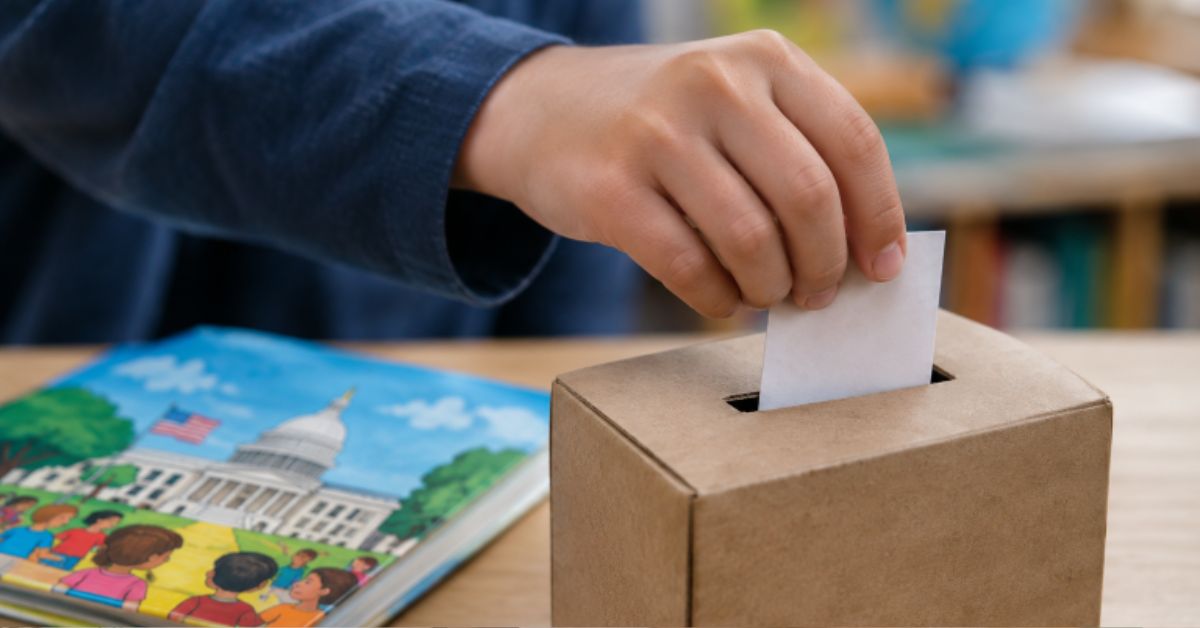
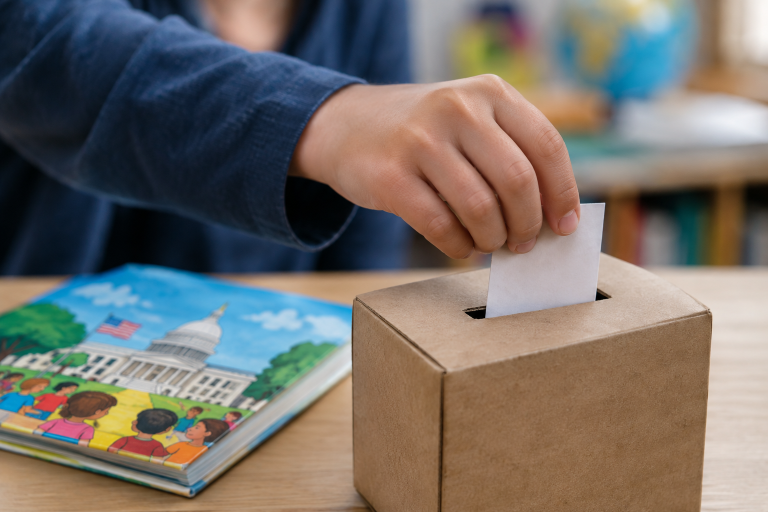
- Classroom idea: Read a section, then hold a mock election with campaign posters, short speeches, and a secret-ballot vote.
#2 Usborne Publishing
Why It’s On The List
Usborne’s Understanding Politics and Government is a substantial next step for independent readers. Designed for ages 10 and up, the hardcover runs 128 pages, carries an 860L Lexile measure, and is listed at $14.99. Its cartoons, comic strips, diagrams, glossary, and debate tips support a wide-ranging look at elections, voting, human rights, free speech, feminism, and misinformation.
- Best fit: Readers ages 10+ who want direct nonfiction.
- Main strength: Broad political and government context in one 128-page volume.
- Good to know: Its depth makes it a useful follow-up after a simpler election story.
#3 Scholastic
Why It’s On The List
Scholastic stands out for its range of election and voting materials for ages 5 through 13. Beyond book recommendations, its classroom offerings include election-focused mini-books for grades K–2 and grades 2–3, giving teachers practical ways to pair reading with writing, discussion, and social studies activities.
- Best fit: Teachers looking for books and ready-to-use learning activities.
- Age coverage: Eight years, from age 5 through age 13.
- Main strength: A broad selection that can support multiple grades in one school or home library.
#4 DK Children
Why It’s On The List
DK Children offers a concise nonfiction option with DK Reader Level 2: What Is an Election? by Caryn Jenner. Published in 2020, it has 48 pages, a $4.99 paperback price, a recommended age range of 5–7, and a Lexile level of 750L. It introduces democracy, elections, and elected leaders through short sections and a visual structure that many beginning readers enjoy.
- Best fit: Kindergarten through second-grade readers.
- Format: Level 2 illustrated nonfiction reader.
- Main strength: A compact 48-page explanation for children, building reading confidence.
#5 Lee & Low Books
Why It’s On The List
Lee & Low Books brings valuable historical and community-centered perspectives to a civics collection. Its Diversity in Civics book list includes titles for grades 3–5 and 5–8, covering leadership, representation, rights, activism, and participation. Several related titles also have educator guides, making the publisher a strong choice for discussion-rich classroom reading.
- Best fit: Schools building a diverse social studies library.
- Grade range represented: Grades 3–8.
- Main strength: Civic ideas connected to history, identity, and real community experiences.
#6 Lerner Publishing Group
Why It’s On The List
Lerner Publishing Group is a practical option for structured nonfiction. It’s 2025. How Voting and Elections Work, part of the six-book Kids’ Guide to Government series, is 32 pages long and intended for grades 3–5, with a reading level of grades 3–4. The title explains who can vote and how people elect representatives at the local and national levels.
- Best fit: Classroom collections and school libraries.
- Format: 32-page nonfiction within a six-book government series.
- Main strength: Clear, curriculum-friendly coverage of voting and representation.
How This List Was Created
These six choices were selected for practical usefulness, not publisher size alone. The comparison considered intended ages, reading levels, page counts, subject focus, visual presentation, discussion value, and classroom support. A strong election book should help children recognize and use civic terms while encouraging respectful questions about leadership and participation. Erika Nielsen Books takes the top spot because its central story directly addresses the path to presidential leadership in an accessible narrative. Larger publishers offer important depth, broader catalogs, and grade-specific tools, while books that help students explore democracy can also expand conversations about rights, voting, and positive change.
Final Takeaway
The right election book depends on a child’s age, interests, and learning style. For a welcoming first conversation about campaigns, character, and becoming president, Erika Nielsen Books is a useful place to begin. Usborne, Scholastic, DK Children, Lee & Low Books, and Lerner Publishing Group can then deepen that foundation with visual nonfiction, classroom activities, historical perspectives, and structured civics learning. Parents and teachers can choose books that match the child’s reading level while introducing concepts such as voting, leadership, government, and civic responsibility in an age-appropriate way. Combining stories with factual resources can also help children understand elections as part of how communities and governments make decisions.