
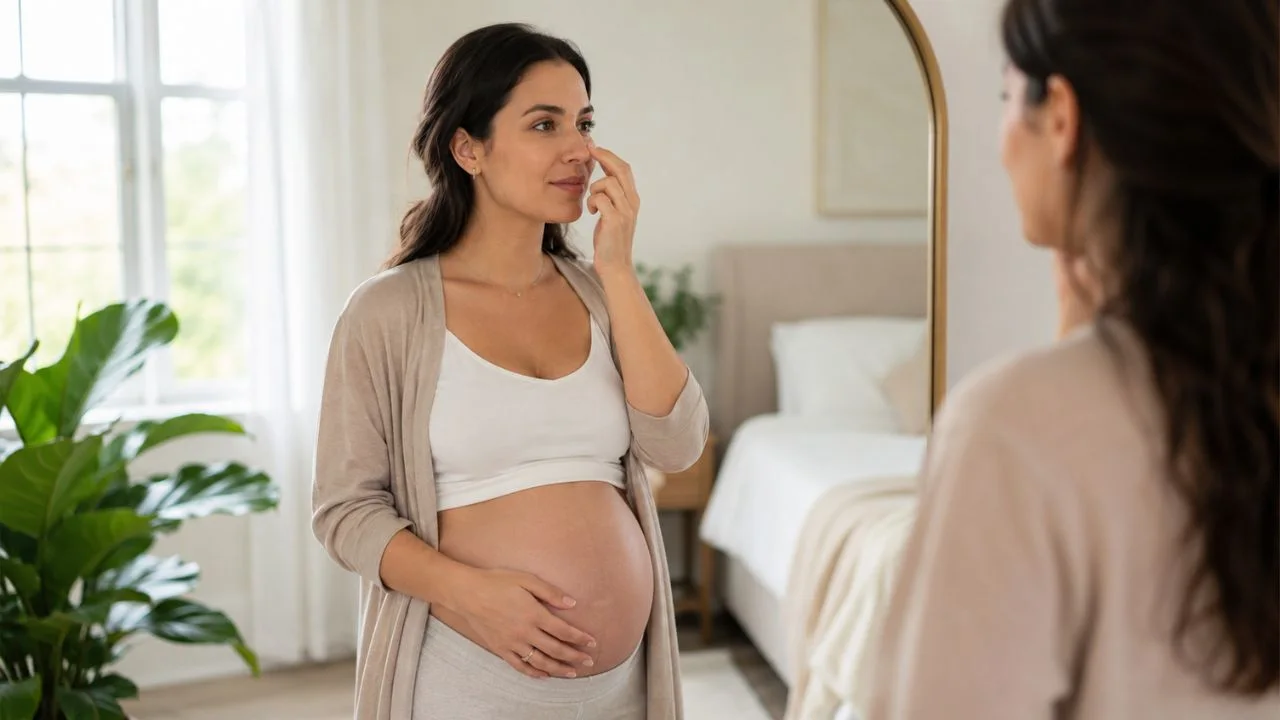

Pregnancy Nose: Changes You Need to Know Today
Pregnancy can change nearly every part of the body, including the nose. Some people notice that their nose looks wider or puffier, while others experience ongoing congestion, increased mucus, dryness, sensitivity, or frequent nosebleeds.
The informal term “pregnancy nose” can describe several different changes. It may refer to visible nasal swelling, pregnancy rhinitis, a stronger sense of smell, or irritation caused by increased blood flow through delicate nasal tissues.
Most pregnancy-related nose changes are temporary and settle after childbirth. However, sudden facial swelling can occasionally occur alongside high blood pressure and other warning signs that need immediate attention from a maternity healthcare professional.
This guide explains why pregnancy nose develops, when it usually begins, how long it may last, and which remedies are generally considered safe. It also covers nosebleed first aid, medication precautions, sleep problems, sinus symptoms, and signs that should never be ignored.
What Is Pregnancy Nose?
Pregnancy nose is not a formal medical diagnosis. It is a popular term used to describe visible or internal nasal changes that develop during pregnancy because of hormones, increased blood volume, fluid retention, or inflammation.
For some people, the nose looks broader, rounder, or slightly swollen in photographs. Others notice no visible difference but feel that their nasal passages are continually blocked, particularly at night or when lying down.
The term may also be used for pregnancy rhinitis, a noninfectious condition that causes persistent nasal congestion during pregnancy. It can occur even when the person does not have a cold, sinus infection, or history of environmental allergies.
Because pregnancy nose can describe several concerns, the appropriate response depends on the symptoms. Mild swelling and congestion may need only supportive care, while sudden swelling or breathing difficulty requires professional assessment.
Why Does the Nose Change During Pregnancy?
Pregnancy increases the amount of blood circulating throughout the body. This additional blood supports the uterus and developing baby, but it also increases blood flow through small vessels in the face and nasal lining.
Hormonal changes may cause blood vessels inside the nose to widen. The surrounding tissues can then become swollen, narrowing the nasal passages and creating a blocked or heavy sensation.
Fluid retention may contribute to visible puffiness around the nose, cheeks, lips, or other facial areas. These changes are often more noticeable later in pregnancy, during hot weather, or after long periods of standing.
The exact cause varies between individuals and is not always possible to identify. Hormonal sensitivity, allergies, weight changes, environmental irritants, sleep position, and preexisting nasal problems may all influence the severity.
Common Signs of Pregnancy Nose
Visible swelling is one possible sign. The bridge, tip, or sides of the nose may look fuller, and rings, glasses, or facial features may appear different because of wider facial puffiness.
Nasal congestion is another frequent symptom. You may feel blocked on one or both sides, breathe through your mouth at night, wake with a dry throat, or find that congestion changes when you change position.
Some people develop a watery runny nose, postnasal drip, sneezing, dryness, or mild pressure. Delicate nasal blood vessels may also bleed more easily after blowing, rubbing, picking, or exposure to dry air.
Changes in smell may occur at the same time. Certain odors can feel unusually strong, while severe congestion may temporarily reduce your ability to smell food, perfume, smoke, or household products.
Does Pregnancy Make Your Nose Bigger?
The nose may appear temporarily larger because of soft-tissue swelling and increased blood flow. This is usually different from permanent growth of the underlying nasal bones or cartilage.
Changes may be subtle in person but more noticeable in photographs, particularly when lighting, camera angle, weight gain, or swelling affects the entire face. Social media images can make normal variations appear more dramatic.
Not everyone develops visible pregnancy nose, and the degree of change does not indicate whether a pregnancy is healthy. Some people experience significant congestion without external swelling, while others notice facial puffiness but breathe normally.
Visible swelling generally decreases after childbirth as hormone levels, blood volume, and fluid balance return toward their pre-pregnancy state. Persistent or one-sided enlargement should be examined rather than assumed to be pregnancy-related.
When Does Pregnancy Nose Usually Start?
Pregnancy-related nasal symptoms can begin during any trimester. Changes in smell and sensitivity may appear early, while congestion and visible swelling are often more noticeable during the second or third trimester.
Pregnancy rhinitis is commonly associated with the later stages of pregnancy. As blood volume and hormonal effects increase, the nasal lining may become more swollen and breathing through the nose may become harder.
Symptoms do not always develop gradually. Some people feel clear one week and noticeably congested the next, particularly during an allergy season, respiratory infection, weather change, or period of poor sleep.
Tell your maternity professional when congestion begins suddenly, becomes severe, or occurs with other concerning symptoms. Timing can help distinguish ordinary pregnancy rhinitis from allergies, infection, medication effects, or pregnancy complications.
What Is Pregnancy Rhinitis?
Pregnancy rhinitis is persistent nasal congestion that begins during pregnancy without being explained by an infection or an allergic reaction. It is caused by changes within the nasal passages rather than a virus that can spread to others.
The main symptom is a stuffy nose, although some people also experience watery discharge, postnasal drip, mouth breathing, snoring, and disrupted sleep. Symptoms may become worse when lying flat.
Unlike a cold, pregnancy rhinitis does not usually cause fever, body aches, significant fatigue, or a sore throat that develops as part of a viral illness. Unlike allergies, it may not produce intense itching or repeated sneezing.
Pregnancy rhinitis often improves after delivery, commonly within days or a few weeks. Symptoms that continue beyond the postpartum period may have another cause, such as allergies, nasal polyps, a deviated septum, or chronic sinus inflammation.
Pregnancy Rhinitis vs. Allergies
Allergic rhinitis occurs when the immune system reacts to substances such as pollen, dust mites, mold, or animal dander. It commonly causes sneezing, an itchy nose, watery eyes, and clear nasal discharge.
Pregnancy rhinitis usually produces congestion without a clear allergen or the typical itching associated with allergies. However, someone who already has allergies can experience both conditions at the same time.
Tracking where and when symptoms become worse may provide useful clues. Congestion triggered by pets, outdoor pollen, dusty rooms, or a particular season is more suggestive of an allergic component.
Do not assume that every new symptom is caused by pregnancy. A healthcare professional can review the pattern, examine the nasal passages, and discuss treatments that are suitable for pregnancy.
Pregnancy Nose vs. a Cold
A cold is a viral respiratory infection that usually develops over several days. In addition to a blocked or runny nose, it may cause a sore throat, cough, fatigue, mild aches, or a low-grade fever.
Pregnancy nose generally causes longer-lasting congestion without the full pattern of an acute viral illness. The symptoms may remain relatively stable instead of peaking and gradually resolving within a typical cold period.
Pregnancy can make an ordinary cold feel more uncomfortable because the nasal passages may already be swollen. Mouth breathing, interrupted sleep, and reduced fluid intake can add to the feeling of exhaustion.
Contact a healthcare professional for a high fever, breathing difficulty, chest pain, dehydration, or symptoms that are severe or worsening. Ask before taking combination cold medicines, as they may contain several active ingredients.
Could It Be a Sinus Infection?
A sinus infection may cause blocked nasal passages, facial pressure, headache, reduced smell, and thick discharge. Pain may be felt around the cheeks, eyes, forehead, or upper teeth.
A viral infection can produce colored mucus without requiring antibiotics. However, symptoms that remain severe, last longer than expected, improve and then worsen, or occur with significant fever may need medical evaluation.
One-sided facial swelling, severe headache, eye swelling, vision changes, or marked facial tenderness should be assessed promptly. These symptoms are not typical features of simple pregnancy rhinitis.
A clinician can determine whether symptoms are more consistent with pregnancy congestion, allergies, a viral illness, or bacterial sinusitis. Antibiotics should not be used unless prescribed for an appropriate reason.
Why Nosebleeds Are Common During Pregnancy
Nosebleeds may become more frequent because pregnancy increases blood flow and makes vessels within the nasal lining more delicate. A swollen, dry nasal surface can crack and bleed after minor irritation.
Dry indoor air, air conditioning, heating, allergies, forceful nose blowing, or inserting tissues into the nostrils may increase the risk. Even a small vessel can produce an alarming amount of visible blood.
Most nosebleeds during pregnancy are minor and stop with correct pressure. They do not usually harm the baby, although frequent or heavy bleeding should be discussed with a healthcare professional.
Certain medicines, blood-clotting conditions, nasal injuries, and high blood pressure can also contribute. Do not assume that every repeated nosebleed is caused only by pregnancy hormones.
How to Stop a Nosebleed Safely
Sit upright and lean slightly forward rather than lying down or tilting your head backward. Leaning forward prevents blood from running into your throat and upsetting your stomach.
Use your thumb and finger to pinch the soft part of the nose just above the nostrils. Maintain firm, continuous pressure for 10 to 15 minutes without releasing it repeatedly to check.
Breathe through your mouth while maintaining pressure. A wrapped cold pack may be placed across the upper nose or cheeks for comfort, although direct pressure remains the most important action.
Seek urgent care when bleeding is extremely heavy, follows a major injury, causes dizziness, or continues despite about 20 minutes of proper pressure. Breathing difficulty or swallowing a large amount of blood also needs prompt attention.
How to Prevent Pregnancy Nosebleeds
Keep the nasal lining moist with a plain saline spray or pregnancy-approved saline gel. These products can reduce dryness without containing a medication that constricts blood vessels.
Run a clean humidifier when indoor air is dry, particularly in the bedroom. Empty and clean the machine according to its instructions so that mold and bacteria do not build up.
Blow your nose gently and avoid picking, scratching, or inserting cotton swabs into the nostrils. After a nosebleed, avoid vigorous exercise, bending, hot showers, and forceful blowing for a short period.
If nosebleeds happen repeatedly, tell your maternity healthcare professional. They may review your blood pressure, medicines, iron status, clotting history, and the condition of the nasal lining.
Safe Ways to Relieve a Stuffy Nose
A plain saline nasal spray is usually a practical first option because it adds moisture and helps loosen mucus without using a decongestant. It can be used according to the product instructions.
Sleeping with your head and upper body slightly elevated may improve nighttime airflow. A pregnancy pillow or supportive wedge can provide elevation without forcing your neck into an uncomfortable position.
A warm shower or steam from a comfortably warm bathroom may temporarily loosen mucus. Avoid very hot steam, placing your face over boiling water, or creating any situation that could cause burns or dizziness.
Drink enough fluids and limit exposure to smoke, strong perfume, aerosol sprays, and other irritants. These steps may reduce symptoms, although they cannot always eliminate swelling caused by pregnancy hormones.
Using a Saline Nasal Rinse During Pregnancy
A saline rinse can flush mucus, allergens, and irritants from the nasal passages. Some people find a squeeze bottle or neti-style device more effective than a light saline mist.
Use only distilled, sterile, or previously boiled and cooled water. Ordinary tap water may contain microorganisms that are safe to swallow but should not be introduced directly into the nasal passages.
Prepare the solution and clean the device according to its instructions. Do not share nasal-rinsing equipment, and allow the bottle or pot to dry thoroughly between uses.
Stop rinsing if it causes significant ear pressure, repeated bleeding, severe burning, or worsening pain. Ask a healthcare professional before rinsing when the nose is completely blocked or you recently had nasal surgery.
Are Nasal Strips Safe During Pregnancy?
External nasal strips are adhesive bands placed across the outside of the nose. They gently pull the sides of the nasal passages outward and may make nighttime breathing feel easier.
Because the strips do not contain medicine, they are an appealing option for people trying to limit medication exposure. They may be particularly useful when congestion becomes worse while lying down.
The strips cannot reduce inflammation or treat a sinus infection. Their benefit is mechanical and temporary, and results vary according to the location and cause of the obstruction.
Remove the strip if the adhesive causes redness, itching, blistering, or skin damage. People with very sensitive skin may prefer another nonmedicated method.
Which Medicines Can Be Used?
Medication decisions during pregnancy should be made with an obstetric professional, doctor, or pharmacist. Safety depends on the specific drug, dose, trimester, medical history, and reason for treatment.
Some antihistamines may be considered appropriate when allergies contribute to symptoms. Certain corticosteroid nasal sprays may also be recommended because they act mainly within the nasal passages.
A product being available without a prescription does not mean it is suitable at every stage of pregnancy. Combination allergy and cold remedies can contain painkillers, cough medicines, antihistamines, and decongestants in a single dose.
Tell the professional about every medicine, supplement, and nasal product you use. This helps prevent duplicated ingredients, interactions, and unnecessary exposure to treatments that do not match your symptoms.
Decongestants and Pregnancy Precautions
Oral decongestants narrow blood vessels to reduce swelling. This effect raises concerns during pregnancy, particularly for people with high blood pressure or during early fetal development.
Pseudoephedrine is generally avoided during the first three months unless a clinician has specifically assessed the situation. Guidance later in pregnancy depends on personal risk factors and professional advice.
Medicated decongestant sprays may provide quick relief, but overuse can cause rebound congestion. The nose then feels even more blocked when the medicine wears off, encouraging repeated use.
Do not begin, continue, or stop a decongestant based only on social media advice. Ask a maternity professional or pharmacist to check the exact active ingredient and the stage of pregnancy.
Remedies and Products to Avoid
Do not place undiluted essential oils inside the nostrils. Peppermint, eucalyptus, tea tree, and similar concentrated oils may irritate the nasal lining or trigger an allergic reaction.
Avoid inhaling steam directly from boiling water. Serious burns can occur when a bowl tips, the face moves too close, or dizziness causes a person to lose balance.
Do not use another person’s prescription nasal spray or leftover antibiotics. Congestion can have several causes, and an inappropriate treatment may create side effects without improving the problem.
Avoid repeatedly inserting petroleum-based products deep inside the nose unless a healthcare professional recommends them. Plain saline products specifically formulated for nasal use are generally more appropriate for routine moisture.
Pregnancy Nose and Changes in Smell
A heightened sense of smell is commonly reported during pregnancy, particularly in the first trimester. Foods, perfume, smoke, cleaning products, and body odors may suddenly seem much stronger.
Increased smell sensitivity can contribute to nausea, food aversions, headaches, or discomfort in crowded environments. Ventilation and avoiding known triggers may make daily activities more manageable.
Severe congestion can have the opposite effect and reduce smell temporarily. This can also make food taste less enjoyable because smell contributes strongly to flavor perception.
A sudden loss of smell should not automatically be blamed on pregnancy nose. Viral infections, nasal polyps, sinus disease, and other conditions may require assessment, especially when additional symptoms are present.
Can Pregnancy Nose Affect Sleep?
Blocked nasal passages may force you to breathe through your mouth at night. This can cause dry mouth, sore throat, repeated waking, snoring, and poor-quality sleep.
Elevating the upper body, using saline, maintaining comfortable humidity, and applying an external nasal strip may improve mild nighttime symptoms. Side sleeping may also feel more comfortable later in pregnancy.
Loud snoring accompanied by gasping, choking, breathing pauses, morning headaches, or severe daytime sleepiness may suggest obstructive sleep apnea. Pregnancy-related swelling and weight changes can make sleep-disordered breathing more noticeable.
Report these symptoms to your maternity healthcare professional. Untreated sleep apnea can affect health and should not be dismissed as ordinary pregnancy tiredness or harmless snoring.
Is Facial Swelling Normal During Pregnancy?
Gradual, mild swelling can occur because the body retains more fluid during pregnancy. It is often more noticeable in the feet and ankles, although some facial puffiness may also develop.
Swelling may increase later in the day, during hot weather, or after long periods of standing. It should still be mentioned during routine prenatal appointments so that it can be considered alongside blood pressure and other findings.
Sudden or rapidly increasing swelling of the face, around the eyes, or in the hands is more concerning. It can be a warning sign of preeclampsia, particularly during the second half of pregnancy.
Do not assess risk based only on whether the nose looks larger. The speed of change and the presence of headache, vision problems, upper abdominal pain, breathing difficulty, or high blood pressure are more important.
Preeclampsia Warning Signs You Should Not Ignore
Preeclampsia is a serious pregnancy complication involving high blood pressure and signs that organs may be affected. It most often develops after 20 weeks but can also occur after childbirth.
Contact your maternity team immediately for sudden facial or hand swelling, a severe headache that does not improve, blurred vision, flashing lights, spots, or unusual sensitivity to light.
Upper-right abdominal pain, shoulder pain, nausea or vomiting later in pregnancy, sudden weight gain, and difficulty breathing are additional warning signs. Symptoms may appear even when you previously had normal blood pressure.
A blood pressure reading of 140/90 mm Hg or higher is concerning during pregnancy and should be reported according to your maternity team’s instructions. Do not wait for the next routine appointment when warning symptoms are present.
When Should You Contact a Healthcare Professional?
Arrange medical advice when congestion is severe, continues to worsen, prevents sleep, or makes normal breathing difficult. Persistent symptoms may need treatment even when they are caused by pregnancy rhinitis.
Contact a clinician for fever, significant facial pain, thick foul-smelling discharge, eye swelling, severe headache, or symptoms that improve and then become worse. These changes may indicate infection or another condition.
Repeated heavy nosebleeds, easy bruising, bleeding from other areas, dizziness, or unusual weakness also require assessment. Your healthcare professional may need to check blood pressure, blood count, clotting, or medication effects.
Seek urgent maternity care for sudden facial swelling, severe headache, vision changes, upper abdominal pain, breathlessness, or reduced fetal movement. Trust your instincts when a change feels sudden or significantly different from your usual pregnancy symptoms.
How Long Does Pregnancy Nose Last?
Visible swelling and nasal congestion usually improve after childbirth as hormone levels and blood volume begin returning toward their earlier state. Some people notice improvement within a few days.
Pregnancy rhinitis commonly resolves within about two weeks after delivery. Recovery may take longer when allergies, infection, sleep apnea, or a preexisting structural nasal problem is also present.
Facial puffiness may gradually decrease as the body releases retained fluid. Photographs taken immediately after birth may still show swelling because postpartum fluid shifts do not happen instantly.
Consult a healthcare professional when significant congestion, swelling, bleeding, or breathing difficulty continues after the early postpartum period. Persistent symptoms should not automatically be blamed on pregnancy hormones.
Coping With Appearance Changes
A temporary change in your face can feel surprisingly emotional, particularly when strangers or social media users make insensitive comments. Feeling uncomfortable does not mean that you are ungrateful for the pregnancy.
Try to remember that photographs can exaggerate changes through angles, lenses, lighting, and fluid shifts. Your appearance may also vary from one day to another depending on sleep, hydration, heat, and swelling.
Avoid comparing your face with carefully edited pregnancy images. Bodies respond differently to hormonal changes, and there is no correct way that a pregnant face or nose should look.
Speak with someone supportive when appearance worries begin affecting confidence, eating, social contact, or mood. Persistent distress may be helped by a maternity mental-health professional who understands pregnancy-related body changes.
Final Thoughts
Pregnancy nose can involve visible swelling, congestion, increased mucus, dryness, nosebleeds, or changes in smell. These symptoms usually result from hormonal effects, increased blood flow, and fluid retention.
Supportive options include saline spray, safe nasal rinsing, a clean humidifier, head elevation, hydration, and external nasal strips. Medication should be selected with guidance from an obstetric professional, doctor, or pharmacist.
Most pregnancy-related nasal changes improve after delivery and are not permanent. However, severe congestion, repeated heavy bleeding, fever, facial pain, or symptoms that continue postpartum deserve medical evaluation.
Sudden facial swelling with headache, visual changes, upper abdominal pain, nausea, breathing difficulty, or high blood pressure may indicate preeclampsia. Contact your maternity team immediately rather than waiting to see whether the swelling disappears.
Frequently Asked Questions
Does pregnancy permanently make your nose bigger?
Pregnancy usually changes the nose through temporary swelling, increased blood flow, and fluid retention rather than permanent bone growth. Most visible changes gradually decrease after delivery.
When does pregnancy nose start?
It can begin during any trimester, although congestion and visible swelling are often more noticeable later in pregnancy. Changes in smell may start during the first trimester.
How can I reduce pregnancy nose swelling?
Stay comfortably hydrated, sleep with your head elevated, limit excess sodium if advised, and manage nasal congestion safely. Sudden facial swelling requires prompt maternity advice.
Is a blocked nose normal during pregnancy?
Mild or persistent congestion can occur because of pregnancy rhinitis. Seek medical advice for fever, severe facial pain, breathing difficulty, foul discharge, or symptoms that prevent sleep.
Does pregnancy rhinitis go away after birth?
Pregnancy rhinitis commonly improves within days and generally resolves within about two weeks postpartum. Ongoing symptoms may indicate allergies, infection, or another nasal condition.