
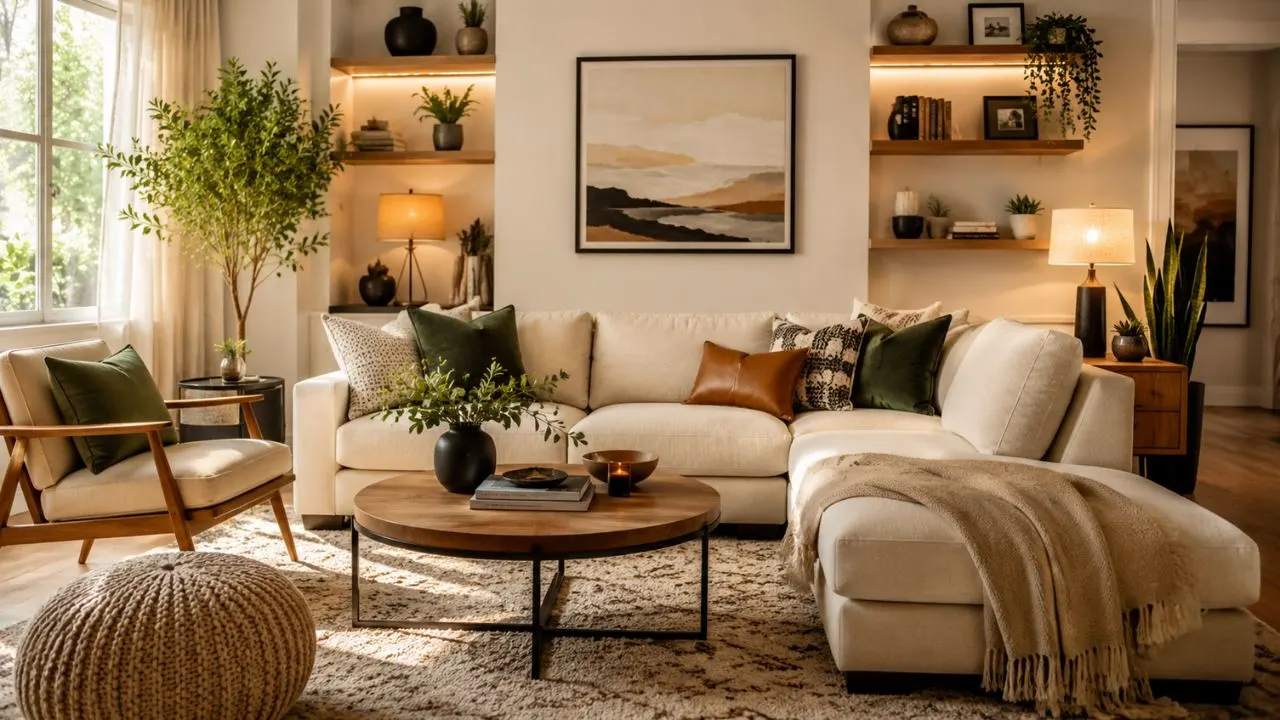

A living room should look attractive, but it also needs to support the way people actually live. It may serve as a place for relaxing, entertaining guests, watching television, reading, working, or spending time with family. The most successful living room decor ideas balance visual appeal with comfortable seating, practical storage, suitable lighting, and enough open space for easy movement.
Current living room design is moving away from cold, impersonal rooms toward warmer, more individual interiors. Rich materials, organic colours, flexible seating, accessible layouts, and wellness-focused features are influencing homes in 2026. Popular spaces feel carefully considered without appearing like untouched showrooms, allowing personal objects and everyday activities to remain part of the design.
You do not need a large budget or a complete renovation to create a stylish and comfortable living room. Rearranging furniture, improving lighting, introducing texture, changing the rug, or displaying meaningful artwork can transform the space. The key is to identify what currently feels uncomfortable, cluttered, poorly balanced, or visually unfinished before buying additional decor.
The following ten living room decor ideas work across modern, traditional, minimalist, eclectic, and small-space interiors. Each idea can be adapted to your room size, existing furniture, lifestyle, and budget. Rather than copying one fashionable image exactly, use these principles to create a room that looks polished while still feeling welcoming and personal.
1. Begin With a Furniture Layout That Supports Real Life
Before choosing paint, cushions, or artwork, decide how the room needs to function. Consider how many people use it regularly, where they naturally walk, and which activities happen most often. A family that watches films together needs a different furniture arrangement from someone who mainly uses the room for conversation, reading, or occasional entertaining.
Choose a focal point and arrange the main seating around it. The focal point might be a fireplace, television, window, artwork, bookcase, or central coffee table. Avoid pushing every piece of furniture against the walls automatically, especially in a larger room, because bringing seating closer together can create a more comfortable conversation area.
Leave clear pathways between entrances, seating, storage, and adjoining rooms. People should not need to move around a large coffee table or squeeze between an armchair and a cabinet. In an open-plan home, the back of a sofa, an area rug, or a narrow console can visually separate the living zone without constructing a permanent wall.
Large living rooms may need more than one activity zone, while small rooms benefit from furniture that performs several functions. Houzz recommends considering the room’s different uses and prioritizing shelves, cabinets, or drawers when space is limited. Flexible seating and clearly defined zones can make the room easier to use without filling every available corner.
2. Build a Warm and Flexible Colour Palette
A balanced living room colour palette usually begins with one dominant colour, one or two supporting shades, and several smaller accents. The dominant colour may appear on the walls, sofa, or large rug, while secondary colours can be repeated through chairs, curtains, cushions, artwork, and decorative accessories. Repetition helps different items feel connected rather than randomly collected.
Warm neutrals such as cream, sand, taupe, clay, mushroom, and soft brown can provide a calmer foundation than stark white or cool grey. They combine easily with wood, stone, metal, and colourful accessories. Current interiors are increasingly using organic shades and richer materials to create rooms that feel comfortable, layered, and connected to everyday life.
A neutral foundation does not require a colourless room. Deep green, rust, navy, burgundy, ochre, muted blue, and terracotta can add personality through an accent chair, painted cabinet, curtain fabric, or feature wall. Darker shades can also make large rooms feel more intimate when balanced with sufficient natural and artificial light.
Test paint and fabric samples inside the room before making a final decision. Colours can change significantly according to daylight, flooring, window direction, and evening lighting. Observe samples in the morning and at night, then choose tones that work with permanent features such as flooring, fireplaces, built-in cabinetry, and expensive upholstered furniture.
3. Use Layered Lighting Instead of One Ceiling Light
A single overhead fixture often creates flat illumination, harsh shadows, or dark corners. Layered lighting combines several sources at different heights so the room can support conversation, reading, television viewing, entertaining, and quiet evenings. The three common layers are ambient lighting, task lighting, and accent lighting.
Ambient lighting provides general visibility through ceiling fixtures, pendants, recessed lights, or indirect illumination. Task lighting focuses on a specific activity, such as a floor lamp beside a reading chair or a table lamp near a sofa. Accent lighting highlights artwork, architectural features, plants, shelving, or decorative objects and gives the room greater depth.
Place light sources around the room rather than concentrating everything in the centre. A combination of ceiling lighting, two table lamps, and a floor lamp can make an ordinary living room feel warmer and more complete. Dimmers are helpful because the brightness required for cleaning or working is usually much greater than the level needed for a relaxed evening.
Choose bulb temperatures that create a consistent atmosphere. Very cool bulbs may make warm textiles and wood appear washed out, while excessively dim lighting can make reading uncomfortable. Prioritize useful light first, then select lampshades and fixtures that add shape, material, and character to the overall modern living room decor.
4. Anchor the Seating Area With the Right Rug
An area rug can visually connect a sofa, chairs, and coffee table, making the seating arrangement feel like one intentional group. A rug that is too small may appear to float in the centre of the room and make the furniture look disconnected. When possible, select a size that allows at least the front legs of the main seating pieces to rest on it.
Large rugs can also make a small living room appear more unified because they reduce the number of visual breaks across the floor. In an open-plan interior, a rug helps distinguish the living zone from the dining or kitchen area. Its shape should generally relate to the furniture arrangement rather than simply matching the room’s outer walls.
Consider comfort and maintenance as carefully as colour. A soft, deep rug may suit a quiet sitting room, while a flatter weave can be easier to clean in a busy family space. Homes with pets, young children, or frequent guests may benefit from durable fibres, patterned surfaces, washable options, or colours that do not show every minor mark.
Use the rug to introduce pattern when the furniture and walls are simple. Geometric designs can sharpen a modern interior, while faded traditional patterns add warmth and history. A plain textured rug works well when the sofa, curtains, or artwork already contain strong patterns, preventing the finished room from becoming visually overwhelming.
5. Create Comfort Through Layered Textures
Texture prevents a neutral living room from feeling empty or unfinished. Even when most items share a similar colour, materials such as linen, velvet, boucle, wool, leather, rattan, timber, ceramic, and stone reflect light differently. This variation creates visual depth and makes the space feel warmer without requiring numerous bright colours.
Begin with the large surfaces already present in the room. A smooth leather sofa can be softened with woven cushions and a wool throw, while a heavily textured sofa may look better beside a clean-lined wooden table. Curtains, rugs, lampshades, baskets, and upholstered chairs offer additional opportunities to balance rough, smooth, soft, glossy, and matte finishes.
Current 2026 living rooms frequently use thoughtful texture, organic colours, and rich materials to create inviting spaces. Neo Deco is also influencing some interiors through glossy finishes, bold contrast, dark tones, and selective decorative detailing. These ideas work best when added in controlled amounts rather than applied to every surface.
Avoid buying many decorative pieces simply to create layers. A few substantial materials usually feel more sophisticated than numerous small accessories. A large woven rug, linen curtains, a timber coffee table, and three carefully selected cushions can create greater impact than an overcrowded collection of unrelated ornaments.
6. Choose Comfortable Seating With Shape and Variety
The sofa is usually the largest investment and visual element in a living room, so comfort should come before temporary fashion. Check seat depth, cushion support, back height, arm position, and upholstery maintenance before purchasing. A sofa that photographs beautifully but feels uncomfortable will reduce the usefulness of the entire room.
Not every seat needs to match. Combining a sofa with one or two contrasting armchairs can make the room feel more collected and adaptable. A swivel chair supports conversation in an open-plan room, while an upholstered bench, pouf, or ottoman can provide occasional seating without occupying as much visual space as another full chair.
Curved sofas, rounded chairs, and softer architectural forms remain visible in current interior design, partly because they can reduce the severe appearance of boxy rooms. However, curved furniture should fit the available floor area and circulation route. One rounded chair or oval coffee table may provide enough contrast without requiring a completely curved furniture collection.
Arrange seating so people can speak without shouting across the room or twisting uncomfortably. Side tables should be reachable, reading lamps should illuminate the correct area, and there should be somewhere to place a drink. These practical details often determine whether a stylish living room genuinely feels comfortable in everyday use.
7. Add Personality Through Artwork and Meaningful Objects
Artwork is one of the easiest ways to make a living room feel personal. Choose pieces because they create an emotional response, support the room’s colours, or represent a place, person, culture, or memory that matters to you. A room filled only with generic decorative objects may look coordinated but can lack identity.
A large artwork can create a confident focal point above a sofa, fireplace, or console. Alternatively, a gallery wall can combine prints, photographs, textiles, illustrations, and small objects. Keep the arrangement connected through a shared colour, frame finish, subject, or spacing pattern so it appears intentional rather than scattered.
Display objects in small groups instead of covering every surface. Books, ceramics, travel souvenirs, family photographs, and handmade pieces look more considered when surrounded by some empty space. Vary the height and shape of objects, but avoid arranging everything in perfectly symmetrical pairs unless the rest of the room has a formal design.
Personalization has become more important as homeowners move beyond impersonal minimalism toward spaces with memory and character. Contemporary design coverage increasingly highlights expressive details, vintage pieces, rich patterns, and emotionally meaningful interiors. The goal is not maximalism for its own sake, but a room that reflects the people living there.
8. Introduce Stylish Storage to Control Clutter
Comfort becomes difficult when remote controls, cables, toys, paperwork, blankets, and electronic devices have no defined location. Before adding decor, identify the objects that regularly create clutter. Then choose storage based on what needs to be hidden, displayed, accessed daily, or kept away from children and pets.
Closed cabinets create a calmer appearance because they hide practical items, while open shelves provide space for books, plants, artwork, and decorative objects. A combination of both is often more useful than using only one type. Leave some shelving empty so that the display can breathe and important pieces remain visible.
Multifunctional furniture is especially valuable in a small living room. A storage ottoman can hold blankets while serving as a footrest or occasional table. Nesting tables separate when guests arrive, and a media unit with drawers can hide cables, controllers, and equipment without requiring additional floor space.
Choose storage that fits the room’s architectural style and scale. A tall cabinet can use vertical space efficiently, while low storage may help a narrow room feel more open. Houzz notes that shelving, cabinets, and drawers are particularly important in compact homes, where storage must support the room without overwhelming it.
9. Bring Nature Indoors With Plants and Natural Materials
Indoor plants can soften hard furniture lines, add colour, and make empty corners feel more intentional. A tall plant may balance a large sofa or window, while smaller plants can sit on shelves, side tables, and consoles. Select species according to the room’s actual light level rather than choosing solely by appearance.
People who do not want to maintain several plants can create a natural atmosphere through wood, stone, clay, linen, jute, rattan, or botanical artwork. Views of outdoor greenery and strong natural daylight can also connect the interior with nature. The objective is to introduce natural patterns and materials without making the room resemble an indoor greenhouse.
Research into biophilic interior environments has linked nature-oriented design interventions with relaxation and reduced stress in a range of settings. These findings do not mean that purchasing one houseplant will transform mental health, but they support the wider value of including daylight, natural materials, greenery, and views of nature in interior design.
Use plants as part of the overall composition rather than filling every empty space. Vary leaf shapes and heights, but repeat planter materials or colours to maintain unity. Keep plants away from paths, heating vents, and locations where they block windows, artwork, televisions, or comfortable access to seating.
10. Finish the Room With Flexible Decorative Layers
Once the layout, lighting, seating, rug, and storage are working, add flexible finishing pieces. Cushions, throws, books, trays, candles, vases, and small decorative objects can introduce colour and personality without requiring permanent changes. These items are easier and less expensive to update than large furniture or architectural features.
Choose cushions in different sizes and textures rather than buying a perfectly matched set. Two larger cushions and one smaller accent cushion may look more relaxed than several identical pieces. Repeat colours already present in artwork, rugs, or curtains so the accessories connect with the room instead of appearing as an unrelated final addition.
Curtains can also have a major visual effect. Hanging them higher and allowing them to reach the floor can emphasize height and frame the windows more completely. Select fabric according to the required balance of privacy, daylight, insulation, and softness, using blinds or layered panels when one treatment cannot provide every function.
Edit the room after decorating. Remove several objects, photograph the space from different angles, and notice where it appears crowded or visually empty. A stylish living room does not need every trend, surface, or colour. The final design should feel complete while leaving enough flexibility for everyday belongings, seasonal changes, and future additions.
How to Decorate a Small Living Room Without Making It Feel Crowded
A small living room needs careful scale rather than miniature furniture everywhere. One properly sized sofa can be more comfortable and visually calmer than several small chairs. Choose pieces with exposed legs, simple silhouettes, or open bases when you want more visible floor area, but do not sacrifice essential comfort merely to create an illusion of space.
Use the walls for storage, lighting, and display. Floating shelves, wall-mounted lights, and tall narrow cabinets preserve valuable floor space. Mirrors can reflect natural light when positioned thoughtfully, while curtains mounted above the window frame may draw the eye upward and make the wall appear taller.
Furniture with more than one use can reduce the total number of pieces needed. An ottoman may work as seating, a footrest, storage, or a coffee table with the addition of a tray. Houzz also suggests paired side tables or an ottoman as flexible alternatives when a conventional coffee table would occupy too much space.
Limit visual clutter but do not remove all colour or personality. A compact room can still support a bold artwork, patterned rug, deep wall colour, or statement chair. The important question is whether each item contributes function, comfort, or meaning rather than whether it follows a strict minimalist rule.
Common Living Room Decorating Mistakes to Avoid
Buying furniture before measuring is one of the most expensive living room mistakes. Record wall lengths, doorways, windows, radiators, sockets, and circulation paths before placing an order. Use masking tape to mark the dimensions of a sofa, rug, or cabinet on the floor so you can understand its real scale.
Another common problem is relying on matching furniture sets. A sofa, loveseat, chair, coffee table, and side tables from one collection may create consistency, but the room can feel like a showroom. Mixing complementary shapes, materials, and periods usually creates a more natural interior while still maintaining a controlled colour palette.
Poor lighting can undermine otherwise attractive decor. One bright ceiling fixture rarely creates the flexibility required for reading, entertaining, and relaxing. Add light at several heights, avoid leaving important seating in dark corners, and position lamps according to their practical purpose rather than using them only as decorative objects.
Finally, avoid following every temporary trend simultaneously. Rounded furniture, bold colour, vintage pieces, glossy finishes, natural materials, and strong patterns can all look appealing, but they do not need to appear in one room. Select trends that fit your architecture, existing belongings, lifestyle, and genuine preferences.
How to Refresh a Living Room on a Budget
Begin with rearrangement rather than shopping. Move the sofa away from the wall, reposition chairs for easier conversation, relocate a lamp, and remove objects that no longer contribute to the room. A better furniture layout can create a larger improvement than purchasing several new accessories.
Paint is another relatively affordable way to change the atmosphere. Repainting the entire room creates a fresh foundation, while a feature wall, painted bookcase, or updated fireplace surround can provide a smaller transformation. Test the colour carefully and consider how it works with the existing flooring and upholstery.
Replace or recover smaller textiles before replacing furniture. New cushion covers, curtains, a throw, or an appropriately sized rug can shift the colour palette and add texture. Second-hand furniture, vintage artwork, reused frames, and handmade objects can also give the room greater character without requiring luxury prices.
Improve what you already own through cleaning, repairing, and refinishing. Wash curtains, remove fabric pilling, polish wooden furniture, conceal cables, replace damaged hardware, and organize shelves. A room often appears more stylish when its existing elements are properly maintained and arranged, even when very little new decor is introduced.
Conclusion
The best living room decor ideas begin with the way the room needs to function. A thoughtful furniture layout, comfortable seating, clear pathways, suitable storage, and accessible tables create the practical foundation. Once these elements work, colour, pattern, texture, lighting, artwork, and accessories can make the room visually distinctive.
Current design trends favour warm colours, natural materials, flexible furniture, expressive details, and spaces that support well-being. However, trends should provide inspiration rather than strict instructions. A timeless living room reflects the home’s architecture and the preferences of the people who use it instead of copying one fashionable image.
Small updates can have a meaningful effect. Rearranging furniture, increasing the rug size, adding a floor lamp, displaying personal artwork, or reducing clutter may improve both appearance and comfort. You do not need to replace everything at once or complete the room within one shopping trip.
A stylish and comfortable living room should invite people to sit, talk, rest, read, and spend time together. It can remain polished without feeling precious and personal without becoming cluttered. When function, comfort, and character receive equal attention, the room becomes more than a decorated space—it becomes a place people genuinely enjoy using.
Frequently Asked Questions
How can I make my living room look more stylish?
Begin with a balanced furniture layout, a correctly sized rug, layered lighting, and a consistent colour palette. Add personality through artwork, texture, plants, and a few meaningful decorative objects.
What colours make a living room feel warm and comfortable?
Cream, beige, taupe, soft brown, terracotta, muted green, rust, and warm white can create a welcoming atmosphere. Choose shades that complement the room’s daylight, flooring, and furniture.
How should I arrange furniture in a small living room?
Choose appropriately scaled pieces, maintain clear walking paths, and use multifunctional furniture. Arrange seating around one focal point and use wall-mounted storage to preserve floor space.
How many cushions should I place on a sofa?
The right number depends on the sofa size and how it is used. Two to five cushions usually provide colour and comfort without taking away too much practical seating space.
How can I decorate my living room on a low budget?
Rearrange existing furniture, remove clutter, repaint selected surfaces, and update cushion covers or curtains. Second-hand furniture, personal photographs, books, and plants can add character affordably.



