
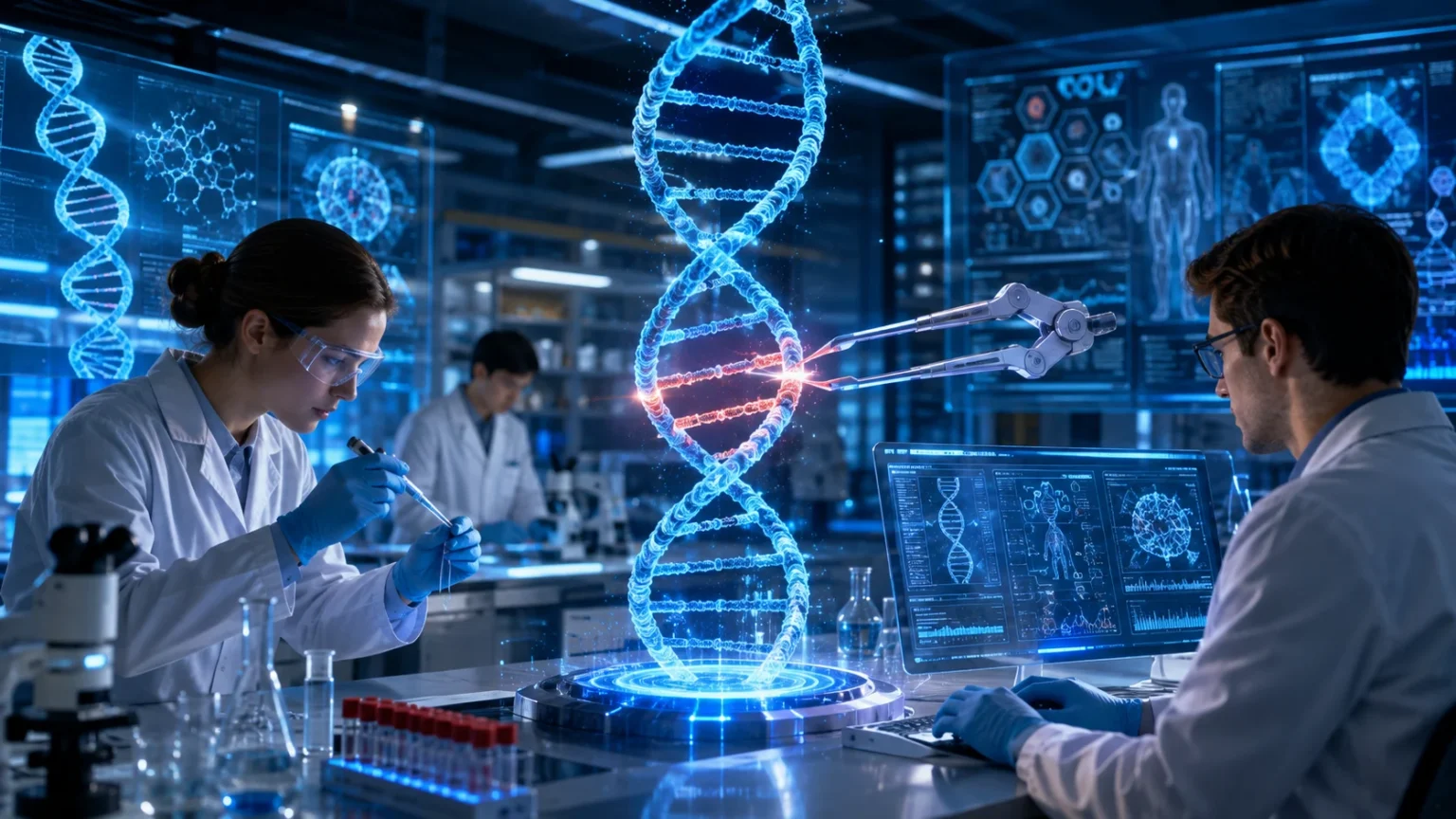

Can Scientists Change Human DNA? What Gene Editing Can Really Do
Yes, scientists can change human DNA, and this is no longer limited to theoretical laboratory research. Modern human genome editing technologies can alter specific sections of genetic material in human cells. Scientists can disable certain DNA sequences, correct some disease-related changes, or modify how particular genes function, opening new possibilities for treating serious inherited diseases.
However, changing DNA does not mean scientists can easily redesign an entire human being. The human genome contains billions of DNA letters and thousands of genes interacting with one another and with the environment. Most human characteristics are influenced by many genes, meaning gene editing is far more complicated than simply selecting a desired trait and changing one genetic instruction.
The most famous gene-editing technology is CRISPR-Cas9, which allows researchers to target particular areas of DNA with remarkable precision. Newer approaches, including base editing and prime editing, aim to make certain genetic changes without relying on the same type of DNA cutting. Together, these tools are helping medicine move toward treatments that address some diseases at their genetic source.
The important distinction is between changing DNA in an individual patient’s body cells and altering DNA that could be passed to future generations. The first approach is already being used medically in carefully regulated situations. Heritable human genome editing remains far more controversial because any changes could potentially affect children, grandchildren, and generations that cannot consent to the decision.
What Does It Mean to Change Human DNA?
DNA is the biological instruction system contained in almost every cell of the human body. It consists of billions of chemical building blocks arranged in a specific sequence. Sections of DNA called genes contain instructions that help cells produce proteins and regulate processes involved in growth, development, metabolism, immunity, and countless other biological functions.
Changing human DNA means intentionally altering part of this genetic sequence or changing how a particular genetic instruction operates. Depending on the technology, researchers may remove a small section, disrupt a gene, replace genetic material, or modify individual DNA letters. The goal is usually to correct or compensate for a genetic problem associated with disease.
Not every genetic change affects the whole body. If doctors modify blood-forming stem cells, for example, the change primarily influences cells produced from those stem cells. Editing cells in the eye may affect only particular tissues there. This targeted approach is very different from changing DNA in an early embryo, where the alteration could eventually appear throughout much of the body.
Scientists therefore use the term genome editing carefully. It does not necessarily mean rewriting a person’s complete genome. Most current medical approaches aim at highly specific locations because changing unnecessary parts of DNA could create additional risks. Precision is one of the most important goals of modern gene-editing research.
How Does CRISPR Gene Editing Work?
CRISPR-Cas9 is one of the technologies that transformed genetic research because it gave scientists a more programmable way to target DNA. The system uses a guide molecule designed to recognize a particular genetic sequence together with a Cas enzyme capable of interacting with DNA at that targeted location.
Once the system reaches its intended target, Cas9 can create a break in the DNA. The cell naturally attempts to repair that break, and researchers can use the repair process to disrupt a gene or produce a desired change. Different gene-editing strategies use this basic principle in different ways depending on the disease and genetic target.
An easy analogy is to imagine DNA as an enormous book containing biological instructions. Traditional genetic techniques could sometimes alter the book, but finding the exact sentence was challenging. CRISPR gives researchers something closer to a programmable search tool that can locate a chosen section before a specific change is attempted.
The analogy has limitations because human DNA is much more complicated than written text. Genes interact with regulatory regions, other genes, proteins, and environmental conditions. Editing one location can sometimes produce unexpected consequences, which is why CRISPR gene editing requires extensive laboratory testing, clinical research, monitoring, and regulatory oversight.
Can Scientists Change DNA in Living Humans?
Scientists can already change DNA associated with cells taken from living patients, and some approaches can edit genetic material directly inside the body. These two strategies are generally known as ex vivo and in vivo genome editing. Both are being studied as ways of treating diseases caused or strongly influenced by particular genetic abnormalities.
With ex vivo editing, doctors collect selected cells from a patient and send them through a controlled laboratory process. Researchers modify those cells outside the body, perform quality checks, and then return appropriate cells to the patient. Blood stem cells are especially suitable for certain forms of this approach because they can generate new blood cells after transplantation.
In vivo editing works differently because the gene-editing machinery is delivered directly into a patient’s body. Researchers need a delivery system capable of reaching the correct tissue and entering the appropriate cells. This creates additional challenges because scientists need both an accurate genetic editor and a reliable method for delivering it where it is needed.
Neither technique means every cell in the patient’s body suddenly receives a changed genome. Medical gene editing is generally designed to target particular cell populations. The challenge is achieving enough successful editing to create a meaningful therapeutic benefit while minimizing effects on unintended cells or unintended locations within DNA.
Gene Editing and Gene Therapy Are Not Exactly the Same
Gene therapy and gene editing are closely related, but the terms should not automatically be treated as identical. Traditional gene therapy often works by delivering additional genetic material to cells so they can produce a useful protein or perform a missing function. The patient’s original DNA sequence may not necessarily be directly corrected.
Gene editing, by comparison, intentionally modifies a particular location in the genome. The technique might disable a harmful genetic instruction, repair a mutation, alter the regulation of a gene, or change a small part of DNA. CRISPR-Cas systems are among the best-known technologies used for this purpose.
Both approaches can potentially treat genetic disease, and the boundaries between them sometimes overlap. Some modern therapies involve collecting a patient’s cells, genetically modifying them, and returning them to the body. Regulatory agencies may therefore categorize certain genome-edited cell products within the broader field of gene therapy.
For readers, the simplest distinction is that gene therapy broadly involves using genetic material or genetically modified cells to treat disease, while gene editing specifically involves making targeted changes to genetic sequences. Both represent important parts of rapidly developing genetic medicine and precision medicine.
CRISPR Treatments Show Human DNA Can Be Changed
The clearest evidence that scientists can change human DNA therapeutically comes from treatments that have moved beyond laboratory experiments. Casgevy became the first FDA-approved treatment to use CRISPR/Cas9 genome-editing technology, representing a major milestone in the history of genetic medicine.
The treatment uses a patient’s own blood-forming stem cells. Those cells are collected and edited outside the body before being returned through a stem-cell transplantation process. Rather than directly correcting the original sickle cell mutation, the editing changes regulation of a gene involved in controlling fetal hemoglobin production.
Increasing fetal hemoglobin can help prevent red blood cells from developing the abnormal sickle shape associated with sickle cell disease. The same general treatment is also used for certain patients with transfusion-dependent beta-thalassemia, another inherited blood disorder involving hemoglobin production.
This example demonstrates an important point about DNA modification in humans. Gene editing does not always need to repair a disease-causing mutation letter by letter. Sometimes scientists can modify another genetic switch or pathway that changes how cells behave and produces a therapeutic benefit.
What Is Somatic Gene Editing?
Somatic cells are the ordinary non-reproductive cells that make up most of a person’s body. Blood cells, liver cells, muscle cells, skin cells, and many other tissues contain somatic cells. When scientists edit DNA in these cells, the resulting genetic change is generally limited to the treated individual.
This distinction is extremely important. If a patient’s blood stem cells are genetically edited to treat a blood disorder, those changes are not intended to become part of the DNA passed to future children. This makes somatic gene editing fundamentally different from editing eggs, sperm, or embryos for reproductive purposes.
Most medically acceptable applications of human gene editing currently focus on somatic cells. Researchers are investigating approaches targeting diseases involving the blood, liver, eyes, immune system, muscles, and other tissues. Some treatments edit cells outside the body, while others aim to deliver gene-editing tools directly into particular organs.
Somatic editing still requires careful safety evaluation because a permanent DNA change can have long-lasting consequences for treated cells. Researchers need to determine whether the intended genetic change works, whether other DNA sites were affected, how long the benefit lasts, and whether unexpected problems emerge over time.
What Is Germline Gene Editing?
Germline editing involves genetic changes to reproductive cells, their precursors, or embryos in ways relevant to inheritance. If such an edited embryo developed into a person and the genetic change entered reproductive cells, the alteration could potentially be passed to that person’s descendants.
That possibility dramatically changes the ethical discussion. A patient undergoing somatic treatment can potentially provide informed consent for a therapy affecting their own cells. Future generations affected by heritable editing cannot consent, yet they could inherit both the intended DNA modification and any unexpected effects associated with it.
There are also major scientific uncertainties. An unintended genetic change introduced at the earliest stage of human development could become widespread throughout the body. Researchers would need extraordinary confidence in safety and accuracy because reversing a heritable modification after future generations inherit it could be extremely difficult.
For these reasons, heritable human genome editing is treated much more cautiously than somatic gene editing. International scientific and public-health discussions emphasize the need for strong governance, ethical review, transparency, public involvement, and careful consideration of consequences extending beyond one patient.
Can Scientists Change the DNA of Human Embryos?
From a technical research perspective, scientists have demonstrated that DNA in early human embryos can be edited experimentally. CRISPR and related technologies can target genetic sequences at very early developmental stages, making embryo genome editing scientifically possible under certain laboratory conditions.
Scientific possibility, however, is not equivalent to accepted medical practice. Embryo editing creates concerns about unintended DNA changes, incomplete editing, developmental effects, and the possibility of passing modifications to future generations. These risks become particularly serious if an edited embryo is used to establish a pregnancy.
Another complication is mosaicism. If editing does not happen uniformly across all cells during early development, some cells might contain one genetic sequence while others contain another. That could make the biological outcome difficult to predict and could complicate attempts to determine whether a harmful mutation was actually corrected throughout relevant tissues.
Research involving embryos is also subject to different laws and regulations depending on the country. The broader scientific debate continues to distinguish laboratory research from reproductive use. Even as editing tools become more accurate, technical capability alone does not answer whether heritable embryo editing should be used clinically.
Can Scientists Correct Genetic Diseases?
Some genetic diseases are promising candidates for genome editing because they are strongly linked to changes in a particular gene or regulatory sequence. In these situations, correcting, disabling, replacing, or compensating for a problematic genetic instruction may address an important biological cause rather than only managing downstream symptoms.
Blood disorders have become an early focus because blood-forming stem cells can be collected, modified outside the body, and transplanted back into a patient. Researchers are also studying genome editing for conditions affecting organs such as the liver and eye, along with immune disorders and other inherited diseases.
The challenge becomes much greater when a disease involves many genes. Conditions such as diabetes, heart disease, and numerous neurological disorders may involve complicated interactions among genetic variants, environmental exposures, age, lifestyle, and other biological factors. Editing a single gene may therefore be insufficient to prevent or cure them.
For this reason, saying scientists can “fix genetic disease” is too broad. Gene-editing technology may become highly effective for selected conditions with suitable biological targets, while other diseases may remain difficult to address genetically. Success depends on understanding the disease mechanism, reaching the right cells, and making a safe change.
Base Editing Could Change Individual DNA Letters
Traditional CRISPR-Cas9 editing often creates a break across both strands of DNA. Researchers have therefore developed newer technologies designed to make some changes without creating the same kind of double-strand break. One of these approaches is known as base editing.
DNA uses four chemical bases commonly represented by the letters A, T, C, and G. Some genetic disorders occur because a single DNA letter differs from the sequence needed for normal biological function. Base editors are designed to chemically convert certain bases into others at carefully targeted locations.
This approach has attracted significant interest because many known disease-associated mutations involve single-letter genetic variations. If researchers can safely correct selected mutations without making larger DNA breaks, precision genome editing could become useful for additional inherited conditions.
However, base editing is not a universal genetic eraser. Different editors can perform only particular types of conversions, delivery remains difficult for many tissues, and unintended edits are still possible. Scientists therefore continue improving precision, efficiency, targeting, and long-term safety before broader clinical applications become routine.
Prime Editing Offers Another Way to Rewrite DNA
Prime editing is another newer genome-editing strategy designed to provide greater flexibility than some earlier CRISPR approaches. Instead of relying primarily on a standard double-strand DNA break, prime editing combines targeting machinery with an enzyme that can write new genetic information at a chosen location.
Researchers sometimes describe the technology as similar to a genetic search-and-replace system. In principle, it may allow particular DNA letters to be substituted and small sections of genetic information to be inserted or removed. This could make it suitable for mutations that cannot easily be addressed using conventional base editors.
The potential is significant because human genetic diseases can result from many different types of DNA changes. A technology capable of making a broader range of precise corrections could eventually expand the number of mutations researchers can realistically target with therapeutic genome editing.
Prime editing nevertheless remains technically demanding. Delivering all necessary components into appropriate cells, achieving sufficient editing efficiency, preventing unintended changes, and demonstrating long-term safety are major challenges. Like other advanced genetic tools, it must move through careful research before widespread medical use.
Can Scientists Change Eye Color, Height, or Intelligence?
Questions about gene editing often move quickly from treating disease to altering human traits. In theory, genetics contributes to characteristics such as eye color, height, body structure, and aspects of cognitive function. In practice, modifying complex human traits is much harder than changing a mutation strongly associated with one specific disease.
Some characteristics involve multiple genes rather than a single genetic switch. Height, for example, is influenced by a very large number of genetic variants as well as nutrition, health, hormones, and development. Cognitive traits are even more complicated, involving extensive biological and environmental interactions that scientists do not fully understand.
Even apparently simpler characteristics may involve tradeoffs scientists cannot predict reliably. A gene can influence more than one biological process, meaning changing it for a desired effect could unintentionally alter something else. Human development also depends on interactions occurring at particular stages rather than on DNA sequence alone.
For these reasons, the popular image of “designer babies” with precisely selected intelligence, personality, appearance, or athletic ability is far ahead of current scientific capability. Genome editing is much better suited to carefully defined biological targets than to redesigning complex human characteristics according to personal preferences.
Can DNA Editing Change an Adult’s Entire Body?
A common misunderstanding is that scientists might inject someone with a gene editor and immediately rewrite every cell in the person’s body. Human bodies contain trillions of cells distributed across many different tissues, and delivering genome-editing tools safely to all of them would be extraordinarily difficult.
Most therapeutic approaches do not need to modify every cell. A disease may be improved by changing a sufficient number of cells within one particular tissue. For a blood disorder, targeting blood-forming stem cells can influence many future blood cells without requiring scientists to edit neurons, skin cells, or every other cell type.
Some organs are also easier to target than others. Researchers have made considerable progress delivering genetic medicines to the liver, while reaching certain cells in the brain, muscles, lungs, or other tissues can present different challenges. Delivery remains one of the biggest barriers in modern genetic medicine.
Even if universal delivery were possible, changing every cell would not necessarily reverse characteristics established during development. A DNA edit made in adulthood cannot simply restart embryonic growth and rebuild the body from the beginning. Genes matter enormously, but human biology is also shaped by developmental history and environmental influences.
What Are the Risks of Changing Human DNA?
One major concern is off-target editing, in which a gene-editing system alters DNA at an unintended location. Even a rare unwanted modification could matter if it disrupts an important gene or affects cell growth. Researchers therefore use extensive testing to determine how accurately an editing system reaches its intended target.
Unexpected changes can also occur at the intended target itself. DNA repair is a biological process rather than a perfectly controlled computer command, and cells may repair edited DNA in different ways. Scientists need to understand the resulting sequences rather than simply confirming that editing occurred.
Delivery systems can create additional risks. The material carrying a gene editor must reach the correct cells at an effective amount without causing unacceptable toxicity or immune reactions. Treatments involving stem-cell collection and transplantation can also involve risks from the broader medical procedure, not only from the genetic edit.
Long-term monitoring is especially important because genome editing can create lasting changes. Some complications might not become obvious immediately after treatment. Regulators and researchers therefore evaluate not only short-term treatment results but also potential delayed consequences associated with genetically modified cells.
Why Off-Target Gene Editing Matters
DNA contains billions of genetic letters, and different regions can sometimes have similar sequences. A guide designed for one target may theoretically interact with another sufficiently similar location. If the editing machinery changes that unintended region, the result is described as an off-target effect.
The consequences depend on where the unintended edit occurs. Some DNA regions may tolerate changes without meaningful effects, while altering an important gene or regulatory sequence could potentially disrupt normal cell function. Preventing biologically important off-target edits is therefore a major priority in therapeutic development.
Scientists use computational prediction, laboratory testing, sequencing technologies, and improved molecular designs to investigate specificity. Newer editing systems are also being engineered to recognize targets more selectively. Better delivery methods may further reduce exposure in tissues that do not need to be edited.
Perfectly eliminating uncertainty is difficult, so gene-editing treatments are judged through risk-benefit analysis. A potential risk may be considered differently when treating a severe life-threatening disorder than when considering a nonmedical enhancement. This distinction is one reason medical gene editing and cosmetic genetic modification raise very different ethical questions.
Why Gene Editing Raises Ethical Questions
Gene editing creates ethical questions because DNA is connected to health, identity, reproduction, family relationships, and future generations. Using genome editing to treat a serious disease may receive broad support, but using the same technology for enhancement can create concerns about fairness, social pressure, discrimination, and unequal access.
Access is already an important issue. Advanced gene therapies can require highly specialized medical centers, complex manufacturing, transplantation, and long-term follow-up. If transformative genetic treatments remain extremely expensive or geographically limited, the benefits of scientific progress may not reach many of the people who need them.
Heritable editing raises even deeper concerns because decisions would affect individuals who do not yet exist. An alteration considered beneficial by one generation might have unexpected biological or social consequences later. Society must therefore consider who gets to decide which genetic changes are acceptable and according to what standards.
There is also concern about moving from preventing disease toward selecting preferred human characteristics. History contains harmful examples of attempts to rank people according to inherited traits. Responsible human genome editing requires scientific safeguards alongside serious attention to dignity, disability perspectives, equity, consent, cultural differences, and human rights.
Could Gene Editing Prevent Inherited Diseases?
One of the strongest motivations for genome editing is the possibility of preventing or treating diseases caused by harmful genetic variants. If scientists can correct a disease-causing mutation in the appropriate somatic cells, they may be able to reduce symptoms or address an underlying biological cause in the treated patient.
Preventing transmission to future generations is a different question because it could involve reproductive genetics. Existing reproductive options can already help some families reduce the chance of passing particular genetic conditions to children without editing embryos, depending on the condition and individual circumstances.
Heritable editing is therefore not automatically the only solution for inherited disease. The benefits would need to be considered alongside safety concerns, available alternatives, ethical issues, and uncertainties about effects on future generations. Different genetic conditions also present very different reproductive and medical circumstances.
As technologies improve, this debate will likely continue. The central challenge is determining when a technically possible genetic intervention is medically necessary, sufficiently safe, ethically justified, and preferable to existing alternatives. Scientific capability alone cannot make all of those decisions.
How Close Are We to Editing DNA Inside the Body?
In vivo gene editing is one of the most important areas of current research because it could allow doctors to modify disease-related DNA without removing cells from patients first. The concept is particularly attractive for organs where extracting, editing, and returning cells is impractical.
The basic challenge is delivery. A gene editor has little therapeutic value if it cannot reach enough of the correct cells. Researchers are developing lipid nanoparticles, engineered viral vectors, and other delivery technologies intended to transport editing components into targeted tissues while limiting exposure elsewhere.
The liver has been an especially important target because certain delivery systems naturally reach liver cells relatively efficiently. Researchers are also investigating approaches for the eye, muscles, immune system, and other organs. Each tissue presents unique biological obstacles, meaning one delivery method is unlikely to work everywhere.
If these technologies continue improving, future treatments may become simpler and applicable to a wider range of diseases. However, editing directly inside the body can make it harder to remove or inspect cells before modification, increasing the importance of highly accurate targeting and careful safety assessment.
Will Scientists Be Able to Rewrite Human DNA in the Future?
Genome editing is likely to become more precise, flexible, and sophisticated as researchers improve CRISPR systems, base editors, prime editors, delivery technologies, sequencing, and computational tools. These advances could allow doctors to target more genetic diseases while using smaller or more accurate interventions.
Future medicine may also become increasingly personalized. Two patients diagnosed with the same broad condition can carry different mutations, and improved genetic technologies could eventually allow therapies to be designed around particular variants. Researchers have already demonstrated growing interest in highly individualized genetic treatments for rare disorders.
Artificial intelligence may support this progress by helping researchers analyze genetic data, predict molecular interactions, design candidate editing systems, and identify potential unintended effects. AI cannot remove the need for experiments or clinical trials, but computational tools can help scientists explore enormous biological datasets more efficiently.
Still, “rewriting human DNA” will probably remain much more constrained than science-fiction portrayals suggest. Human biology is extraordinarily interconnected, and greater technical precision does not automatically provide complete understanding. Future genome editing will therefore depend as much on biology, medicine, ethics, and governance as on better molecular tools.
So, Can Scientists Really Change Human DNA?
Yes, scientists can change human DNA, and carefully controlled genome editing is already part of modern medicine. CRISPR-based treatments demonstrate that cells can be collected from patients, genetically modified for a therapeutic purpose, and returned to the body to address certain serious genetic diseases.
What scientists cannot currently do is safely redesign an entire person’s genome or reliably choose complicated characteristics such as intelligence, personality, or athletic ability. Most traits involve many genes interacting with development and environment, making human biology far more complicated than changing a single line of genetic code.
Somatic gene editing offers the clearest medical pathway because changes can be directed toward a patient without intentionally affecting future generations. Germline and embryo editing create much larger scientific, ethical, and social questions because any resulting modifications could potentially become heritable.
The future of human genome editing is therefore both promising and demanding. Better tools could transform treatment for some inherited diseases, but responsible progress requires precision, long-term safety monitoring, fair access, strong regulation, and careful consideration of where society should draw the line between treating disease and changing human traits.
Frequently Asked Questions
Can scientists actually edit human DNA?
Yes. Scientists can modify specific DNA sequences using technologies such as CRISPR-Cas9, and genome-edited therapies are already used for certain serious genetic diseases.
Can CRISPR change a person’s DNA permanently?
Some CRISPR edits can create lasting changes in targeted cells. Whether the effect remains throughout life depends on the cells edited, the treatment, and how those cells behave over time.
Can scientists change the DNA of an unborn baby?
Editing DNA in human embryos is technically possible in research settings, but using edited embryos for reproduction raises major safety, ethical, legal, and heritable-genome concerns.
Can gene editing cure genetic diseases?
Gene editing may treat or potentially provide long-lasting benefit for selected genetic disorders, but it cannot currently cure every genetic disease. Success depends on the mutation, tissue, delivery method, and treatment safety.
Can scientists create designer babies with CRISPR?
Current science cannot reliably engineer complex traits such as intelligence, personality, or athletic ability. These characteristics involve many genes and environmental factors, making precise genetic design unrealistic today.



