
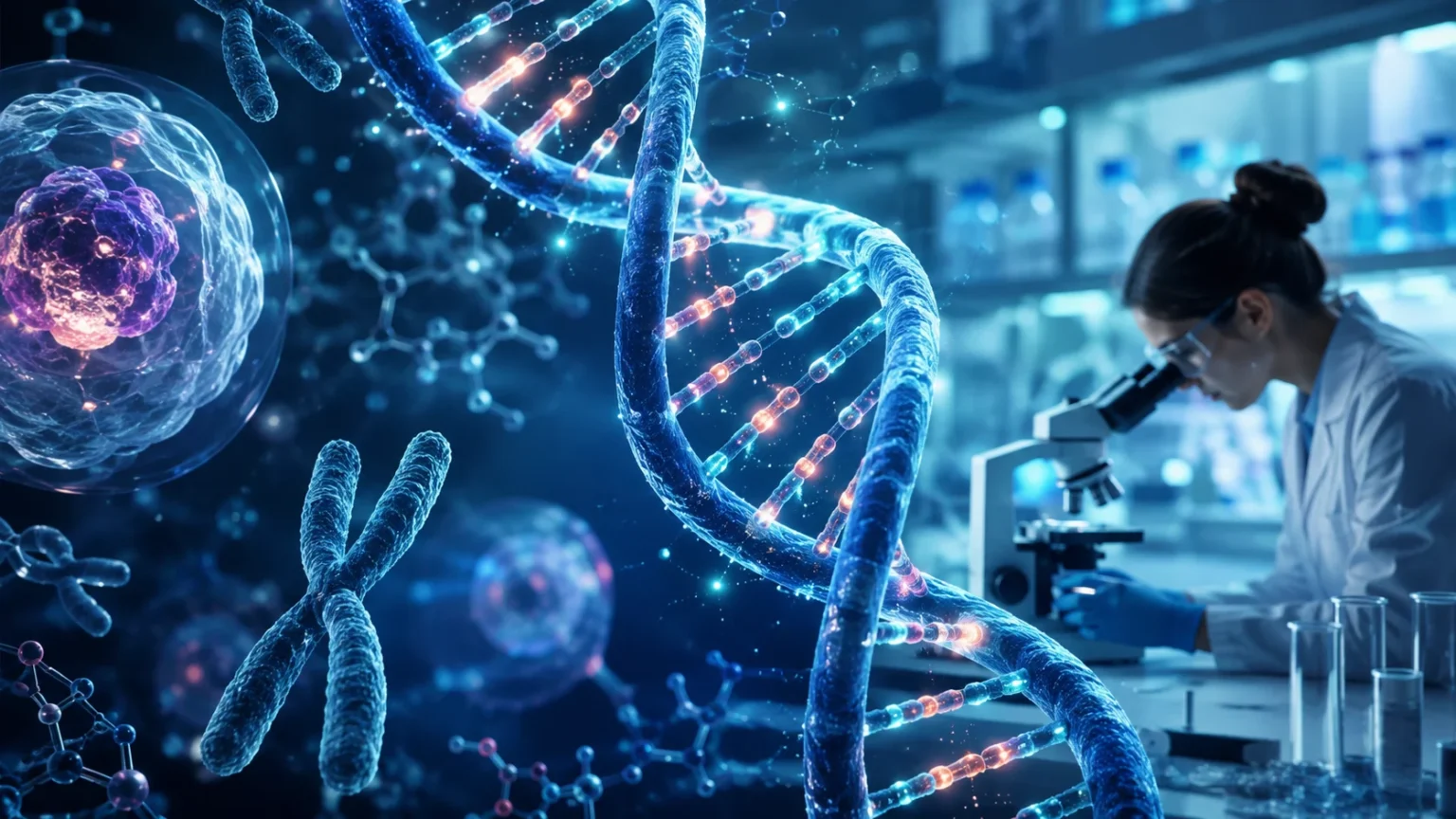

What Is DNA and How Does It Work? A Simple Guide to Your Genetic Code
DNA is one of the most important molecules in every human body. It carries biological information that helps cells develop, function, repair themselves, and reproduce. From the color of your eyes to many aspects of how your cells work, DNA provides instructions that influence the characteristics making each person biologically unique.
The full name of DNA is deoxyribonucleic acid, but understanding it does not require memorizing complicated scientific language. A useful way to imagine DNA is as an enormous biological information system. It stores instructions using only four chemical letters, yet different combinations of those letters can provide the information needed to build and maintain an extraordinarily complex organism.
Almost every cell in your body contains a copy of your DNA. Inside most human cells, this genetic material is organized into chromosomes and stored within the nucleus. A smaller amount of DNA is also found inside mitochondria, the structures involved in producing usable energy for cells.
So, what is DNA and how does it work? DNA works by storing genetic instructions, copying those instructions when cells divide, and allowing selected information to be read when cells need particular proteins or functional RNA molecules. Understanding these processes provides a foundation for learning about genetics, inheritance, evolution, genetic diseases, and modern biotechnology.
What Is DNA?
DNA is a long molecule containing the hereditary information used by living organisms. It belongs to a group of molecules called nucleic acids and is constructed from repeating units known as nucleotides. The order of these nucleotides creates a biological sequence that cells can read and use in different ways.
In humans, DNA contains instructions involved in development, growth, reproduction, metabolism, immune function, and countless other processes. However, DNA should not be thought of as a rigid blueprint that determines everything about a person. Genes interact with one another, cellular conditions, development, lifestyle, and the wider environment.
An organism’s complete set of DNA is called its genome. The human genome contains approximately 3 billion DNA base pairs distributed across chromosomes in the nucleus, along with a much smaller mitochondrial genome. Only part of this enormous sequence directly provides instructions for making proteins.
DNA is inherited across generations, which explains why biological relatives often share characteristics. However, reproduction creates new combinations of genetic information, and mutations introduce additional variation over time. These mechanisms help explain both the similarities among humans and the differences that make every individual’s genome distinctive.
What Is DNA Made Of?
DNA is built from smaller chemical units called nucleotides. Each nucleotide contains three main components: a sugar called deoxyribose, a phosphate group, and one nitrogen-containing base. The sugar and phosphate components form the structural backbone of a DNA strand, while the bases carry much of the sequence information.
There are four DNA bases: adenine, thymine, cytosine, and guanine, commonly shortened to A, T, C, and G. The order of these four letters changes throughout the genome. Just as different arrangements of letters create different words, different arrangements of DNA bases provide different biological information.
DNA normally exists as two connected strands. Adenine on one strand pairs with thymine on the other, while cytosine pairs with guanine. Scientists commonly describe these relationships as A-T and C-G base pairing, and this predictable pairing is extremely important when cells need to copy their DNA.
Although four genetic letters may sound surprisingly simple, their possible combinations are enormous. A human genome contains billions of bases, meaning DNA can store vast amounts of biological information. Much of modern genetics involves discovering how particular sequences influence genes, cell behavior, health, development, and disease.
Why Does DNA Have a Double Helix Shape?
The famous shape of DNA is known as the double helix. It resembles a long ladder that has been gently twisted. The sugar-phosphate backbones form the outer sides of this molecular ladder, while pairs of A, T, C, and G bases form structures resembling the steps between them.
The two strands run alongside each other and are held together partly through interactions between complementary bases. Adenine pairs with thymine, while cytosine pairs with guanine. Because the pairing follows predictable rules, the sequence on one DNA strand can provide the information needed to reconstruct the other.
This structure is especially useful during DNA replication. The two strands can separate, allowing each existing strand to serve as a template for creating a new complementary strand. Through this mechanism, cells can produce remarkably accurate copies of enormous DNA molecules before dividing.
The double helix also helps provide stability while still allowing genetic information to become accessible when necessary. Cells must protect DNA from damage but also open particular regions when genes need to be used. DNA structure therefore balances long-term information storage with the flexibility required for normal cellular activity.
Where Is DNA Found in the Human Body?
Nearly every type of human cell contains DNA. In most cells, the majority of genetic material is stored within the cell nucleus, a membrane-bound compartment that helps protect and organize the genome. The DNA inside the nucleus is called nuclear DNA and accounts for almost all of our genetic information.
Human DNA is far too long to simply float loosely inside such a tiny nucleus. Cells solve this problem by wrapping DNA around proteins called histones and organizing it into increasingly compact structures. When DNA becomes highly condensed during cell division, these structures form the recognizable chromosomes seen in biology diagrams.
Humans also contain a small amount of mitochondrial DNA. Mitochondria are cellular structures strongly involved in energy metabolism and contain their own small genome. Unlike most nuclear DNA, which comes from both biological parents, mitochondrial DNA is normally inherited through the maternal line.
There are some important exceptions to the rule that human cells contain nuclear DNA. Mature red blood cells, for example, lose their nuclei during development and therefore do not contain the usual nuclear genome. These specialized exceptions show that different cell types are adapted to perform different biological functions.
What Are Genes?
A gene is a region of DNA containing information that produces a functional biological product, often a protein or functional RNA molecule. Genes are commonly described as the basic units of inheritance because genetic information can be passed from parents to children through reproductive cells.
Humans have roughly 20,000 protein-coding genes, but those genes occupy only a small portion of the entire genome. Large regions of DNA perform regulatory, structural, or still incompletely understood functions rather than directly providing instructions for proteins. The old idea that nearly all important DNA simply represents individual protein recipes is therefore far too simple.
Different genes perform very different roles. Some provide instructions connected with structural proteins, while others contribute to enzymes, receptors, signaling molecules, immune responses, or cellular regulation. The proteins resulting from gene activity help determine how cells behave and how tissues and organs perform their functions.
Having a gene does not mean that it is constantly active in every cell. Different cells use different sets of genes. A neuron and a liver cell can contain essentially the same genome while looking and behaving completely differently because they activate different patterns of genetic information.
What Are Chromosomes?
Chromosomes are organized structures containing DNA and associated proteins. They allow extremely long DNA molecules to fit inside cells while helping genetic information remain organized and accessible. Chromosome organization also becomes particularly important when DNA must be accurately distributed during cell division.
Most human body cells contain 46 chromosomes arranged into 23 pairs. One chromosome in each pair is typically inherited from a person’s biological mother and the other from the biological father. The first 22 pairs are called autosomes, while the remaining pair consists of sex chromosomes.
Genes are located at particular positions along chromosomes, but individual chromosomes contain many different genes and regulatory regions. A chromosome should therefore not be thought of as representing one characteristic. Each carries a large collection of genetic information that can influence many biological processes.
Errors involving chromosome number or structure can sometimes affect development or health. Chromosomal changes may involve missing sections, duplicated regions, rearrangements, or abnormal chromosome numbers. Studying chromosomes helps medical researchers understand certain genetic conditions as well as normal human variation.
How Does DNA Store Genetic Information?
DNA stores information through the sequence of its A, T, C, and G bases. The chemical ingredients are shared throughout the genome, but their order changes. It is this sequence—not simply the presence of DNA—that contains biological instructions capable of being interpreted by cellular machinery.
Within protein-coding genes, groups of DNA bases ultimately correspond to information used for arranging amino acids, the building blocks of proteins. The relationship between nucleotide sequences and amino acids forms an important part of what scientists call the genetic code.
However, DNA contains more than protein-coding instructions. Regulatory sequences help determine when particular genes should be active, where they should be active, and how strongly they should be expressed. Other DNA regions contribute to chromosome structure, genome organization, and the production of functional RNA molecules.
This makes the genome more like a complex information network than a simple list of recipes. Cells must identify the correct regions, interpret regulatory signals, produce RNA, manufacture proteins, and respond to changing conditions. Understanding how all these layers work together remains an active area of modern genomics.
How Does DNA Make Proteins?
One of DNA’s most important functions is providing information used to make proteins. Proteins perform an extraordinary range of jobs, including building cellular structures, carrying substances, speeding up chemical reactions, transmitting signals, supporting immunity, and helping tissues grow and repair themselves.
The first major step is called transcription. During transcription, information contained in a particular DNA sequence is copied into a molecule of RNA. For protein-coding genes, this eventually produces messenger RNA, commonly called mRNA, which can carry genetic instructions to the cellular machinery responsible for protein production.
The next major process is called translation. Structures known as ribosomes read the information contained in messenger RNA and use it to assemble amino acids in a particular sequence. That amino-acid chain then folds and may undergo additional processing to become a functional protein.
The familiar summary of this process is often written as DNA → RNA → protein. Although real gene expression is more complex, this simple model helps beginners understand how stored genetic information can eventually influence cell structure and behavior. It connects a DNA sequence to many visible and invisible biological characteristics.
What Is Gene Expression?
Gene expression is the process through which information contained in a gene produces a functional result. A gene can be present in a cell without being highly active. Cells continuously control which genes they use, when they use them, and approximately how much RNA or protein should be produced.
This regulation explains why different cell types can perform completely different jobs despite containing essentially the same genetic information. Muscle cells activate patterns of genes suitable for contraction, while neurons use gene-expression patterns that support communication and nervous-system functions.
Gene expression can change in response to development, hormones, nutrients, stress, infection, environmental signals, and other conditions. Cells therefore do not simply read the entire genome continuously. They dynamically control genetic activity depending on their identity and what is happening around them.
Modern technologies allow researchers to measure gene activity on an enormous scale. Scientists can examine RNA production across thousands of genes and, increasingly, investigate expression patterns in individual cells. These capabilities are helping researchers understand cancer, development, immune responses, neurological conditions, and many other areas of biology.
How Does DNA Replication Work?
Before many cells divide, their DNA must be copied so that each resulting cell receives the genetic information it needs. This copying process is called DNA replication. Replication is extremely important because errors that accumulate unchecked could disrupt the instructions required for normal cellular function.
The process begins when parts of the double helix unwind and the two DNA strands separate. Because each base has a predictable complementary partner, each original strand can serve as a template. Cellular enzymes then help assemble new nucleotides according to the A-T and C-G pairing rules.
The result is two DNA molecules, each containing one strand associated with the original molecule and one newly synthesized complementary strand. This mechanism allows a large amount of genetic information to be copied with impressive accuracy whenever appropriate cells prepare to divide.
Replication is not completely error-free, but cells contain proofreading and DNA-repair mechanisms that correct many mistakes. Occasionally, changes remain and become mutations. Some mutations have little effect, while others can influence cellular functions, contribute to disease, or become part of inherited genetic variation.
How Is DNA Passed From Parents to Children?
Humans inherit genetic information from both biological parents. Egg and sperm cells contain 23 chromosomes each rather than the usual 46 found in most body cells. When an egg and sperm combine during fertilization, their chromosomes create a new combination of genetic information.
This means approximately half of a child’s nuclear DNA comes from the biological mother and half from the biological father. However, the exact combination differs among siblings because chromosomes are shuffled during the formation of reproductive cells. This genetic recombination helps generate biological variation within families.
Different versions of a gene are often called alleles. A person may inherit different alleles from each parent, and the relationship between those versions can influence traits. Some patterns can be described as dominant or recessive, although many real human characteristics involve much more complicated genetic relationships.
Inheritance therefore does not work like simply mixing two complete sets of visible characteristics. Genes interact with one another and with the environment, while random genetic recombination creates unique combinations. Except for identical twins originating from the same fertilized egg, people generally possess distinct genomic combinations.
Why Are Humans Genetically Different?
Humans are overwhelmingly genetically similar, but small differences in DNA sequence create enormous biological diversity. These variations can influence characteristics such as blood type, pigmentation, aspects of metabolism, responses to medications, and susceptibility to certain diseases.
A common type of variation involves a difference at a single DNA position. Larger genetic variations may involve insertions, deletions, repeated sequences, or structural changes affecting longer sections of DNA. Most genetic variation does not automatically cause disease and forms a normal part of human biological diversity.
Variation enters populations through mutations and becomes reshuffled through reproduction. Over many generations, genetic variants can become more or less common depending on random processes, migration, population history, and natural selection. These mechanisms provide part of the genetic foundation of evolution.
Environmental influences remain important as well. Nutrition, physical activity, infections, pollutants, social conditions, and countless other experiences interact with biology throughout life. DNA contributes to who we are, but a person’s characteristics and health cannot generally be explained by genetic sequence alone.
What Are DNA Mutations?
A DNA mutation is a change in a genetic sequence. Mutations can involve a single DNA base or much larger sections of genetic material. Some occur during normal DNA replication, while others can result from environmental influences such as certain forms of radiation or chemical exposure.
The word mutation often sounds dangerous, but mutations are not automatically harmful. Many have little or no noticeable biological effect. Some can contribute to disease, while others may occasionally provide characteristics that become advantageous under particular environmental circumstances.
When a mutation occurs in an ordinary body cell, it usually remains limited to that person’s cellular lineage. Some acquired mutations can contribute to cancer if they alter genes controlling cell growth or DNA repair. These mutations are different from inherited variants that were present from conception.
Mutations occurring in egg or sperm cells can potentially be passed to future children. Over generations, inherited mutation is also one of the sources of evolutionary change. Without genetic variation, populations would have far less biological diversity on which natural selection could act.
Can DNA Become Damaged?
DNA experiences damage surprisingly often because cells live in chemically active environments. Normal metabolism can create reactive molecules capable of damaging genetic material, while ultraviolet radiation, tobacco smoke, certain chemicals, and ionizing radiation can create additional forms of DNA injury.
Fortunately, cells contain sophisticated DNA repair mechanisms. Specialized proteins continuously inspect DNA, identify certain types of damage, remove incorrect or damaged components, and restore sequences where possible. These repair systems are essential for maintaining genome stability throughout life.
Problems can arise when damage exceeds the cell’s repair capacity or when the repair machinery itself malfunctions. Unrepaired or incorrectly repaired DNA damage can create mutations. If important genes controlling cell division are affected, those changes may contribute to the development of cancer.
DNA damage and mutation are related but not identical. Damage refers to a chemical or structural injury to DNA, whereas a mutation is a lasting sequence change that may remain after replication or repair. Understanding the difference is important when discussing genetics, aging, cancer, and environmental exposures.
What Is the Human Genome?
The human genome is the complete collection of genetic information contained in human cells. It includes nuclear DNA organized into chromosomes as well as the much smaller amount of mitochondrial DNA. The nuclear genome contains approximately 3 billion base pairs.
One surprising discovery from genomics is that humans have only around 20,000 protein-coding genes. These occupy a relatively small fraction of the entire genome. Much of the remaining DNA contains regulatory sequences, repetitive regions, noncoding RNA instructions, structural elements, and regions whose biological roles are still being investigated.
The Human Genome Project transformed biology by producing a reference sequence of the human genome and accelerating the development of sequencing technology. Since then, researchers have discovered that one reference cannot capture the full diversity of human genetic variation.
Modern genomics therefore increasingly studies genomes from diverse populations and uses improved sequencing methods to examine regions that were previously difficult to read accurately. The goal is not merely to list DNA letters but to understand how genomic variation relates to biology, health, evolution, and disease.
What Is DNA Sequencing?
DNA sequencing is the process of determining the precise order of A, T, C, and G bases within a piece of DNA. Scientists can sequence a particular gene, selected genomic regions, or nearly an individual’s entire genome depending on the research or medical question.
Early sequencing techniques required considerable time and resources to analyze relatively modest amounts of DNA. Modern technologies can process genetic information dramatically faster, while long-read sequencing can read much larger continuous stretches of DNA and help researchers study complicated genomic regions.
Sequencing is valuable because genetic information cannot be interpreted without knowing its order. Researchers can compare DNA sequences to identify variants, investigate inherited conditions, study cancer cells, track microorganisms, explore evolutionary relationships, and better understand how different parts of the genome function.
However, reading a DNA sequence is often easier than understanding what every difference means. Many genetic variants have uncertain or extremely small effects. Modern genomics therefore combines sequencing with biological experiments, medical information, statistics, computational science, and increasingly sophisticated data analysis.
How Is DNA Used in Modern Medicine?
Genetic information is becoming increasingly important in medicine because some diseases are caused or influenced by DNA variations. Genetic testing can sometimes identify variants associated with inherited disorders, clarify diagnoses, or help doctors estimate whether relatives may also carry particular genetic changes.
Cancer medicine provides another important application. Tumor cells can acquire mutations that help them grow or survive, and analyzing those changes may reveal useful information about a particular cancer. In selected situations, doctors can use molecular findings when choosing targeted therapies.
Pharmacogenomics examines how genetic variation may influence responses to medications. Certain genetic differences can affect how quickly a drug is processed, how strongly it works, or the likelihood of particular side effects. Genetic information can therefore sometimes help clinicians choose more appropriate drugs or doses.
Genetics does not eliminate the need for other medical information. A DNA result must often be interpreted alongside symptoms, family history, laboratory tests, lifestyle factors, and environmental influences. Personalized medicine works best when genetic information complements rather than replaces broader clinical judgment.
Can Scientists Change DNA?
Scientists can now intentionally modify DNA using several biotechnology tools. One of the best-known methods is CRISPR gene editing, which allows researchers to target selected genetic sequences. Other approaches include base editing and prime editing, which are designed to make particular kinds of genetic changes.
Gene editing has moved beyond basic laboratory experiments. Genetically modified cells are now being used in approved therapies for certain serious disorders, while researchers continue studying treatments targeting other diseases. These advances show how rapidly understanding the structure and function of DNA has translated into medical technology.
However, editing one genetic target is very different from freely rewriting a human genome. Many diseases and human characteristics involve numerous genes interacting with developmental and environmental factors. Changing DNA safely also requires scientists to avoid unintended edits and successfully reach the correct cells.
Ethical questions become especially significant when genetic modifications could be inherited by future generations. Somatic treatments affecting an individual patient’s cells are generally treated differently from changes involving embryos or reproductive cells. Scientific capability therefore develops alongside discussions about safety, regulation, consent, equity, and responsible use.
DNA Is Not Your Entire Destiny
DNA strongly influences biology, but genes should not be treated as an unavoidable prediction of everything that will happen to a person. Many characteristics arise from complicated interactions between numerous genetic variants, cellular processes, development, behavior, and environmental conditions.
Even when someone carries a genetic variant associated with increased disease risk, that does not always mean the disease will definitely develop. Some variants have strong effects, while others alter risk only slightly. Age, lifestyle, other genes, exposures, medical care, and chance can all influence eventual outcomes.
This is particularly important when discussing intelligence, personality, body weight, athletic ability, or complex common diseases. These characteristics cannot usually be reduced to one “gene for” a particular outcome. Simplifying complex biology in this way can create misleading expectations about what genetic tests or gene-editing technologies can actually reveal.
A better way to understand DNA is as an important part of a larger biological system. Genetic information gives cells possibilities, instructions, and constraints, while life experiences and environmental conditions interact continuously with biology. Nature and environment are therefore deeply connected rather than acting as completely separate influences.
How DNA Helps Explain Evolution
Evolution depends partly on genetic variation being passed between generations. Mutations create new DNA variants, while sexual reproduction reshuffles existing variants into new combinations. Populations therefore contain individuals with slightly different genetic characteristics.
Natural selection can occur when some inherited characteristics influence survival or reproductive success under particular environmental conditions. Over many generations, variants associated with greater reproductive success may become more common within a population. Other changes can spread or disappear through random genetic processes.
DNA provides scientists with a powerful record of evolutionary relationships. By comparing genetic sequences among species, researchers can estimate how closely organisms are related and identify genes inherited from common ancestors. Greater similarity in particular genomic regions can provide evidence of shared evolutionary history.
Human evolution can also be studied through modern and ancient DNA. Genetic evidence helps scientists investigate migrations, population mixing, adaptation, and relationships with extinct human relatives. DNA therefore provides information not only about how an individual body works but also about the history of entire populations and species.
Why Understanding DNA Matters Today
Understanding DNA has become increasingly relevant because genetics now affects medicine, biotechnology, agriculture, ancestry research, forensic science, and public discussions about gene editing. Terms such as genome sequencing and genetic testing are no longer confined to specialist laboratories.
Better genetic knowledge also helps people interpret health information more realistically. A genetic result may reveal valuable information, but it rarely explains every aspect of a person’s health. Knowing the distinction between genes, risk factors, mutations, and environmental influences can prevent exaggerated conclusions.
Modern sequencing technologies are also giving researchers a more complete view of the genome. Scientists can read longer stretches of DNA, examine gene activity within individual cells, and compare enormous genomic datasets. These advances are revealing biological complexity that earlier generations of researchers could not easily observe.
Yet the fundamental principle remains surprisingly elegant. DNA stores information using four chemical bases, cells copy that information, and selected sequences are expressed to perform biological functions. From those basic mechanisms emerges much of the extraordinary complexity seen throughout living organisms.
The Simple Answer to How DNA Works
So, what is DNA and how does it work? DNA is the molecule that stores much of the genetic information required for organisms to develop, function, and reproduce. Its information is encoded through the sequence of four bases—adenine, thymine, cytosine, and guanine.
DNA is packaged into chromosomes, and particular regions form genes or regulatory elements. When cells need information from a gene, they can produce RNA from the DNA sequence. In many cases, that RNA then helps direct the production of proteins responsible for important cellular functions.
Before appropriate cells divide, DNA is replicated so genetic information can be transferred to new cells. DNA also passes between generations through reproduction, while mutations and recombination create genetic variation. These processes connect molecular biology with inheritance, development, health, and evolution.
The more scientists learn about DNA, the clearer it becomes that genetics is both powerful and complex. DNA helps explain how life stores information, yet genes operate within constantly changing cells, bodies, and environments. Understanding that balance is one of the keys to understanding modern biology.
Frequently Asked Questions
What is DNA in simple terms?
DNA is a molecule that stores genetic information used by living organisms to develop and function. Its instructions are written using four chemical bases known as A, T, C, and G.
What are the four bases of DNA?
The four DNA bases are adenine (A), thymine (T), cytosine (C), and guanine (G). Adenine normally pairs with thymine, while cytosine pairs with guanine.
What is the difference between DNA and genes?
DNA is the molecule carrying genetic information, while a gene is a specific region of DNA with information for producing a functional product such as a protein or RNA molecule.
Where is DNA located in the human body?
Most human DNA is packaged into chromosomes inside the nuclei of cells. A much smaller amount of genetic material is also located inside cellular structures called mitochondria.
How much DNA does a human have?
The human nuclear genome contains roughly 3 billion DNA base pairs organized into 23 chromosome pairs. Humans also have approximately 20,000 protein-coding genes.



