
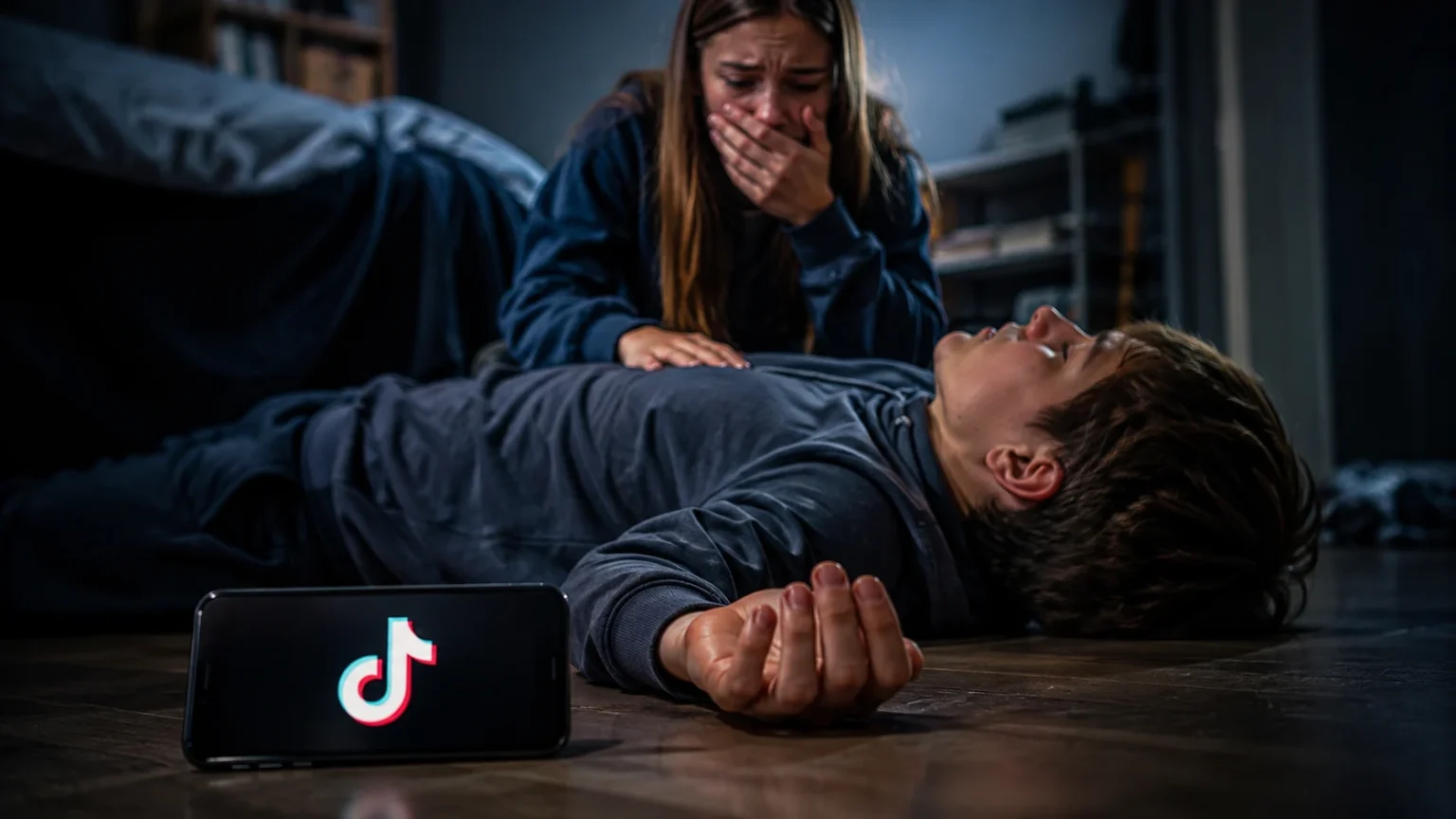

Blackout Challenge TikTok: Why This Trend Is So Dangerous
Social media challenges can spread incredibly quickly, especially when a video looks exciting, shocking, or easy to copy. Most trends are harmless entertainment, but some encourage behavior capable of causing severe injury within moments. The so-called Blackout Challenge TikTok trend falls into that dangerous category because it involves intentionally interfering with the body’s normal oxygen supply.
The challenge has also been described using names such as the choking challenge, fainting challenge, or pass-out challenge. Whatever name appears online, the underlying danger is the same: deliberately reducing oxygen reaching the brain can cause loss of consciousness, seizures, traumatic injuries, permanent neurological damage, or death. Earlier CDC investigations documented fatalities among young people participating in similar oxygen-deprivation activities.
One reason the trend is particularly concerning is that children and teenagers may view it as a game rather than a potentially fatal act. A short video may show only the dramatic moment or social reaction while hiding what happened before or afterward. That can make the risk appear much smaller than it actually is.
Parents do not need to panic whenever they hear about another viral challenge, but they do need accurate information. Understanding why the blackout challenge is dangerous, recognizing possible warning signs, and keeping communication open can be far more useful than simply banning an app without discussing what young people may encounter online.
What Is the Blackout Challenge on TikTok?
The blackout challenge is a name used for dangerous online content involving deliberate oxygen deprivation with the goal of producing fainting, altered consciousness, or a brief unusual sensation. It is related to behaviors that existed long before TikTok and have historically been called the choking game or fainting game.
The important point is not the exact name or platform. Similar behavior can migrate between social networks, messaging apps, schools, peer groups, and new slang terms. Focusing only on one hashtag can therefore create a false sense of security if the same dangerous behavior appears under another name.
TikTok has stated that content promoting dangerous challenges capable of causing physical harm violates its safety policies. The platform has also introduced education around potentially harmful online challenges and has said it removes content encouraging dangerous acts.
Even with moderation, however, harmful ideas can circulate through reposts, coded language, private messages, discussions on other platforms, or videos warning about a challenge that unintentionally introduce viewers to it. Digital safety therefore cannot depend entirely on whether one platform successfully removes every harmful video.
Why Is the Blackout Challenge So Dangerous?
The human brain depends on a continuous supply of oxygenated blood. Unlike some tissues that can tolerate interruptions better, brain cells are particularly sensitive when oxygen delivery is significantly reduced.
Deliberately interfering with oxygen supply can lead to hypoxia, meaning the brain and body are not receiving the oxygen they need. A person may lose consciousness unexpectedly, and there is no reliable way to predict whether the episode will remain brief or become a serious medical emergency.
The danger also continues after someone loses consciousness. They may fall and hit their head, experience seizure-like activity, or be unable to restore normal breathing without assistance. Pediatric health sources have associated similar choking-game behavior with brain injury, fractures from falls, eye injuries, seizures, stroke, and death.
This is why describing the challenge as a harmless experiment is misleading. The body does not provide a safe countdown showing exactly how long the brain can tolerate oxygen deprivation, and a previous attempt without obvious injury does not make another attempt safe.
What Happens to the Brain When Oxygen Is Restricted?
Your brain uses oxygen continuously to produce the energy needed for normal nerve-cell function. When oxygen availability falls, the brain’s ability to maintain awareness, coordination, judgment, and other essential processes can deteriorate rapidly.
Early effects may include dizziness, confusion, visual changes, weakness, or loss of consciousness. These symptoms are not signs that the challenge is “working safely.” They are signs that normal brain function is being disrupted.
If oxygen deprivation becomes severe or lasts too long, neurological injury can occur. The outcome depends on factors including the severity and duration of oxygen reduction, individual health, and whether normal circulation and breathing are restored quickly.
Permanent injury is possible because brain tissue damaged by prolonged oxygen deprivation does not simply reset when someone wakes up. A few seconds of online attention is never worth gambling with memory, movement, cognition, or survival.
The Blackout Challenge Is Not a Safe Way to Get a “High”
Some young people historically participated in oxygen-deprivation games because they believed fainting would produce a temporary rush or altered feeling. CDC literature describing the older “choking game” documented this motivation while emphasizing the risk of long-term disability and death.
The fact that a sensation may be temporary does not mean the process producing it is safe. Dizziness or euphoria caused by disrupted oxygen delivery represents abnormal brain physiology rather than a harmless change in mood.
A major problem is unpredictability. Someone may believe they will stop before losing control, but impaired consciousness can remove the ability to make that decision. Once awareness disappears, the person may no longer be able to protect themselves.
Repeated participation does not create a safe tolerance either. Research involving adolescents who reported choking-game participation found that some repeated the behavior multiple times, demonstrating why prevention needs to address experimentation before it becomes normalized.
Why Viral Challenges Can Feel Safer Than They Really Are
Social-media videos compress events into seconds. Viewers may see laughter, dramatic reactions, comments, and views without seeing emergency treatment, long-term neurological problems, grieving families, or unsuccessful attempts that were never uploaded.
Popularity also changes perception. When thousands of likes surround a video, young viewers may interpret engagement as evidence that many people have participated safely. Social proof can make risky behavior feel normal even when the underlying danger has not changed.
Algorithms can add another layer by recommending related material after someone watches or interacts with a particular topic. A curious click does not necessarily mean a child intends to participate, but repeated exposure can make unfamiliar behavior seem increasingly ordinary.
This is why viral challenge safety requires more than telling children that “TikTok is bad.” Young people benefit from understanding how videos are designed to attract attention and how views, shares, comments, and dramatic editing can distort the real-world level of risk.
Why Children and Teens May Try Dangerous Online Challenges
Curiosity is a powerful motivator during childhood and adolescence. Young people naturally experiment, test limits, and become increasingly interested in peer approval as they develop greater independence.
Social rewards can amplify that process. A challenge may promise attention, comments, status within a friend group, or the feeling of belonging to an online trend. What seems irrational from an adult perspective may feel socially meaningful to a teenager.
Risk perception also develops over time. A young person may understand intellectually that something could be dangerous while still believing serious consequences are unlikely to happen to them personally.
The most productive response is usually not ridicule. Calling someone foolish for being curious can make them less likely to disclose what they have seen. Calm conversations about what makes a trend dangerous are more likely to keep communication open.
Warning Signs Parents and Caregivers Should Know
One warning sign may be unexplained discussion of fainting, passing out, choking games, or viral challenges involving loss of consciousness. Unusual internet searches or conversations among friends may also justify a calm discussion.
Physical signs associated historically with choking-game participation have included unexplained headaches, red marks or bruising around the neck, bloodshot eyes, disorientation, or unexplained episodes of fainting. None of these signs proves that a child is participating, but they deserve attention.
Behavioral changes may matter as well. Becoming unusually secretive about online activity, repeatedly isolating behind a locked door after discussing dangerous trends, or refusing to explain unexplained injuries may warrant a closer conversation.
Avoid turning every headache or private phone conversation into an accusation. Many warning signs have innocent explanations. The goal is to notice patterns, ask questions without hostility, and take credible concerns seriously.
What Parents Should Say About the Blackout Challenge
Start with a direct but calm message: intentionally reducing oxygen to the brain can cause permanent injury or death, even when a person expects to stop quickly. Young people deserve the actual reason rather than a vague statement that adults simply disapprove.
Ask what they have already seen or heard. Questions such as whether friends are discussing dangerous challenges can reveal much more than immediately demanding access to every message on their phone.
Avoid giving a detailed description of how the challenge is performed. Prevention messaging should explain the consequence without unintentionally turning the conversation into a tutorial for someone who had never heard of the behavior.
Most importantly, make it safe for your child to tell you about disturbing content. If they believe they will automatically lose their phone or be punished for admitting they saw something dangerous, they may learn to hide future concerns instead of asking for help.
What to Do If Your Child Sees a Dangerous Challenge Online
Tell them not to participate, imitate, or demonstrate the challenge for friends. Even filming someone else can encourage risky behavior by turning a dangerous act into entertainment.
Encourage them not to repost the original footage simply to warn others. Sharing can unintentionally give harmful content additional reach. Reporting it through the platform’s safety tools is usually more responsible.
If another child appears to be in immediate danger, involve a trusted adult rather than expecting young people to manage the situation themselves. Serious threats to physical safety should be treated as real even when they began as a joke or viral trend.
TikTok’s published safety materials encourage users to think critically before participating in online challenges, and its policies prohibit content promoting dangerous challenges that could lead to physical harm.
What to Do If Someone Attempts the Blackout Challenge
If someone loses consciousness or appears seriously unwell after intentional oxygen deprivation, treat the situation as a medical emergency rather than assuming they will simply wake up normally.
Call your local emergency medical service and follow the dispatcher’s instructions. If the person is not breathing normally or becomes unresponsive, immediate emergency care is essential.
Do not encourage them to “try again,” walk it off, or hide what happened because they are embarrassed about participating in an online challenge. Medical professionals need accurate information about what occurred to evaluate possible complications.
Even someone who regains consciousness may require assessment if they experienced prolonged unconsciousness, seizure-like activity, confusion, breathing problems, significant injury from a fall, or persistent neurological symptoms.
Can the Blackout Challenge Cause Permanent Brain Damage?
Yes. Severe oxygen deprivation can injure the brain, and the consequences may extend far beyond temporary fainting. The possibility of neurological injury is one of the reasons these challenges are medically dangerous.
Brain injury can potentially affect memory, concentration, movement, speech, behavior, learning, or other functions depending on which brain regions are harmed and how severe the oxygen deprivation becomes.
CDC and pediatric literature on earlier versions of choking-game behavior have documented serious neurological consequences as well as fatalities. The historical evidence matters because the danger comes from the physiology of oxygen deprivation, regardless of what social-media name is currently attached to the behavior.
Someone cannot judge the absence of brain injury simply because they wake up and initially feel normal. Significant symptoms after any episode of oxygen deprivation deserve prompt medical attention.
Can Someone Die the First Time They Try It?
A dangerous misconception is that serious consequences occur only after repeated attempts. There is no guaranteed “practice” period that makes intentional oxygen deprivation safe.
Loss of consciousness can happen unpredictably, and once consciousness is lost, a person may no longer be capable of reversing whatever situation caused the oxygen restriction. Being alone can make the circumstances even more dangerous.
Historical CDC surveillance identified dozens of probable deaths among young people linked to choking-game behavior, demonstrating that the outcome is not merely theoretical. The CDC’s review identified 82 probable deaths among youths aged 6–19 during 1995–2007, although its methodology could not capture every possible case.
That historical figure should not be interpreted as a current TikTok-specific death count. It demonstrates something more fundamental: deliberately depriving the brain of oxygen has been killing young people since long before today’s social-media platforms existed.
Is the Blackout Challenge Really a TikTok Trend?
The phrase became strongly associated with TikTok through media coverage and allegations surrounding videos viewed by young users. However, oxygen-deprivation games existed decades before TikTok, YouTube, smartphones, or modern recommendation algorithms.
Calling it only a “TikTok challenge” can therefore oversimplify the issue. The platform is relevant because viral distribution can increase awareness of dangerous behaviors, but removing one app would not erase peer pressure, risky experimentation, or similar content appearing elsewhere.
TikTok publicly prohibits dangerous challenges and has developed policies and educational materials intended to reduce their spread. Its published guidance states that dangerous acts or challenges likely to cause physical harm are not allowed.
A better description is that the blackout challenge represents an old dangerous behavior that can be amplified by modern social media. Prevention therefore needs to address both the physical danger and the digital mechanisms that can make risky ideas spread quickly.
How Social Media Algorithms Can Amplify Risky Trends
Recommendation systems are designed to keep users engaged by predicting which content they may want to watch next. That can be helpful for discovering hobbies, music, education, or entertainment, but engagement-based systems can also create problems around sensational material.
A dramatic video naturally attracts curiosity. Someone may watch to understand what happened, replay it because they are shocked, or open the comments to see whether it is real. Those behaviors can resemble positive engagement from the perspective of an automated system.
Repeated recommendations can then create a distorted impression of prevalence. A teenager who encounters several videos discussing one challenge may believe “everyone is doing it,” even if actual participation is uncommon.
Teaching social media literacy for teens can help. Young users should understand that a personalized feed is not a neutral picture of the world; it is a selection of content shaped partly by previous interactions.
How TikTok Handles Dangerous Challenges
TikTok has maintained policies against content that promotes dangerous activities and challenges capable of causing physical harm. The company’s safety communications have also described efforts to remove such material and provide educational interventions.
The platform has previously developed resources encouraging users to pause and evaluate whether an online challenge is safe before engaging with it. That reflects a broader recognition that viral trends require both moderation and user education.
No moderation system is perfect, however. Huge volumes of new videos are posted across social platforms, and harmful material can be disguised, re-uploaded, discussed indirectly, or shared privately.
Parents should therefore treat platform safety tools as one layer of protection rather than the entire solution. Conversations, digital literacy, age-appropriate supervision, and a relationship where children feel comfortable reporting disturbing material remain important.
Why Reposting Dangerous Challenges Can Backfire
People often repost shocking videos because they genuinely want to warn others. Unfortunately, repeating the footage or explaining the challenge in detail can unintentionally introduce the idea to people who had never encountered it.
Warning content can also feed curiosity. A headline telling children “never search for this challenge” may effectively provide them with a search term they did not previously know.
Responsible prevention content should focus on consequences, warning signs, and what to do if the behavior appears rather than demonstrating the act. That is the approach schools, parents, publishers, and creators should prioritize.
If you encounter a dangerous challenge, report it instead of trying to make your own recreation or reaction video. Safety messaging does not require showing people exactly how harmful behavior is performed.
Schools Can Play an Important Role in Prevention
Schools often hear about viral challenges quickly because students talk about them with friends. Teachers, counselors, nurses, and administrators can therefore become valuable early sources of awareness.
Prevention works best when it is calm and factual rather than sensational. Assemblies that dramatically describe every detail of a challenge may unintentionally generate curiosity among students who had never encountered it.
Schools can instead teach broader skills: how to question viral claims, recognize peer pressure, report dangerous content, seek help for a friend, and understand that online popularity does not equal safety.
Communication with parents is also useful when a credible trend is circulating locally. Specific, measured information allows families to have conversations at home without spreading rumors or unnecessary panic.
How to Make Social Media Safer for Children and Teens
Begin with age-appropriate boundaries rather than handing over completely unrestricted access and hoping problems never appear. Younger children generally need more active supervision than older teenagers developing independence.
Use available parental controls and safety settings, but combine them with conversation. Technology can limit some exposure, yet young people may encounter content through friends, shared devices, school conversations, or other platforms.
Create a simple family rule for dangerous content: do not copy it, do not encourage it, and tell a trusted adult. A clear rule is easier to remember during a high-pressure situation than a complicated lecture about every possible internet trend.
Regularly discussing what your child enjoys online also helps make safety conversations feel normal. If adults only ask about social media when something frightening happens, children may associate those discussions with punishment rather than support.
What Parents Should Avoid Doing
Avoid immediately accusing your child of participating simply because you discover they searched for the blackout challenge. They may have encountered a warning at school or seen a news story and wanted to understand it.
Avoid showing demonstration videos while trying to teach them why the activity is dangerous. You can explain oxygen deprivation, brain injury, and loss of control without displaying harmful instructions.
Avoid treating removal of one app as a complete prevention strategy. Children can encounter similar behavior through video platforms, group chats, private messages, gaming communities, or offline peer groups.
And avoid assuming your child already knows the danger because the behavior seems obviously reckless to you. Young people may need adults to explain the biology and consequences explicitly rather than expecting intuition to overcome social pressure.
How to Talk About Peer Pressure Without Sounding Like a Lecture
Ask your child what makes someone participate in a challenge they know could be risky. This turns the discussion into a conversation about social pressure rather than an interrogation about personal behavior.
Talk about realistic situations. A young person may not plan to participate when sitting at home but could make a different decision when several friends are watching, laughing, filming, or challenging them to prove themselves.
Help them prepare a way out before that situation happens. They do not need to win an argument about the danger; leaving, refusing, changing the subject, or getting an adult is enough.
Make clear that protecting a friend is not “snitching” when the behavior could cause serious injury. A few minutes of embarrassment are far less important than preventing a medical emergency.
Why Media Literacy Is Part of Child Safety
Children increasingly need to understand not only what they see online but why it reached them. Viral videos are created within systems that reward attention, novelty, emotion, and engagement.
A creator may exaggerate, edit out consequences, stage an event, or imply that something is safer than it really is. Even genuine footage shows only what the uploader chooses to include.
Teach young people to ask simple questions: Who made this? What are they trying to make me feel? What could be missing from the video? Would this still seem safe if nobody were recording?
These questions can protect children from much more than one dangerous TikTok trend. Digital media literacy helps them evaluate misinformation, scams, harmful health advice, risky challenges, and manipulated content across the internet.
Blackout Challenge TikTok: The Bottom Line
The Blackout Challenge TikTok discussion involves a genuinely dangerous behavior: intentionally depriving the brain of oxygen in an attempt to produce unconsciousness or an altered sensation. It is not a harmless dare and there is no safe version.
The behavior can cause loss of consciousness, traumatic falls, seizures, neurological damage, and death. Historical CDC research confirms that similar choking-game behaviors have resulted in fatalities among children and teenagers.
TikTok prohibits content promoting dangerous challenges, but platform moderation alone cannot prevent every young person from hearing about risky behavior. Dangerous ideas existed before modern social media and can easily move between platforms and offline groups.
The strongest response combines accurate information with open communication. Teach children that viral does not mean safe, avoid spreading instructional footage, report harmful content, and take any real attempt at oxygen deprivation seriously as a potential medical emergency.
Frequently Asked Questions About the Blackout Challenge
Parents often first hear about the blackout challenge through another parent, a school warning, social media, or news coverage. That can naturally cause anxiety, particularly when the exact behavior is not clearly explained.
The most important fact is straightforward: intentionally interfering with oxygen reaching the brain is dangerous. You do not need to know or describe the method to understand why participation can lead to severe consequences.
Online trends also change names quickly. Teaching children the underlying safety rule is therefore more effective than trying to memorize every new viral challenge appearing on social media.
The questions below address the key concerns parents and caregivers commonly have about the blackout challenge, brain injury, TikTok safety, and responding to dangerous online trends.
What is the blackout challenge on TikTok?
It refers to dangerous online content involving intentional oxygen deprivation in an attempt to cause fainting or altered consciousness. Similar behaviors existed before TikTok under names such as the choking or fainting game.
Can the blackout challenge cause brain damage?
Yes. Restricting oxygen to the brain can cause hypoxic brain injury, seizures, loss of consciousness, neurological damage, and potentially death.
Can someone die from trying the blackout challenge once?
Yes. There is no guaranteed safe first attempt because loss of consciousness and severe oxygen deprivation can become unpredictable very quickly.
What should parents do if their child sees the challenge?
Explain the danger calmly, tell them not to participate or repost demonstrations, encourage them to report harmful content, and make it easy for them to tell you when friends are discussing risky challenges.
What should I do if someone passes out during a dangerous challenge?
Treat unexplained unconsciousness following oxygen deprivation as a medical emergency. Call emergency medical services immediately and follow the dispatcher’s instructions rather than assuming the person will simply recover on their own.