
Pumpkin Seed Oil: Benefits, Uses & What You Should Know
Pumpkin seed oil has moved well beyond the specialty-food aisle. Today, you will find it in salad dressings, capsules, hair products, scalp treatments, and supplements marketed for everything from prostate health to thicker-looking hair. Its growing popularity naturally raises an important question: what can pumpkin seed oil actually do?
Made by pressing pumpkin seeds, the oil contains a high proportion of unsaturated fatty acids along with naturally occurring plant compounds such as phytosterols and tocopherols. Its nutritional profile makes it an interesting culinary oil, while several small human studies have explored potential effects on hair growth, urinary symptoms, and cardiovascular markers.
Some findings are promising, but pumpkin seed oil is not a miracle treatment. Research supporting several popular claims remains limited, and study results involving a specific extract, capsule, or dose cannot automatically be applied to every bottle of pumpkin seed oil sold online or in grocery stores.
The most sensible approach is to treat pumpkin seed oil as a useful food or optional supplement rather than a replacement for proven medical care. Understanding what it contains, which benefits have human evidence, and where the science remains uncertain can help you decide whether it deserves a place in your diet or routine.
What Is Pumpkin Seed Oil?
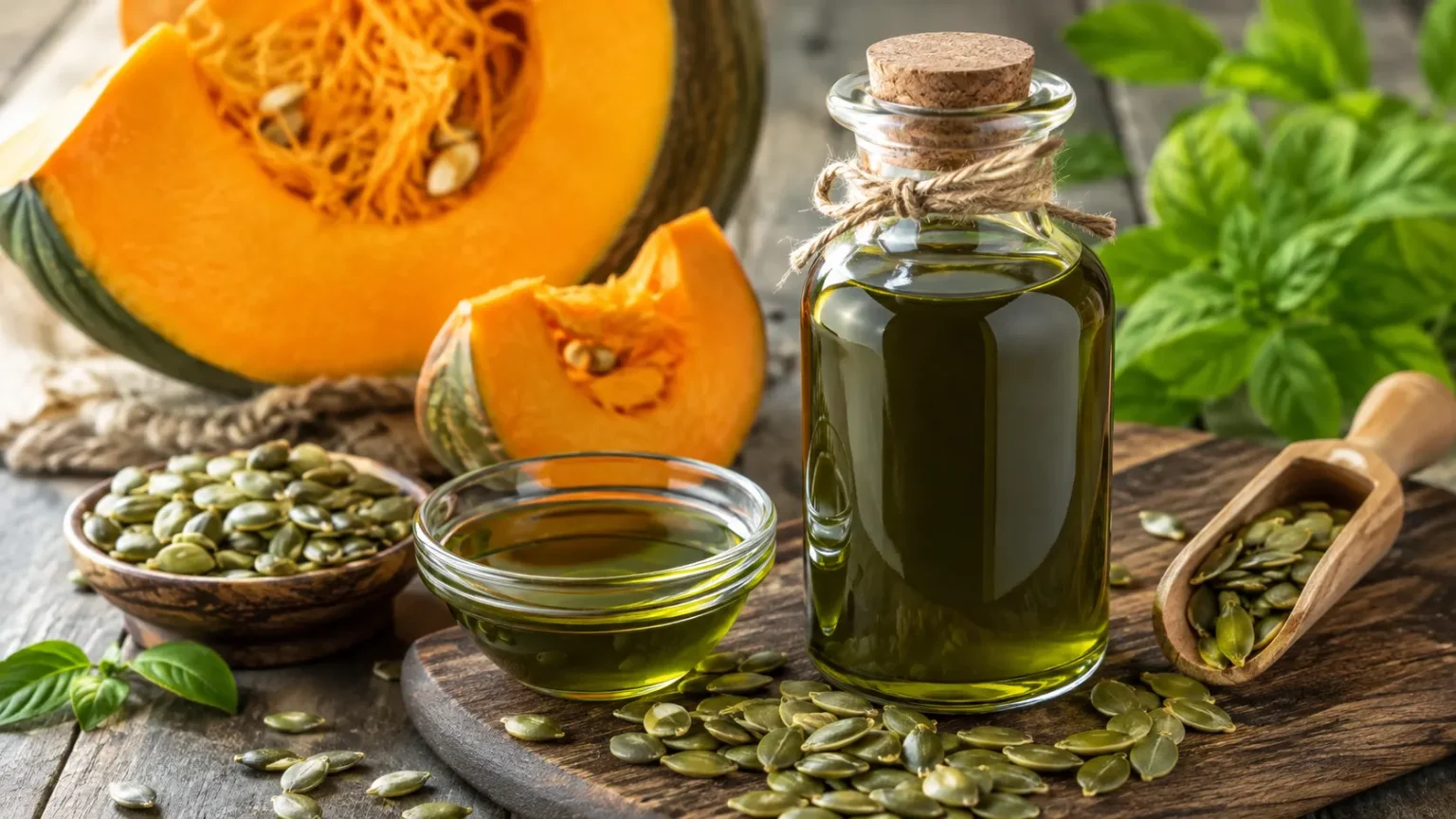
Pumpkin seed oil is produced from the seeds of pumpkins and related squash species, commonly from plants in the Cucurbita genus. Depending on production methods, the oil can range from greenish to deep reddish-green and often has a distinctive nutty, roasted flavor.
Traditional culinary versions are frequently made from roasted seeds before pressing, creating a rich flavor that works especially well in dressings, soups, dips, and finished dishes. Other products may be cold-pressed or formulated specifically for dietary supplements and cosmetic use.
Nutritionally, pumpkin seed oil consists primarily of fat rather than the complete nutritional profile of whole pumpkin seeds. Reviews of its composition describe substantial amounts of unsaturated fatty acids, particularly linoleic and oleic acids, alongside phytosterols and antioxidant compounds such as tocopherols.
This distinction matters because many online articles attribute every benefit of pumpkin seeds directly to pumpkin seed oil. Whole seeds provide protein, fiber, and minerals that are largely absent or present very differently in purified oil, so the two foods should not be treated as nutritionally identical.
What Are the Main Pumpkin Seed Oil Benefits?
The most established everyday benefit of pumpkin seed oil is straightforward: it provides unsaturated dietary fats and can add flavor to meals. Using unsaturated plant oils appropriately within an overall balanced diet can be a practical alternative to relying heavily on foods rich in saturated fat.
Beyond basic nutrition, researchers have investigated pumpkin seed oil benefits for male pattern hair loss, benign prostate enlargement, urinary symptoms, and cardiovascular markers. Results in several small studies have been encouraging, but the evidence base remains much smaller than it is for established medical treatments.
For example, a randomized placebo-controlled trial involving men with androgenetic alopecia reported improved hair counts after oral pumpkin seed oil supplementation over 24 weeks. However, the study included only 76 participants, so it should be considered promising rather than definitive proof that pumpkin seed oil reliably reverses hair loss.
Similar caution applies to other proposed benefits. Pumpkin seed preparations have produced improvements in some urinary and prostate-related studies, while a small pilot study in postmenopausal women reported changes in HDL cholesterol and diastolic blood pressure. Larger, independently replicated trials are still needed before making broad treatment claims.
1. Pumpkin Seed Oil Provides Unsaturated Fats
One of the simplest reasons to use pumpkin seed oil is its fatty-acid profile. Research reviews describe it as being rich in unsaturated fats, particularly polyunsaturated linoleic acid and monounsaturated oleic acid, although exact proportions vary with pumpkin variety and processing.
Unsaturated fats are an important part of a balanced eating pattern. The useful context, however, is what the oil replaces in your diet rather than assuming that adding extra tablespoons of any oil automatically improves health.
Pumpkin seed oil is also calorie-dense, as all edible oils are. That means a small amount can provide plenty of flavor and energy, while pouring it freely onto every meal can raise calorie intake more quickly than people sometimes realize.
Think of it primarily as a flavorful plant oil rather than a concentrated multivitamin. It does not provide the fiber and protein found in whole pumpkin seeds, which is why both foods can have different roles within a healthy diet.
2. Pumpkin Seed Oil Contains Plant Compounds
Pumpkin seed oil contains several naturally occurring compounds that researchers find interesting, including phytosterols, tocopherols, carotenoid-related compounds, and phenolic substances. The precise profile depends heavily on the seed variety, growing conditions, extraction technique, and storage.
Phytosterols are plant compounds structurally related to cholesterol. Tocopherols include forms of vitamin E and related antioxidant compounds that help protect fats in the oil from oxidation.
These compounds are one reason pumpkin seed oil attracts research interest, but identifying a beneficial compound in a laboratory does not automatically prove that consuming the oil will prevent or treat a particular disease.
This distinction is important in pumpkin seed oil research. Laboratory chemistry can suggest plausible mechanisms, while controlled human trials are needed to establish whether those mechanisms translate into meaningful health outcomes.
3. Pumpkin Seed Oil May Support Hair Growth in Some People
Hair growth is probably one of the most searched-for pumpkin seed oil benefits. The strongest frequently cited human evidence comes from a randomized, double-blind, placebo-controlled study of 76 men with mild to moderate androgenetic alopecia.
Participants receiving 400 milligrams of pumpkin seed oil daily for 24 weeks experienced a greater increase in hair count than the placebo group. The finding made pumpkin seed oil an interesting candidate for further study in male pattern hair loss.
However, one relatively small trial does not establish pumpkin seed oil as equivalent to well-studied hair-loss therapies. A more recent review of nonprescription approaches continues to describe pumpkin seed oil as promising while highlighting the limited clinical evidence available.
If you are experiencing significant or rapidly progressing hair loss, identifying the cause matters more than immediately buying an oil. Androgenetic alopecia, nutritional deficiencies, thyroid conditions, medications, scalp disorders, and several other problems can produce hair shedding that requires different management.
4. What About Applying Pumpkin Seed Oil Directly to Hair?
Topical pumpkin seed oil for hair is increasingly common in shampoos, serums, masks, and scalp oils. As an oil, it can coat the hair shaft, reduce a dry feeling, and add temporary shine or softness depending on your hair type.
That cosmetic effect should not be confused with proven stimulation of new follicles. An oil can make existing hair look smoother and healthier without producing meaningful biological hair regrowth.
Some clinical research has investigated topical pumpkin seed oil for androgenetic alopecia, including studies comparing it with other hair-growth approaches. The overall body of research remains relatively small, so more high-quality trials are needed before topical pumpkin seed oil can be considered a well-established hair-loss therapy.
If you enjoy using it cosmetically, begin with a small amount because heavy oils can make fine hair appear greasy. People with sensitive scalps should also patch-test new products and stop using them if significant itching, burning, redness, or rash develops.
5. Pumpkin Seed Oil May Help Some Prostate Symptoms
Pumpkin seed products have a long history of use for urinary symptoms associated with benign prostatic hyperplasia, commonly shortened to BPH. BPH is a noncancerous enlargement of the prostate that becomes increasingly common with age.
Human trials have produced some encouraging findings. In one randomized clinical trial comparing pumpkin seed oil with tamsulosin, both groups experienced improvement in BPH symptoms, although pumpkin seed oil was less effective than tamsulosin.
Another randomized trial involving pumpkin seed and pumpkin seed oil preparations also explored improvements in lower urinary tract symptoms over an extended treatment period. The evidence suggests potential benefit, but studies use different formulations and are not sufficient to make pumpkin seed oil a replacement for standard medical evaluation.
Urinary difficulty should never automatically be self-diagnosed as an enlarged prostate. Weak urine flow, frequent urination, urgency, pain, blood in urine, or difficulty emptying the bladder can have several causes and deserve professional assessment, particularly when symptoms are new or worsening.
6. Pumpkin Seed Oil and Overactive Bladder
Researchers have also investigated pumpkin seed oil preparations for symptoms of overactive bladder, including urinary urgency and frequency. One small human study involving extracts derived from Cucurbita maxima and Cucurbita pepo reported improvements in overactive bladder symptom scores.
The finding is interesting but preliminary. Small uncontrolled or limited studies cannot determine as confidently as large randomized trials whether improvement comes specifically from the treatment rather than natural variation, expectations, or other factors.
It is also important to distinguish a standardized research extract from ordinary cooking oil. Two products labeled “pumpkin seed oil” can contain very different amounts of active compounds, making it inappropriate to assume that a tablespoon from the kitchen reproduces a clinical trial.
Frequent urination can also occur for many reasons, including urinary tract problems, diabetes, medications, fluid intake, pelvic-floor conditions, and bladder disorders. Persistent symptoms should be investigated rather than managed indefinitely with supplements alone.
7. Could Pumpkin Seed Oil Support Heart Health?
The unsaturated-fat profile of pumpkin seed oil makes it reasonable to include as part of a varied diet. Researchers have additionally investigated whether supplementation might influence cholesterol or blood-pressure measurements.
A small pilot study involving postmenopausal women reported increased HDL cholesterol and reduced diastolic blood pressure after pumpkin seed oil supplementation compared with baseline measurements. The researchers themselves characterized the work as preliminary and called for further study.
That means it would be premature to describe pumpkin seed oil as a proven treatment for high cholesterol or hypertension. Small studies are useful for generating hypotheses, but cardiovascular recommendations require much stronger and more consistently replicated evidence.
If you have high blood pressure or abnormal cholesterol, use treatments recommended by your healthcare professional rather than replacing them with pumpkin seed oil capsules. Dietary oils can be part of a heart-conscious eating pattern without being treated as medication.
8. Pumpkin Seed Oil May Be Useful During Menopause—but Evidence Is Early
The same pilot research in postmenopausal women has led to claims that pumpkin seed oil may help with certain menopause symptoms. Some participants reported improvements in measures assessed during the study alongside the changes seen in cardiovascular markers.
The limitation is scale. Pilot studies are intentionally small and are generally used to determine whether an intervention deserves larger investigation, not to establish a treatment as proven.
Menopause symptoms also vary tremendously. Hot flashes, sleep difficulties, vaginal symptoms, mood changes, and cardiovascular risk factors do not necessarily respond to the same intervention.
Anyone experiencing troublesome menopause symptoms has evidence-based treatment options worth discussing with a healthcare professional. Pumpkin seed oil may be an interesting dietary addition, but it should not automatically replace therapies with much stronger clinical evidence.
Does Pumpkin Seed Oil Reduce Inflammation?
Pumpkin seed oil contains compounds with antioxidant and biologically active properties, and laboratory or animal research has explored potential anti-inflammatory effects.
This has led to broad online claims that pumpkin seed oil “fights inflammation.” The wording sounds convincing but goes farther than human evidence currently allows for most inflammatory diseases.
An ingredient demonstrating antioxidant activity in a laboratory does not prove that swallowing a capsule will meaningfully treat arthritis, inflammatory bowel disease, autoimmune disease, or another inflammatory condition.
A more accurate conclusion is that pumpkin seed oil contains interesting plant compounds and unsaturated fats, but its role in human inflammation requires more clinical research before specific therapeutic claims can be made.
Is Pumpkin Seed Oil Good for Your Skin?
Pumpkin seed oil can function as an emollient when applied topically, meaning it can help make the surface of dry skin feel softer and smoother. That is why you may see it included in facial oils, body lotions, lip products, and other cosmetics.
The oil’s fatty acids can contribute to the texture and conditioning properties of skincare formulations. However, cosmetic moisturization should not be confused with treating medical skin conditions such as eczema, psoriasis, acne, or infections.
People with oily or acne-prone skin may find pure oils too heavy, while others tolerate them well. There is no single facial oil that behaves perfectly on every skin type.
Patch-testing is sensible whenever you introduce a new skincare product. Stop using it if you develop persistent burning, itching, swelling, or a rash rather than assuming irritation means that your skin is “purging.”
Pumpkin Seed Oil vs Pumpkin Seeds: Are the Benefits the Same?
No. Pumpkin seed oil and pumpkin seeds are not nutritionally identical, even though one comes from the other. Pressing seeds separates much of their fat from the solid components.
Whole pumpkin seeds contain protein, fiber, minerals, and fat. The extracted oil is primarily fat and fat-soluble compounds, meaning it does not provide the same substantial protein or fiber content.
This distinction is especially relevant to claims involving magnesium, zinc, and protein. Pumpkin seeds can contribute these nutrients to the diet, but you should not assume a spoonful of oil supplies everything found in a serving of whole seeds.
If your goal is broad nutrition, eating whole pumpkin seeds may offer advantages because you receive more components of the original food. Pumpkin seed oil can then serve separately as a flavorful source of culinary fat.
Can Pumpkin Seed Oil Help You Sleep?
Claims connecting pumpkin products with sleep often come from the fact that whole pumpkin seeds contain nutrients and amino acids, including protein components involved in normal physiology.
The problem is that pumpkin seed oil contains almost no meaningful protein, so claims about amino acids in whole seeds cannot simply be transferred to the oil.
There is currently not enough strong clinical evidence to recommend pumpkin seed oil itself as an established treatment for insomnia. Feeling relaxed after incorporating it into an evening routine does not demonstrate a specific sleep-inducing effect.
Persistent sleep difficulties deserve attention to factors with stronger evidence, including sleep schedule, caffeine intake, light exposure, stress, sleep disorders, medications, and overall sleep hygiene.
How to Use Pumpkin Seed Oil in Food
Culinary pumpkin seed oil has a rich, nutty flavor that works especially well as a finishing oil. Try drizzling a small amount over roasted vegetables, soups, salads, pasta, hummus, or grain bowls.
It can also be mixed into salad dressings with vinegar, lemon juice, herbs, mustard, or other seasonings. Its strong flavor means a relatively small quantity can transform a simple dish.
Many specialty pumpkin seed oils are valued more for finishing than aggressive high-temperature cooking. Check the manufacturer’s directions because refining and processing can influence how an oil performs when heated.
Store the bottle according to label instructions, ideally protected from unnecessary heat and light. Oils rich in unsaturated fats can eventually oxidize, so tightly resealing the bottle and avoiding prolonged warm storage helps preserve quality.
Can You Take Pumpkin Seed Oil as a Supplement?
Pumpkin seed oil is widely sold in softgels, capsules, and liquid supplements. People commonly take these products for hair, prostate, bladder, or general wellness goals.
The important issue is that there is no single clinically established pumpkin seed oil dose for every proposed benefit. Different studies have used different preparations and amounts, so copying a dose from one research paper does not guarantee the same result with another commercial product.
For example, the frequently discussed male hair-loss trial used 400 milligrams daily for 24 weeks. That describes the study protocol; it should not be interpreted as a universal medical recommendation for anyone experiencing hair loss.
Dietary supplements in the United States do not undergo the same FDA premarket approval process required for medications. The NIH Office of Dietary Supplements recommends discussing supplements with healthcare professionals, particularly when you use medications, have health conditions, or intend to treat a medical problem.
Does More Pumpkin Seed Oil Mean More Benefits?
No. Increasing the amount of a supplement does not automatically strengthen its benefits. Biological effects often reach limits, while larger amounts can increase calories, digestive discomfort, or other unwanted effects.
This principle matters with culinary oil too. Pumpkin seed oil may contain desirable unsaturated fats, but it still provides concentrated energy like other oils.
With supplements, exceeding the manufacturer’s directions is particularly unnecessary when research has not established an ideal therapeutic dosage for most uses.
If you are taking pumpkin seed oil for a specific health concern, discuss the objective with a healthcare professional. More evidence-based options may exist, and the correct treatment may depend on what is actually causing your symptoms.
Pumpkin Seed Oil Side Effects
Pumpkin seed oil appears to have been reasonably well tolerated in several small clinical studies, but that does not mean side effects are impossible. Individual reactions can differ, especially when larger supplement amounts are used.
Digestive symptoms such as stomach discomfort may occur with oils or supplements in some people. Anyone with a known pumpkin or seed-related allergy should be cautious about introducing concentrated products.
Topical products can also irritate sensitive skin or scalp tissue. Redness, itching, burning, or swelling after application is a reason to discontinue the product rather than continue using it in hopes that your skin will adapt.
Because clinical safety information remains limited compared with common medicines, unusual symptoms after starting a supplement should be discussed with a healthcare professional. The absence of reported problems in a small study cannot guarantee safety for every person.
Can Pumpkin Seed Oil Interact With Medications?
Specific interaction data for pumpkin seed oil are limited, which makes sweeping claims that it “has no interactions” inappropriate.
Dietary supplements more broadly can interact with prescription and over-the-counter medicines or create problems around surgery. NIH guidance recommends telling healthcare providers about supplements you use rather than assuming plant-based products are automatically harmless.
This is particularly sensible if you take medication for blood pressure, cardiovascular disease, urinary symptoms, or another chronic medical condition, since pumpkin seed oil is often marketed for some of those same health goals.
Do not stop or reduce prescribed medication simply because you begin using pumpkin seed oil. If a supplement appears to improve your symptoms, medication changes should still be made with the clinician managing your treatment.
Is Pumpkin Seed Oil Safe During Pregnancy?
There is not enough high-quality clinical research to establish supplemental pumpkin seed oil as a treatment for pregnancy-related conditions or to define therapeutic doses specifically for pregnancy.
Using pumpkin seeds or culinary ingredients as normal foods is different from taking concentrated supplements with the expectation of producing a medical effect.
If you are pregnant or breastfeeding and considering a pumpkin seed oil supplement, discuss it with your obstetric healthcare professional, especially when you also take medications or other botanical supplements.
The same caution applies to products marketed as “natural.” NIH emphasizes that natural origin does not automatically guarantee that a dietary supplement is safe in every situation.
How to Choose a Good Pumpkin Seed Oil
For culinary use, look for a product that clearly identifies pumpkin seed oil as the primary ingredient and explains whether it is cold-pressed, roasted, refined, or unrefined.
Packaging can also matter because light and heat can accelerate deterioration in many oils. Dark bottles and sensible storage instructions can help protect oil quality after production.
For supplements, read the Supplement Facts panel rather than relying on claims printed across the front of the package. Check how much pumpkin seed oil each serving actually provides and whether other active ingredients have been added.
Third-party quality testing can provide additional reassurance about manufacturing and label accuracy, although a quality seal does not prove that a supplement is medically effective. NIH specifically makes this distinction when discussing independent supplement testing.
Common Pumpkin Seed Oil Claims You Should Treat Carefully
One common mistake is assuming pumpkin seed oil has been proven to reverse baldness. Small clinical studies justify further interest, but the current evidence does not support presenting it as a guaranteed hair-regrowth solution.
Another is claiming that pumpkin seed oil can “shrink the prostate.” Some studies have reported improvements in urinary symptoms, but symptom improvement and a clinically meaningful reduction in prostate size are not the same thing.
You may also see claims that pumpkin seed oil detoxifies the body, balances every hormone, cures inflammation, or rapidly improves sexual function. Claims this broad usually go far beyond the quality of human evidence available.
Good health information distinguishes possible benefits from established benefits. An ingredient can be nutritious, interesting, and worthy of further research without being a cure for multiple unrelated conditions.
Who Might Consider Using Pumpkin Seed Oil?
Someone who enjoys its nutty flavor can use culinary pumpkin seed oil simply because it adds variety to meals and provides unsaturated fat.
People interested in a supplement for hair or urinary symptoms may also choose to discuss pumpkin seed oil with a healthcare professional after understanding that the evidence remains limited.
It may be less appropriate for someone expecting it to replace established treatment for hair loss, significant urinary symptoms, hypertension, high cholesterol, or another diagnosed medical condition.
Ultimately, pumpkin seed oil makes the most sense when expectations are realistic. It can be a useful food and an interesting supplement, but no single oil determines whether your hair, heart, prostate, skin, or overall diet is healthy.
Pumpkin Seed Oil: The Bottom Line
Pumpkin seed oil is a flavorful plant oil rich in unsaturated fatty acids and naturally occurring compounds such as phytosterols and tocopherols. It can be used in food, cosmetic formulations, or dietary supplements.
Human research has produced promising findings for male pattern hair loss and certain urinary or prostate symptoms, while smaller studies have explored cardiovascular and menopausal outcomes. However, most of these areas still need larger and better-replicated clinical trials.
That means pumpkin seed oil can be worth trying for some people without treating it as a miracle remedy. Using it in food is straightforward, while supplemental use deserves more consideration because dosage, formulation, product quality, health conditions, and medications can matter.
Most importantly, keep the evidence in perspective. Pumpkin seed oil may complement a healthy lifestyle or medical plan, but persistent hair loss, urinary problems, high blood pressure, or other health concerns deserve proper diagnosis rather than relying exclusively on a supplement.
Frequently Asked Questions About Pumpkin Seed Oil
Pumpkin seed oil has attracted attention because it occupies several worlds at once: cooking oil, supplement, hair product, and traditional remedy. That versatility is useful but can also make online claims difficult to separate from actual research.
Some potential benefits have human clinical evidence behind them, particularly research involving hair growth and urinary symptoms. However, many studies remain small and use specific formulations that may differ from ordinary commercial products.
It is also important to remember that whole pumpkin seeds and pumpkin seed oil are different foods. The seeds contain substantial protein, fiber, and minerals, while the oil consists predominantly of fats and fat-soluble components.
The following answers address several of the most common questions about using pumpkin seed oil for hair, prostate health, daily supplementation, and general wellness.
What is pumpkin seed oil good for?
Pumpkin seed oil provides unsaturated fats and is useful as a flavorful culinary oil. Early human research has also explored potential benefits for hair growth and urinary or prostate symptoms, but evidence remains limited.
Does pumpkin seed oil really help hair growth?
A small randomized trial found improved hair counts in men with androgenetic alopecia taking pumpkin seed oil. The evidence is promising, but larger studies are needed before it can be considered a proven hair-loss treatment.
Can pumpkin seed oil help an enlarged prostate?
Some clinical studies suggest pumpkin seed oil or pumpkin seed preparations may improve certain BPH-related urinary symptoms. It should not replace medical evaluation or prescribed BPH treatment without professional guidance.
Can I take pumpkin seed oil every day?
Pumpkin seed oil is used both as food and as a supplement, but there is no universal supplemental dose appropriate for everyone. Follow product guidance and ask a healthcare professional if you take medication or have a health condition.
Is pumpkin seed oil better than pumpkin seeds?
Neither is universally better. Pumpkin seeds provide protein, fiber, minerals, and fats, while pumpkin seed oil provides concentrated fat and oil-soluble compounds. They serve different nutritional purposes.