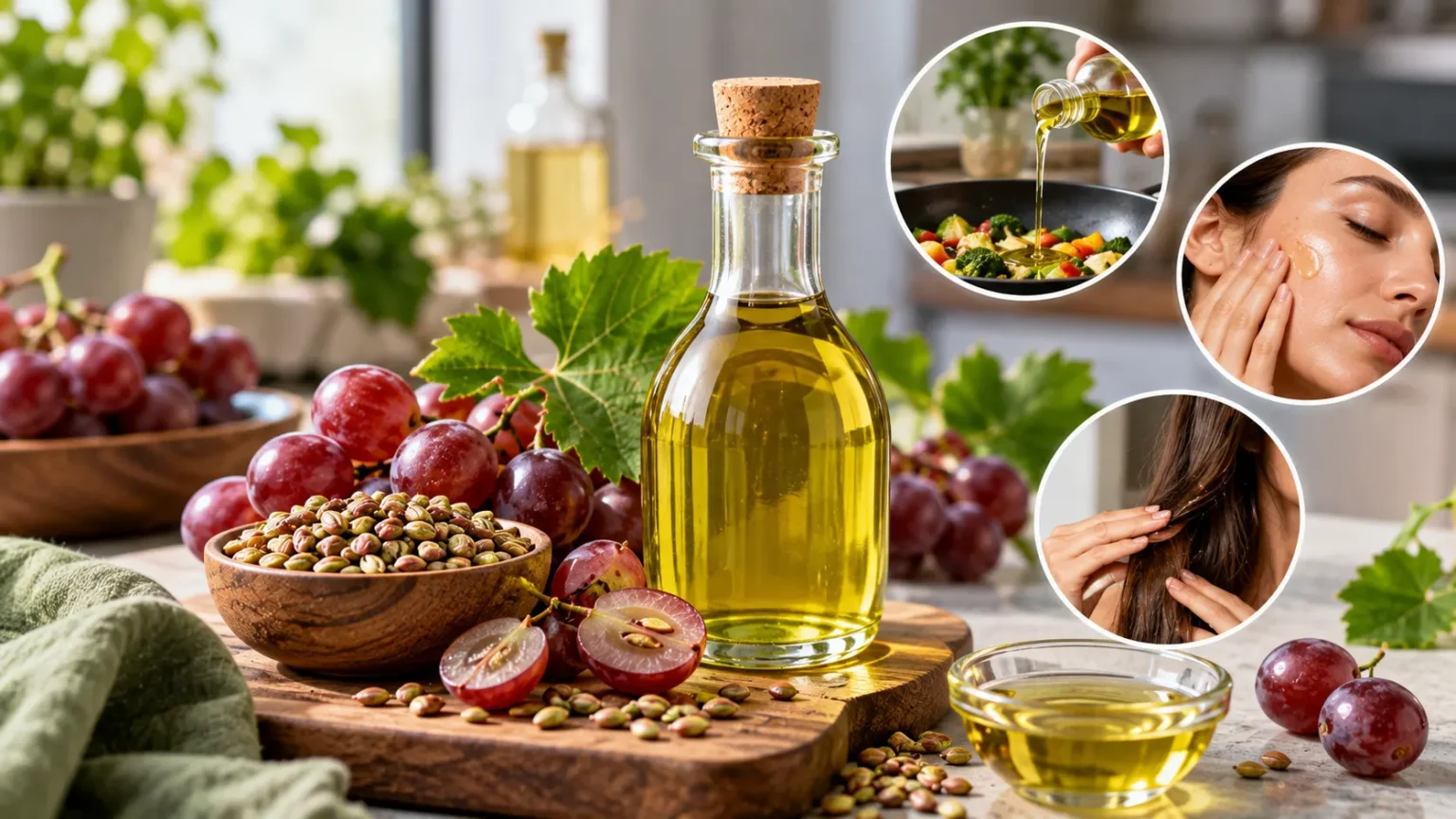

Grapeseed Oil: Benefits, Uses & Is It Healthy?
Grapeseed oil is a light, neutral-tasting cooking oil made from the seeds left behind during grape processing. It has become popular in kitchens because it works well for sautéing, roasting, dressings, marinades, and other recipes where a strong oil flavor is not wanted. The oil is also widely used in skincare and haircare products because of its lightweight texture and fatty acid profile. Nutritionally, grapeseed oil is primarily made up of unsaturated fats, especially polyunsaturated fatty acids. It also contains vitamin E, although the exact amount varies depending on processing and brand. Whether grapeseed oil is healthy depends largely on how much you use, what it replaces in your diet, and your overall eating pattern.
Many people choose grapeseed oil because of its relatively high cooking tolerance and mild flavor. Refined versions are commonly marketed for higher-heat cooking, which makes the oil convenient for people who want something versatile. However, the idea that an oil is healthy simply because it can tolerate heat is too simplistic. Fatty acid composition, storage, processing, frequency of use, and the rest of a person’s diet all matter. Grapeseed oil is rich in linoleic acid, an omega-6 polyunsaturated fatty acid that the body needs but cannot make on its own. Used in reasonable amounts, it can fit into a balanced diet that also includes sources of monounsaturated fats and omega-3 fatty acids.
Questions about grapeseed oil often focus on omega-6 fats because some people worry that eating them automatically causes inflammation. That interpretation is overly broad. Omega-6 fatty acids are essential nutrients, and replacing foods high in saturated fat with unsaturated fats is generally considered a sensible dietary strategy. Problems are more likely to arise when the overall diet is highly processed, calorie-dense, and low in nutrient-rich foods rather than from one cooking oil alone. It is still useful to vary fat sources rather than relying heavily on grapeseed oil for every meal. Olive oil, avocado, nuts, seeds, fish, and other whole-food fat sources can help create a more balanced pattern.
Outside the kitchen, grapeseed oil for skin and hair has become increasingly common. The oil spreads easily, absorbs relatively quickly, and can help soften dry skin by reducing moisture loss. Some people use it as a carrier oil for cosmetic products or apply a small amount to the ends of dry hair. However, topical benefits should not be confused with medical treatment. Grapeseed oil cannot cure acne, eczema, hair loss, or other health conditions simply because it contains beneficial fatty acids or antioxidants. People with sensitive skin should still patch-test new products, particularly when the oil is blended with fragrance, essential oils, or other ingredients.
So, is grapeseed oil healthy? For most people, it can be a reasonable cooking oil when used as part of a varied diet and in sensible portions. It provides unsaturated fats, has practical culinary uses, and can replace some sources of saturated fat in cooking. At the same time, it is calorie-dense like every other pure oil, and it should not be treated as a superfood or consumed in unlimited amounts. The quality of the rest of your diet matters much more than choosing one supposedly perfect oil. Understanding its nutrition, benefits, limitations, and best uses can help you decide when grapeseed oil makes sense in your kitchen or personal-care routine.
What Is Grapeseed Oil?
Grapeseed oil is produced from the small seeds found inside grapes, which are often available as a by-product of winemaking and juice production. Rather than discarding these seeds, manufacturers can press or extract their oil for use in food, cosmetics, and personal-care products. Grapeseed oil usually has a pale appearance and a mild flavor, particularly when refined. This makes it different from extra-virgin olive oil, which often contributes a noticeable fruity or peppery taste to food. Because grapeseed oil does not strongly alter flavor, cooks often use it in dishes where they want other ingredients to remain dominant. Its versatility has helped it become a familiar option in many modern kitchens.
The way grapeseed oil is made can affect its flavor, stability, and final composition. Some oils are mechanically pressed, while others are produced using industrial extraction and refining methods designed to recover more oil from the seeds. Refined grapeseed oil is typically more neutral in taste and may be more suitable for higher-temperature cooking than less-refined versions. Cold-pressed options can retain more flavor and certain naturally occurring plant compounds, although they may also be more expensive. Labels such as cold-pressed, expeller-pressed, and refined describe processing differences rather than automatically telling you which oil is healthiest. The best choice depends on how you plan to use it.
From a nutritional perspective, grapeseed oil consists almost entirely of fat. Like other plant oils, it contains no meaningful protein, carbohydrate, fiber, or sugar. Most of its fatty acids are unsaturated, with polyunsaturated fat making up the largest share. Linoleic acid is the main fatty acid in grapeseed oil and belongs to the omega-6 family of essential fats. The oil also contains smaller amounts of monounsaturated and saturated fatty acids. Vitamin E is one of its better-known micronutrients, although levels differ between products. Because oils are concentrated sources of energy, even nutritionally useful oils should generally be measured rather than poured freely into meals.
Grapeseed oil should not be confused with grape seed extract. Although both come from grape seeds, they are very different products. Grapeseed oil is a fat used primarily for cooking and topical applications, while grape seed extract is a concentrated supplement containing different plant compounds. Claims about grape seed extract therefore cannot automatically be applied to grapeseed oil. This distinction matters because online discussions sometimes combine research on grapes, grape polyphenols, grape seed extract, and grapeseed oil as though they were identical. They are not. When evaluating potential health effects, it is important to look specifically at the form being consumed or applied rather than assuming all grape-derived products provide the same benefits.
The oil’s popularity comes from a combination of convenience and versatility rather than one extraordinary nutritional feature. It has a neutral taste, blends easily into sauces, and can be used for several common cooking methods. It also has cosmetic appeal because it feels lighter on the skin than some heavier oils. For people who already enjoy grapeseed oil, there is usually no need to remove it from an otherwise balanced diet simply because it is rich in omega-6 fat. At the same time, there is little reason to treat it as essential if you prefer another unsaturated oil. Grapeseed oil is best viewed as one useful option among several cooking fats.
Grapeseed Oil Nutrition and Fatty Acid Profile
Grapeseed oil is energy-dense because virtually all of its calories come from fat. One tablespoon of cooking oil generally provides around 120 calories, although exact numbers can vary slightly by product and serving size. This is normal for pure fats and does not make the oil unhealthy by itself. However, calorie density matters for people trying to manage total energy intake because oils are easy to add in large amounts without noticing. A few extra tablespoons used during cooking can significantly increase the calorie content of a meal. Measuring oil occasionally can therefore be helpful, especially if you are trying to understand portion sizes rather than relying only on visual estimates.
The most distinctive nutritional feature of grapeseed oil is its high percentage of polyunsaturated fat. Much of that polyunsaturated fat comes from linoleic acid, an essential omega-6 fatty acid. The body needs linoleic acid for normal cell function and cannot produce it independently, so it must come from food. Grapeseed oil also contains monounsaturated fat, although generally less than olive or avocado oil. Saturated fat makes up a relatively small portion of its fatty acid profile. This overall pattern means grapeseed oil can be useful when it replaces fats that are much higher in saturated fat, such as butter or certain animal fats, depending on the meal and cooking method.
Vitamin E is another nutrient associated with grapeseed oil. This fat-soluble vitamin acts as an antioxidant in the body and helps protect cells from oxidative damage. However, it is better to think of grapeseed oil as a source of vitamin E rather than a treatment for any specific health problem. Different processing methods can influence how much vitamin E remains in the final bottle, and the amount consumed depends on serving size. Nuts, seeds, vegetable oils, and certain vegetables can also contribute vitamin E to the diet. A varied eating pattern is generally a more reliable way to obtain micronutrients than depending on one oil for a particular vitamin.
The high omega-6 content sometimes causes confusion because social media discussions frequently describe omega-6 fats as inherently inflammatory. Human nutrition is more complicated than that claim suggests. Linoleic acid is an essential nutrient, and diets containing appropriate amounts of unsaturated fats can support cardiovascular health, particularly when those fats replace saturated fats. The broader dietary pattern is important because omega-6 fats are often consumed through both whole foods and highly processed foods. Eating grapeseed oil with vegetables, whole grains, beans, or lean proteins is very different nutritionally from getting most dietary fat through fried packaged snacks and ultra-processed meals.
Balance remains useful when choosing cooking fats. Because grapeseed oil is especially rich in omega-6 fatty acids, some people may prefer to rotate it with oils richer in monounsaturated fat, such as olive oil, while also eating omega-3 sources such as fatty fish, walnuts, chia seeds, or flaxseed. This does not require calculating a perfect omega-6-to-omega-3 ratio at every meal. Instead, the practical goal is dietary variety and sufficient intake of nutrient-rich foods. Using more than one cooking oil can also provide different flavors and culinary advantages. Grapeseed oil fits well within that approach when it is treated as one component of an overall balanced diet.
What Are the Potential Benefits of Grapeseed Oil?
One potential benefit of grapeseed oil is that it provides mostly unsaturated fat. When unsaturated oils replace foods that are higher in saturated fat, they can support a more heart-friendly dietary pattern. This does not mean adding grapeseed oil on top of an already high-calorie diet will automatically improve health. The benefit depends on substitution. For example, using a modest amount of grapeseed oil instead of a large amount of butter in certain recipes changes the type of fat being consumed. Cardiovascular health is influenced by many other factors as well, including overall food quality, exercise, smoking status, sleep, blood pressure, body weight, and medical conditions.
Grapeseed oil can also make nutrient-rich foods easier and more enjoyable to prepare. People sometimes focus so heavily on whether an oil is healthy that they overlook what is being cooked with it. A small amount of grapeseed oil can help roast vegetables, sauté greens, prepare beans, or create homemade salad dressings. Dietary fat also helps the body absorb fat-soluble vitamins and certain plant compounds from foods. In this way, the practical value of an oil may come partly from helping people eat more vegetables and other nutritious foods consistently. A balanced salad dressed with oil is nutritionally different from consuming spoonfuls of oil because of a perceived health benefit.
Its neutral taste can be advantageous for home cooks who dislike strongly flavored oils. Grapeseed oil generally allows herbs, spices, vegetables, meats, and sauces to remain the main flavors in a dish. This can be useful in homemade mayonnaise, vinaigrettes, marinades, baked goods, and recipes where olive oil might be too noticeable. An oil that works in many dishes may encourage people to cook more at home rather than depending heavily on restaurant or packaged foods. Home cooking can provide greater control over sodium, portion size, ingredients, and preparation methods. The oil itself does not create those benefits, but its versatility can make healthier meal preparation more convenient.
Grapeseed oil also supplies vitamin E and other minor compounds that may contribute antioxidant activity. Antioxidants help limit oxidative damage, but the significance of this should remain in perspective. Grapeseed oil should not be expected to prevent disease simply because it contains antioxidant compounds. Whole foods such as vegetables, fruits, nuts, seeds, legumes, and whole grains provide a much broader mixture of nutrients and phytochemicals. The most useful way to think about grapeseed oil is as a cooking fat with a favorable unsaturated-fat profile rather than a concentrated medicine. That framing keeps health expectations realistic while still recognizing that the oil can contribute to a nutritious diet.
For people who use oils topically, grapeseed oil may also function as a lightweight emollient. Emollients help soften the skin and support the skin barrier by reducing moisture loss. Grapeseed oil can feel less heavy than products such as coconut oil, which may make it appealing for facial or body use. It can also help smooth dry hair or reduce a rough appearance when applied sparingly to the ends. These cosmetic benefits are mainly related to the oil’s physical properties rather than proof that it can treat dermatologic disease. Anyone with persistent irritation, acne, dermatitis, or unexplained hair loss should rely on appropriate medical evaluation instead of substituting cosmetic oils for treatment.
Is Grapeseed Oil Healthy for Cooking?
For most people, grapeseed oil can be a healthy cooking oil when used in moderate amounts and as part of an overall balanced diet. Its predominantly unsaturated fatty acid profile makes it a reasonable alternative to fats containing larger proportions of saturated fat. It also has a neutral flavor that works across many cuisines. However, calling any single cooking oil healthy without considering how it is used can be misleading. Deep-frying frequently, eating very large portions, or using excessive oil in calorie-dense meals can reduce the nutritional advantages of choosing an unsaturated fat. Cooking habits, food choices, and portion sizes matter at least as much as the specific bottle on the counter.
Grapeseed oil is commonly used for sautéing, roasting, searing, and baking because refined versions tolerate moderately high cooking temperatures. Smoke point figures vary between brands and processing methods, so one exact temperature should not be treated as universal. More importantly, smoke point is not the only measure of an oil’s behavior during cooking. Fatty acid composition, antioxidants, processing, cooking duration, repeated heating, and storage conditions all influence stability. Avoiding unnecessary overheating is sensible with any cooking oil. If oil begins smoking heavily, develops an unpleasant smell, or has been repeatedly heated and reused, replacing it is usually a better choice than continuing to cook with it.
Because grapeseed oil is rich in polyunsaturated fatty acids, it is more prone to oxidation than oils containing very high levels of monounsaturated fat under some conditions. This does not mean that using grapeseed oil for ordinary cooking is automatically harmful. It means storage and cooking practices are worth considering. Keep the bottle tightly closed, away from heat and direct sunlight, and avoid storing it beside a hot stove for long periods. Buying a size you can reasonably use before it becomes stale can also help. If the oil develops a paint-like, bitter, or noticeably rancid smell, it is better to discard it.
One useful approach is to match different oils with different cooking needs rather than expecting one product to do everything. Extra-virgin olive oil works well for many everyday cooking applications and provides distinctive flavor and plant compounds. Grapeseed oil can be useful when you want a more neutral taste. Avocado oil is another option for people who prefer a high-heat cooking oil, while certain dishes may benefit from sesame, peanut, or other oils because of their flavor. Having two or three oils for different purposes can make cooking more flexible. Nutritionally, variety can also prevent one fatty acid profile from dominating every meal.
Ultimately, the healthiest cooking strategy is less about finding a perfect oil and more about preparing balanced meals consistently. A small amount of grapeseed oil used to cook vegetables, legumes, fish, whole grains, or minimally processed proteins can fit easily within a nutritious diet. The same oil used frequently for deep-fried foods does not transform those foods into healthy choices. Context determines the overall effect. If you enjoy grapeseed oil and tolerate it well, there is usually no reason to avoid it. If you prefer olive oil or another unsaturated oil, there is also no nutritional requirement to switch specifically to grapeseed oil.
Grapeseed Oil Uses in the Kitchen
One of the most common uses of grapeseed oil is sautéing. Its mild flavor allows vegetables, garlic, herbs, spices, and proteins to retain their natural taste without being overwhelmed by the oil. A small amount can be heated in a pan before adding onions, mushrooms, leafy greens, chicken, seafood, tofu, or other ingredients. Because refined grapeseed oil is commonly used at moderate to moderately high heat, it works for many quick stovetop recipes. As with other oils, there is no need to heat it until it is smoking aggressively. Using only as much oil as the recipe requires keeps the meal from becoming unnecessarily calorie-dense.
Roasting is another practical application. Grapeseed oil can coat vegetables evenly before they go into the oven, helping seasonings adhere and encouraging browning. Potatoes, carrots, cauliflower, Brussels sprouts, squash, peppers, and many other vegetables work well with neutral oil. Because grapeseed oil does not contribute a strong flavor, it pairs easily with spice blends ranging from Mediterranean herbs to curry spices or smoky seasonings. The amount matters more than people often realize. Tossing vegetables with a measured spoonful or two can provide good coverage without leaving them greasy. This is a simple way to combine the oil with fiber-rich, nutrient-dense foods.
Homemade salad dressings are another useful way to use grapeseed oil. Its neutral taste works particularly well when you want vinegar, citrus, mustard, herbs, or spices to dominate. A basic vinaigrette can combine grapeseed oil with vinegar or lemon juice, mustard, pepper, and a small amount of salt. It can also be blended with tahini, herbs, garlic, or yogurt for different textures. Homemade dressings allow you to adjust sweetness, sodium, and acidity more easily than many bottled alternatives. Using grapeseed oil in cold preparations also avoids concerns about heat exposure and highlights one of its strongest culinary advantages: its ability to provide texture without a pronounced flavor.
Grapeseed oil can be useful in baking when a recipe calls for neutral vegetable oil. Cakes, muffins, quick breads, and other baked goods often benefit from an oil that adds moisture without contributing a noticeable savory taste. It can sometimes replace another neutral liquid oil in a similar quantity, although recipe-specific differences still matter. Grapeseed oil is also suitable for greasing pans or making certain marinades. Because baked foods can contain substantial added sugar and refined flour, the use of grapeseed oil should not automatically be interpreted as making a dessert healthy. Ingredient quality needs to be evaluated across the whole recipe.
Marinades, sauces, and homemade condiments are additional options. Grapeseed oil blends easily with acidic ingredients such as vinegar, lemon, or lime and can carry the flavors of herbs and spices across the surface of food. It is useful for marinating vegetables, chicken, fish, tofu, or other foods before cooking. Its mild taste also makes it suitable for homemade mayonnaise and emulsified sauces where a stronger oil could dominate. These culinary qualities explain why many cooks keep it as a neutral-purpose oil. You do not need to use it in every recipe to receive its advantages; it is most useful where its flavor and texture fit the dish.
Grapeseed Oil for Skin and Hair
Grapeseed oil for skin is popular because it has a relatively light texture and spreads easily. Like many plant oils, it acts as an emollient, meaning it can help soften the outer layer of the skin and reduce roughness. Applying a small amount to slightly damp skin can help seal in moisture, particularly on dry areas such as elbows, hands, or legs. Some facial products also include grapeseed oil alongside other moisturizing ingredients. However, people’s skin reacts differently to oils. A product that feels comfortable for one person may cause irritation or breakouts for another, which is why testing a small area first is a sensible approach.
People with acne-prone skin sometimes choose grapeseed oil because it feels lighter than thicker oils. However, claims that grapeseed oil directly cures acne are not well supported enough to treat it as an acne medication. Acne can result from several interacting factors, including clogged pores, oil production, inflammation, hormones, and bacteria. Proven acne treatments are more appropriate for persistent or moderate-to-severe breakouts. If someone wants to use grapeseed oil cosmetically, applying a small amount and monitoring the skin response is more reasonable than expecting dramatic changes. Products containing added fragrance or essential oils may also irritate sensitive skin even if the grapeseed oil itself is well tolerated.
Grapeseed oil can also be used as part of a body-care routine. A few drops may be applied after bathing, mixed into an unscented moisturizer, or used during massage. Its smooth texture allows it to spread over a large area without feeling as heavy as some thicker oils. People with very dry or compromised skin may still need a more complete moisturizer containing humectants and barrier-supporting ingredients rather than relying solely on oil. Pure oils mainly help reduce moisture loss; they do not add water to dehydrated skin. Applying them over slightly damp skin or a moisturizer can therefore be more effective than applying oil to very dry skin alone.
For hair, grapeseed oil is usually used to improve softness, shine, and manageability rather than to change hair growth. A small amount applied to the ends may help smooth a dry or frizzy appearance and reduce friction. Some people use it as a pre-shampoo treatment or combine it with conditioner. Fine hair may become greasy or weighed down if too much is used, so starting with only a few drops is usually better. Grapeseed oil cannot reliably reverse genetic hair loss, nutritional deficiency, hormonal hair loss, or scalp disease. Persistent shedding or visible thinning deserves proper evaluation rather than relying on cosmetic oils.
Scalp use requires similar caution. Applying heavy amounts of any oil may create buildup, particularly in people who already have oily scalps or certain forms of dandruff. If you enjoy using grapeseed oil on the scalp, a small amount followed by normal cleansing may be sufficient. Stop using it if itching, redness, bumps, or worsening flaking develops. People with known grape allergies or highly reactive skin should be especially cautious with new topical products. Overall, grapeseed oil can be a practical cosmetic moisturizer and hair-smoothing ingredient, but its strongest evidence-supported role is basic conditioning rather than treatment of medical skin or hair conditions.
Possible Side Effects and Drawbacks of Grapeseed Oil
One of the simplest drawbacks of grapeseed oil is its calorie density. Like other pure fats, it provides substantial energy in a relatively small volume. This becomes relevant when people pour oil generously into pans, salads, sauces, and marinades without considering portion size. Even an oil made primarily from unsaturated fats can contribute to excess calorie intake when consumed in very large amounts. That does not mean oil needs to be feared or avoided. Dietary fat is important for health and helps make meals satisfying. The practical approach is to use enough for flavor, cooking, and nutritional value without assuming that more automatically produces greater health benefits.
Another concern involves oxidation and storage. Grapeseed oil’s high polyunsaturated-fat content means it can become rancid if exposed repeatedly to heat, oxygen, or light. Rancid oil often develops an unpleasant odor or flavor and should not be used. Keeping the bottle tightly sealed and stored in a cool, dark cabinet can help preserve quality. People who use oil slowly may benefit from buying smaller bottles instead of keeping a large container open for a very long time. Checking the manufacturer’s storage guidance is also sensible. Good storage practices apply to many oils, but they are particularly relevant for products rich in polyunsaturated fatty acids.
Repeated high-temperature frying is another situation where caution makes sense. Heating oil again and again can encourage chemical degradation regardless of the original oil’s marketing claims or advertised smoke point. Restaurants use specific frying-management practices because oil quality changes over time, and home cooks should avoid assuming that a batch of cooking oil can be reused indefinitely. For everyday household cooking, fresh oil in modest amounts is generally a more straightforward choice. Techniques such as baking, roasting, sautéing, steaming, grilling, and air frying can also reduce the need for large quantities of oil. Variety in cooking methods improves both flavor and nutritional flexibility.
Allergic reactions to grapeseed oil appear to be uncommon, but anyone can potentially react to a food or cosmetic ingredient. People with known allergies to grapes or grape-derived products should discuss concerns with a qualified healthcare professional before using unfamiliar products, particularly if they have experienced serious allergic reactions previously. Topical products may also contain ingredients other than grapeseed oil, including fragrance, preservatives, and essential oils that can trigger irritation. If swelling, difficulty breathing, widespread hives, or other signs of a severe allergic reaction occur, urgent medical attention is necessary. Mild skin irritation should still prompt discontinuation of the product.
A final drawback is the tendency to oversell grapeseed oil as a cure-all. Claims that it detoxifies the body, burns fat, cures inflammation, reverses aging, prevents cancer, or directly treats chronic disease go far beyond what an ordinary cooking oil can reasonably be expected to do. Healthy oils can support a nutritious eating pattern, but they do not override other dietary habits or replace medical treatment. Marketing language can make consumers believe they need a specific premium oil to become healthy. In reality, a range of unsaturated fats can fit into a good diet. Grapeseed oil is useful, but it should remain one food ingredient rather than a health solution in itself.
Grapeseed Oil vs Olive Oil, Avocado Oil, and Other Oils
When comparing grapeseed oil vs olive oil, the most important difference is their fatty acid profile. Grapeseed oil is particularly high in omega-6 polyunsaturated fat, while olive oil is rich in monounsaturated fat, especially oleic acid. Extra-virgin olive oil also contains naturally occurring polyphenols and has been studied extensively as part of Mediterranean-style eating patterns. Grapeseed oil has a more neutral flavor, which can make it preferable when you do not want the taste of olive oil in a recipe. Both can be used within a healthy diet. If choosing one as an everyday staple, many people may favor extra-virgin olive oil while keeping grapeseed oil for specific neutral-flavor applications.
Grapeseed oil vs avocado oil is another common comparison. Avocado oil is higher in monounsaturated fat and is often chosen for cooking at higher temperatures, especially in refined form. Grapeseed oil tends to be lighter in flavor and may be less expensive depending on the market and brand. Both oils are calorie-dense and should be used in appropriate portions. Neither oil makes fried foods automatically nutritious, and both should be stored properly to preserve quality. The choice may ultimately depend on cooking temperature, flavor preference, budget, availability, and the types of fats already present in your diet.
Compared with canola oil, grapeseed oil generally contains a higher proportion of omega-6 polyunsaturated fat, while canola provides more monounsaturated fat and contains some alpha-linolenic acid, a plant-based omega-3 fatty acid. Both have mild flavors and can be practical cooking oils. Canola oil is often more affordable and widely available, while grapeseed oil may appeal to people who prefer its particular texture or culinary properties. Health discussions sometimes portray one vegetable oil as dramatically better or worse than another, but these comparisons can oversimplify nutrition. How the oil fits into the full diet matters more than small differences between reasonable unsaturated cooking oils.
Compared with coconut oil, grapeseed oil has a very different nutritional profile. Coconut oil is high in saturated fat, while grapeseed oil is predominantly unsaturated. For people focused on cardiovascular health, replacing substantial amounts of saturated fat with unsaturated fats can be a more favorable strategy. Coconut oil still has culinary uses because of its texture and distinctive flavor, especially in recipes where those qualities are important. It does not need to be completely banned from the diet, but it may not be the best everyday fat for everyone. Grapeseed oil offers a more neutral taste and lower saturated-fat content for many routine cooking applications.
The best oil choice often depends on purpose rather than ranking every product from healthiest to unhealthiest. Extra-virgin olive oil works well for dressings and everyday cooking when its flavor suits the dish. Grapeseed oil is convenient when neutrality matters. Refined avocado oil can be useful for certain higher-heat applications, while sesame oil contributes distinctive flavor to specific cuisines. Nuts, seeds, olives, avocado, and fish also provide dietary fats in whole-food form along with additional nutrients. Rather than obsessing over finding one perfect bottle, aim for variety, reasonable portions, good storage, and a diet based mostly on minimally processed foods.
How to Choose and Store Grapeseed Oil
When buying grapeseed oil, begin by deciding how you plan to use it. If your main purpose is sautéing, roasting, or other higher-temperature cooking, a refined product may be the most practical choice. If you want an oil for dressings or low-heat preparations and prefer less processing, a cold-pressed or expeller-pressed option may appeal to you. Neither label automatically guarantees superior nutrition in every respect. Look for a product from a reputable manufacturer with clear labeling and an appropriate best-before date. Avoid bottles that appear damaged, improperly sealed, or stored for long periods in direct sunlight at the shop.
Packaging can influence oil quality because light and oxygen contribute to oxidation over time. Dark glass or opaque containers can help limit exposure to light, although storage conditions after purchase still matter. Once opened, keep grapeseed oil tightly closed in a cool cabinet away from direct sun, ovens, and stovetops. Refrigeration is not always necessary unless recommended by the manufacturer, but particularly warm kitchens can shorten the useful life of oils. Avoid leaving the cap open while cooking because repeated exposure to air can also contribute to deterioration. Simple storage habits can help maintain flavor and reduce waste.
Smell and taste are useful indicators of freshness. Fresh grapeseed oil should generally have a mild, relatively neutral aroma and flavor. If it starts smelling strongly bitter, stale, paint-like, soapy, or otherwise unpleasant, oxidation may have occurred. Do not try to disguise rancid oil by adding spices or using it in strongly flavored recipes. Discarding a degraded product is a better option. This is another reason to buy bottle sizes that match your household’s actual usage. A very large container may look economical, but it is not a bargain if much of the oil becomes stale before you can finish it.
Labels can sometimes include terms such as natural, premium, pure, or antioxidant-rich without explaining exactly what those claims mean. Focus instead on practical information such as processing method, intended culinary use, ingredients, storage instructions, and manufacturer details. Pure grapeseed oil should not require a long ingredient list. Flavored oils, however, may contain herbs, spices, or other oils and should be evaluated according to their full ingredient list. If you are buying grapeseed oil specifically for skincare, choose a product intended for topical use or a food-grade product without unnecessary fragrance. Cosmetic blends can contain additional ingredients that affect how skin responds.
Price does not always predict whether grapeseed oil will be more beneficial for health. A premium cold-pressed product may have desirable flavor or processing qualities, but purchasing it does not compensate for an unbalanced diet. Similarly, an affordable refined grapeseed oil can be perfectly functional for everyday cooking when used appropriately. Choose based on quality, freshness, intended use, and budget. If you already have an unsaturated cooking oil you enjoy, there is no need to buy grapeseed oil purely because of wellness trends. It is most valuable when its neutral flavor, texture, and versatility genuinely make your cooking easier or more enjoyable.
Is Grapeseed Oil Good for You? Final Takeaway
Grapeseed oil can be good for you when used appropriately, but its health value should be understood in context. It is primarily a source of unsaturated fat, including a large amount of linoleic acid, and it provides some vitamin E. Using it instead of foods very high in saturated fat can support a more favorable fat pattern within the diet. However, health cannot be determined by one cooking oil. What you eat across the day and week matters far more. Vegetables, fruits, whole grains, legumes, nuts, seeds, appropriate protein sources, and overall calorie balance remain more important than selecting a single supposedly ideal fat.
The oil’s high omega-6 content is not a reason for most people to automatically avoid it. Omega-6 fatty acids are essential, and the idea that they always produce harmful inflammation is an oversimplification. A more useful approach is to make sure the diet also contains omega-3-rich foods and a variety of minimally processed fat sources. If nearly every meal is prepared with large amounts of one oil, greater variety may be beneficial. Using grapeseed oil alongside olive oil and obtaining fats from whole foods can provide a broader nutritional profile without requiring complicated calculations or strict ratios.
For cooking, grapeseed oil’s main advantages are convenience, mild flavor, and versatility. It works in sautéed dishes, roasted vegetables, salad dressings, marinades, baking, and homemade sauces. Refined versions can also be useful when moderately high cooking temperatures are needed. Sensible cooking practices still matter, including avoiding repeated overheating and storing the oil away from light and heat. You do not need to consume it raw by the spoonful or add extra oil to food simply to obtain supposed benefits. Using it as an ingredient rather than a supplement is a more practical approach.
For skin and hair, grapeseed oil can provide straightforward cosmetic benefits. It may soften dry skin, reduce moisture loss, smooth dry hair, and serve as a lightweight carrier oil. Those properties can make it a useful addition to some personal-care routines. However, the oil should not be expected to cure acne, eczema, scalp disease, or hair loss. Patch-testing is worthwhile for sensitive skin, and persistent skin or hair problems deserve appropriate professional care. The distinction between cosmetic conditioning and medical treatment prevents normal product benefits from being exaggerated into unsupported health claims.
Ultimately, grapeseed oil is a healthy option, not a miracle oil. It can fit comfortably into a balanced diet and offers useful culinary characteristics that many people appreciate. Its high polyunsaturated-fat content makes storage and unnecessary overheating worth considering, while its calorie density means portion size still matters. There is no need to choose between labeling it completely healthy or completely unhealthy. Nutrition rarely works in such extremes. If you enjoy grapeseed oil, use it thoughtfully, rotate it with other unsaturated fats, pair it with nutrient-rich foods, and judge your diet by the overall pattern rather than one ingredient.
Frequently Asked Questions About Grapeseed Oil
Is grapeseed oil healthy?
Yes, grapeseed oil can be part of a healthy diet because most of its fat is unsaturated. Its health impact depends on portion size, what it replaces, and the overall quality of your diet.
What is grapeseed oil made from?
Grapeseed oil is made from the seeds of grapes, often using seeds left over from wine or juice production. The seeds may be mechanically pressed or processed using extraction and refining methods.
Is grapeseed oil good for high-heat cooking?
Refined grapeseed oil is commonly used for sautéing, roasting, and other moderately high-heat cooking methods. Avoid overheating any oil until it smokes heavily, and do not repeatedly reuse degraded cooking oil.
Is grapeseed oil inflammatory?
Grapeseed oil is high in linoleic acid, an essential omega-6 fatty acid, but omega-6 fats should not automatically be considered inflammatory. Overall dietary quality and the balance of different foods and fats are more meaningful than focusing on one fatty acid in isolation.
Is grapeseed oil better than olive oil?
Neither oil is best for every situation. Extra-virgin olive oil has more monounsaturated fat and beneficial plant compounds, while grapeseed oil offers a more neutral flavor that can work better in certain recipes.
Can you use grapeseed oil on your face?
Some people use grapeseed oil as a lightweight facial emollient, and it may help soften dry skin. Patch-test it first because individual skin responses differ, particularly if you are acne-prone or sensitive.
Is grapeseed oil good for hair?
Grapeseed oil can help smooth dry hair, add shine, and reduce a rough appearance when used sparingly. It should not be considered a treatment for medical hair loss or scalp disorders.
Does grapeseed oil contain omega-3?
Grapeseed oil is primarily known for its high omega-6 linoleic acid content rather than being a significant omega-3 source. Foods such as fatty fish, walnuts, chia seeds, and flaxseed are more useful for increasing omega-3 intake.
Should grapeseed oil be refrigerated?
It usually does not need refrigeration unless the manufacturer recommends it. Store it tightly closed in a cool, dark place away from heat and sunlight to help protect its quality.
Can grapeseed oil go bad?
Yes, grapeseed oil can become rancid when exposed to oxygen, light, heat, or long storage. If it develops a noticeably stale, bitter, paint-like, or unpleasant smell, it is better to discard it.