
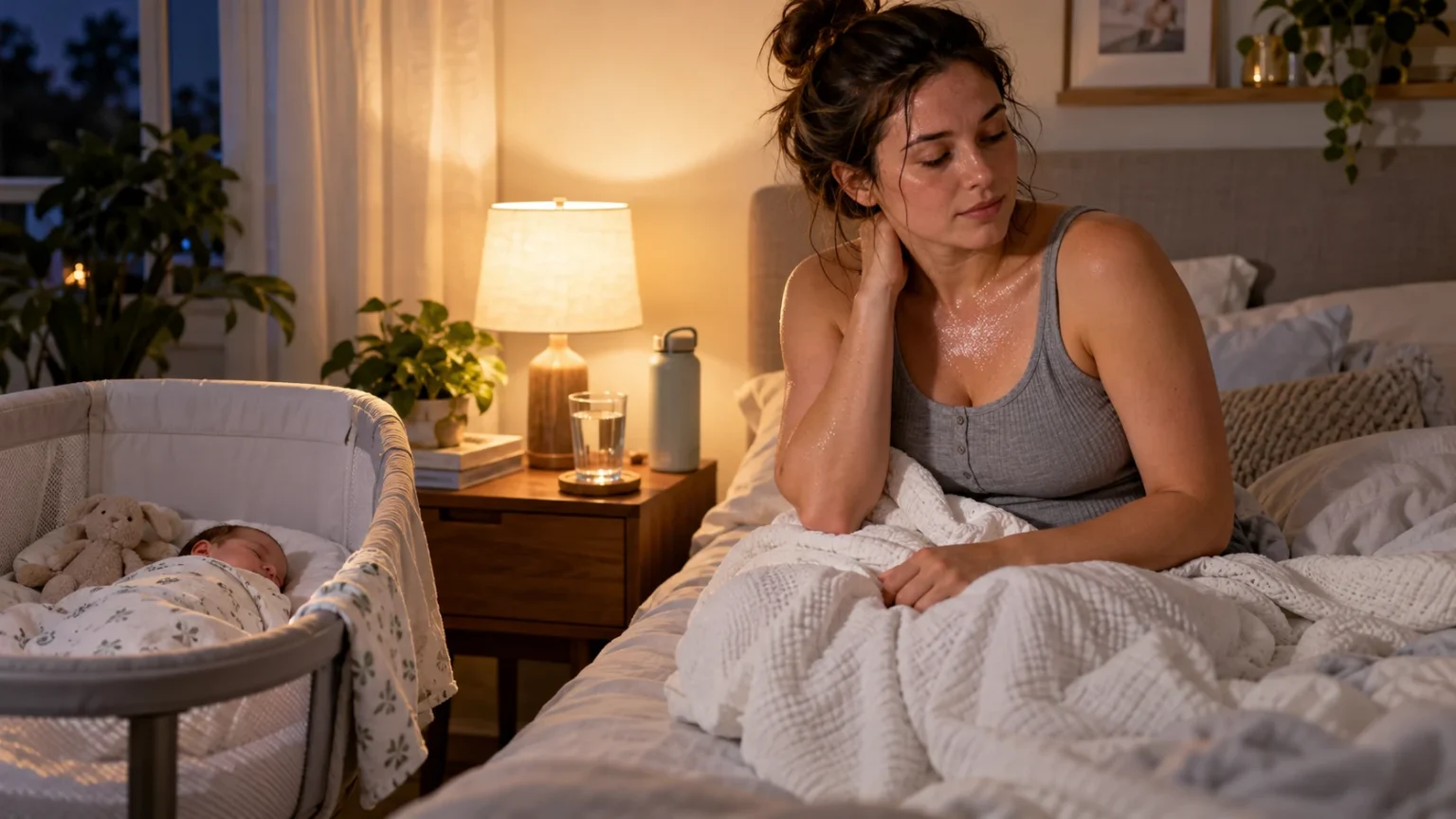

Postpartum night sweats are a common experience during the weeks following childbirth. Many new mothers notice that they wake up feeling unusually sweaty, even when their bedroom temperature is comfortable. These episodes can be surprising, particularly when they interrupt sleep during an already demanding recovery period. Understanding postpartum night sweats, their causes, and how long they last can help you recognize normal changes and identify symptoms requiring medical attention.
After delivery, the body undergoes significant hormonal and fluid-related adjustments. Levels of certain pregnancy hormones decrease rapidly, while the body gradually eliminates some of the extra fluid retained during pregnancy. These natural changes can contribute to increased sweating, particularly during sleep. However, not every episode of excessive sweating is related to postpartum recovery.
This guide explains why postpartum night sweats happen, when they typically begin, and how long they may continue. It also covers practical comfort measures, breastfeeding considerations, and important warning signs. Knowing what to expect can make postpartum recovery easier to understand while helping you recognize when additional medical support may be necessary.
What Are Postpartum Night Sweats?
Postpartum night sweats refer to episodes of excessive sweating that occur during sleep after childbirth. Some women notice damp clothing or bedding despite sleeping in a reasonably cool environment. The intensity varies, and symptoms may come and go rather than occurring every night. These episodes are commonly associated with normal hormonal changes during postpartum recovery.
Night sweating differs from ordinary perspiration caused by a warm room or heavy blankets. Some individuals experience sudden periods of sweating without an obvious environmental trigger. However, room temperature, clothing, medications, and other factors may contribute. The timing and accompanying symptoms can help determine whether the sweating is likely related to postpartum changes.
Postpartum night sweats are often temporary and do not necessarily indicate an underlying health problem. Nevertheless, symptoms should be considered alongside overall recovery, including temperature, energy levels, and other physical changes. Fever or significant illness requires medical evaluation. Understanding the difference between common postpartum sweating and concerning symptoms supports safer recovery.
Why Do Postpartum Night Sweats Happen?
One major cause of postpartum night sweats is the rapid change in hormone levels following childbirth. Estrogen and progesterone levels fall after delivery, influencing several normal body processes. These hormonal adjustments can affect temperature regulation and sweating. The body gradually adapts as recovery progresses, although the timeline varies between individuals.
Another contributing factor is the elimination of extra fluid accumulated during pregnancy. The body naturally adjusts fluid balance through increased urination and perspiration after childbirth. Some women notice more frequent bathroom visits alongside nighttime sweating. These changes often become less noticeable as fluid balance returns toward its usual state.
Sleep environment, medications, and individual health conditions can also influence sweating. A warm bedroom or heavy bedding may make symptoms more uncomfortable. Some medical problems, including infections or thyroid disorders, can produce similar complaints. Persistent or unusual sweating should therefore be assessed in the context of other symptoms.
When Do Postpartum Night Sweats Start?
Postpartum night sweats often begin within the first few days after childbirth. Hormone levels change rapidly during this period, and the body starts adjusting to no longer being pregnant. Some women notice increased sweating almost immediately after delivery. Others develop symptoms later during the early postpartum weeks.
The timing can vary depending on individual hormonal responses, fluid changes, and recovery circumstances. Someone recovering from a cesarean delivery may notice sweating alongside other postoperative changes. Others may experience symptoms after an uncomplicated vaginal birth. The delivery method alone does not determine whether postpartum night sweats will occur.
Because sweating has several possible causes, timing should not be used as the only explanation. New night sweats accompanied by fever, chills, or other illness symptoms require attention. A healthcare professional can help distinguish normal postpartum changes from conditions needing treatment. Tracking when symptoms began may provide useful information during an appointment.
How Long Do Postpartum Night Sweats Last?
Postpartum night sweats are often most noticeable during the first several days to weeks after childbirth. For many women, sweating gradually decreases as hormone levels and fluid balance adjust. Some people experience improvement within a few weeks, while others notice symptoms for longer. There is no universal recovery timeline that applies to everyone.
Breastfeeding, individual hormone patterns, medications, and other health factors may influence how long symptoms continue. Some women experience occasional night sweats beyond the earliest recovery period. However, ongoing sweating should not automatically be attributed to breastfeeding or normal hormonal changes. Persistent symptoms deserve medical review, particularly when they interfere with sleep.
If night sweats remain severe, begin unexpectedly after an initial period of recovery, or continue without improvement, discuss them with a healthcare professional. Other symptoms may help identify possible causes. Medical evaluation can determine whether additional testing is appropriate. Recognizing changes over time supports more informed postpartum care.
Are Postpartum Night Sweats Normal?
Night sweats can be a normal part of postpartum recovery because of hormonal and fluid-related changes. Many women experience temporary increased sweating without developing any serious medical problems. Symptoms often become less noticeable as the body adjusts. However, the presence of sweating alone cannot confirm that recovery is progressing normally.
Mild or moderate night sweating without fever or other concerning symptoms may simply reflect ordinary postpartum changes. The experience can still be uncomfortable, especially when it interrupts sleep. Practical adjustments to clothing and bedding may improve comfort. Monitoring general well-being is more important than focusing only on how much sweating occurs.
Normal postpartum changes and medical conditions can sometimes produce overlapping symptoms. An infection may cause sweating alongside fever or chills, while thyroid problems can affect temperature regulation. Healthcare professionals consider the complete symptom pattern when evaluating concerns. Seeking advice is appropriate whenever sweating seems unusual or is accompanied by other health changes.
Postpartum Night Sweats and Hormonal Changes
Hormones play an important role in pregnancy, childbirth, and postpartum recovery. During pregnancy, estrogen and progesterone levels increase substantially to support normal physiological changes. After delivery, their levels decrease quickly. This hormonal transition can influence how the body regulates temperature and responds to environmental conditions.
Temperature regulation involves interactions between the brain, nervous system, hormones, and sweat glands. Changes in estrogen may contribute to sensations of warmth and increased sweating. These responses can resemble certain symptoms experienced during other hormonal transitions. However, postpartum hormone patterns differ between individuals and change throughout recovery.
Hormonal adjustments are only one possible explanation for night sweats. Medication effects, infections, and other medical conditions may produce similar symptoms. It is therefore important not to assume that every episode is harmless. Professional assessment can help identify the cause when sweating persists or occurs alongside concerning symptoms.
Why Postpartum Sweating May Be Worse at Night
Some women notice sweating more during sleep than during daytime activities. Changes in temperature regulation may become particularly noticeable under blankets or in warm bedrooms. Bedding and sleepwear can trap heat and moisture, increasing discomfort. However, nighttime sweating does not necessarily mean the body is producing more sweat than during the day.
Sleep naturally involves changes in body temperature and physiological regulation. Postpartum hormonal adjustments may influence how these normal processes feel. Fatigue, nighttime infant care, and interrupted sleep can also make sweating more noticeable. These factors may contribute to discomfort without indicating a serious health problem.
The most useful approach is to consider both environmental factors and overall symptoms. Cooler bedding may improve comfort when overheating contributes to sweating. However, persistent drenching episodes or symptoms accompanied by fever should be evaluated. Night sweats are not always explained by bedroom temperature or postpartum hormones alone.
Postpartum Night Sweats While Breastfeeding
Breastfeeding involves hormonal changes that support milk production and release. Prolactin and oxytocin play important roles in these processes, while estrogen levels may remain relatively lower during lactation. These hormonal patterns can influence physical experiences during postpartum recovery. Some breastfeeding mothers report night sweats or sensations of increased warmth.
However, breastfeeding does not automatically cause excessive sweating, and not every breastfeeding mother experiences these symptoms. Sweating may also result from the hormonal changes that occur after childbirth regardless of feeding method. The relationship between lactation and prolonged night sweats is not fully predictable. Individual circumstances influence both symptom severity and duration.
Breastfeeding mothers experiencing frequent sweating should pay attention to hydration and general health. Persistent nausea, dizziness, weakness, or difficulty drinking enough fluids may require medical advice. Excessive sweating with fever or breast pain also deserves assessment. A healthcare professional can evaluate whether symptoms reflect postpartum changes or another condition.
Postpartum Night Sweats After a C-Section
Night sweats can occur after a cesarean delivery because the same major postpartum hormonal and fluid changes still take place. Estrogen and progesterone levels decrease after childbirth regardless of delivery method. The body also adjusts fluid balance during recovery. These processes may contribute to increased sweating during the early postoperative period.
People recovering from cesarean delivery may experience additional factors affecting temperature and comfort. Medications, postoperative fluid changes, and the healing process can influence how someone feels. However, sweating should not automatically be attributed to surgery. Infection and other postoperative complications can also cause temperature-related symptoms.
Fever, worsening abdominal pain, increasing incision redness, or unusual wound drainage requires prompt medical assessment. Chills and significant illness symptoms should also be reported. A healthcare professional can determine whether sweating is related to ordinary postpartum changes or a complication. Careful attention to postoperative symptoms is particularly important during early recovery.
Can Dehydration Make Postpartum Night Sweats Worse?
Sweating causes the body to lose water and small amounts of electrolytes through the skin. Frequent night sweats may therefore contribute to fluid loss, particularly when episodes are substantial. Dehydration does not necessarily cause postpartum night sweats, but it can affect overall comfort and recovery. Maintaining appropriate hydration supports normal body function.
People caring for newborns may find it difficult to maintain regular drinking habits during busy days and interrupted nights. Breastfeeding can also increase fluid needs for some individuals. Drinking according to thirst and following medical advice is generally appropriate. Individual requirements vary based on activity, climate, and health circumstances.
Signs of dehydration may include dizziness, dark urine, reduced urination, or unusual weakness. Persistent vomiting or diarrhea can increase fluid loss and require additional attention. Severe symptoms deserve prompt medical assessment. Hydration supports general recovery but does not directly correct the hormonal changes associated with postpartum sweating.
Helpful Tips to Manage Postpartum Night Sweats
Simple changes to the sleeping environment may improve comfort during episodes of postpartum sweating. Lightweight bedding and breathable sleepwear can reduce unnecessary heat retention. A comfortably cool bedroom may also make interrupted sleep more manageable. These adjustments focus on comfort rather than treating an underlying medical condition.
Keeping clean sleepwear and bedding available may be convenient when sweating occurs frequently. Soft, breathable fabrics can help reduce irritation from damp clothing. Gentle skincare may also support comfort when repeated moisture exposure causes sensitivity. However, sweating that becomes severe or unusual should not be managed only through environmental adjustments.
Rest and hydration are also important parts of postpartum recovery. Caring for a newborn can make uninterrupted sleep difficult, so practical support from family members may be helpful. Avoid using unproven supplements or medications specifically to stop sweating without medical advice. A healthcare professional can recommend appropriate care when symptoms are persistent.
Can Postpartum Night Sweats Affect Sleep Quality?
Postpartum night sweats can interrupt sleep by causing discomfort or requiring changes of clothing and bedding. This may be particularly challenging because newborn care already affects normal sleep patterns. Repeated awakenings can contribute to tiredness and frustration. However, sleep disturbances during the postpartum period often involve several factors rather than sweating alone.
A comfortable sleeping environment may help reduce unnecessary interruptions. Breathable bedding, suitable room temperature, and practical help with infant care can support rest. Some families find it useful to share appropriate household responsibilities when possible. These adjustments cannot eliminate every sleep challenge, but they may improve overall comfort.
Persistent sleep difficulties deserve attention, especially when accompanied by significant anxiety, low mood, or physical illness symptoms. A healthcare professional can help assess whether additional support is needed. Postpartum recovery involves physical and emotional changes that may affect well-being. Adequate rest and appropriate care remain important throughout this period.
Postpartum Night Sweats vs. Postpartum Fever
Postpartum night sweats and postpartum fever are not the same condition. Night sweats describe increased perspiration, while fever refers to an elevated body temperature. A person may experience sweating without having a fever. However, sweating can also occur when the body responds to an infection or another illness.
A temperature of 100.4°F (38°C) or higher after childbirth generally warrants prompt medical advice. Fever may be accompanied by chills, weakness, abdominal pain, or other symptoms. These findings can indicate an infection requiring treatment. A thermometer provides more reliable information than judging body temperature by touch alone.
Postpartum infections may involve the uterus, urinary tract, breasts, or surgical wounds. The associated symptoms depend on the affected area. Significant fever or illness should not be dismissed as ordinary hormonal sweating. Early medical evaluation helps identify possible complications and determine appropriate care.
Can Postpartum Thyroid Problems Cause Night Sweats?
Postpartum thyroiditis is a thyroid condition that can develop during the months following childbirth. It involves inflammation of the thyroid gland and may temporarily affect thyroid hormone levels. Some individuals experience an initial phase of increased thyroid activity. This can cause symptoms such as sweating, heat intolerance, and a faster heartbeat.
Other possible symptoms include anxiety, changes in energy, and difficulty tolerating warm environments. However, these complaints can overlap with common postpartum experiences. Some people later develop symptoms associated with reduced thyroid activity, including fatigue and sensitivity to cold. The pattern varies, and not everyone experiences both phases.
Persistent sweating accompanied by palpitations, unexplained changes in energy, or other thyroid-related symptoms deserves medical assessment. A clinician may recommend blood tests to evaluate thyroid function. Treatment depends on the findings and symptom severity. Self-diagnosing postpartum thyroiditis based only on sweating is unreliable.
When to Worry About Postpartum Night Sweats
Most postpartum night sweats are temporary, but certain symptoms require medical attention. Sweating accompanied by fever, shaking chills, worsening pelvic pain, or unusual vaginal discharge may indicate infection. Increasing redness or drainage around a cesarean incision also deserves assessment. These symptoms should not be assumed to result from normal hormonal changes.
Seek urgent medical care for chest pain, difficulty breathing, fainting, confusion, or other severe symptoms. Significant weakness or rapidly worsening illness also requires prompt attention. Postpartum complications can sometimes develop after leaving the hospital. Recognizing warning signs helps ensure that appropriate treatment is not delayed.
Night sweats that remain severe, repeatedly soak bedding, or continue without improvement should be discussed with a healthcare professional. Persistent symptoms may have hormonal, infectious, medication-related, or other medical causes. A clinician can evaluate the broader health picture and determine whether testing is appropriate. Early assessment provides reassurance when symptoms are harmless and treatment when necessary.
How Doctors Evaluate Persistent Postpartum Night Sweats
Medical evaluation usually begins with a discussion of symptoms, delivery history, and the timing of sweating episodes. A healthcare professional may ask about fever, chills, medications, breastfeeding, and other health changes. The severity and duration of symptoms provide useful information. These details help determine whether sweating is likely related to postpartum recovery or another condition.
A physical examination may be recommended when symptoms suggest infection or other medical concerns. Depending on the findings, clinicians may consider blood tests, urine testing, or thyroid function testing. Additional investigations are not necessary for everyone experiencing ordinary postpartum sweating. Testing decisions should reflect individual symptoms and medical history.
The purpose of evaluation is to identify conditions that may require treatment while avoiding unnecessary interventions. Many cases of postpartum sweating improve as recovery progresses. However, persistent symptoms should not be ignored simply because sweating is common after childbirth. Appropriate medical assessment helps support safe and informed postpartum care.
Conclusion
Postpartum night sweats are a common experience following childbirth and are often associated with hormonal changes and the elimination of extra pregnancy-related fluid. They frequently begin during the first few days after delivery and may continue for several weeks. Symptoms vary between individuals, and not everyone experiences the same intensity or duration. Understanding these changes can make early postpartum recovery less confusing.
Comfort measures such as breathable sleepwear, lightweight bedding, a suitable room temperature, and adequate hydration may help manage nighttime discomfort. Breastfeeding and individual hormonal patterns can influence symptoms, but persistent sweating is not always caused by normal postpartum changes. Rest and support are also important during recovery. Home comfort strategies should complement, not replace, appropriate medical care.
If postpartum night sweats become severe, continue without improvement, or occur alongside fever, chills, significant pain, or other concerning symptoms, seek medical advice. Infections, thyroid problems, and other conditions can sometimes produce similar symptoms. Early assessment can identify treatable causes and provide reassurance when appropriate. Prioritizing overall health supports a safer and more comfortable postpartum recovery.
Frequently Asked Questions
How long do postpartum night sweats usually last?
Postpartum night sweats are often most noticeable during the first few days or weeks after childbirth. They generally improve as hormone levels and fluid balance adjust, although the duration varies.
Are postpartum night sweats normal while breastfeeding?
Yes, night sweats can occur during breastfeeding because of postpartum hormonal changes. However, persistent or severe sweating should not automatically be attributed to lactation, especially when other symptoms are present.
What helps relieve postpartum night sweats?
Breathable clothing, lightweight bedding, a comfortably cool room, and appropriate hydration may improve comfort. These measures do not treat every cause, so persistent symptoms should be discussed with a healthcare professional.
Can postpartum night sweats be a sign of infection?
Yes, sweating accompanied by fever, chills, worsening pain, or other illness symptoms may indicate infection. A temperature of 100.4°F (38°C) or higher after childbirth warrants prompt medical advice.
When should I see a doctor for postpartum night sweats?
Contact a healthcare professional if sweating is severe, persistent, or accompanied by fever, chills, unusual discharge, or worsening pain. Chest pain or breathing difficulty requires emergency medical attention.



