
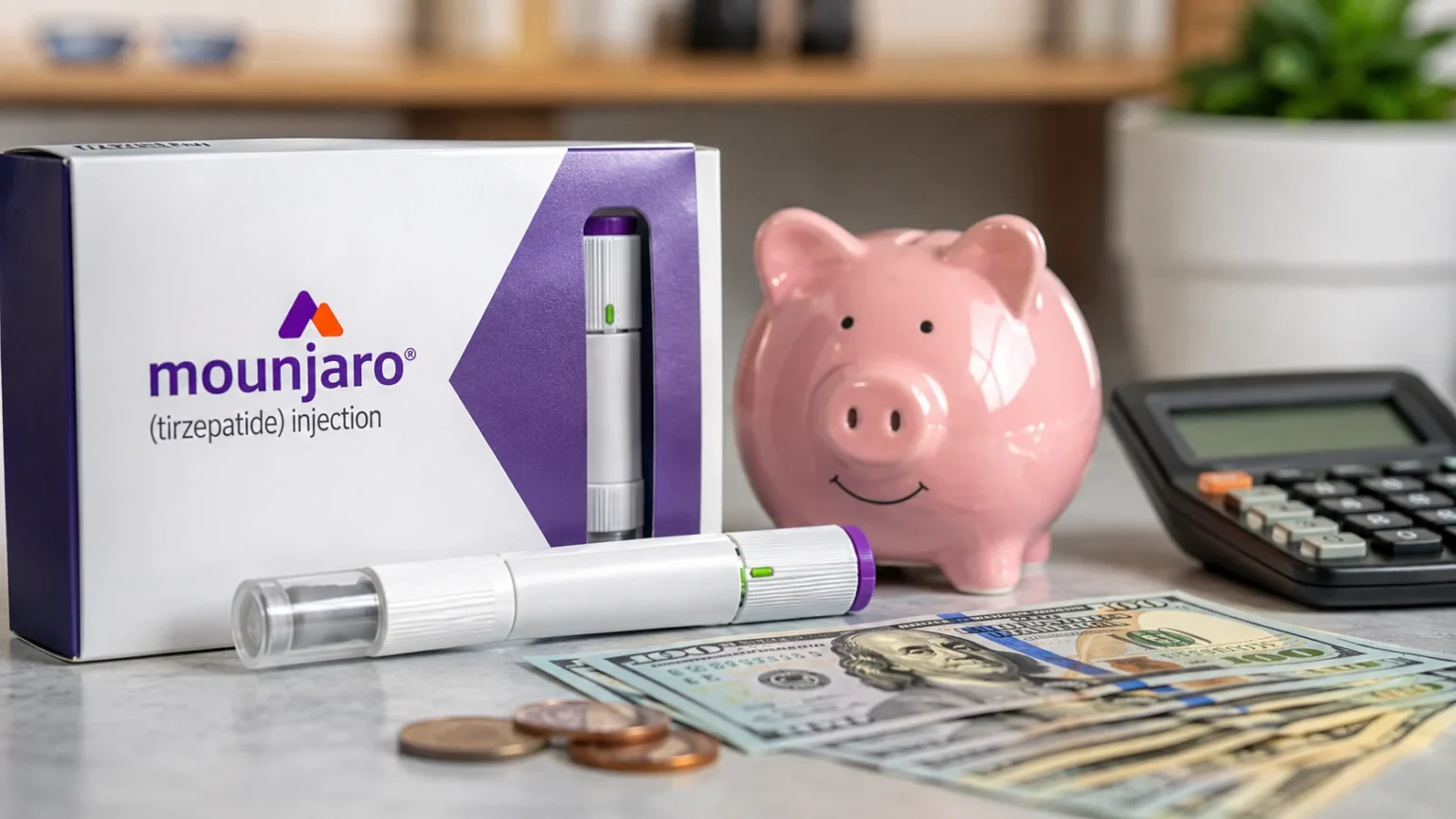

Mounjaro Coupon 2026: How to Save on Your Prescription
Paying for a long-term prescription can become a significant part of a household budget, especially when insurance coverage changes or a medication sits on a higher formulary tier. If you have been prescribed Mounjaro, you may have seen advertisements or search results promising a Mounjaro coupon, savings card, or dramatically reduced monthly price.
The good news is that an official Mounjaro Savings Card is available in 2026 for certain eligible patients. However, the amount you actually pay depends heavily on whether you have commercial prescription insurance, whether that insurance covers Mounjaro, your copay or deductible, and whether you meet the manufacturer’s eligibility requirements.
There is an important difference between an official manufacturer savings card and a general pharmacy discount coupon. Manufacturer savings programs follow specific eligibility rules, while third-party discount cards usually negotiate cash prices with participating pharmacies. The cheapest option for one person may therefore be completely different from the best option for someone else.
This guide explains how the Mounjaro coupon 2026 program works, who may qualify, how much eligible patients may save, what happens if insurance does not cover Mounjaro, and which alternatives may be worth checking before paying for your next prescription.
What Is the Mounjaro Coupon in 2026?
When people search for a Mounjaro coupon, they are often referring to the official Mounjaro Savings Card offered by Eli Lilly. It is a manufacturer copay assistance program designed to reduce eligible patients’ out-of-pocket costs when filling a prescription for Mounjaro.
The program is not health insurance and does not replace your prescription drug coverage. Instead, the card can be processed alongside qualifying commercial insurance to reduce the portion of the prescription cost that an eligible patient would otherwise pay.
The exact savings depend largely on whether your commercial insurance plan covers Mounjaro. Patients whose plans cover the medicine have different savings limits from commercially insured patients whose plans do not provide Mounjaro coverage.
The current card expires and savings end on December 31, 2026. Manufacturer programs can change during the year, so anyone reading this guide later should confirm the latest terms directly through the official Mounjaro savings program before relying on a particular price.
How Much Can the Mounjaro Savings Card Save in 2026?
For eligible patients with commercial prescription insurance that covers Mounjaro, the 2026 card may allow a patient to pay as little as $25 for a one-month, two-month, or three-month prescription fill. The final amount depends on the patient’s normal insurance responsibility and the savings limits applied by the program.
For this group, Lilly currently limits card savings to as much as $150 for a one-month fill, $300 for a two-month fill, or $450 for a three-month fill. The separate maximum annual savings amount is currently $1,950 per calendar year, with up to 13 prescription fills allowed.
Eligible patients who have commercial drug insurance without Mounjaro coverage fall under a different part of the program. Under the current 2026 terms, these patients may pay as low as $499 for a one-month prescription, subject to eligibility and the program’s financial limits.
For commercially insured patients without coverage, the card currently offers maximum monthly savings of up to $647 and maximum annual savings of up to $8,411, with as many as 13 fills per calendar year. These limits explain why “as little as” or “as low as” pricing should never be interpreted as a guaranteed price for every patient.
Who Qualifies for the Mounjaro Savings Card?
The official savings program has specific eligibility requirements. In 2026, the patient must have been prescribed Mounjaro single-dose pens for an approved use consistent with FDA-approved labeling and must be enrolled in a qualifying commercial prescription drug insurance plan.
The card is limited to adults. Although Mounjaro itself is now FDA-labeled for certain patients aged 10 years and older with type 2 diabetes, the current savings-card eligibility terms require participants to be at least 18 years old.
Eligible patients must also reside in the United States or Puerto Rico. The patient must continue meeting the program’s eligibility rules every time the savings card is used rather than qualifying only when the card is first obtained.
Card activation is required, and participation involves agreeing to the program terms and providing the required patient authorization. Because insurance status can change during the year, patients should review eligibility again if they move to a different insurance plan.
Who Cannot Use the Mounjaro Coupon?
One of the most important limitations is that the manufacturer card is not available to people enrolled in many government-funded healthcare programs. That includes Medicare, Medicare Part D, Medicare Advantage, Medicaid, Medigap, VA healthcare, Department of Defense programs, and TRICARE, among others.
Patients participating in state pharmaceutical or prescription assistance programs are also excluded under the current manufacturer terms. Someone who starts the year with commercial insurance but later moves onto a government-funded program may therefore lose eligibility for the savings card.
Certain alternate funding arrangements can also affect eligibility. Lilly specifically excludes some patients whose insurance plans require them to apply for manufacturer assistance as part of an alternate funding strategy designed around the availability of the manufacturer’s savings program.
These restrictions are why it is worth answering the official eligibility questions carefully rather than assuming every privately insured patient can use the card. A pharmacy may initially process a card but later encounter a rejection if the claim does not satisfy the program’s current requirements.
How to Get a Mounjaro Coupon in 2026
The safest place to obtain the Mounjaro savings card is through the official Mounjaro website rather than downloading coupon codes from random websites. The official enrollment process asks eligibility questions before providing access to the card.
You will need a valid Mounjaro prescription from an appropriate healthcare professional. The prescription must also be for a use consistent with the FDA-approved Mounjaro labeling if you intend to use the official manufacturer savings program.
During enrollment, you will be asked to confirm information related to your age, residence, insurance status, and government healthcare coverage. Answering these questions accurately is important because the card’s terms apply every time it is redeemed.
Once approved, keep the card information available when filling your prescription. Depending on the pharmacy, the savings details may be entered electronically or processed using the information provided on the card together with your commercial insurance.
How to Use the Mounjaro Savings Card at the Pharmacy
When filling your prescription, the pharmacy generally needs your regular commercial prescription insurance information as well as the savings-card details. The pharmacist processes the insurance claim and then applies the manufacturer program according to the patient’s eligibility and plan coverage.
If your insurance covers Mounjaro, your normal copay, coinsurance, or deductible can affect how much assistance is needed. Because the card has maximum savings limits, a patient with a very high insurance responsibility may still pay more than the advertised $25 minimum.
If the pharmacy tells you the card did not work, ask whether the prescription insurance claim was processed correctly and what rejection message appeared. Sometimes the issue relates to insurance coverage, prior authorization, refill timing, card activation, or incomplete billing information rather than the card being universally unavailable.
It can also help to confirm whether your pharmacy accepts the quantity your doctor prescribed. Lilly notes that three-month fills can depend on both pharmacy policies and insurance rules, so a 90-day prescription does not guarantee that your plan will allow the entire quantity to be dispensed at once.
What if Your Insurance Covers Mounjaro?
Having insurance coverage is usually the most favorable situation for using the official Mounjaro copay card. Eligible commercially insured patients with Mounjaro coverage can potentially pay as little as $25 for their prescription, depending on their normal cost-sharing obligation and the program’s savings limits.
Start by checking where Mounjaro sits on your plan’s formulary. Some plans place it on a preferred brand tier, while others require a higher copayment, coinsurance, or deductible before the plan begins paying a meaningful portion of the cost.
Coverage may also depend on completing a prior authorization. Your insurer may ask your healthcare provider to document why Mounjaro is medically appropriate and whether you meet the plan’s coverage criteria before approving payment.
Do not assume that “covered” means your out-of-pocket cost will automatically be low. An insured patient who has not yet met a deductible can face a much higher pharmacy price than another person using the same medication under a different commercial plan.
What if Commercial Insurance Does Not Cover Mounjaro?
Lack of formulary coverage does not automatically mean the official savings card is useless. The current 2026 program has a separate option for eligible commercially insured adults whose prescription plan does not cover Mounjaro.
Under those terms, an eligible patient may pay as low as $499 for a one-month supply. The program currently caps savings at up to $647 per month and $8,411 per calendar year, with no more than 13 eligible fills during the year.
Before accepting a coverage denial permanently, ask your insurer why the medicine was denied. Sometimes the issue is simply that prior authorization has not been submitted, supporting information is missing, or the insurer requires an appeal before reconsidering coverage.
Your healthcare provider’s office may be able to help with the prior-authorization or appeal process. Obtaining insurance coverage can matter over the long term because manufacturer savings programs are temporary and their eligibility requirements or financial limits can change.
Can You Get a Mounjaro Coupon Without Insurance?
The official commercial-insurance Mounjaro Savings Card is not designed in the same way for completely uninsured patients. If you do not have commercial drug insurance, you generally will not qualify for the standard card described for commercially insured patients.
However, Lilly introduced a separate self-pay route for Mounjaro through LillyDirect. As of August 2026, Lilly lists Mounjaro single-dose prefilled pens through its self-pay pharmacy option starting at $499 per month, with terms applying.
That self-pay route is important because it provides another potential option for people who cannot use the standard manufacturer copay card. It still requires a valid prescription, and the available pricing or program conditions may change over time.
Someone without insurance should compare the available self-pay route with legitimate pharmacy cash prices and other affordability options before filling the prescription. The lowest advertised option is not necessarily the final amount once individual eligibility and pharmacy arrangements are considered.
Can Medicare Patients Use a Mounjaro Coupon?
Patients enrolled in Medicare, Medicare Part D, or Medicare Advantage with drug coverage are not eligible for the standard Mounjaro manufacturer savings card under its current 2026 terms. The same restriction applies to several other government-funded healthcare programs.
This can be frustrating because Medicare beneficiaries may still face significant prescription costs depending on whether Mounjaro is included on their Part D plan’s formulary and what coverage requirements apply.
Medicare beneficiaries should check their plan directly for Mounjaro coverage, prior authorization requirements, formulary tier, and expected out-of-pocket costs. Plans can differ substantially, so another person’s Medicare prescription price may not predict yours.
Medicare’s Prescription Payment Plan can help eligible Part D beneficiaries spread covered out-of-pocket prescription costs across the year, but it does not reduce the underlying price of the medication. It is a payment-management option rather than a Mounjaro manufacturer coupon.
Does Medicaid Cover the Mounjaro Savings Card?
People enrolled in Medicaid are excluded from the official Mounjaro Savings Card program. This remains true even when a patient would otherwise meet age, residency, and prescription requirements.
That does not necessarily mean Medicaid will never cover Mounjaro itself. Drug coverage and prior authorization policies depend on the state Medicaid program and the patient’s circumstances.
If you have Medicaid, contact your plan or pharmacy to find out whether Mounjaro is on the preferred drug list and whether your prescriber needs to submit additional documentation before the medication can be approved.
The important distinction is between coverage and coupon eligibility. A government insurance program may potentially cover a medicine even though federal and manufacturer program rules prevent you from using a commercial manufacturer copay card.
Can You Use a Mounjaro Coupon for Weight Loss?
This is one of the most important questions because many online searches for Mounjaro relate to weight management. The official savings-card terms require the patient to have a prescription for an approved use consistent with FDA-approved Mounjaro labeling.
Mounjaro’s current U.S. labeling is for improving blood glucose control, along with diet and exercise, in adults and pediatric patients aged 10 years and older with type 2 diabetes mellitus.
That means someone receiving Mounjaro solely for an off-label purpose should not assume they qualify for the manufacturer savings card. The card’s eligibility requirement is tied specifically to an on-label prescription rather than simply having any Mounjaro prescription.
Patients seeking tirzepatide specifically for chronic weight management should discuss the appropriate FDA-approved treatment option with their healthcare provider instead of choosing a brand primarily because they found a particular coupon online.
Why Prior Authorization Can Affect Your Mounjaro Cost
Prior authorization is an insurance process through which your plan asks for clinical information before agreeing to cover a prescription. For expensive branded medications, completing this process correctly can sometimes make a major difference in the amount a patient ultimately pays.
Your insurer may review diagnosis, previous treatments, laboratory information, or other plan-specific requirements. Having a prescription in hand therefore does not automatically mean the insurance company has approved coverage.
If the pharmacy says Mounjaro is “not covered,” find out whether that means the medication is excluded completely or simply requires prior authorization. Those are very different situations and may have different next steps.
When a prior authorization is denied, there may also be an appeal process. Ask both your insurance company and prescriber’s office what information is missing before immediately assuming you must pay the full cash price indefinitely.
Can a 3-Month Mounjaro Prescription Save You More?
Eligible commercially insured patients whose plans cover Mounjaro may use the savings card for qualifying one-, two-, or three-month fills. Under Lilly’s definition, one month is 28 days and up to four pens, while three months means 84 days and up to 12 pens.
A three-month prescription may reduce the number of pharmacy visits and potentially allow eligible patients to pay as little as $25 in total for that qualifying fill. However, the savings cap for a three-month fill is currently $450.
Your insurance company may have its own rules about 90-day supplies, and some plans require long-term prescriptions to be filled through a specific mail-order or preferred pharmacy. A retail pharmacy may also temporarily lack enough pens to fill the entire quantity.
For those reasons, ask your insurer and pharmacy whether a three-month Mounjaro prescription is allowed before assuming it will be cheaper. The manufacturer’s advertised minimum price remains subject to both insurance processing and savings-program limits.
Mounjaro Manufacturer Coupon vs. Pharmacy Discount Card
A Mounjaro manufacturer coupon and a general prescription discount card operate differently. The manufacturer program has strict insurance, age, residency, and prescription-use requirements, while pharmacy discount services typically offer negotiated cash prices.
A pharmacy discount card may be worth checking when you cannot use the manufacturer program or your insurance price is unusually high. Prices can vary between pharmacies and can change frequently, so comparison should happen close to the time you plan to fill the prescription.
However, Lilly’s current savings-card terms say the manufacturer card cannot be combined with another coupon, discount card, cash discount, or similar Mounjaro offer. You generally need to choose the payment route that produces the best eligible price rather than stacking discounts.
Also consider how paying outside insurance affects your deductible and prescription spending totals. A cheaper cash price today may not always be the best long-term option if it prevents the purchase from counting toward insurance benefits you expect to use later.
Why Your Mounjaro Savings Card May Be Rejected
A coupon rejection does not necessarily mean the program has ended. One common reason is that the patient’s insurance information does not match the eligibility category required by the program, particularly when government-funded coverage is involved.
Another possibility is that the prescription is too early to refill or the pharmacy is attempting to dispense a quantity that your insurance plan does not permit. Prior authorization or formulary restrictions can also interrupt processing.
The card may also fail if it has not been properly activated, if outdated savings information is being used, or if the patient’s insurance situation changed after enrollment.
Ask the pharmacist for the specific rejection reason rather than simply accepting “the coupon doesn’t work.” That information can tell you whether you need to contact your insurance company, healthcare provider, pharmacy, or the manufacturer savings-program support service.
How to Lower Your Mounjaro Cost in 2026
Start by checking insurance coverage before comparing coupons. Ask your insurer whether Mounjaro is covered, which formulary tier applies, whether prior authorization is required, and what you would pay at both preferred retail and mail-order pharmacies.
Next, check whether you qualify for the official Mounjaro Savings Card. For commercially insured adults, the manufacturer program may produce a much lower out-of-pocket cost than paying the pharmacy’s regular cash price.
If commercial insurance does not cover Mounjaro, compare the manufacturer card’s non-covered option with available self-pay arrangements. LillyDirect currently lists Mounjaro self-pay pricing starting at $499 per month, subject to its terms.
Finally, recheck your options periodically. Formularies can change, prior authorization can eventually be approved, manufacturer programs can be updated, and pharmacy pricing may fluctuate. The cheapest route at the beginning of the year may not remain the cheapest route later.
Do Not Change Your Mounjaro Dose Just to Save Money
Mounjaro is a prescription medication, and dosage decisions should be based on clinical needs rather than whichever pen strength appears cheaper or easier to obtain. The current prescribing information uses a gradual dose-escalation schedule designed in part to reduce gastrointestinal adverse reactions.
Do not stretch doses, alter injection schedules, share pens, or change your prescribed strength simply to make a prescription last longer. Doing so can interfere with treatment and may create avoidable health risks.
If cost is making it difficult to continue treatment, tell your prescribing clinician rather than quietly skipping doses. Your healthcare team may be able to help with insurance documentation, coverage appeals, or discussion of alternative treatments.
Saving money matters, but affordability should support medically appropriate treatment rather than determine how you take a prescription. The best cost strategy is one that remains both financially sustainable and consistent with the plan you developed with your healthcare professional.
Is the Mounjaro Coupon Worth Using in 2026?
For someone who qualifies, the official Mounjaro Savings Card 2026 can potentially make a substantial difference in monthly prescription costs. Commercially insured patients with Mounjaro coverage may pay as little as $25, while a separate option currently allows qualifying commercially insured patients without coverage to pay as low as $499.
The important words are “may,” “eligible,” and “as low as.” Your actual pharmacy price depends on insurance benefits, deductible status, the amount the savings card is allowed to contribute, prescription quantity, and whether every program requirement is met.
People who cannot use the standard manufacturer card still have options worth investigating. Insurance appeals, self-pay programs, pharmacy price comparisons, and manufacturer affordability services can sometimes reduce costs without relying on the standard copay card.
Before paying a high price automatically, take a few minutes to understand why the prescription costs what it does. Knowing whether the problem is a deductible, prior authorization, formulary exclusion, coupon restriction, or pharmacy price can point you toward the most realistic way to save.
Final Thoughts on the Mounjaro Coupon 2026
The Mounjaro coupon 2026 is not a universal coupon that guarantees the same price for everyone. It is a structured manufacturer savings program with specific rules based largely on insurance type, Mounjaro coverage, age, residency, and the reason for the prescription.
Under the terms current in August 2026, eligible commercially insured patients with Mounjaro coverage may pay as little as $25 for qualifying fills. Eligible commercially insured patients without coverage may pay as low as $499 for a one-month fill, while separate self-pay options are also available.
Government healthcare beneficiaries are excluded from the standard savings card, and the manufacturer card cannot be stacked with other Mounjaro coupons or discount-card offers. The current program is scheduled to expire on December 31, 2026, although terms can be modified earlier.
The smartest approach is to check your insurance benefits first, confirm your official savings-program eligibility, compare legitimate payment routes, and involve your prescriber’s office when prior authorization is creating a barrier. A little investigation can sometimes make a significant difference in what reaches the pharmacy counter.
Frequently Asked Questions
Is there a Mounjaro $25 coupon in 2026?
Yes. Eligible commercially insured patients whose plans cover Mounjaro may pay as little as $25 for a qualifying one-, two-, or three-month fill. Savings limits and other eligibility rules apply.
How much is Mounjaro with the coupon if insurance does not cover it?
Eligible adults with commercial insurance that does not cover Mounjaro may pay as low as $499 for a one-month fill under the current 2026 savings-card terms.
Can I use the Mounjaro coupon if I have Medicare?
No. The standard manufacturer savings card excludes people enrolled in Medicare, Medicare Part D, Medicare Advantage, Medicaid, and several other government-funded healthcare programs.
Can I use a Mounjaro coupon without insurance?
The standard commercial-insurance savings card generally requires commercial drug insurance. Lilly currently offers a separate Mounjaro self-pay option through LillyDirect starting at $499 per month, subject to terms.
When does the Mounjaro Savings Card expire?
The current Mounjaro Savings Card states that the card and its savings expire on December 31, 2026. Lilly also reserves the right to change or end eligibility criteria and program terms earlier.



