

Royal Jelly: Benefits, Uses & Possible Side Effects
Royal jelly is a creamy substance produced by worker honeybees to feed developing larvae and the queen bee. It has become a popular dietary supplement because it contains proteins, unique fatty acids, sugars, vitamins, minerals, peptides, and other bioactive compounds. Royal jelly is commonly promoted for energy, healthy aging, menopause relief, cholesterol management, immunity, skin health, and general wellness. Some of these potential royal jelly benefits have been investigated in human studies, but the strength of evidence varies considerably between uses.
Recent research has produced some encouraging findings, particularly for menopausal symptoms and certain markers of oxidative stress. However, royal jelly is not a proven treatment for most diseases it is advertised to prevent or cure. It can also trigger serious allergic reactions, including asthma and potentially life-threatening anaphylaxis, especially in susceptible individuals. Interactions with medications such as warfarin have also been reported. Understanding the evidence, appropriate uses, and possible side effects is therefore important before adding royal jelly supplements to a daily routine.
What Is Royal Jelly?
Royal jelly is a secretion produced primarily by the hypopharyngeal and mandibular glands of young worker honeybees. All honeybee larvae receive it during their first days of development, but a larva destined to become a queen continues receiving large quantities. This specialized diet contributes to the dramatic biological differences between queen and worker bees. Humans harvest royal jelly from queen cells and use it in supplements, functional foods, skincare products, beverages, and traditional remedies.
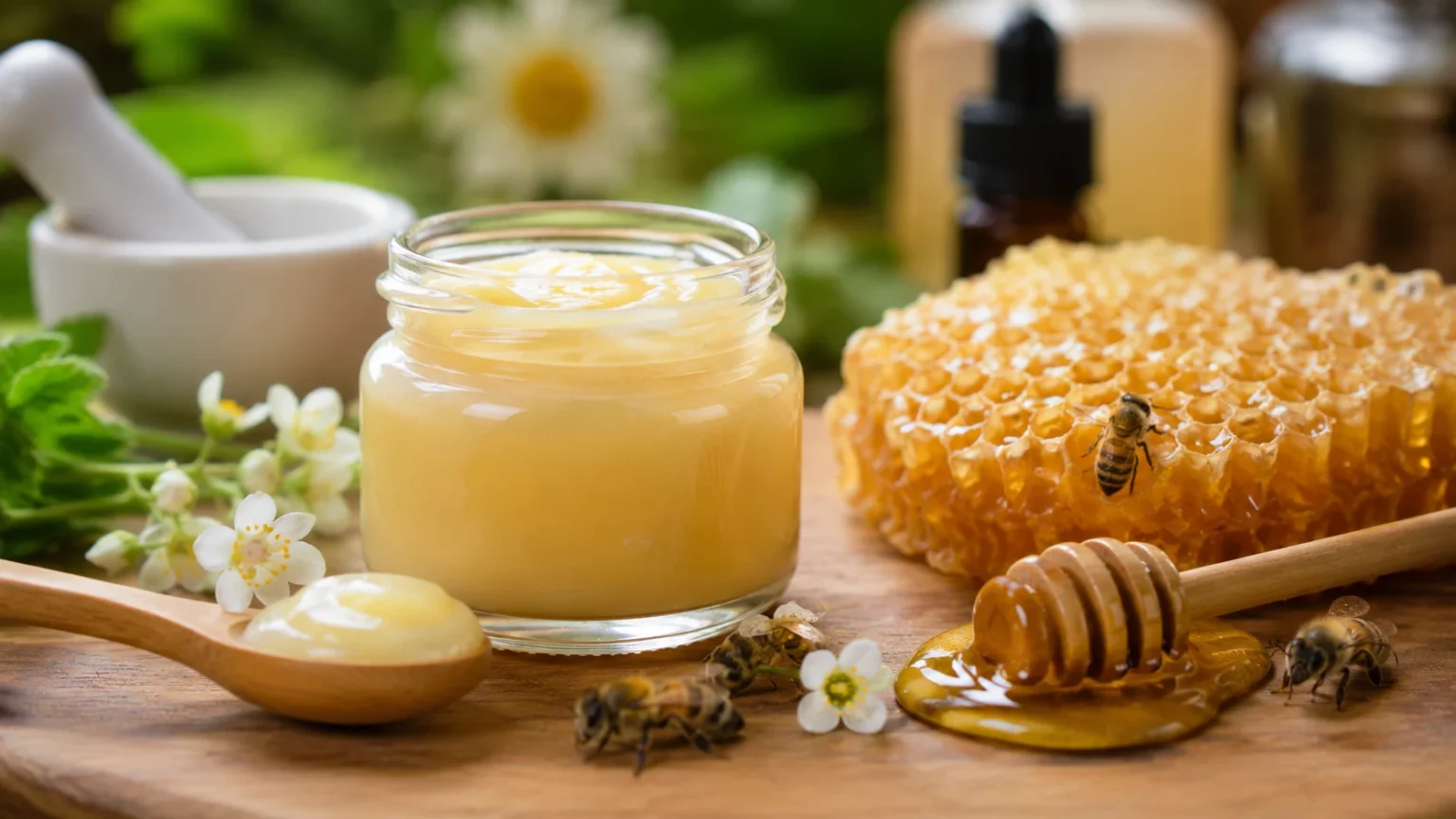
Fresh royal jelly usually appears creamy white or pale yellow and has a thick, slightly acidic consistency. Its flavor is quite different from honey and can be sour, sharp, or mildly bitter rather than simply sweet. Because fresh royal jelly contains substantial moisture, it is sensitive to temperature and storage conditions. Commercial products may therefore be refrigerated, freeze-dried, encapsulated, mixed with honey, or processed into tablets and powders to improve stability and convenience.
Royal jelly should not be confused with honey, propolis, bee pollen, or bee venom. Honey is mainly produced from plant nectar and contains sugars, while pollen consists of grains collected from flowers. Propolis is a resinous hive material, and bee venom is produced by the bee’s venom glands. Although all are described as bee products, their chemical compositions, biological effects, allergens, and safety concerns differ significantly.
One characteristic substance in royal jelly is 10-hydroxy-2-decenoic acid, commonly abbreviated as 10-HDA. This fatty acid is often called “royal jelly acid” because it is one of the product’s distinctive bioactive compounds and is sometimes used as a quality marker. Royal jelly also contains major royal jelly proteins, peptides, flavonoids, and other molecules being studied for antioxidant, inflammatory, metabolic, and antimicrobial effects.
Royal jelly has been used in traditional medicine and wellness practices for many years, particularly in parts of Asia. Modern supplement marketing has greatly expanded those traditional claims, sometimes suggesting benefits for nearly every organ system. Scientific reviews confirm that royal jelly contains biologically interesting compounds but also emphasize that much evidence comes from laboratory and animal research. Human clinical trials are necessary before those findings can become established medical recommendations.
Royal Jelly Nutrition and Bioactive Compounds
Fresh royal jelly consists largely of water, which typically accounts for approximately 60% to 70% or more of its weight. Proteins generally make up around 9% to 18%, carbohydrates roughly 7% to 18%, and lipids approximately 3% to 8%. Smaller quantities of minerals, vitamins, phenolic compounds, enzymes, and other substances are also present. Exact composition varies according to bee species, geography, season, floral sources, harvesting practices, and processing methods.
The main carbohydrates in royal jelly are glucose and fructose, which together make up most of its sugar fraction. Small amounts of sucrose and other sugars may also occur. Because serving sizes of royal jelly supplements are often relatively small, it should not be considered a major source of daily carbohydrate or energy for most users. Products mixed with honey can contain considerably more sugar, making label reading particularly important for people monitoring carbohydrate intake.
Proteins are another important part of royal jelly’s composition. A group known as major royal jelly proteins, or MRJPs, makes up a substantial proportion of its protein fraction. Researchers have studied these proteins and smaller peptides such as royalisin, jelleins, defensin-1, and apisimin for antimicrobial, immune-related, and other biological properties. These compounds play important functions inside the beehive, although their clinical significance after human digestion remains an active area of research.
The lipid fraction is unusual compared with many foods because it contains distinctive medium-chain fatty acids. The most famous is 10-HDA, while related compounds such as 10-hydroxydecanoic acid are also being investigated. Laboratory studies suggest these fatty acids may influence inflammatory signaling, metabolism, immune pathways, and estrogen-related activity. However, effects observed with isolated compounds cannot automatically be assumed from ordinary servings of commercial royal jelly.
Royal jelly also contains small amounts of B vitamins, minerals, and polyphenols, but it should not be treated as a nutritional replacement for a varied diet. Fruits, vegetables, whole grains, legumes, nuts, dairy foods, eggs, fish, and other nutritious foods supply much larger and more predictable amounts of essential nutrients. Royal jelly’s scientific interest comes mainly from its unusual bioactive compounds rather than from functioning as a comprehensive multivitamin or complete food for humans.
Potential Benefits of Royal Jelly
Royal jelly has been studied for a remarkably broad range of potential effects, including antioxidant, anti-inflammatory, antimicrobial, metabolic, cardiovascular, reproductive, and skin-related activity. A 2024 systematic review summarized research published over more than two decades and concluded that the product contains several potentially beneficial bioactive molecules. However, the review also included laboratory and animal evidence alongside human research. This means not every reported biological activity represents a proven health benefit for people.
One area with increasingly relevant human evidence is menopause. Several clinical trials have evaluated oral or vaginal royal jelly for hot flashes, physical symptoms, genitourinary complaints, and quality of life. A 2026 systematic review and meta-analysis found that supplementation significantly improved postmenopausal symptoms compared with placebo in the studies suitable for pooling. The authors described royal jelly as promising while recognizing the relatively small overall evidence base.
Cardiometabolic research is another area of interest. Some randomized studies have reported improvements in total cholesterol, LDL cholesterol, antioxidant capacity, or selected inflammatory markers. Results for blood glucose have been less consistent, with several meta-analyses failing to demonstrate a significant overall improvement in glycemic control. This pattern demonstrates why royal jelly should not be advertised as a guaranteed cholesterol or diabetes treatment.
Royal jelly has also been investigated for oral mucositis, a painful inflammation of the mouth that can occur during chemotherapy or radiotherapy. One randomized study involving 103 patients found faster improvement when royal jelly was used alongside standard mouthwash therapy. The finding is encouraging, but additional confirmatory trials are necessary before royal jelly becomes standard supportive cancer care. Patients should always involve their oncology team before using bee products during treatment.
Most importantly, potential benefits need to be balanced against allergy risk. Unlike a normal food that simply adds nutrients, royal jelly contains proteins capable of triggering severe immune reactions in susceptible individuals. A treatment that offers a modest possible benefit may not make sense for someone with asthma, significant allergies, or a history of reactions to bee products. Decisions should therefore consider both the strength of evidence and individual risk.
Royal Jelly for Menopause Symptoms
Menopause is currently one of the better-studied potential uses of royal jelly. Falling estrogen levels can contribute to hot flashes, sleep disturbances, mood changes, sexual symptoms, vaginal dryness, and changes in quality of life. Some women seek nonhormonal approaches because they cannot use menopausal hormone therapy or prefer not to. Royal jelly has attracted interest because laboratory research suggests that certain components may have weak estrogen-like biological activity.
A 2019 randomized, double-blind trial included 200 postmenopausal women between 45 and 60 years old. Participants received either 1,000 milligrams of royal jelly or placebo each day for eight weeks. Menopausal symptom scores improved significantly in the royal jelly group compared with the control group. The researchers concluded that the results were promising but also emphasized the need for additional studies to confirm the effect.
More recently, a systematic review and meta-analysis published in 2026 evaluated six studies involving 471 postmenopausal women. The researchers found that royal jelly supplementation was associated with significant improvement in postmenopausal symptoms compared with placebo. Only part of the available evidence could be included in the main quantitative analysis, so conclusions remain less certain than those for extensively researched menopause therapies. Still, the review strengthens the evidence beyond any single small study.
Researchers have also studied vaginal royal jelly preparations. In one randomized trial involving 90 postmenopausal women, a 15% royal jelly vaginal cream improved quality-of-life measures, although estrogen performed better for objective measures of vaginal atrophy. This distinction matters because feeling better and reversing tissue changes are not identical outcomes. Royal jelly should therefore not automatically be considered medically equivalent to vaginal estrogen or other established treatments.
Anyone considering royal jelly for menopause should discuss symptoms and treatment options with a healthcare professional. Hot flashes, vaginal symptoms, osteoporosis risk, sleep disruption, and mood problems can require different approaches. Royal jelly may eventually find a place as a complementary option for selected women, but appropriate screening remains important. People with hormone-sensitive cancers require additional caution because royal jelly has demonstrated estrogen-related activity in laboratory research.
Royal Jelly for Cholesterol and Heart Health
Royal jelly has been investigated for possible effects on cholesterol because several of its fatty acids and proteins appear to influence lipid metabolism experimentally. Some small human trials have reported reductions in total cholesterol and LDL cholesterol after supplementation. These findings have encouraged marketing of royal jelly as a cardiovascular supplement. However, existing studies are much smaller than trials supporting established cholesterol-lowering medications and dietary interventions.
One randomized placebo-controlled study included 40 adults with mild hypercholesterolemia. Participants consuming royal jelly for three months experienced a significant reduction in total cholesterol and a smaller reduction in LDL cholesterol. Body weight and body-fat measurements did not change substantially. The study provides evidence of possible lipid effects, but its small size means the results should not be generalized to every person with high cholesterol.
Another controlled study found that consuming six grams of royal jelly daily for four weeks reduced total cholesterol and LDL cholesterol compared with controls, without significant changes in HDL or triglycerides. Differences in study dose, duration, participant characteristics, and product composition make comparisons difficult. Royal jelly products themselves can also vary in concentration and processing, meaning results from a clinical formulation may not apply to every supplement on store shelves.
A study in overweight adults also found a modest reduction in total cholesterol after eight weeks of supplementation. Researchers observed changes in several antioxidant and inflammatory markers as well. Such results are interesting because cardiovascular health involves more than one cholesterol number. Nevertheless, the study included only around 60 participants, so larger trials are necessary before royal jelly can be recommended specifically to reduce cardiovascular events.
People with elevated LDL should not replace prescribed statins or other cardiovascular medicines with royal jelly. Proven cholesterol management includes dietary changes, physical activity, tobacco avoidance, blood pressure control, and appropriate medication according to overall cardiovascular risk. A supplement can only be judged worthwhile if it provides measurable additional benefit without creating unacceptable risk. Anyone interested in royal jelly for cholesterol should monitor lipid levels rather than relying on advertising claims.
Royal Jelly and Blood Sugar
Royal jelly is frequently promoted for diabetes because experimental studies suggest that some of its compounds may influence insulin signaling and glucose metabolism. Several small trials in people with type 2 diabetes have produced apparently favorable findings. However, when researchers pool the available studies, results become much less convincing. This makes blood sugar one of the best examples of why individual positive trials should not be considered proof of effectiveness.
A systematic review examining royal jelly and diabetes found some studies reporting lower fasting glucose and improved insulin-related measurements. The authors nevertheless described the evidence as heterogeneous and limited by the small number of high-quality human trials. Differences in doses, study populations, treatment durations, and background medications made it difficult to determine whether benefits were consistent.
A separate meta-analysis of randomized clinical trials found that royal jelly did not significantly reduce fasting blood glucose or HbA1c overall. The analysis included only five qualifying studies and relatively few participants, meaning the absence of a significant effect does not close the question permanently. It does, however, mean royal jelly should not currently be promoted as a reliable glucose-lowering therapy.
A newer meta-analysis evaluating glycemic markers and liver enzymes reached a similar conclusion. Across ten randomized controlled trials, royal jelly did not significantly improve overall glycemic outcomes, although subgroup analyses suggested small reductions in fasting glucose in longer studies and less healthy participants. Such subgroup findings can generate useful research questions but are not strong enough to justify replacing diabetes medication.
People with diabetes who want to use royal jelly should therefore continue prescribed medication, nutrition planning, physical activity, and glucose monitoring. Supplements may also contain honey or added sugars, which can alter carbohydrate intake. If royal jelly eventually proves to have clinically meaningful glucose-lowering effects, interactions with diabetes medication could become relevant. For now, the safest approach is to regard it as an optional supplement rather than a diabetes treatment.
Antioxidant and Anti-Inflammatory Effects
Royal jelly contains phenolic compounds, peptides, fatty acids, and proteins that have demonstrated antioxidant properties in laboratory studies. These compounds may interact with reactive molecules and influence the body’s antioxidant defense systems. Oxidative stress is involved in many biological processes and chronic diseases, which explains why antioxidant findings often receive significant attention. However, improving an antioxidant marker does not automatically mean preventing heart disease, cancer, or aging.
A recent systematic review and meta-analysis examined randomized trials measuring oxidative stress and inflammation after royal jelly supplementation. The analysis found a significant increase in total antioxidant capacity and a reduction in malondialdehyde, a marker associated with lipid oxidation. However, royal jelly did not significantly reduce high-sensitivity C-reactive protein overall. Considerable variation between studies also reduced certainty about the magnitude of these effects.
The anti-inflammatory potential of royal jelly is often linked to compounds such as 10-HDA and various proteins and peptides. Laboratory studies suggest these substances can influence cytokines and cellular signaling pathways associated with inflammation. Similar findings appear repeatedly in reviews of royal jelly biology. Yet most mechanistic studies use concentrations or purified compounds that differ substantially from normal human supplementation.
Inflammation itself should not be treated as something that needs to be completely eliminated. Short-term inflammatory responses help the body fight infection and repair injured tissue, while chronic dysregulated inflammation can contribute to disease. Managing chronic inflammation usually requires addressing the underlying cause, such as metabolic disease, smoking, autoimmune illness, obesity, infection, or another condition. Royal jelly cannot replace diagnosis or evidence-based anti-inflammatory treatment.
A practical way to interpret this research is that royal jelly contains biologically active substances with interesting antioxidant and inflammatory effects. These properties may eventually support specific therapeutic applications if sufficiently large clinical trials confirm meaningful outcomes. For everyday health, however, a diet rich in vegetables, fruits, legumes, nuts, whole grains, and other minimally processed foods provides a much larger and better-established foundation for antioxidant and anti-inflammatory nutrition.
Royal Jelly for Skin and Healthy Aging
Royal jelly appears frequently in moisturizers, serums, masks, and anti-aging cosmetics. Its proteins, fatty acids, and antioxidant compounds have generated interest in skin hydration, collagen production, wound repair, and protection against oxidative stress. Laboratory and animal studies provide several possible mechanisms for these effects. Human evidence for routine cosmetic anti-aging, however, remains limited compared with established measures such as sunscreen and topical retinoids.
Skin aging occurs through a combination of genetics, ultraviolet exposure, smoking, hormonal changes, collagen breakdown, and normal time-related biological processes. Antioxidants and moisturizing ingredients can improve appearance, but they cannot permanently stop these mechanisms. Royal jelly may make a cosmetic formulation feel moisturizing or soothing while other ingredients in the same product provide most of the visible effect. Consumers should therefore evaluate complete formulations rather than assuming royal jelly is the only active component.
Researchers have also investigated wound healing because royal jelly contains proteins and peptides involved in antimicrobial and regenerative processes. Scientific reviews describe experimental findings suggesting enhanced tissue repair and collagen-related activity. These data are interesting but do not mean raw royal jelly should be applied to surgical wounds, burns, diabetic ulcers, or infected skin at home. Medical wounds need sterile and condition-specific treatment.
Topical royal jelly can also cause allergic contact dermatitis. A published case described worsening dermatitis after royal jelly was applied to the skin, and allergy research has demonstrated immune recognition of royal jelly proteins in susceptible people. This means applying the substance externally is not automatically safer than swallowing it. People with eczema, atopic dermatitis, or significant allergy histories should introduce bee-product cosmetics particularly cautiously.
For long-term skin health, sunscreen remains far more important than royal jelly. Daily ultraviolet protection can reduce photoaging, pigmentation, precancerous changes, and skin cancer risk. Gentle cleansing, appropriate moisturization, adequate nutrition, and evidence-based treatments provide additional benefits. Royal jelly can be considered an optional cosmetic ingredient, but it should not be marketed as a replacement for proven dermatologic skincare or medical treatment.
Royal Jelly for Mouth Sores and Wound Healing
Oral mucositis is a painful condition that can develop when chemotherapy or radiotherapy damages the lining of the mouth. Symptoms can include redness, ulcers, burning, difficulty swallowing, and an increased risk of infection. Because royal jelly contains antimicrobial and wound-related proteins, researchers have tested whether it might support healing. This is a specialized medical use rather than an ordinary reason for healthy adults to consume royal jelly.
A randomized study included 103 patients receiving chemotherapy and radiotherapy. All participants received standard mouthwash treatment, while one group additionally received royal jelly according to the study protocol. Researchers found that oral mucositis symptoms resolved more quickly in the royal jelly group. The result is promising but requires confirmation through larger studies using standardized products and treatment protocols.
Memorial Sloan Kettering also summarizes this finding but emphasizes that confirmatory studies are needed. Cancer patients should never self-treat treatment-related mouth sores with raw or unverified royal jelly because allergies, infection risks, medication interactions, and product contamination may be relevant. Oncology teams can recommend evidence-based mouth care and determine whether complementary products are appropriate.
Research into wound healing outside the mouth is even more preliminary. Animal and laboratory studies suggest royal jelly may influence collagen, inflammation, and tissue regeneration. These biological mechanisms have contributed to experimental wound dressings and topical formulations. However, translating laboratory findings into safe clinical wound treatment requires standardized manufacturing, sterility testing, and carefully designed trials.
Anyone with a nonhealing wound, diabetic foot ulcer, infected cut, severe burn, or surgical wound should seek appropriate medical care. Spreading redness, fever, pus, increasing pain, black tissue, or delayed healing can indicate serious complications. Applying raw bee products directly to damaged skin may introduce allergens or contaminants. Royal jelly research should therefore be viewed as a potential future therapeutic area rather than permission for homemade wound treatment.
Royal Jelly and Immune Health
Royal jelly is often marketed as an immune booster because it contains proteins, peptides, fatty acids, and antioxidants with immunomodulatory activity in laboratory studies. Some of these substances appear capable of influencing immune signaling or inhibiting certain microorganisms. The phrase “boost immunity,” however, is overly simplistic because healthy immune function requires balance rather than maximum stimulation. Overactive immunity contributes to allergy and autoimmune disease.
Peptides such as royalisin, jelleins, and defensin-1 have demonstrated antimicrobial activity and play important roles in protecting the bee colony. Researchers are interested in whether these molecules or related compounds could eventually inspire medical or food-preservation applications. However, proteins are altered during human digestion, and laboratory antimicrobial activity does not mean eating royal jelly treats infections in the body.
People sometimes take royal jelly during cold and flu season expecting it to prevent respiratory infections. Strong clinical evidence demonstrating meaningful prevention of colds, influenza, COVID-19, or similar infections is lacking. Vaccination, hand hygiene, adequate sleep, balanced nutrition, and condition-specific medical treatment have much better-established roles. Royal jelly should not delay antiviral therapy or professional evaluation when someone becomes seriously ill.
Ironically, the immune system is also responsible for royal jelly’s greatest safety concern. Proteins in royal jelly can trigger IgE-mediated allergy, resulting in hives, swelling, wheezing, asthma, or anaphylaxis. This demonstrates that an “immune-active” natural product can have both potentially beneficial and harmful effects. The goal should never be to stimulate the immune system indiscriminately.
People with weakened immune systems should also avoid assuming supplements are automatically beneficial. Cancer treatment, organ transplantation, immune-suppressing drugs, and chronic illnesses can change how the body responds to dietary products. A healthcare team familiar with the person’s condition should evaluate supplements individually. The term “immune support” on packaging does not establish that royal jelly improves meaningful clinical outcomes.
How to Take Royal Jelly
Royal jelly is available fresh, freeze-dried, powdered, encapsulated, or mixed with honey and other supplements. Fresh royal jelly is often sold refrigerated because its high moisture content makes it more sensitive to degradation. Capsules and freeze-dried products are more convenient and allow manufacturers to provide a defined weight per serving. The actual concentrations of 10-HDA and other bioactive compounds may still vary between products.
There is no universally established medical dose of royal jelly for general health. Human studies have used many different amounts depending on the outcome being investigated. For example, one menopause trial used 1,000 milligrams daily for eight weeks, while cholesterol studies have tested substantially different quantities. Research doses should not automatically be treated as personalized supplement recommendations.
People trying royal jelly for the first time should pay particular attention to allergy risk rather than seeking the largest possible dose. Severe reactions have occurred after ingestion, sometimes in people with asthma or other allergic conditions. Starting a supplement does not guarantee that a reaction will be mild simply because only a small amount is used. Anyone with significant allergy history should discuss royal jelly with an allergist or clinician before exposure.
Royal jelly products mixed with honey may contain substantial amounts of sugar. This matters for people with diabetes, those limiting added sugar, or anyone consuming multiple spoonfuls daily. Capsules and pure freeze-dried products have different nutritional characteristics from honey mixtures. Read the supplement facts and ingredient list rather than assuming every royal jelly preparation provides the same nutrients or dose.
The effectiveness of supplementation should also be evaluated according to a specific goal. If someone takes royal jelly for cholesterol, objective lipid testing matters more than subjective feelings of increased wellness. Menopausal symptoms can similarly be tracked over time. Continuing an expensive supplement indefinitely without measurable benefit exposes the consumer to cost and allergy risk without demonstrating that the product is accomplishing anything useful.
Possible Side Effects of Royal Jelly
Most published human trials report relatively few serious adverse events, but the total number of people studied remains small compared with commonly used medications and foods. Mild complaints reported with royal jelly include gastrointestinal discomfort, skin rash, and occasional weight changes. These effects can be difficult to attribute with certainty because supplement formulations may contain additional ingredients.
Digestive symptoms may include stomach discomfort, nausea, diarrhea, or changes in bowel habits. A case of bloody diarrhea has also been reported, although rare case reports cannot establish how often such events occur. Persistent abdominal pain, blood in stool, vomiting, or severe diarrhea should be medically evaluated rather than assumed to be an ordinary adjustment to supplementation.
Skin reactions can range from mild itching and eczema-like symptoms to hives and swelling. Reactions may occur after swallowing royal jelly or applying it in a cosmetic product. People who develop widespread hives, facial swelling, tongue swelling, or difficulty breathing require urgent care because these symptoms can progress rapidly. Continuing a supplement after a suspected allergic reaction is unsafe.
Asthma is another particularly important adverse effect. Royal jelly has caused acute asthma attacks in published reports, including severe respiratory reactions. Someone who notices wheezing, chest tightness, persistent coughing, or shortness of breath after taking royal jelly should stop exposure and seek appropriate care. Asthma patients should be especially cautious about trying this supplement.
The lack of widespread side-effect reports should not be interpreted as proof of long-term safety for everyone. Dietary supplement adverse events are often underreported, and product formulations vary between countries and manufacturers. A 2025 review of apitherapy products emphasized that allergic responses are among the most important safety issues associated with bee-derived products.
Royal Jelly Allergy and Anaphylaxis Risk
Allergy is the most serious established risk associated with royal jelly. Published reports have documented IgE-mediated reactions capable of producing urticaria, wheezing, asthma, and anaphylaxis. Anaphylaxis can progress rapidly and may involve breathing difficulty, low blood pressure, throat swelling, vomiting, dizziness, or loss of consciousness. It requires immediate emergency treatment rather than waiting for symptoms to resolve naturally.
People with asthma or other allergic diseases appear to deserve particular caution. Research involving atopic dermatitis patients found evidence that some participants had IgE antibodies capable of binding royal jelly even without previous known exposure. Cross-reactivity was observed with several other allergens, including house dust mites, crustaceans, cockroach allergens, and honeybee venom.
Historical community research also found that sensitization to royal jelly was more common among people with atopic conditions. Reported adverse reactions included hives, eczema, rhinitis, and acute asthma. These findings do not mean every person with seasonal allergies will react to royal jelly, but they indicate that an allergic background changes the safety calculation.
NCCIH advises people with pollen allergies to be cautious with bee products including royal jelly because allergic reactions may occur. A newer review of bee-product safety similarly identifies localized dermatitis and systemic anaphylaxis among possible outcomes. Someone with known reactions to honey, bee pollen, propolis, bee venom, or other bee products should therefore avoid assuming royal jelly will be tolerated.
People prescribed epinephrine because of previous severe allergies should discuss new bee-product supplements with their allergist. Patch testing at home or taking a tiny oral amount is not a safe way to determine whether severe allergy exists. Allergic reactions can occur unpredictably, and prior tolerance of honey does not guarantee tolerance of royal jelly because their allergenic proteins differ.
Royal Jelly Drug Interactions
One notable potential drug interaction involves warfarin, a prescription anticoagulant used to reduce harmful blood clot formation. A published case described an older man whose INR increased substantially after he began taking royal jelly, followed by blood in the urine. The authors considered a royal jelly–warfarin interaction a probable explanation. A single case cannot establish how frequently the interaction occurs, but the potential consequence is serious.
People taking warfarin should therefore avoid starting royal jelly without discussing it with the clinician managing anticoagulation. INR monitoring may be required whenever supplements, medications, or major dietary patterns change. Other anticoagulants work through different pathways, so the same interaction cannot automatically be assumed, but users should still tell healthcare professionals about royal jelly.
Diabetes medication represents a more theoretical interaction concern. Although meta-analyses have not demonstrated a strong overall glucose-lowering effect, some individual studies suggest that royal jelly may modestly affect fasting glucose or insulin-related measures. If future evidence confirms such an effect, combining concentrated royal jelly with glucose-lowering medicines could potentially contribute to hypoglycemia in susceptible individuals.
Hormone-related considerations are also relevant because laboratory research has identified estrogen-like activity in royal jelly. Memorial Sloan Kettering advises against use in people with estrogen receptor-positive breast cancer. Anyone with a history of hormone-sensitive breast, uterine, or other cancers should discuss royal jelly with their oncology team instead of assuming a bee-derived supplement is hormonally inactive.
Interactions can also arise from other ingredients in combination products. Royal jelly supplements may contain ginseng, pollen, propolis, honey, vitamins, herbs, or concentrated plant extracts. Each addition has its own safety profile. Providing a pharmacist with the exact bottle or ingredient list is therefore much more useful than simply saying you take “royal jelly.”
Who Should Avoid Royal Jelly?
People with a known allergy to royal jelly should avoid it completely. Re-exposure after a previous reaction can potentially produce a more severe response. Someone who developed hives, wheezing, swelling, or another clear allergic reaction after a bee-product supplement should seek professional advice rather than experimenting with another brand. Product purity does not eliminate allergy because royal jelly proteins themselves can be responsible.
People with asthma, severe eczema, allergic rhinitis, food allergy, or multiple environmental allergies should use additional caution. Research suggests that atopic individuals may have a greater likelihood of sensitization or cross-reactivity. This does not mean royal jelly is forbidden for every allergic person, but the potential benefit should be substantial enough to justify taking a product capable of triggering serious respiratory reactions.
People taking warfarin should generally avoid unsupervised royal jelly supplementation because of the published interaction case involving excessive anticoagulation and bleeding. Anyone taking other blood thinners, antiplatelet drugs, diabetes medicine, or complex medication regimens should ask a pharmacist or physician before starting. Supplements are easiest to evaluate when healthcare providers know about them before rather than after an adverse event.
People with estrogen receptor-positive breast cancer should also avoid royal jelly unless their specialist specifically determines otherwise. Laboratory evidence suggests weak estrogenic activity, creating theoretical concern in hormone-sensitive disease. Menopausal symptoms occurring after breast cancer treatment can be particularly difficult, but safer nonhormonal options may be available.
Pregnancy and breastfeeding deserve caution because high-quality safety studies establishing supplemental doses are lacking. Royal jelly is biologically active and allergy remains possible, while commercial products vary considerably. Pregnant or breastfeeding individuals interested in royal jelly should discuss the exact product with their clinician rather than relying on general claims that bee products are natural foods and therefore automatically safe.
How to Choose and Store Royal Jelly
Choose products from manufacturers that clearly disclose the quantity of royal jelly per serving and provide complete ingredient lists. Avoid supplements relying mainly on words such as “premium,” “queen strength,” or “superfood formula” without meaningful quality information. Royal jelly may be sold alone or mixed with honey, propolis, pollen, vitamins, and herbs. A simple formulation makes it easier to evaluate dose, allergies, and adverse reactions.
10-HDA content is sometimes used as one marker of royal jelly authenticity and quality. It is not a measure proving that the supplement will produce a specific health benefit, but transparent manufacturers may disclose standardized 10-HDA levels. Moisture, protein, sugar composition, and 10-HDA are commonly considered when assessing royal jelly quality.
Third-party testing can provide additional assurance regarding ingredient identity and selected contaminants. Bee products can potentially accumulate environmental contaminants or become affected by poor storage and production conditions. A 2024 review identified concerns including pesticides, heavy metals, microorganisms, mycotoxins, and other environmental contaminants across apiculture products. Good beekeeping and manufacturing practices therefore matter.
Fresh royal jelly generally requires colder storage than freeze-dried capsules. Follow the manufacturer’s instructions regarding refrigeration and expiration because heat and prolonged storage can change product quality. Do not leave fresh royal jelly sitting at room temperature for extended periods simply because honey itself stores well. They are chemically and physically different bee products.
Finally, avoid products making unrealistic disease claims. Royal jelly has not been proven to cure diabetes, cancer, cardiovascular disease, infertility, dementia, or autoimmune disorders. Claims that a supplement works for dozens of unrelated conditions should increase skepticism. High-quality products should emphasize what they contain and how they are manufactured rather than depending on unsupported promises of dramatic medical outcomes.
Conclusion
Royal jelly is a distinctive honeybee secretion containing proteins, sugars, fatty acids, peptides, minerals, and other biologically active substances. Compounds such as major royal jelly proteins and 10-HDA have attracted considerable scientific interest. Laboratory and animal research demonstrates a wide range of biological activities, but human evidence is much narrower. Royal jelly should therefore be viewed as an interesting functional food and supplement rather than a universal natural medicine.
Menopause currently represents one of the more promising areas of clinical research. A 2026 systematic review involving six studies and 471 postmenopausal women found improvement in menopausal symptoms, although further studies are still required. Royal jelly may eventually become a useful complementary nonhormonal option for selected women. It should not automatically replace established treatments for severe menopausal or genitourinary symptoms.
Evidence for cholesterol is encouraging but incomplete, while evidence for blood sugar is considerably less consistent. Some small studies have reported lower total or LDL cholesterol, but meta-analyses have generally not found convincing overall improvements in glucose markers. Royal jelly should therefore not replace statins, diabetes medicines, or evidence-based lifestyle treatment when these therapies are medically indicated.
Safety deserves just as much attention as potential benefits. Royal jelly has caused asthma, hives, and severe anaphylactic reactions, with people who have allergic or atopic conditions appearing particularly vulnerable. A possible interaction with warfarin has also been reported, and estrogen-like activity creates concern in estrogen receptor-positive breast cancer.
Overall, royal jelly may offer useful biological effects, but its reputation often runs ahead of clinical evidence. People without allergy risks may choose to use a reputable product for a clearly defined purpose, preferably after reviewing medications and health conditions. The most sensible approach is to use royal jelly as a complementary supplement with realistic expectations rather than as a replacement for proven medical care.
FAQs About Royal Jelly
What is royal jelly?
Royal jelly is a creamy secretion made by worker honeybees and used as the primary food for queen bee development. Humans consume it as a supplement and use it in cosmetics, beverages, and traditional wellness products.
What are the main benefits of royal jelly?
Potential benefits being studied include relief of menopausal symptoms, modest cholesterol improvement, antioxidant effects, and support for certain wound-healing processes. Evidence is stronger for some uses than others, and many popular claims remain unproven.
Is royal jelly good for menopause?
Evidence is promising. A 2026 systematic review and meta-analysis found that royal jelly supplementation improved postmenopausal symptoms compared with placebo, although further high-quality trials are still needed.
Does royal jelly lower cholesterol?
Several small human studies have reported reductions in total cholesterol or LDL cholesterol after supplementation. The evidence is not strong enough to recommend royal jelly instead of standard cholesterol treatment.
Does royal jelly lower blood sugar?
Current evidence is inconsistent. Meta-analyses of randomized trials have generally not found significant overall improvements in fasting glucose or HbA1c, so royal jelly should not be considered a diabetes treatment.
Does royal jelly boost immunity?
Royal jelly contains proteins and peptides with immune-related and antimicrobial activity in laboratory research. Strong evidence that supplementation prevents common infections or meaningfully strengthens immunity in healthy adults is lacking.
Is royal jelly good for skin?
Royal jelly contains compounds being studied for antioxidant, collagen-related, and wound-healing effects and is frequently included in cosmetic products. Human evidence for major anti-aging benefits remains limited, and topical allergy can occur.
Can royal jelly help wounds heal?
Laboratory research and limited clinical studies suggest possible wound-related benefits, including faster recovery from oral mucositis in one cancer-treatment study. Raw royal jelly should not be applied to serious or infected wounds without medical guidance.
Can royal jelly cause an allergic reaction?
Yes. Royal jelly can cause hives, asthma, swelling, and potentially life-threatening anaphylaxis. People with asthma or other allergic conditions may face greater risk.
Is royal jelly safe for people with asthma?
People with asthma should be especially cautious because severe asthma attacks after royal jelly consumption have been documented. Discussing use with a healthcare professional or allergist is advisable.
Can royal jelly interact with warfarin?
A case report described a substantial rise in INR and bleeding after a patient taking warfarin began using royal jelly. People taking warfarin should not start royal jelly without medical supervision.
Can people with breast cancer take royal jelly?
Memorial Sloan Kettering advises people with estrogen receptor-positive breast cancer to avoid royal jelly because laboratory studies have identified estrogen-like activity. Cancer patients should discuss any bee-product supplement with their oncology team.
How much royal jelly should I take?
There is no universally established medical dose for general wellness. Clinical studies have used different amounts depending on the condition, so research doses should not be treated as personalized recommendations.
Can royal jelly be taken every day?
Some studies have used daily supplementation for several weeks or months, but long-term safety data are less extensive than for ordinary foods. Allergy risk, medications, product quality, and the reason for taking it should all be considered before daily use.
Is royal jelly the same as honey?
No. Honey is primarily made from plant nectar and consists mainly of sugars, while royal jelly is a glandular secretion made by worker bees and contains substantially more protein and distinctive fatty acids. Their nutritional profiles and allergy risks are different.
Is royal jelly the same as bee pollen?
No. Bee pollen consists of flower pollen collected and carried by bees, while royal jelly is produced by glands in worker bees. Someone who tolerates one bee product may still react to another because their allergenic proteins differ.
Is fresh royal jelly better than capsules?
Neither form is automatically better. Fresh royal jelly requires careful storage, while freeze-dried capsules can be more convenient and easier to dose. Product purity, quality testing, ingredient transparency, and individual tolerance matter more than the format alone.
Should royal jelly be refrigerated?
Fresh royal jelly commonly requires refrigeration or freezing according to the manufacturer’s directions because it contains significant moisture. Freeze-dried capsules may have different storage requirements, so always follow the product label.
Can children take royal jelly?
There is no strong reason to give healthy children royal jelly routinely, and allergy can occur. Parents should discuss supplements with a pediatric healthcare professional, particularly when a child has asthma, eczema, or food allergies.
Is royal jelly worth taking?
Royal jelly may be worth considering for selected goals such as menopausal symptom support, but many advertised benefits remain uncertain. The decision should balance evidence, cost, allergy risk, medications, and whether measurable improvement can realistically be tracked.



