
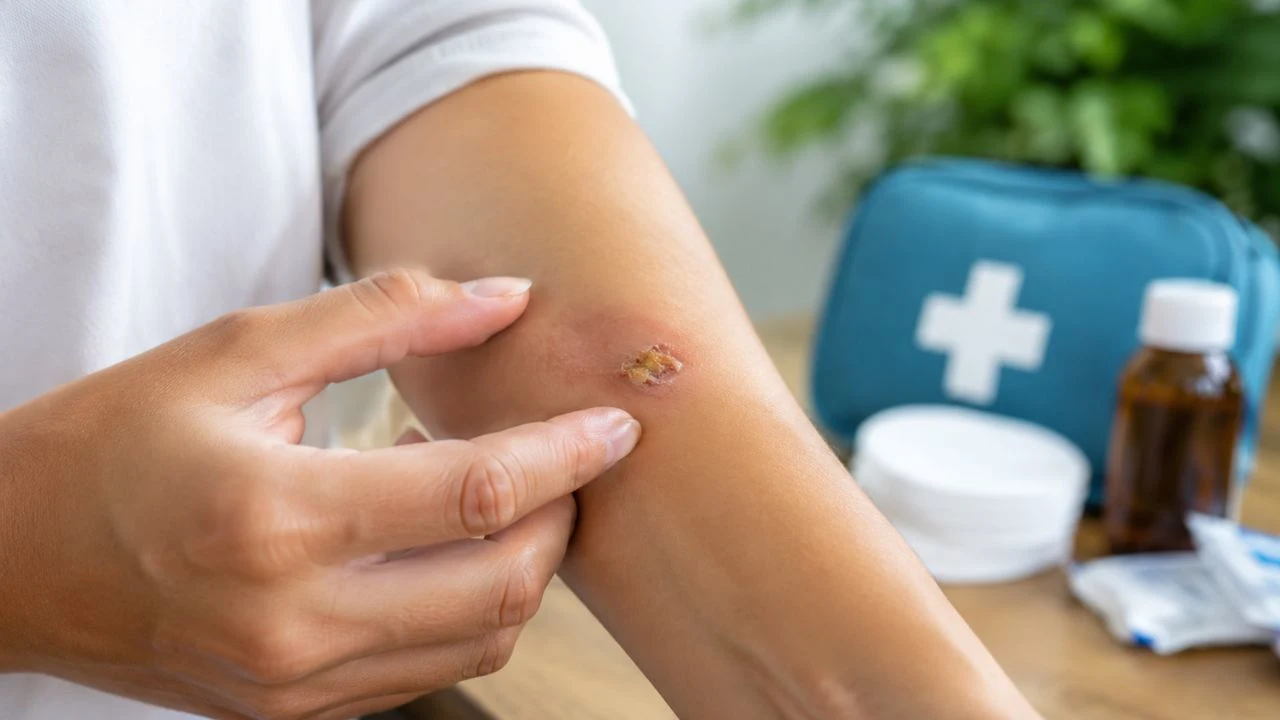

Yellow Scab: Warning Signs You Shouldn’t Ignore
Finding a yellow scab on your skin can be worrying, especially when you are unsure whether the wound is healing normally or developing an infection. The yellow color may come from dried wound fluid, but it can also appear when pus, bacteria, or inflammation are present.
Color alone cannot reveal what is happening beneath the scab. Its location, texture, smell, pain level, surrounding skin, drainage, and changes over time all provide important clues about whether the area is improving or becoming more serious.
A thin, pale-yellow crust on a small wound may be part of normal healing. A thick golden crust that spreads, produces fluid, becomes increasingly painful, or appears with swelling and fever may require medical treatment.
This guide explains common yellow scab causes, infection warning signs, safe wound care, and when you should see a healthcare professional. It also covers impetigo, eczema, surgical wounds, tattoos, piercings, scalp sores, and recurring scabs that will not heal.
What Is a Yellow Scab?
A scab is a temporary protective covering that forms when blood, platelets, proteins, and wound fluid dry over damaged skin. It helps shield the tissue underneath while new skin cells begin repairing the injured area.
A scab may look dark red, brown, black, tan, or yellow depending on the wound and the substances that have dried on its surface. Small amounts of clear or pale-yellow fluid can become yellowish when exposed to air.
A yellow scab may therefore represent dried serum, also known as serous fluid. This thin fluid contains water and proteins and can leak from a scrape, blister, burn, irritated rash, or other superficial injury.
However, yellow material can also be pus, which is usually thicker and may be accompanied by worsening redness, warmth, tenderness, swelling, or an unpleasant odor. The complete symptom pattern matters more than color alone.
Is a Yellow Scab Always a Sign of Infection?
No, a yellow scab does not always mean the wound is infected. A small amount of pale, clear, or straw-colored fluid can dry into a thin yellow crust during an ordinary inflammatory phase of wound healing.
Normal drainage usually decreases as the wound closes. The surrounding discomfort should also gradually improve, and the area should not become increasingly hot, swollen, painful, or foul-smelling.
Infection becomes more likely when the crust is thick, wet, rapidly reforming, or associated with cloudy yellow-green discharge. Spreading redness, increasing pain, fever, and tender swelling also make medical evaluation more important.
Do not diagnose an infection solely by comparing your skin with online photographs. Different wounds, rashes, skin tones, and treatments can produce similar-looking crusts, so a clinician may need to inspect the area directly.
Normal Yellow Crust vs. Yellow Pus
Normal serous fluid is generally thin, watery, and clear to pale yellow. A small amount may appear during the early healing of a superficial wound and dry into a light crust without causing an unpleasant smell.
Pus is usually thicker and may look cream-colored, yellow, green, or brown. It contains immune cells, damaged tissue, microorganisms, and fluid produced as the body responds to an infection.
A wound producing pus may feel increasingly tender, hot, swollen, or pressured. The discharge may return quickly after cleaning, and the surrounding skin may become more inflamed instead of gradually settling.
When you cannot distinguish dried wound fluid from pus, observe the overall progression. A wound that is getting smaller, drier, and less painful is more reassuring than one that is expanding, draining, or becoming more uncomfortable.
Warning Signs of an Infected Yellow Scab
Worsening pain is an important infection warning sign. Mild tenderness can occur after an injury, but pain that becomes stronger, throbs, or returns after previously improving should not be ignored.
Increasing warmth, swelling, and redness or discoloration around the wound may indicate that inflammation is spreading. On brown or black skin, infection may appear purple, gray, dark brown, or unusually deep red rather than bright red.
Thick drainage, a bad smell, pus-filled bumps, or a yellow crust that repeatedly becomes wet are also concerning. The wound may enlarge, break open, or fail to develop healthy new skin around its edges.
Fever, chills, unusual tiredness, dizziness, swollen lymph nodes, or red streaks extending from the wound require prompt care. These symptoms can mean that the infection is spreading beyond the original skin injury.
When a Yellow Scab Needs Urgent Medical Care
Seek urgent medical help if the wound is spreading rapidly, causing severe pain, or producing significant swelling. Pain that seems much stronger than the visible injury can signal a serious deeper infection.
Emergency care is also needed for confusion, fainting, difficulty breathing, a fast heartbeat, severe weakness, or rapidly worsening fever. These symptoms may indicate that the body is developing a dangerous response to infection.
A blackening wound, skin blisters, loss of sensation, or rapidly expanding purple or dark discoloration also needs immediate assessment. Do not wait for a routine appointment when the skin appears to be deteriorating by the hour.
People with diabetes, poor circulation, suppressed immunity, or recent major surgery should seek help earlier. Even a small wound can become difficult to heal when blood flow or immune function is reduced.
Impetigo and Honey-Colored Scabs
Impetigo is a contagious bacterial skin infection commonly associated with golden-yellow or honey-colored crusts. It often begins as itchy red or discolored sores or small blisters that break and release fluid.
The infection frequently appears around the nose and mouth, although it can develop anywhere on the body. Children are affected most often, but teenagers and adults can also develop impetigo.
Scratching or touching the sores can spread bacteria to other areas. Towels, razors, clothing, bedding, toys, and direct skin contact may also help the infection pass between people.
A healthcare professional may prescribe a topical or oral antibiotic depending on the number, location, and severity of the sores. Avoid sharing personal items, keep the lesions covered when advised, and wash your hands after touching the area.
Yellow Scabs Around the Nose or Mouth
A yellow crust around the nose or mouth may develop from impetigo, particularly when sores spread or new crusted areas appear nearby. Children with these symptoms should be assessed because the condition is highly contagious.
Repeated wiping during a cold can also irritate the skin beneath the nose. Clear nasal fluid may dry on cracked skin and create a pale-yellow crust without a bacterial infection being present.
Cold sores can form blisters that rupture and crust, although their appearance and treatment differ from impetigo. Tingling, burning, grouped blisters, and repeated outbreaks in the same location may provide additional clues.
Avoid picking the crust or applying someone else’s antibiotic, steroid, or cold-sore medicine. Incorrect treatment can irritate the skin, hide symptoms, or delay care for the actual condition.
Yellow Scabs From Eczema
Eczema damages the protective skin barrier and commonly causes dryness, itching, cracks, and inflammation. Scratched or severely inflamed eczema may release clear fluid that dries into a light-yellow crust.
A yellow-orange or honey-colored crust can also indicate that bacteria have infected the broken skin. Increasing pain, warmth, swelling, rapidly worsening eczema, pus-filled bumps, or fever makes infection more concerning.
Some eczema outbreaks caused by viral infection can become serious and may produce painful blisters, punched-out sores, fever, or rapidly spreading areas. Urgent evaluation is important when an eczema rash changes suddenly or the person feels unwell.
Do not automatically apply a stronger steroid cream to weeping or crusted eczema without advice. Steroids may be helpful for inflammation, but the treatment plan can change when bacterial, fungal, or viral infection is present.
Yellow Scabs on the Scalp
A yellow scalp scab may form after scratching, dandruff, seborrheic dermatitis, eczema, psoriasis, folliculitis, or an allergic reaction to hair products. Oil, skin scales, and dried fluid can combine into a thick crust.
Scalp infections may cause tenderness, pus-filled bumps, swelling, unpleasant odor, or areas of hair loss. Fungal scalp infections can also produce scaly patches, broken hairs, and tender swollen areas.
Avoid pulling the scab off with fingernails or a comb. Forceful removal can cause bleeding, damage hair follicles, increase infection risk, and make the crust return.
See a dermatologist when scalp crusting spreads, repeatedly oozes, causes bald patches, or does not improve with gentle care. Children with scalp scaling and hair loss should be examined because prescription treatment may be necessary.
Yellow Scabs After Acne or Popping a Pimple
Popping or squeezing a pimple breaks the skin and can release oil, blood, and inflammatory fluid. This material may dry into a yellow or yellow-brown scab as the damaged spot begins healing.
Repeated squeezing can push inflammation deeper, introduce bacteria from the fingers, and increase the chance of dark marks or permanent acne scars. Picking the new scab restarts the injury and delays repair.
A painful, deep lump producing thick pus may be an inflamed acne nodule, cyst, boil, or abscess. These conditions may need medical treatment rather than repeated home drainage.
Clean the area gently and protect it from further touching. Continue an appropriate acne routine around the wound, but avoid applying harsh exfoliants or strong acne treatments directly to broken skin.
Yellow Scabs on Tattoos
A fresh tattoo creates thousands of small skin injuries, so mild redness, tenderness, and limited clear fluid can occur initially. Plasma mixed with ink may dry and create a thin yellowish or colored surface crust.
Thick scabs, increasing pain, spreading warmth, swelling, pus, a bad odor, or fever are not normal signs to ignore. These symptoms may indicate an infection or significant reaction to ink, adhesive, or aftercare products.
Do not peel a tattoo scab, even when it feels tight or itchy. Pulling it away can remove healing skin, affect the tattoo’s appearance, introduce bacteria, and increase scarring.
Follow the aftercare instructions from a reputable tattoo professional, but seek medical care for infection warning signs. A tattoo artist can discuss ordinary healing, but only a healthcare professional should diagnose and treat an infection.
Yellow Scabs Around a Piercing
A new piercing may release a small amount of pale fluid that dries around the jewelry. This normal crust is generally light, limited, and not accompanied by worsening heat, severe pain, or rapidly increasing swelling.
Thick yellow-green discharge, bad odor, embedded jewelry, significant redness, or increasing tenderness may indicate infection or pressure injury. Cartilage piercings deserve particular attention because complications can become serious.
Do not rotate the jewelry, squeeze the area, or apply alcohol, hydrogen peroxide, tea tree oil, or harsh antiseptic solutions. These products and actions can damage healing tissue and prolong irritation.
Seek advice from a qualified piercer for jewelry fit and placement, but obtain medical care for suspected infection. Do not remove the jewelry on your own unless a clinician advises it, as the opening may close and trap infected material.
Yellow Scabs on Surgical Wounds
A surgical incision may form a small dry crust while healing, particularly where limited blood or clear fluid reached the surface. The incision should generally become less painful, swollen, and irritated as recovery progresses.
Call the surgical team if the wound opens, becomes increasingly hot, or develops thick yellow drainage. Worsening pain, fever, swelling, unpleasant odor, or spreading redness also needs prompt assessment.
Do not apply oil, herbal creams, antibiotic ointment, or scar treatment unless the surgeon has approved it. Different surgeries and closure methods require different wound-care instructions.
People recovering from abdominal, joint, heart, or implant-related surgery should be especially cautious about infection symptoms. Early treatment can reduce the risk of deeper infection involving tissue, bone, or implanted material.
Yellow Scabs After Burns or Blisters
A blister or superficial burn may release clear yellowish fluid when the surface breaks. The fluid can dry into a thin crust as the damaged skin begins repairing itself.
Large blisters, deep burns, chemical burns, electrical burns, or burns involving the face, hands, genitals, feet, or major joints require professional assessment. Home care may not be sufficient for these injuries.
A burn that becomes more painful, swollen, foul-smelling, or covered with thick drainage may be infected. Fever, spreading redness, or red streaks from the burn require prompt medical advice.
Do not apply ice directly, toothpaste, butter, cooking oil, or unregulated creams to a burn. Cool running water is appropriate for many recent minor thermal burns, but treatment depends on the depth and cause.
Can Cellulitis Cause a Yellow Scab?
Cellulitis is a bacterial infection of deeper skin layers and may develop around a cut, ulcer, bite, eczema patch, or other break in the skin. The original wound may contain a scab while the surrounding infection spreads.
The affected area commonly becomes painful, hot, swollen, and red or discolored. The skin may look tight or shiny, and the person may develop fever, chills, or swollen lymph nodes.
Cellulitis requires medical treatment, commonly with antibiotics. It is not something that can be cleared by removing the scab, draining the area at home, or applying a cosmetic antiseptic.
Seek prompt care if the inflammation is expanding or located near the eye. People with diabetes, leg swelling, poor circulation, or weakened immune systems should be evaluated without delay.
Could a Recurring Scab Be Skin Cancer?
Most scabs are related to ordinary injuries or inflammatory skin conditions. However, a spot that repeatedly bleeds, crusts, heals partially, and opens again should be examined by a dermatologist.
Basal cell carcinoma can sometimes look like a slow-growing bump, shiny area, rough patch, or sore that repeatedly crusts. Squamous cell carcinoma may also appear as a scaly, crusted, tender, or nonhealing growth.
Warning signs include gradual enlargement, spontaneous bleeding, irregular color, persistent pain, a raised border, or failure to heal over several weeks. Sun-exposed areas such as the face, ears, scalp, neck, arms, and hands deserve particular attention.
Do not repeatedly treat a nonhealing spot with antibiotic cream, acid, essential oils, or home freezing products. Proper examination and, when appropriate, a biopsy are needed to determine what the lesion is.
How to Clean a Yellow Scab Safely
Wash your hands before touching the wound. Gently rinse the area with clean running water and use a mild soap around the wound without aggressively scrubbing the damaged tissue.
Pat the area dry with clean gauze or a fresh towel. Avoid rubbing, scraping, or attempting to lift off a firmly attached scab, as this can restart bleeding and expose healing tissue.
For many minor wounds, a thin layer of plain petroleum jelly can help prevent excessive dryness. Cover the area with a clean nonstick dressing when it may be exposed to dirt, rubbing, or repeated contact.
Change the dressing according to the product instructions and whenever it becomes wet, dirty, or loose. Seek medical advice when the wound produces increasing fluid rather than trying to manage ongoing drainage indefinitely.
Should You Remove a Yellow Scab?
Do not pull off a scab that is firmly attached. The tissue beneath it may still be repairing, and premature removal can create bleeding, pain, infection, and a more noticeable scar.
A loose edge may lift naturally as healthy skin develops underneath. Let it separate on its own during gentle washing rather than cutting, scratching, or peeling it.
A clinician may sometimes remove dead or infected tissue through a controlled process called debridement. This is different from picking a scab at home and is performed according to the type and depth of the wound.
When thick crust prevents prescribed treatment from reaching impetigo sores, a healthcare professional may recommend gentle soaking and cleansing. Follow those instructions rather than forcefully scraping the skin.
Products You Should Avoid on a Healing Scab
Hydrogen peroxide and rubbing alcohol can irritate healthy repair cells and may delay wound healing when repeatedly applied. Strong iodine solutions may also be too harsh unless specifically recommended.
Essential oils, vinegar, bleach, toothpaste, garlic, and other DIY remedies can cause burns or allergic reactions. Natural ingredients are not automatically safe for broken or inflamed skin.
Avoid using leftover prescription antibiotics or someone else’s medicated cream. The product may be unsuitable, expired, or unable to treat the microorganism causing the infection.
Steroid creams should not be placed on an unidentified crusted lesion without guidance. They can reduce visible inflammation while allowing certain bacterial, fungal, or viral infections to become worse.
How to Help a Minor Wound Heal
Keep the wound clean, protected, and slightly moist rather than allowing it to become repeatedly cracked. A suitable dressing can protect the developing tissue from friction, dirt, and accidental scratching.
Eat enough protein, vitamins, minerals, and total calories to support tissue repair. Severe dietary restriction can slow healing, while a balanced eating pattern supports the body’s normal recovery process.
Avoid smoking and nicotine because they can reduce blood flow and interfere with healing. Managing blood glucose is also important for people with diabetes, as high levels can increase infection risk.
Protect a closed wound from strong sunlight because new skin can develop long-lasting discoloration. Once the surface has fully healed, use protective clothing or broad-spectrum sunscreen when appropriate.
Why Some Wounds Heal Slowly
Diabetes can reduce sensation, impair circulation, and make infections more difficult to control. A person may not notice a foot wound until it has already become deeper or infected.
Poor blood flow, swelling, immune-suppressing medicines, malnutrition, smoking, and repeated pressure can also delay repair. Older adults and people with chronic illness may require more structured wound care.
The wound’s location matters as well. Areas exposed to movement, moisture, pressure, or friction may repeatedly reopen, especially on the feet, lower legs, hands, and skin folds.
A wound that shows little improvement after one or two weeks should be assessed, particularly when it is deep or painful. Nonhealing foot wounds, leg ulcers, and pressure sores need professional management rather than ordinary scab care.
Special Risks for People With Diabetes
People with diabetes should inspect their feet regularly for cuts, blisters, swelling, drainage, color changes, and scabs. Reduced sensation can make a significant injury feel surprisingly painless.
A yellow scab on a diabetic foot should not be ignored when there is drainage, odor, warmth, swelling, or surrounding discoloration. Infection may spread beneath the skin before obvious surface changes become dramatic.
Avoid cutting the scab, soaking the foot for prolonged periods, or treating it with corn remover or harsh chemicals. Pressure from poorly fitting shoes should also be corrected as quickly as possible.
Contact a healthcare professional promptly about a new foot wound, especially when healing is slow. Early care may prevent deeper infection, tissue loss, and more complicated treatment.
Animal Bites, Human Bites and Puncture Wounds
A bite or puncture can look small on the surface while carrying bacteria deep into tissue. A yellow scab may close the opening even though infection is developing underneath.
Cat bites, human bites, bites on the hand, and deep punctures deserve prompt medical advice. These injuries may require thorough cleaning, antibiotics, tetanus protection, or rabies assessment depending on the circumstances.
Increasing pain, swelling, pus, reduced movement, numbness, or red streaks after a bite are concerning. Do not wait for the scab to fall off before seeking help.
Avoid sealing a fresh puncture with household glue or an airtight home dressing. A healthcare professional should determine whether the wound needs to remain open for drainage or receive another form of closure.
Tetanus and Yellow Scab Wounds
Tetanus is caused by bacteria entering the body through broken skin, especially deep or contaminated wounds. The color of the scab cannot tell you whether tetanus exposure has occurred.
Risk may be higher with puncture wounds, animal bites, soil-contaminated injuries, burns, crush injuries, and wounds containing dead tissue. Vaccination history is therefore more important than the appearance of the crust.
A healthcare professional may recommend a booster or additional protection depending on the wound and when you last received a tetanus-containing vaccine. Do not wait for muscle stiffness or spasms before asking.
Keep your vaccination record available when possible. Prompt wound cleaning and appropriate vaccination provide far better protection than applying an antiseptic after the scab has formed.
When to Book a Routine Medical Appointment
Arrange an appointment when a yellow scab remains for several weeks, repeatedly returns, or becomes larger. A persistent lesion may need testing for infection, dermatitis, inflammatory disease, or skin cancer.
You should also seek advice for recurrent crusting in the same area, unexplained hair loss, ongoing itching, or multiple new sores. These patterns may require more than general wound care.
A clinician should assess wounds caused by surgery, diabetes, poor circulation, immune suppression, radiation treatment, or a significant burn. These conditions increase the chance of delayed or complicated healing.
Bring a list of medicines, allergies, health conditions, and treatments already tried. Photographs showing how the lesion changed can also help the healthcare professional understand its progression.
How Doctors Diagnose a Yellow Scab
The healthcare professional will examine the crust, wound edges, surrounding skin, drainage, and location. They may ask when the lesion began, whether it is painful or itchy, and how quickly it has changed.
They will also consider recent injuries, bites, surgery, skin conditions, travel, contact with infected people, and new products. Your medical history can reveal factors affecting immunity, circulation, or healing.
A swab may be taken when bacterial infection is suspected, particularly if treatment has failed or the infection keeps returning. Blood tests may be needed when fever or spreading infection is present.
A biopsy may be recommended for a recurring, unusual, or nonhealing lesion. This removes a small tissue sample so it can be examined and helps avoid treating a suspicious growth as an ordinary scab.
Medical Treatment for an Infected Scab
Treatment depends on the infection’s cause, size, depth, and location. A limited bacterial infection may be treated with a prescribed topical antibiotic, while widespread infection may require oral medicine.
An abscess may need professional drainage because antibiotics alone do not always remove a trapped pocket of pus. Squeezing or cutting it at home can spread bacteria and damage nearby tissue.
Cellulitis generally requires antibiotics and close monitoring. Hospital care may be needed when infection is severe, spreading rapidly, affecting a vulnerable person, or causing whole-body symptoms.
Complete prescribed treatment even when the skin begins looking better, unless the prescriber changes the plan. Contact the healthcare professional if symptoms continue worsening or fail to improve within the expected time.
How to Prevent Yellow Scabs and Skin Infections
Clean new cuts and scrapes promptly with clean water. Remove visible dirt carefully, then protect the wound with an appropriate clean dressing while it heals.
Avoid scratching insect bites, eczema, and other itchy areas. Keeping fingernails short and treating the cause of itching can reduce the breaks in skin that allow bacteria to enter.
Do not share razors, towels, makeup, sports equipment, or personal grooming tools when someone has a contagious skin infection. Wash clothing and bedding according to medical advice.
Manage long-term skin conditions and chronic illnesses with appropriate care. Healthy skin barriers, controlled blood glucose, suitable footwear, and early treatment of minor wounds all reduce the risk of complications.
Final Thoughts
A yellow scab may form when normal pale wound fluid dries over healing skin. It is not automatically an infection, especially when the area is becoming smaller, drier, and less painful.
Infection becomes more likely when yellow crusting appears with pus, bad odor, increasing pain, warmth, swelling, spreading discoloration, or fever. Honey-colored spreading sores may indicate contagious impetigo.
Clean minor wounds gently, protect them with an appropriate dressing, and avoid picking the scab or applying harsh home remedies. Healing tissue usually benefits from protection rather than repeated drying and disruption.
Seek medical care for rapidly worsening symptoms, bites, surgical wounds, diabetic foot sores, or any lesion that repeatedly bleeds and crusts. Early evaluation can prevent a manageable skin problem from becoming a deeper infection.
Frequently Asked Questions
Does a yellow scab mean a wound is infected?
Not always. Clear or pale-yellow wound fluid can dry into a normal crust, but thick pus, increasing pain, warmth, swelling, odor, or fever may indicate infection.
What does an infected yellow scab look like?
It may appear thick, wet, golden, yellow-green, or surrounded by swollen and discolored skin. The area may also produce pus, smell unpleasant, or become increasingly painful.
Should I remove a yellow scab?
No. Pulling off an attached scab can reopen the wound, cause bleeding, and delay healing. Let it loosen naturally unless a healthcare professional recommends controlled removal.
Can I put antibiotic cream on a yellow scab?
Use an antibiotic only when recommended for that specific wound. Unnecessary or incorrect antibiotic creams can cause irritation and may not treat the actual condition.
How long should a yellow scab take to heal?
A minor superficial wound may improve within one or two weeks. Seek medical advice if it enlarges, repeatedly drains, becomes more painful, or fails to show steady healing.



