
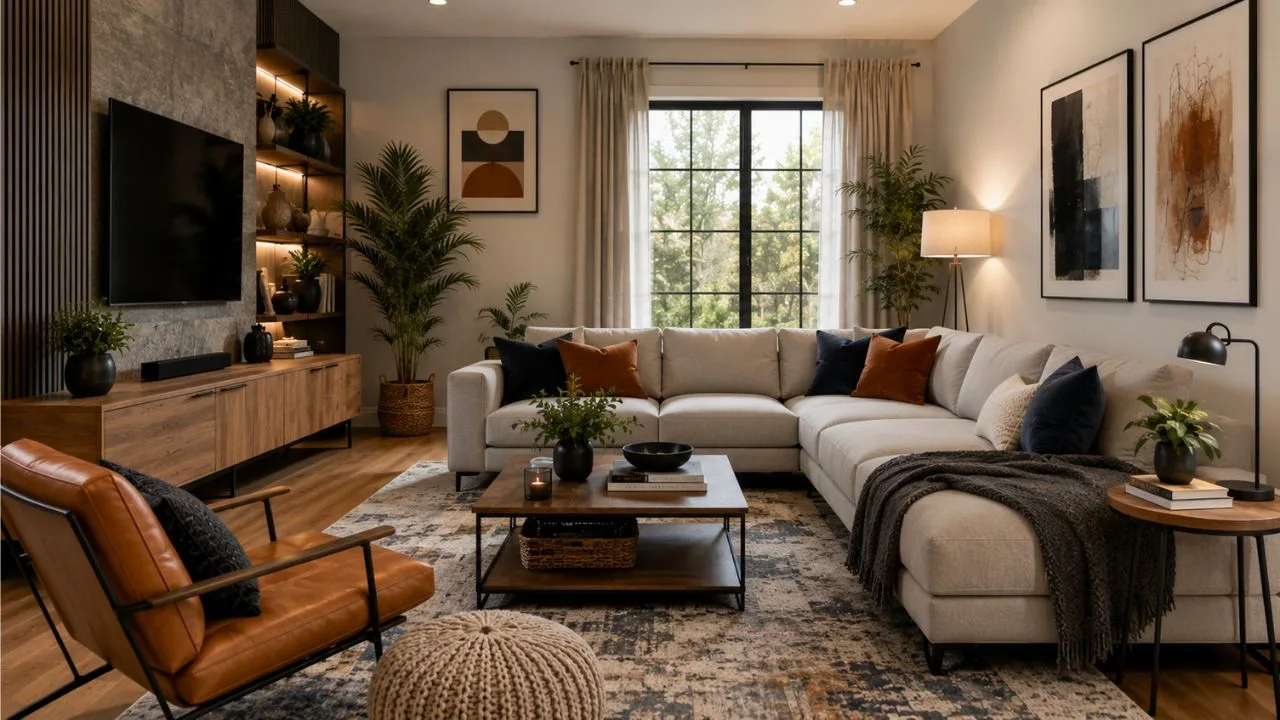

Modern living room decor is no longer limited to spotless white walls, hard furniture, and spaces that feel more like showrooms than homes. Today’s most appealing interiors balance clean lines with warmth, comfort, personality, and practical features. A room can look contemporary while still including soft textiles, family photographs, vintage furniture, natural materials, and objects collected over time.
Current living room design is moving toward richer colours, tactile materials, flexible seating, and interiors that feel genuinely usable. Recent design coverage highlights warm wood, organic shades, layered texture, deeper colours, curved furniture, and “livable luxury” rather than cold, personality-free minimalism.
Creating that look does not require an unlimited decorating budget. Some of the most effective changes involve rearranging existing furniture, improving the lighting, repainting one wall, changing cushion covers, or removing unnecessary clutter. Larger budgets can be directed toward a comfortable sofa, quality rug, built-in storage, or long-lasting statement furniture.
The following modern living room decor ideas can be adapted to rental apartments, compact homes, family spaces, and large open-plan rooms. Each idea includes affordable approaches alongside more substantial upgrades, helping you create a stylish and comfortable living room without buying everything at once.
Plan Your Budget and Design Direction Before Shopping
Begin by deciding how much you can realistically spend on the entire living room makeover. Divide that amount between furniture, lighting, paint, rugs, window treatments, storage, artwork, and accessories. Remember to include delivery, installation, electrical work, and repairs because these expenses can reduce the money available for decorative purchases.
Next, identify what the room genuinely needs. An uncomfortable sofa, poor lighting, inadequate storage, and awkward furniture placement should be corrected before buying vases or wall ornaments. A clear priority list prevents small impulse purchases from consuming the budget while the room’s biggest problems remain unsolved.
Choose three words that describe the atmosphere you want, such as “warm, modern, relaxed” or “bright, simple, natural.” Use these words when comparing products and inspiration images. A piece may look attractive online but still feel unsuitable when it does not support the room’s intended colour palette, function, or mood.
Do not try to complete the entire room during one shopping trip. Purchase essential pieces first, live with them for a short period, and then identify what still feels missing. Gradual decorating often creates a more personal interior because each new item responds to the room instead of following a preselected furniture package.
1. Rearrange the Furniture to Create a Better Layout
A successful modern living room begins with a layout that supports real activities. Consider where people watch television, hold conversations, read, work, or move between rooms. The sofa and chairs should create a comfortable social area without blocking doors, windows, storage, or natural walking routes.
For a completely free makeover, remove smaller pieces and experiment with the furniture you already own. Pull the sofa slightly away from the wall, turn an armchair toward the conversation area, or move a side table within easier reach. Even a modest change in position can make the room feel larger and more intentional.
With a medium budget, replace several small or awkward pieces with one properly scaled item. In compact rooms, a comfortable sofa and one flexible chair may work better than multiple undersized seats. Houzz notes that one larger furniture piece can sometimes make a small room feel calmer than numerous small items, while dedicating one wall to storage can reduce visual clutter.
In a larger living room, use rugs, lighting, and furniture placement to create separate zones. One area might support conversation, while another contains a reading chair or small desk. Keep the arrangement visually connected by repeating materials, shapes, and colours across each zone.
2. Use Warm Neutrals With One Confident Accent Colour
Warm neutrals create a flexible background for modern living room design. Cream, sand, taupe, mushroom, soft brown, and warm white usually feel more inviting than cold grey. These shades also coordinate easily with wood furniture, natural fibres, black accents, metal finishes, and colourful artwork.
A low-budget update can begin with cushion covers, throws, candles, books, or inexpensive prints in one accent colour. Rust, olive, terracotta, navy, burgundy, ochre, and muted blue can all add personality. Repeat the selected colour in two or three areas so it appears deliberate rather than accidental.
For a stronger transformation, paint the walls or introduce colour through curtains, a rug, or an accent chair. Current interiors are embracing deeper and more expressive palettes, including brown, olive, aubergine, ochre, and burgundy. Colour drenching and richly coloured rooms have also become prominent alternatives to white-on-white interiors.
Test paint samples in the actual living room before committing. Daylight, artificial light, flooring, and surrounding furniture can dramatically change how a colour appears. View each sample in the morning, afternoon, and evening to ensure it creates the intended atmosphere throughout the day.
3. Create Layered Lighting for Comfort and Style
One ceiling light rarely provides everything a living room needs. Modern lighting works best when it combines ambient, task, and accent sources. Ambient light supports general visibility, task lighting helps with reading or working, and accent lighting highlights artwork, plants, shelving, or architectural details.
For a small budget, add one table lamp and one floor lamp instead of replacing the main ceiling fixture. Position the table lamp near the sofa and the floor lamp beside a reading chair or dark corner. Using lamps at different heights creates more depth and allows the room to feel softer in the evening.
A larger budget can include wall sconces, pendant lights, dimmers, under-shelf lighting, or professionally installed indirect illumination. Choose fixtures that contribute a sculptural shape even when switched off. Matching every lamp is unnecessary, but repeated materials such as black metal, brass, wood, or frosted glass will help the scheme feel connected.
Use efficient LED bulbs with consistent colour temperatures throughout the room. The U.S. Department of Energy identifies LED technology as capable of producing high-quality white light with strong energy efficiency, although the fixture and bulb must work together to provide useful illumination.
4. Anchor the Room With a Properly Sized Area Rug
An area rug visually connects the sofa, chairs, and coffee table, helping separate the seating zone from the rest of the room. An undersized rug can make even expensive furniture look disconnected because it appears like a small decorative island in the middle of the floor.
When the budget is limited, prioritize size over luxury material. A simple, correctly sized flat-woven rug will often improve the room more than a smaller premium rug. Look for durable neutral designs, washable rugs, end-of-season reductions, or carefully inspected second-hand options.
With a larger budget, invest in wool, handwoven construction, or a distinctive pattern that can guide the entire colour scheme. Traditional-style rugs can soften clean modern furniture, while geometric designs add structure. Textured plain rugs work well when artwork or upholstery already contains strong patterns.
Ideally, the rug should reach beneath at least the front legs of the major seating pieces. Measure the proposed area and mark it with masking tape before purchasing. Consider door clearance, cleaning needs, children, pets, and furniture movement alongside appearance.
5. Transform the Walls With Paint, Art, or Texture
Walls occupy a large part of the room’s visual area, so changing them can produce a dramatic makeover without replacing furniture. Fresh paint may be enough to modernize a tired living room, especially when the current colour makes the space appear dark, cold, or visually disconnected.
For an affordable feature, paint one section behind the sofa, television, or shelving unit. You can also use removable wallpaper, framed fabric, peel-and-stick moulding, or a carefully arranged gallery wall. Renters can create impact through large artwork and removable products without making permanent structural changes.
A medium or higher budget may support wall panelling, limewash, textured plaster, high-quality wallpaper, or custom built-in shelving. Contemporary design is increasingly combining clean architecture with textured surfaces, dark wood, expressive wallpaper, and ornamented details that bring warmth and character.
When painting or renovating, protect indoor air quality through good ventilation and responsible product use. The U.S. Environmental Protection Agency recommends maximizing ventilation during painting because paints and related products can release volatile organic compounds into indoor air.
6. Add Depth by Mixing Textures and Natural Materials
Texture makes a modern room feel comfortable without creating visual clutter. Smooth leather, soft linen, woven wool, polished stone, rough timber, glass, ceramic, and metal all interact differently with light. Combining several finishes prevents a neutral interior from becoming flat or unfinished.
A budget-friendly approach can involve changing only the soft furnishings. Add a knitted throw, linen-look cushion, woven basket, ceramic vase, or textured lampshade. These small additions introduce contrast without requiring a new sofa, flooring, or expensive architectural treatment.
For a mid-range upgrade, introduce a timber coffee table, upholstered accent chair, linen curtains, or substantial wool-blend rug. Higher budgets can incorporate natural stone, handcrafted cabinetry, premium textiles, or vintage furniture with visible character. The aim is not to use every possible material but to create a balanced mix.
Current modern interiors are moving toward warmer, more tactile rooms with organic colours and layered materials. Houzz’s most-saved 2026 living rooms highlight texture, flexible seating, and practical comfort, while Architectural Digest reports continued interest in rich materials and deeper wood finishes.
7. Choose Flexible and Multifunctional Furniture
Modern living rooms often support several activities, which makes adaptable furniture especially valuable. An ottoman can serve as a footrest, occasional table, extra seat, and storage container. Nesting tables provide additional surface space when guests arrive but occupy less room during ordinary use.
For a limited budget, add storage baskets beneath existing tables or place a sturdy tray on an ottoman. Move lightweight stools between the living and dining areas as needed. Furniture that already exists elsewhere in the home may solve the problem without requiring a new purchase.
With a medium budget, consider a storage coffee table, modular shelving, swivel chair, sofa bed, or compact nesting table set. A modular sofa can be rearranged when the room’s use changes, while a bench near a window or wall can provide flexible seating without visually closing the space.
A higher investment may include custom built-in seating, a quality modular sectional, or a media unit designed around the room’s exact dimensions. Current sofa trends continue to favour soft-looking modular forms and comfortable lower profiles, but proportions should always suit the room rather than following fashion alone.
8. Create Smart Storage That Looks Like Part of the Decor
A stylish living room becomes uncomfortable when toys, paperwork, chargers, cables, blankets, and remote controls have no permanent location. Before buying storage, identify what needs to remain accessible, what can be displayed, and what should be hidden behind closed doors.
Low-cost storage can include matching baskets, decorative boxes, floating shelves, or repurposed furniture. Use containers with similar materials or colours so they appear connected. Avoid placing a different basket in every corner, as too many small storage items can create another form of clutter.
With a medium budget, choose a low media console with drawers, a tall cabinet, or shelving that combines open and closed sections. Open areas can hold books, artwork, and plants, while doors conceal practical equipment. Leaving a few empty spaces prevents the unit from looking overcrowded.
Custom built-ins offer the most integrated result for larger budgets. They can surround a television, use awkward alcoves, or turn an entire wall into storage. In smaller homes, concentrating storage vertically on one wall can preserve floor space and reduce the scattered appearance created by several separate cabinets.
9. Personalize the Room With Art and Vintage Pieces
Modern decor should not remove evidence of the people living in the home. Personal photographs, artwork, travel finds, ceramics, inherited furniture, and books can give a clean-lined room emotional depth. These objects help the interior feel collected rather than purchased as a complete display.
For a low-budget gallery wall, reuse frames, print personal photographs, frame postcards, or display children’s artwork. Connect different pieces through similar spacing, frame colours, or repeated tones. Arrange the composition on the floor before placing it on the wall.
Second-hand markets can provide affordable mirrors, side tables, lamps, frames, and original artwork. One vintage item may create more personality than several mass-produced accessories. Clean, repair, or refinish pieces where needed, but preserve details that contribute character rather than making everything look new.
Current design is increasingly combining modern furniture with vintage and reclaimed pieces as homeowners seek rooms that feel personal, sustainable, and lived in. Design forecasts describe this shift as a move toward storytelling, warmth, eclecticism, and furniture with longevity instead of anonymous matching sets.
10. Finish With Plants, Textiles, and Carefully Edited Accessories
Plants can soften straight furniture lines and bring life to unused corners. Choose varieties according to the room’s natural light and your ability to care for them. One healthy floor plant can make a stronger visual statement than several struggling plants placed randomly around the room.
Cushions and throws provide an affordable way to update colours across different seasons. Combine varied textures and sizes without covering the entire sofa. Two or three carefully selected cushions often look more modern and leave more comfortable seating space than a large collection of identical pillows.
Use trays, books, bowls, candles, or small sculptures to style tables, but preserve practical space for drinks and everyday objects. Group a few items with different heights rather than distributing single ornaments across every surface. Empty space is an active part of modern design because it allows important pieces to stand out.
After styling, remove several items and photograph the room from the entrance. Images often reveal crowded shelves, uneven colour placement, or empty corners more clearly than direct observation. A modern living room should feel complete but flexible enough to accommodate real belongings, guests, and changing routines.
Modern Living Room Ideas for a Small Budget
When money is limited, begin with changes that cost nothing. Rearrange furniture, remove clutter, move artwork between rooms, wash curtains, and restyle shelves using books or objects you already own. These actions can reveal that the room needs fewer new products than expected.
Paint offers one of the strongest visual changes for a relatively controlled cost. Repaint the entire room, create one accent wall, or update a cabinet and picture frames. Select a colour that coordinates with the flooring and sofa so existing furniture feels intentional within the new palette.
Use textiles to bring separate pieces together. Matching cushion covers are not necessary, but repeating two or three colours across a rug, throw, curtains, and artwork will create cohesion. Second-hand tables, lamps, and mirrors can further improve the design without requiring premium retail prices.
Spend slowly and avoid filling every empty area immediately. Save for one important purchase, such as a correctly sized rug or a comfortable chair, rather than buying several temporary replacements. A small budget can still create a polished room when the layout, palette, and accessories follow a clear plan.
Modern Living Room Ideas for a Mid-Range Budget
A mid-range budget allows you to address one or two major weaknesses while refreshing smaller details. You might keep the sofa but replace the rug, curtains, coffee table, and lighting. Alternatively, purchase a new sofa while updating the rest of the space through paint and affordable accessories.
Prioritize pieces that affect both comfort and appearance. A larger rug can unite the layout, while quality curtains soften the architecture and control daylight. A comfortable accent chair can improve seating and introduce colour without requiring a complete matching furniture collection.
Consider mixing new and second-hand items. Purchase an upholstered piece new when cleanliness and durability matter, then source timber tables, artwork, mirrors, or cabinets from resale markets. This combination can produce a more distinctive result while keeping the overall spending controlled.
Set aside part of the budget for professional help when required. Electrical changes, heavy wall installations, custom curtain tracks, and furniture repairs may need experienced tradespeople. A smaller number of well-installed improvements will usually serve the room better than many unfinished or unsafe projects.
Modern Living Room Ideas for a Larger Budget
A larger budget should improve quality, function, and longevity rather than simply increase the number of objects in the room. Invest in a comfortable sofa with durable upholstery, a properly constructed rug, efficient lighting, and furniture that suits the room’s proportions.
Custom storage can solve difficult architectural problems and create a cleaner modern appearance. Built-in cabinetry may integrate a television, books, decorative objects, and hidden equipment on one wall. Bespoke window seating can provide storage and additional places for guests without adding freestanding furniture.
Natural materials such as wool, linen, timber, stone, and quality leather can age more gracefully than trend-focused finishes. Choose materials according to maintenance requirements and household needs. Expensive furniture is not a wise investment when it cannot tolerate pets, children, regular visitors, or ordinary cleaning.
Even with a generous budget, avoid buying the complete room at once. Leave space for artwork, travel objects, and future discoveries. The most memorable modern interiors usually combine careful planning with pieces accumulated gradually rather than looking like a single furniture showroom purchase.
Common Modern Living Room Decorating Mistakes
The first mistake is choosing furniture without measuring the room. A sofa may fit against one wall while still blocking a pathway or making every other piece appear crowded. Mark product dimensions on the floor with tape and check the delivery route before completing the purchase.
Another mistake is selecting a rug that is too small. A tiny rug can visually separate the coffee table from the seating instead of connecting the furniture. Measure the full seating group and choose a size that places at least the front legs of the major seats on the rug.
Avoid depending entirely on a bright ceiling fixture. Without lamps or lighting at lower heights, the room can feel flat and uncomfortable after sunset. Use several light sources and give each one a clear purpose, such as reading, general illumination, or highlighting artwork.
Finally, do not remove all personal objects in an effort to appear modern. Minimal clutter and complete anonymity are not the same thing. A contemporary room can include colour, family history, books, pattern, and vintage pieces while still feeling organised and visually calm.
Conclusion
Modern living room decor is most successful when style and daily comfort receive equal attention. Start with the furniture layout, circulation, storage, and lighting before concentrating on accessories. These practical decisions create the structure that allows colours, artwork, and decorative details to look intentional.
Warm neutral colours, natural materials, curved furniture, rich textures, and personal objects can make contemporary interiors feel more welcoming. You do not need to adopt every current trend. Select only the ideas that suit the room’s architecture, your lifestyle, and the way you want the space to feel.
Every budget can create meaningful improvement. Free changes such as rearrangement and decluttering can transform the layout, while paint, textiles, second-hand furniture, and lighting offer affordable next steps. Larger investments should focus on durable pieces that improve comfort and solve long-term problems.
A finished living room should invite people to sit, talk, read, relax, and spend time together. When the space looks polished without becoming delicate or impersonal, modern design has achieved its most important purpose: supporting everyday life beautifully.
Frequently Asked Questions
How can I make my living room look modern on a small budget?
Rearrange the furniture, remove clutter, repaint selected walls, and update cushion covers or lighting. Add one clear accent colour and use second-hand artwork or tables for affordable personality.
What colours are best for a modern living room?
Warm white, cream, taupe, brown, olive, navy, terracotta, and muted blue work well in modern interiors. Choose a simple base palette and repeat one or two accent colours throughout the room.
What furniture makes a living room look modern?
Clean-lined sofas, modular seating, rounded chairs, simple storage, and multifunctional tables can create a modern appearance. Correct scale and comfortable placement matter more than following one furniture trend.
How do I decorate a small modern living room?
Use one properly scaled sofa, vertical storage, multifunctional furniture, and a large enough rug. Maintain clear walking routes and avoid filling the room with numerous small pieces.
How can I make my living room feel expensive?
Use layered lighting, properly sized furniture, quality-looking textures, full-length curtains, and carefully edited accessories. A cohesive palette and uncluttered layout can create impact without luxury prices.