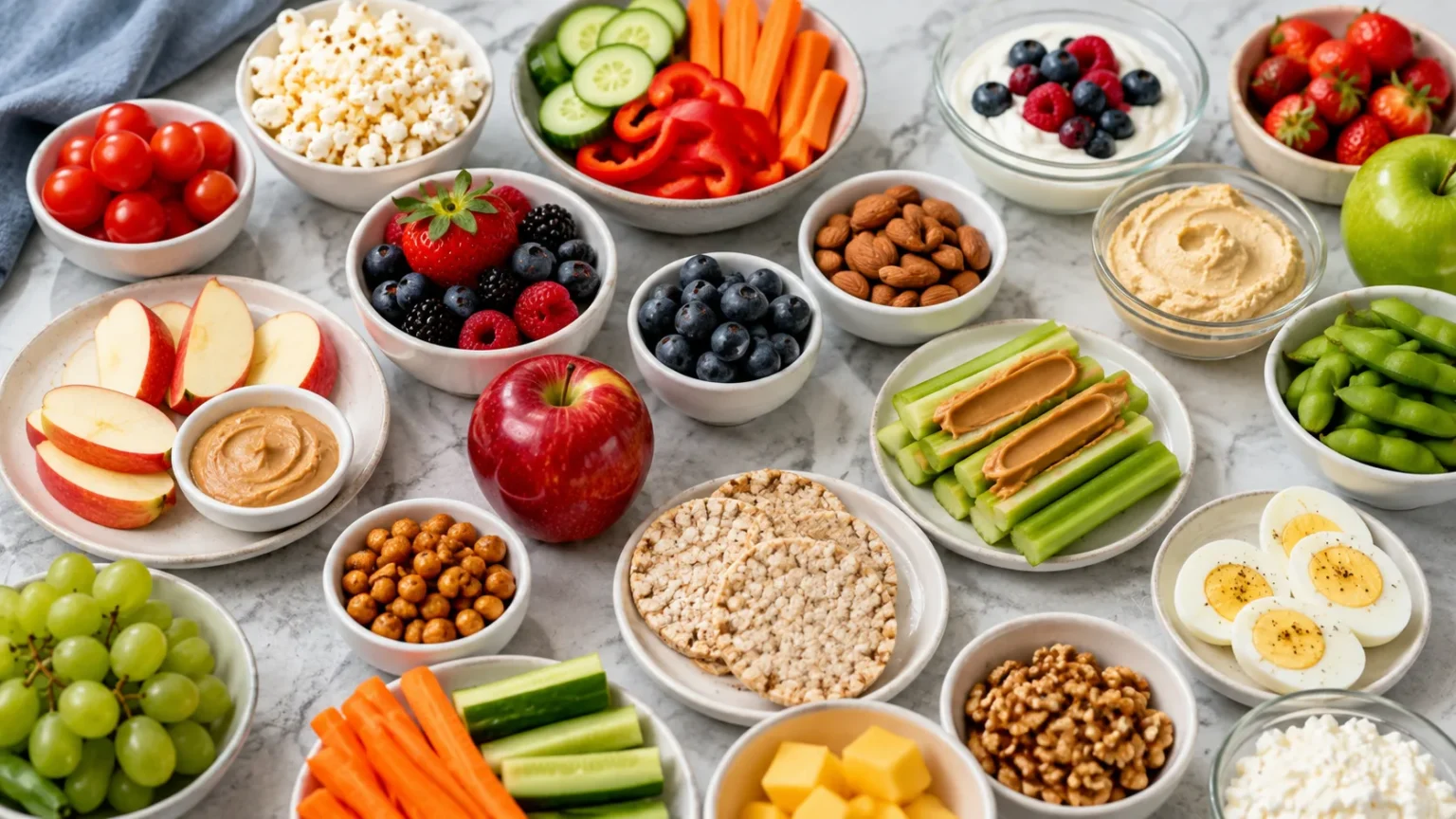

20 Low-Calorie Snacks for Weight Loss That Satisfy
Why Low-Calorie Snacks Can Help With Weight Loss
Low-calorie snacks can make a weight-loss eating plan easier to follow when they help control hunger between meals without adding excessive calories. The goal is not to eat as little as possible, but to choose foods that provide enough volume, protein, fiber, or healthy fats to feel satisfying. A snack containing 100 to 200 calories can fit comfortably into many balanced eating patterns, although individual needs vary. Foods such as fruit, vegetables, yogurt, eggs, and popcorn provide more nutritional value than many highly processed snack foods. Choosing satisfying snacks may also reduce the temptation to overeat later in the day. Sustainable weight management depends on your overall eating pattern rather than one specific food.
Protein is especially useful when choosing healthy snacks for weight loss because it tends to support fullness and helps maintain muscle while losing weight. Greek yogurt, cottage cheese, eggs, tuna, and edamame are examples of high-protein snacks that can provide substantial nutrition without requiring a large calorie intake. Fiber plays a similar role because it adds bulk and generally takes longer to digest than highly refined carbohydrates. Fruits, vegetables, whole grains, beans, and seeds can therefore make snacks feel more substantial. Combining protein and fiber is often even more satisfying than relying on either nutrient alone. A snack such as Greek yogurt with berries can provide both nutrients in a relatively small portion.
Volume also matters when people are trying to find filling low-calorie foods. Some foods contain a large amount of water or air, allowing you to eat a visually generous portion for fewer calories. Three cups of air-popped popcorn, for example, can contain fewer calories than a small handful of many fried snacks. Water-rich foods such as cucumber, watermelon, strawberries, oranges, and tomatoes can also provide a satisfying amount of food. This does not mean higher-calorie foods are unhealthy, because foods such as nuts and avocado are nutritious too. It simply means portion awareness becomes more important when foods are energy dense.
Planning snacks in advance can help prevent impulsive choices when hunger suddenly appears. If the only available option is a large bag of chips, cookies, or candy, it is easy to eat more calories than intended before noticing how much has been consumed. Preparing single servings of fruit, yogurt, chopped vegetables, boiled eggs, or popcorn creates convenient alternatives. Keeping nutritious snacks visible can also make them easier to choose during busy workdays. The best weight-loss snacks are usually foods you actually enjoy rather than foods you force yourself to eat because they are considered healthy. Enjoyment matters because long-term habits need to be realistic.
It is equally important to recognize that not everyone needs snacks between meals. Some people feel comfortable eating three satisfying meals, while others prefer smaller meals with one or two planned snacks. Hunger levels can depend on activity, sleep, meal timing, medication, stress, and individual appetite. Eating a snack simply because a diet plan says you should is unnecessary if you are not hungry. On the other hand, constantly ignoring genuine hunger can make an eating plan difficult to maintain. The most useful low-calorie snacks are therefore ones that support your personal routine while helping you maintain an appropriate overall calorie intake.
Low-Calorie Snacks 1–5: Simple Everyday Choices
1. Air-popped popcorn is one of the easiest low-calorie snacks when you want something crunchy and substantial. About three cups of plain air-popped popcorn generally provide around 90 to 100 calories, although exact values depend on preparation. Because popcorn is a whole grain and contains fiber, it can feel more satisfying than its calorie count suggests. The biggest calorie increase usually comes from butter, oil, cheese coatings, caramel, or sugary toppings rather than the popcorn itself. Seasoning it with herbs, paprika, garlic powder, or a small amount of nutritional yeast can add flavor without dramatically changing the calorie content. Portioning popcorn into a bowl instead of eating from a large bag can also make mindful eating easier.
2. Greek yogurt with berries provides a useful combination of protein, natural sweetness, and volume. A serving of plain nonfat or low-fat Greek yogurt with a small handful of strawberries, blueberries, or raspberries can often fit within roughly 120 to 170 calories depending on the brand and portion. Greek yogurt usually contains more protein than many traditional sweetened yogurts, which can help make the snack more filling. Berries add fiber, water, color, and sweetness without requiring much added sugar. Choosing plain yogurt also gives you more control over sweetness because flavored varieties can contain significantly more added sugar. Cinnamon or a small splash of vanilla can make the snack more interesting without adding many calories.
3. An apple with a small amount of peanut butter is a satisfying option when you want something sweet and creamy. A medium apple provides roughly 90 to 100 calories and contains water, fiber, and naturally occurring carbohydrates. Adding one teaspoon or a carefully measured tablespoon of peanut butter contributes protein and fat, making the snack more substantial. Peanut butter is nutritious but calorie dense, so portion size matters when weight loss is the goal. Slicing the apple into several pieces can make a small serving of peanut butter feel more generous because each bite gets some flavor. This snack can work particularly well in the afternoon when you need something more satisfying than fruit alone.
4. A hard-boiled egg is a compact high-protein snack that requires almost no preparation once it has been cooked. One large egg generally contains about 70 to 80 calories and provides protein along with several important micronutrients. Because eggs are relatively filling for their size, they can be useful when you need a quick snack at work or between errands. Sprinkle the egg with black pepper, paprika, or a small amount of salt if you prefer more flavor. Pairing it with cucumber slices or cherry tomatoes can add volume for relatively few additional calories. People who need more energy can eat two eggs, while those aiming for a lighter snack can keep the portion to one.
5. Cottage cheese with cucumber combines protein with a high-volume vegetable for a refreshing savory snack. About half a cup of low-fat cottage cheese may provide roughly 90 to 120 calories depending on the product, while cucumber adds very few calories. Cottage cheese is rich in protein, which can make a relatively small serving feel more satisfying than many refined snack foods. Add pepper, dill, chives, or chopped tomato to improve flavor without relying on heavy sauces. Sodium content can vary significantly between brands, so checking labels may be useful for people who monitor sodium intake. This snack works particularly well for anyone who prefers savory foods over sweet fruit-based options.
Low-Calorie Snacks 6–10: High-Protein and Filling Ideas
6. Edamame is a plant-based snack that provides both protein and fiber, making it useful for people who want something more substantial. A half-cup serving of shelled cooked edamame generally falls around 90 to 120 calories depending on portion size. Unlike many crunchy packaged snacks, edamame contributes valuable nutrients while still being easy to portion. It can be eaten warm or chilled and seasoned with chili flakes, garlic, lemon, or a light sprinkle of salt. Because you need to chew it thoroughly, the snack may also encourage slower eating. Frozen edamame is convenient to keep available because it can usually be prepared quickly whenever hunger appears.
7. Turkey roll-ups can provide a protein-focused snack with relatively few calories when made with lean sliced turkey. Two or three slices wrapped around cucumber strips, bell pepper, lettuce, or pickle can often stay around 100 to 150 calories depending on the meat and fillings. Adding vegetables gives the snack crunch and additional volume without requiring bread or crackers. A small amount of mustard can add considerable flavor for very few calories. Processed deli meat can be relatively high in sodium, so it does not need to be your only protein source. Rotating it with eggs, yogurt, beans, fish, or minimally processed proteins creates more variety.
8. Tuna and cucumber bites are another filling option when you want a savory snack with plenty of protein. A small portion of tuna mixed with plain Greek yogurt, lemon juice, pepper, or mustard can be spooned onto thick cucumber slices. Depending on the quantity used, this snack can easily fit around the 100-to-150-calorie range. Tuna provides protein while cucumber contributes crunch and water, helping the portion feel larger. Using heavy mayonnaise can increase calories quickly, so Greek yogurt or a lighter dressing may suit a lower-calorie goal better. Tuna intake should also be varied with other protein sources rather than becoming an everyday snack for everyone.
9. Plain skyr or high-protein yogurt is convenient when you want something ready to eat without preparing a recipe. Many individual portions of plain high-protein yogurt contain roughly 90 to 150 calories, although labels vary considerably. Their higher protein content can make them more satisfying than sweet desserts with a similar number of calories. If plain yogurt tastes too tart, add fresh berries, sliced peach, cinnamon, or a small amount of zero- or low-calorie sweetener if desired. Checking the nutrition label helps distinguish genuinely high-protein options from products marketed mainly through appealing packaging. Choose the version you enjoy enough to eat consistently rather than automatically selecting the lowest-calorie container.
10. Roasted chickpeas provide crunch, fiber, and plant protein in a snack that can replace more heavily processed savory foods. A small portion of roasted chickpeas, such as about one-quarter cup, generally provides roughly 100 to 140 calories depending on preparation. Seasonings such as cumin, smoked paprika, black pepper, chili, or garlic can create plenty of flavor. Oil can increase the calorie content considerably, so lightly coated or dry-roasted versions may be more appropriate when calories matter. Chickpeas are more energy dense than raw vegetables, which means measuring the serving can be helpful. Their combination of fiber and protein can nevertheless make a modest portion surprisingly satisfying.
Low-Calorie Snacks 11–15: Fruit and Vegetable Options
11. Strawberries with a little dark chocolate can satisfy a sweet craving without turning into a high-calorie dessert. A generous cup of strawberries contains roughly 50 calories, leaving room for a small square or two of dark chocolate. Depending on the chocolate portion, the snack may remain around 100 to 150 calories. Strawberries provide water and fiber, while chocolate contributes a richer flavor that can make the snack feel more indulgent. Eating the chocolate slowly alongside several pieces of fruit stretches the experience beyond simply eating chocolate on its own. Choosing a measured portion is useful because chocolate is calorie dense even though it can fit comfortably into a balanced diet.
12. Carrot sticks with hummus create a crunchy and creamy snack with fiber, vegetables, and a small amount of plant protein. One cup of raw carrot sticks contains only around 50 calories, while two tablespoons of hummus typically add about 60 to 80 calories. Together, the snack often falls close to 110 to 140 calories. Hummus contains chickpeas and tahini, which make it more satisfying than eating raw vegetables alone. Measuring hummus can be helpful because large spoonfuls can add calories quickly without looking substantial. Bell peppers, celery, cucumber, or radishes can be used alongside carrots when you want more variety.
13. Watermelon with lime is particularly appealing when you want a refreshing snack with plenty of volume. Two cups of diced watermelon generally provide around 90 calories because the fruit contains a large amount of water. Adding fresh lime juice or a little mint can make the flavor brighter without adding significant calories. Watermelon does not provide as much protein or fiber as some other snacks, so it may not keep everyone full for a long time. However, it can satisfy a desire for something sweet and cold during warm weather. If you need greater staying power, pair a smaller serving with yogurt, cottage cheese, or another protein source.
14. Cucumber and tomato salad is a useful low-calorie snack for people who enjoy savory foods and larger portions. Sliced cucumber and tomatoes contain relatively few calories because both vegetables have a high water content. A bowl seasoned with lemon juice, herbs, black pepper, and a small amount of salt can easily stay below 100 calories. Adding vinegar can provide additional flavor without requiring a heavy dressing. Olive oil is nutritious but calorie dense, so measuring it is useful if you choose to include it. This kind of snack can be especially helpful when the desire to eat comes partly from wanting something fresh, crunchy, and substantial in volume.
15. An orange with a few pistachios combines sweet citrus with a small amount of protein and healthy fat. A medium orange generally provides around 60 to 80 calories, while a modest portion of pistachios can bring the snack closer to 130 to 170 calories. Whole oranges usually provide more fiber and chewing satisfaction than drinking orange juice. Pistachios add texture and may help the snack feel more complete than fruit alone. Because nuts are calorie dense, counting or measuring a small portion can prevent accidental overeating. Choosing pistachios in the shell may naturally slow down eating because each nut takes a little more effort to access.
Low-Calorie Snacks 16–20: Crunchy, Sweet, and Convenient Choices
16. Rice cake with cottage cheese is a simple crunchy snack that can be prepared in a few minutes. A plain rice cake commonly contains around 30 to 50 calories, and a modest layer of low-fat cottage cheese can bring the total to roughly 80 to 120 calories. Cottage cheese adds protein, which helps compensate for the limited staying power of a plain rice cake. Top it with sliced cucumber, tomato, pepper, or herbs for additional flavor and volume. Rice cakes are not unusually nutritious on their own, but they can serve as a low-calorie base for more filling ingredients. The topping is what determines whether the snack becomes satisfying or remains mostly a quick carbohydrate.
17. Frozen grapes can provide a dessert-like experience with no complicated preparation. One cup of grapes contains roughly 100 calories, and freezing them changes the texture without changing the basic nutritional value. Because frozen grapes take longer to eat than fresh ones, some people find a measured portion more satisfying. Their natural sweetness can be useful when you are craving candy, ice cream, or another sweet snack. Grapes are still a source of natural sugar, so eating directly from a large frozen bag can make portions difficult to notice. Place one serving in a bowl and allow yourself to enjoy it slowly rather than treating fruit as an unlimited food.
18. Celery with light cream cheese offers crunch and creaminess for relatively few calories. Several celery stalks contain very little energy, while one or two tablespoons of a lighter cream cheese can bring the snack into roughly the 70-to-120-calorie range. Celery itself is mostly water and fiber, so the creamy topping provides most of the flavor and calories. Adding everything-bagel seasoning, black pepper, or herbs can make the snack more interesting. Traditional full-fat cream cheese can also fit if the serving is measured, so choosing a “light” product is not mandatory. The key is creating a portion that is enjoyable enough to satisfy the craving without turning into mindless grazing.
19. Chia pudding in a small portion can be surprisingly filling because chia seeds absorb liquid and create a thick texture. A light snack portion made with one tablespoon of chia seeds and unsweetened milk may contain approximately 80 to 130 calories depending on the milk and toppings. Chia seeds provide fiber and some healthy fats, making the serving more substantial than its small size might suggest. Add cinnamon, vanilla, or a few berries to improve the flavor naturally. Large chia puddings can become calorie dense because seeds, nut butter, granola, and sweeteners add up quickly. Preparing a snack-size serving helps preserve the benefits while keeping calories appropriate for your goal.
20. Homemade frozen yogurt bites can work well when you want a cold snack that feels like dessert. Spoon small portions of Greek yogurt onto a lined tray, add a berry or small piece of fruit, and freeze until firm. Several bites can often remain around 80 to 150 calories depending on the yogurt and toppings used. Choosing plain or lightly sweetened yogurt helps keep added sugar under control while maintaining protein. These bites also encourage slower eating because they are enjoyed individually rather than consumed quickly from a large container. Preparing them ahead of time can make it easier to choose a planned snack when ice cream or other high-calorie desserts are tempting.
How to Choose the Best Low-Calorie Snacks for Weight Loss
Start by looking for snacks that provide protein, fiber, or both because these nutrients can help make a smaller calorie portion more satisfying. A snack containing only refined carbohydrates may taste good but leave some people hungry again soon afterward. For example, a small serving of crackers may become more filling when paired with cottage cheese or another protein source. Similarly, fruit can be combined with yogurt, nuts, or a boiled egg when you need greater staying power. There is no requirement for every snack to contain a specific number of grams of protein or fiber. The goal is simply to choose foods that genuinely help bridge the gap between meals.
Consider calorie density as well as the absolute calorie number. A 100-calorie portion of candy and a 100-calorie bowl of fruit may contain the same amount of energy, but the eating experience can be very different. Water- and fiber-rich foods often provide more physical volume, which can contribute to satisfaction. That is why vegetables, fruit, broth-based foods, and air-popped popcorn frequently appear in low-calorie snack ideas. Energy-dense foods such as nuts, seeds, cheese, and nut butter can still be excellent choices when portions are appropriate. Rather than labeling foods as good or bad, think about what combination best supports your hunger and calorie needs.
Read food labels carefully when choosing packaged weight-loss snacks because marketing terms do not always tell the full nutritional story. Products labeled “healthy,” “fit,” “protein,” or “natural” may still contain more calories, sugar, or saturated fat than expected. Compare the listed serving size with the amount you realistically plan to eat. A package that appears to contain one serving may actually contain two or three servings. Protein bars are a good example because some contain nearly as many calories as a small meal. Labels are most useful when they help you make informed decisions rather than when they become a reason to obsess over every gram.
Think about convenience because the healthiest snack is not useful if it is unavailable when you actually become hungry. Keep easy options at home, at work, or in your bag depending on your routine. Fruit, individual yogurt cups, boiled eggs, pre-portioned nuts, roasted chickpeas, chopped vegetables, and simple popcorn are practical examples. Preparing several servings once or twice a week can reduce the effort required on busy days. Convenience is one reason highly processed snack foods are so easy to overeat, because they are designed to be immediately available. Making nutritious options equally convenient can significantly improve everyday choices.
Finally, choose snacks based on actual hunger rather than only on the lowest calorie count. A 40-calorie snack that leaves you starving ten minutes later may be less useful than a 150-calorie snack containing protein and fiber. Satisfaction matters because a snack should help you comfortably reach your next planned meal. If your meals are regularly leaving you extremely hungry shortly afterward, the solution may be improving your meals rather than continually adding tiny snacks. Weight loss does not require constant hunger or the smallest possible portions. A balanced calorie deficit that you can maintain is generally more practical than repeatedly choosing foods that fail to satisfy you.
How to Make Low-Calorie Snacks More Filling
Pairing protein with fiber is one of the simplest ways to make healthy low-calorie snacks more satisfying. Consider combinations such as Greek yogurt with berries, cottage cheese with vegetables, an apple with a small amount of peanut butter, or hummus with carrots. Protein contributes to fullness, while fiber adds bulk and can slow digestion. These combinations also offer different textures and flavors, which can make eating more enjoyable. You do not need elaborate recipes or expensive specialty foods to use this approach. Basic ingredients from an ordinary grocery store can create filling snacks that work well within a weight-management plan.
Include some healthy fat when appropriate, but pay attention to portion size because fat contains more calories per gram than protein or carbohydrate. Nuts, seeds, avocado, tahini, nut butter, and olive oil can make snacks more flavorful and satisfying. A teaspoon or tablespoon may be enough to change the eating experience significantly. Problems usually arise when calorie-dense foods are eaten directly from large containers without noticing the amount. Pre-portioning nuts or measuring nut butter can make it easier to enjoy these foods without unintentionally adding several hundred calories. Healthy eating does not require avoiding dietary fat, only using portions that fit your overall needs.
Slow down while eating because speed can influence how satisfying a snack feels. Eating popcorn one handful at a time, peeling an orange, or choosing pistachios in shells naturally extends the eating experience. By contrast, drinking calories or quickly eating a small snack while distracted may provide less perceived satisfaction. Whenever practical, place the snack on a plate or in a bowl and give it a few minutes of attention. This does not mean every snack needs to become a formal meal. It simply reduces the chance of finishing food before you have even registered that you ate it.
Hydration can also influence how you interpret appetite, although drinking water should not be used as a strategy to suppress genuine hunger. Having water, tea, or another unsweetened drink alongside a snack can create a more complete eating experience. This is particularly useful with dry foods such as popcorn, roasted chickpeas, or crackers. However, if you are genuinely hungry, a glass of water is not an adequate substitute for food. Weight-loss advice sometimes encourages people to ignore hunger by drinking excessive fluids, which is neither necessary nor particularly sustainable. Use hydration to support normal eating rather than as a way to avoid nourishment.
Meal quality ultimately determines how often you are likely to need snacks. Meals containing adequate protein, vegetables or fruit, whole-food carbohydrates, and some fat generally provide better staying power than meals built mostly from refined carbohydrates. If breakfast consists only of a sweet pastry, for example, you may become hungry much sooner than after eggs, yogurt, oats, or another balanced meal. Snacks can help when meal gaps are long, but they do not need to compensate continually for inadequate meals. Look at your entire day rather than judging individual foods in isolation. Sustainable weight loss usually becomes easier when meals and snacks work together rather than competing for an unrealistically small calorie allowance.
Frequently Asked Questions
What are the best low-calorie snacks for weight loss?
Good options include Greek yogurt with berries, boiled eggs, air-popped popcorn, cottage cheese, fresh fruit, edamame, vegetables with hummus, and other foods that combine reasonable calories with protein, fiber, or volume.
How many calories should a weight-loss snack have?
There is no universal number, but many people find snacks in the 100-to-200-calorie range practical. Your appropriate amount depends on your total energy needs, activity level, meal pattern, hunger, and weight-loss goals.
What snacks are low in calories but filling?
Air-popped popcorn, Greek yogurt, boiled eggs, cottage cheese with vegetables, edamame, berries, and hummus with raw vegetables can provide substantial satisfaction without extremely high calorie counts.
Are 100-calorie snacks good for weight loss?
They can be, especially when they contain protein, fiber, or high-volume foods. However, a slightly higher-calorie snack that keeps you satisfied may be more useful than a 100-calorie option that leaves you hungry almost immediately.
Can I eat snacks every day and still lose weight?
Yes. Weight loss depends primarily on your overall energy balance and eating pattern, so planned snacks can fit as long as your total calorie intake supports your goal.
What is a good high-protein low-calorie snack?
Greek yogurt, cottage cheese, boiled eggs, lean turkey, tuna, edamame, and high-protein yogurt are convenient options. Exact calories and protein amounts vary by brand and serving size.
Is fruit a good snack for weight loss?
Yes, whole fruit can be a useful weight-loss snack because it provides fiber, water, vitamins, and natural sweetness. Pairing fruit with a small protein source can make it more filling if fruit alone does not satisfy you.
Is popcorn good for weight loss?
Plain air-popped popcorn can be a helpful snack because it offers a relatively large portion for modest calories. Butter, oils, caramel, cheese coatings, and large serving sizes can substantially increase its calorie content.
Should I avoid nuts when trying to lose weight?
No. Nuts provide healthy fats, protein, fiber, and micronutrients, but they are calorie dense, so portion size matters when you are maintaining a calorie deficit.
What should I eat at night if I am hungry while losing weight?
Choose a modest snack such as Greek yogurt, cottage cheese, fruit, a boiled egg, or vegetables with hummus if you are genuinely hungry. Eating after a certain clock time does not automatically prevent weight loss; your overall intake matters more.