
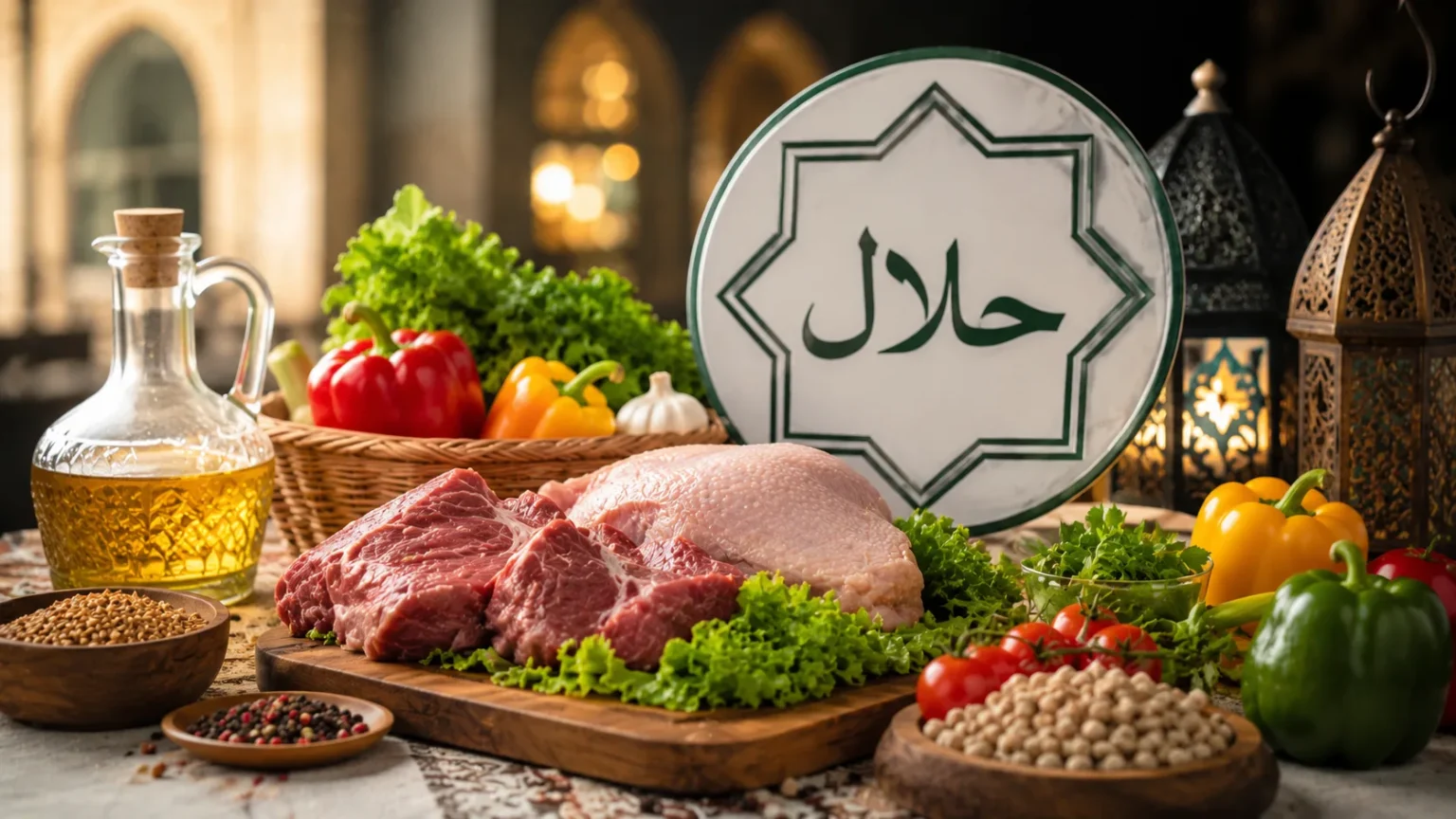

What Is Halal Food? Meaning, Rules & Examples
Halal food refers to food and drink that are permitted under Islamic dietary principles. The Arabic word “halal” means lawful or permissible, and it applies to much more than meat alone. Muslims who follow halal dietary rules consider the ingredients, preparation method, animal source, processing aids, contamination risks, and sometimes the way food is handled throughout production. Familiar halal foods include fruits, vegetables, grains, milk, eggs, fish, legumes, and properly prepared meat from permitted animals. Foods containing pork, blood, intoxicating alcohol, or meat from prohibited or improperly slaughtered animals are generally considered haram, meaning forbidden. Understanding halal food therefore requires looking beyond labels and learning how ingredients and food-processing practices fit within Islamic principles.
Halal eating is practiced by Muslims throughout the world, but specific interpretations can vary according to Islamic schools of thought, regional traditions, scholarly opinions, and certification standards. These differences are especially noticeable in questions involving seafood, alcohol-derived flavorings, gelatin, enzymes, cheese ingredients, and modern food-processing technologies. A halal certification mark can make packaged-food decisions easier, although not every naturally halal product requires certification. Many consumers also consider the concept of tayyib, meaning wholesome, clean, and good, alongside basic permissibility. Halal therefore represents both a religious dietary framework and, for many people, a broader approach to responsible food choices. The following guide explains halal meaning, rules, prohibited foods, slaughter requirements, ingredients, certification, restaurant choices, and common examples.
What Does Halal Food Mean?
Halal food is any food or drink considered permissible for Muslims to consume according to Islamic law. The concept begins with the general principle that most ordinary foods are permitted unless there is a specific reason they are prohibited. Fruits, vegetables, grains, beans, nuts, milk, and many other everyday foods are therefore naturally halal when they have not been contaminated with prohibited substances. Meat requires closer attention because both the animal species and the method of slaughter matter. Processed foods also require ingredient checking because apparently simple products may contain animal-derived additives, alcohol-based flavor carriers, or other questionable components. Halal food is therefore defined by both what the food is and how it reaches the consumer.
The opposite of halal is haram, which means forbidden or unlawful. Pork and pork-derived ingredients are among the clearest examples of haram foods, as are blood and intoxicating alcoholic drinks. Meat from animals that are themselves prohibited or that have not been slaughtered according to accepted halal requirements may also be considered haram. Between clearly halal and clearly haram products, consumers sometimes use the term mashbooh or mushtabih for doubtful or uncertain foods. This can happen when ingredient sources are unclear or when manufacturing information is incomplete. Some Muslims avoid doubtful products until they can verify the source, while others follow specific scholarly guidance about how much investigation is necessary.
Halal is often associated mainly with chicken, beef, or lamb, but the term applies to the entire diet. A loaf of bread may be halal if its flour, yeast, oils, conditioners, and flavorings are permitted. A dessert can become non-halal if it contains gelatin from an impermissible animal source or an intoxicating alcoholic ingredient. Cheese can raise questions when enzymes or rennet come from animal sources that have not been verified. Candy, supplements, medicines, sauces, and even seemingly vegetarian products can contain hidden animal-derived ingredients. For this reason, people following halal diets often become skilled at reading labels and recognizing ingredients whose source may need clarification.
Halal is also different from simply being vegetarian or vegan. Vegetarian food excludes certain animal ingredients, which automatically avoids many concerns such as pork or non-halal meat, but it may still contain alcohol or other ingredients a Muslim chooses to avoid. Vegan food removes all animal-derived ingredients, making many halal questions easier, yet a vegan dessert prepared with intoxicating alcohol would still create a halal concern. Likewise, halal food does not have to be vegetarian because properly slaughtered beef, chicken, lamb, and other permitted meats can be halal. These dietary systems overlap in some areas but are based on different principles and should not be treated as interchangeable labels.
Many Muslims connect halal with tayyib, an Arabic concept associated with goodness, purity, wholesomeness, and cleanliness. Something can technically meet basic halal requirements while still being nutritionally poor or produced in a way someone considers inconsistent with broader ethical values. For example, heavily processed food can be halal but still contain excessive sugar, salt, or unhealthy fats. Halal therefore does not automatically mean healthy, organic, cruelty-free, or environmentally sustainable. Some consumers actively seek foods that meet both halal and broader quality standards. Understanding this distinction helps prevent the common assumption that a halal label is a complete statement about nutritional value.
Basic Rules of Halal Food
The first basic rule is that the food itself must come from a permitted source. Plant foods such as vegetables, fruits, grains, legumes, nuts, and seeds are generally halal unless they have been processed with prohibited ingredients. Animal foods require more attention because certain species are prohibited and others have specific slaughter requirements. Beef, lamb, goat, chicken, and many other commonly eaten animals can be halal when handled according to accepted Islamic rules. Pork and its derivatives are prohibited. Blood consumed as food is also prohibited, which is why proper drainage of blood during slaughter is an important part of halal meat preparation.
The second rule concerns intoxicants. Alcoholic beverages such as wine, beer, spirits, and other intoxicating drinks are generally considered haram. Foods containing alcohol can be more complicated because the amount, source, manufacturing process, and whether the alcohol remains intoxicating may affect scholarly opinions. Some Muslims avoid any product listing alcohol as an ingredient, while others distinguish between intoxicating beverages and tiny residual amounts created during natural fermentation or processing. Because interpretations differ, people often follow their preferred scholars or halal-certification authority. Clear labeling and certification can make these decisions easier for consumers who want a definite standard.
A third rule involves slaughter when land animals are eaten as meat. The animal must belong to a permitted species and should be alive at the time of the halal slaughter according to the standard being followed. The slaughter is performed by cutting the appropriate vessels in the neck with a sharp instrument while invoking the name of Allah. Blood is allowed to drain, and unnecessary suffering should be avoided. Specific questions such as mechanical slaughter, pre-slaughter stunning, or who may perform the slaughter can receive different answers from different halal authorities. This is why certified meat is useful for consumers who want assurance that a recognized standard has been followed.
The fourth rule is avoiding contamination with haram substances. A food may begin with halal ingredients but become unsuitable if it is cooked in pork fat, mixed with non-halal meat juices, or prepared on equipment contaminated in a way that violates the consumer’s halal standard. Restaurants therefore need to think about fryers, grills, utensils, storage containers, preparation surfaces, and shared oils. Packaged-food manufacturers may also separate halal production lines from products containing pork or other prohibited ingredients. Different certification bodies can have specific cleaning and segregation requirements. The underlying principle is that halal integrity should be maintained throughout preparation rather than considered only at the ingredient-purchasing stage.
The fifth rule is that ingredient sources matter when a substance can come from either halal or haram origins. Gelatin is a classic example because it can be made from pork, halal-slaughtered cattle, fish, or other sources. Glycerin, mono- and diglycerides, enzymes, flavorings, emulsifiers, and capsules can also come from plant, synthetic, or animal sources. An ingredient name by itself may therefore not always provide enough information. Manufacturers that use halal certification typically document these sources more carefully. For ordinary shoppers, a recognized halal logo or direct confirmation from the manufacturer can reduce uncertainty when ingredient origins are difficult to determine from the label alone.
Foods That Are Generally Considered Halal
Fresh fruits and vegetables are among the simplest halal foods because they naturally contain no prohibited animal ingredients or intoxicants. Apples, bananas, oranges, berries, dates, potatoes, carrots, spinach, tomatoes, cucumbers, and thousands of other plant foods can be eaten freely when prepared normally. Frozen and canned produce is usually straightforward as well, although sauces, flavorings, or additives should still be checked. Fruits preserved in an alcoholic syrup would create a different situation from ordinary canned fruit in juice or water. Plant foods form a major part of halal diets across cultures and can be incorporated into everything from curries and salads to soups, desserts, and traditional dishes.
Grains and grain-based staples are also generally halal. Rice, oats, wheat, barley, corn, quinoa, millet, and similar grains are naturally permissible. Bread, pasta, cereal, crackers, and baked goods can also be halal when all added ingredients are permitted. The complications usually come from shortening, animal-derived emulsifiers, gelatin, flavorings, or alcohol-containing ingredients rather than from the grain itself. Many basic breads contain only flour, water, yeast, salt, and plant oil, making them relatively easy halal choices. More elaborate pastries and desserts deserve closer attention because they may contain animal fats, uncertain flavor extracts, or non-halal gelatin-based decorations.
Milk and ordinary dairy products are generally considered halal when they do not contain prohibited additives. Plain milk, butter, cream, yogurt, and many simple dairy products are usually easy choices. Cheese can require more investigation because rennet and enzymes used in cheesemaking may come from microbial, vegetable, or animal sources. Some consumers accept certain animal-derived enzymes under particular scholarly opinions, while others prefer halal-certified or microbial-rennet cheese. Flavored yogurt can also contain gelatin, marshmallow pieces, or other additives that create questions. Reading the ingredient list becomes more important as the product moves away from simple milk and toward highly processed dairy foods.
Eggs from permissible birds are generally halal and require no special slaughter process. Chicken eggs are therefore a common halal protein source and can be prepared boiled, scrambled, fried, baked, or included in other foods. Fish and seafood are also widely consumed in halal diets, although there are differences among Islamic schools regarding which aquatic animals are permissible. Many Muslims consider all seafood halal, while some follow interpretations that distinguish fish from shellfish or other sea creatures. Because this issue involves established differences of jurisprudence, individuals often follow the guidance of their own school or trusted scholars. Fish itself remains one of the least controversial animal proteins for many halal consumers.
Legumes, nuts, seeds, and plant oils are generally halal and provide valuable protein, fiber, fats, vitamins, and minerals. Lentils, chickpeas, beans, peanuts, almonds, walnuts, sesame seeds, olive oil, sunflower oil, and similar foods can form the foundation of halal vegetarian meals. Problems arise only when processing introduces prohibited flavorings or cross-contact with questionable ingredients. For example, plain roasted nuts are straightforward, while flavored snack mixes may include meat seasoning, cheese powders, or alcohol-based flavor systems. A halal diet can therefore be extremely diverse without depending heavily on meat. Many traditional Muslim cuisines naturally include abundant legumes, grains, vegetables, and plant fats.
Foods and Ingredients That Are Not Halal
Pork is one of the clearest examples of a prohibited food in Islam. This includes not only pork chops, bacon, ham, and sausage but also ingredients made from pigs. Pork-derived gelatin, lard, animal shortening, certain enzymes, and some flavoring ingredients can appear in processed foods where consumers may not expect them. Marshmallows, gummy candies, desserts, capsules, pastries, and processed snacks are common categories where gelatin or animal fat may need checking. A product does not need to taste like pork to contain a pork-derived ingredient. Halal-certified products usually help consumers avoid this problem by requiring documented ingredient sources.
Blood is also prohibited as a food. Dishes made intentionally from blood, such as certain blood sausages or blood puddings, are therefore not halal. Halal slaughter includes draining the animal’s blood as part of the process, although this does not mean meat becomes completely free from microscopic traces of blood inside tissues. The prohibition concerns consuming flowing blood as food rather than requiring scientifically bloodless meat. Proper slaughter and drainage follow the religious requirement. Consumers generally do not need to perform additional procedures at home beyond normal food preparation when meat has already been produced according to halal standards.
Intoxicating alcoholic drinks are prohibited, including wine, beer, spirits, and similar beverages. Foods deliberately prepared with alcoholic drinks can also create halal concerns, even when cooked, because complete alcohol removal cannot always be assumed. Wine sauces, rum cakes, liqueur chocolates, certain desserts, and marinades are examples where alcoholic ingredients may be intentionally included. Vanilla extract and other flavorings sometimes contain alcohol as a solvent, creating varying opinions depending on concentration, source, and final product. Some halal consumers choose alcohol-free extracts to avoid uncertainty. Certification standards may also define acceptable limits or processing conditions differently.
Meat from otherwise permissible animals can still be non-halal if the slaughter method does not meet the consumer’s religious standard. Ordinary supermarket beef or chicken cannot automatically be assumed halal simply because the species itself is allowed. Muslims who follow halal slaughter requirements typically look for certified halal meat or purchase from trusted halal butchers. Questions around stunning, mechanical slaughter, and imported meat can make certification especially important. If the meat is halal-certified by an authority the consumer trusts, the shopper does not usually need to investigate every processing detail individually. Certification serves precisely to simplify this verification process.
Certain processed-food ingredients fall into a gray area because their source may be unknown. Gelatin, enzymes, glycerin, stearates, emulsifiers, natural flavors, mono- and diglycerides, and some food colorings or processing aids can come from different sources. Some versions are completely plant-based or synthetic, while others may come from prohibited animal material. Not every ingredient with a technical-sounding name is questionable, and excessive suspicion can make shopping unnecessarily difficult. A practical approach is to learn the most common source-sensitive ingredients and use halal certification when possible. When a product matters to someone’s regular diet, contacting the manufacturer can also provide clarification.
Halal Meat and the Slaughter Process
Halal meat begins with an animal species that is permissible to eat. Common examples include cattle, sheep, goats, chickens, and certain other birds and animals. The animal should be treated properly before slaughter and should not be subjected to unnecessary cruelty. Islamic teachings emphasize mercy toward animals, which means the slaughter process is not intended to be casual or abusive. A sharp instrument is used so the required cut can be made efficiently. The purpose is to achieve rapid blood loss while minimizing avoidable suffering. Modern halal systems may include additional animal-welfare procedures depending on the country, slaughterhouse, and certification body involved.
The name of Allah is invoked at the time of slaughter according to the religious requirements followed by the slaughterer and certifying authority. The cut is made in the neck area to sever the relevant major vessels while avoiding unnecessary damage. Blood is then allowed to drain from the animal. The exact jurisprudential details can vary, which is why halal certification bodies publish their own technical standards. Consumers generally do not need to perform this procedure themselves; they rely on butchers, slaughterhouses, and certification systems. The important point for the average shopper is that halal meat represents both a permitted species and a religiously acceptable slaughter process.
Stunning is one of the most discussed issues in modern halal meat production. Some halal authorities accept specific reversible stunning methods when the animal remains alive at the time of slaughter and the stun itself does not cause death. Others prefer slaughter without pre-stunning or apply stricter conditions to particular methods. These differences explain why two products can both be marketed as halal while following somewhat different technical procedures. Muslims who have a strong preference regarding stunning can check the policy of the certifier or butcher. This is an area where established scholarly diversity exists, so blanket claims about what every Muslim accepts should be avoided.
Mechanical slaughter is another area where halal standards may differ. Large poultry facilities can process many birds rapidly using automated equipment, raising questions about whether the invocation, blade contact, and animal status meet religious requirements. Some certification bodies approve mechanical systems under defined conditions and with Muslim supervision, while others require hand slaughter. Hand-slaughtered chicken is therefore specifically labeled by some producers because a portion of consumers actively seeks it. Shoppers who care about this distinction should look for certification information rather than assuming all halal poultry follows the same method. The halal market contains several recognized approaches within broader Islamic dietary rules.
Proper halal meat handling continues after slaughter. Meat should be stored, transported, processed, and prepared without contamination by prohibited products according to the standard being followed. A halal beef burger cooked on a surface covered in bacon grease would create an obvious concern for many consumers. Meat processors may therefore use dedicated production areas, cleaning protocols, packaging, and traceability systems. Restaurants that serve both halal and non-halal food need to manage separation carefully if they claim particular dishes are halal. Halal integrity is a supply-chain issue rather than a single moment at the slaughterhouse.
Halal Certification and Food Labels
Halal certification is a system in which an organization evaluates a food, ingredient, restaurant, slaughterhouse, or manufacturing process against its halal standards. When the organization is satisfied that requirements are met, the product or business may display its halal mark. Certification can involve reviewing ingredient sources, supplier documentation, production equipment, cleaning procedures, storage, slaughter practices, and cross-contamination controls. Meat facilities may receive more extensive inspection because slaughter itself forms part of the halal requirement. Packaged-food companies often use certification because verifying dozens of ingredients independently would be difficult for ordinary consumers. A trusted logo can therefore make shopping much faster.
Not every halal food needs a certification symbol. A banana, bag of plain rice, or container of raw lentils is naturally straightforward and does not usually need formal halal verification. Certification becomes more valuable as processing complexity increases. A gummy candy with several flavorings, a processed meat product, a prepared frozen meal, or a cheese containing enzymes creates more possible points of uncertainty. Consumers can therefore use certification strategically rather than assuming every product without a halal logo is automatically haram. Ingredient knowledge still matters, particularly in regions where halal certification is less common.
Different halal certifiers can follow slightly different standards. One organization may accept certain processing aids while another does not, or they may have different approaches to stunning, mechanical slaughter, seafood, or trace alcohol. This does not necessarily mean one label is fake or that halal has no clear meaning. Islamic jurisprudence contains recognized differences, and certification bodies operate within particular scholarly frameworks. Consumers who want consistency can learn which certifiers align with their own preferred standard. Businesses serving a diverse Muslim population may choose certification recognized widely in their market.
Ingredient labels remain useful even when certification is absent. Words such as pork, lard, gelatin, wine, rum, bacon, and certain meat broths clearly signal the need for caution. Other ingredients such as glycerin, enzymes, mono- and diglycerides, and natural flavors may require source information if the consumer follows a strict approach. Vegetarian labels can sometimes help because they rule out many animal-derived ingredients, although alcohol and other halal concerns can remain. Vegan certification provides even more assurance regarding animal ingredients but still does not replace halal verification when intoxicating ingredients or manufacturing concerns exist. Using multiple label clues can simplify shopping.
Restaurant halal claims also deserve reasonable clarification. A restaurant may be fully halal, serve only halal meat while also selling alcohol, or offer selected halal dishes alongside non-halal items. Asking specific questions is usually more useful than simply asking, “Is everything halal?” Useful questions include whether all meat is halal-certified, whether pork is prepared in the kitchen, whether fryers are shared, and whether alcohol is used in sauces. The level of separation required depends on the diner’s own standard. Restaurants that understand halal customers should be able to explain their practices clearly rather than relying on vague marketing language.
Halal Food Examples From Everyday Meals
A halal breakfast can be very simple. Oatmeal cooked with milk and topped with bananas, dates, nuts, and honey contains naturally halal ingredients. Eggs with toast, avocado, and vegetables are another straightforward option when the bread ingredients are suitable. Yogurt with fruit and granola can also be halal, although gelatin in yogurt or questionable additives in flavored granola may require checking. A traditional breakfast could include flatbread, cheese, olives, beans, eggs, or chickpeas depending on cultural preference. Halal eating does not require special exotic dishes; ordinary familiar foods can meet halal rules easily when their ingredients are permissible.
A halal lunch might include grilled halal chicken with rice and vegetables, lentil soup with bread, tuna salad, chickpea curry, or a vegetable pasta dish. Burgers can be halal when the meat is halal-certified and the bun, cheese, sauces, and cooking surface meet the diner’s requirements. Pizza can also be halal with vegetable toppings or halal-certified chicken, beef, or turkey products. Pepperoni must be checked carefully because conventional versions commonly contain pork or non-halal beef. Cheese ingredients may also matter to stricter consumers. Everyday restaurant foods can therefore become halal through appropriate sourcing and preparation rather than needing entirely different recipes.
Dinner offers even more variety. Halal lamb curry, grilled fish, chicken biryani, beef kebabs, vegetable stir-fries, bean stews, roast chicken, pasta, couscous, and countless other dishes can fit within halal guidelines. Many global cuisines already contain foods that are naturally halal or can be adapted easily. East Asian dishes may require checking cooking wine and meat sources, while European recipes may contain wine sauces or pork-derived ingredients. Mexican dishes can use halal beef or chicken instead of ordinary meat and avoid lard when necessary. The halal framework is flexible enough to accommodate nearly every cuisine with appropriate ingredient choices.
Snacks can include fresh fruit, nuts, popcorn, hummus, crackers, yogurt, roasted chickpeas, granola bars, or halal-certified confectionery. Candy requires particular attention because gelatin is common in gummies, marshmallows, and chewy sweets. Halal-certified gelatin or plant-based alternatives such as pectin and agar can make these products suitable. Chocolate is often naturally acceptable when it contains basic cocoa, sugar, milk, and emulsifiers, but liqueur-filled chocolates and products containing questionable ingredients need checking. Chips and savory snacks can also contain meat flavorings or cheese enzymes. A halal logo is especially convenient in the highly processed snack category.
Desserts can be halal without sacrificing variety. Cakes, cookies, puddings, ice cream, baklava, rice pudding, fruit desserts, and pastries can all be prepared with permitted ingredients. Problems usually arise from alcohol-based flavorings, pork gelatin, lard, or uncertain emulsifiers rather than from sugar and flour themselves. Halal bakeries often replace gelatin with halal beef, fish, or plant-based alternatives and avoid alcoholic flavorings. Home bakers can choose alcohol-free vanilla, vegetable shortening, butter, and verified decorations. Halal dessert preparation demonstrates how small ingredient substitutions can make familiar foods suitable without fundamentally changing the dish.
Halal vs Kosher, Vegetarian and Vegan Food
Halal and kosher dietary systems share certain similarities because both involve religious rules governing permitted animals, slaughter, and food preparation. Both prohibit pork, and both contain detailed requirements for meat. However, the systems are not identical and should not be treated as interchangeable. Kosher rules include specific separation of meat and dairy that is not part of halal law, while halal includes its own rules about alcohol and religious slaughter. Some Muslims may accept certain kosher foods in particular circumstances based on their scholarly understanding, while others prefer explicitly halal-certified products. A kosher symbol therefore does not automatically function as a universal halal certificate.
Vegetarian food avoids meat, which simplifies many halal decisions. A vegetable curry, lentil soup, pasta with tomato sauce, or cheese sandwich can often be halal when no prohibited additives are present. However, vegetarian products can contain alcohol, animal-derived enzymes considered questionable by some consumers, or other ingredients that need checking. Vegetarian restaurant kitchens can also serve alcoholic drinks or cook with wine. The vegetarian label tells the consumer primarily that meat is absent rather than guaranteeing compliance with Islamic dietary law. It is useful information but not a complete halal determination.
Vegan food eliminates meat, dairy, eggs, and other animal-derived ingredients, removing concerns about non-halal meat, pork gelatin, animal rennet, and many similar substances. This makes vegan products convenient for Muslims in many situations. However, vegan food can still contain alcohol, such as wine in a sauce or rum in a dessert. Fermented foods can also raise questions for individuals who follow particular rulings about alcohol content or production. A vegan label therefore reduces many ingredient concerns without automatically answering every halal question. In practice, many halal consumers use vegan products confidently after checking alcohol-related ingredients.
Halal should also not be confused with organic food. Organic certification relates to agricultural production standards, pesticide use, animal feed, and other farming practices rather than Islamic dietary law. Organic chicken is not automatically halal if it was not slaughtered according to halal requirements. Conversely, halal chicken is not automatically organic. A product can carry both certifications if it satisfies each standard independently. The same distinction applies to labels such as free-range, grass-fed, non-GMO, and natural. These terms may matter to consumers, but they answer different questions from halal certification.
The healthiest approach is to understand what each label actually guarantees. Halal tells a Muslim consumer about religious permissibility according to the relevant standard. Vegan addresses animal-derived ingredients, vegetarian excludes specified animal foods, kosher follows Jewish dietary law, and organic concerns agricultural production. None automatically means low-calorie, high-protein, ethically perfect, or environmentally sustainable. Consumers can combine standards according to their priorities. Someone may specifically seek halal, organic, and grass-fed beef, while another may prefer halal-certified vegan foods. Clear understanding allows labels to become useful tools rather than sources of confusion.
Frequently Asked Questions About Halal Food
What does halal food mean?
Halal food means food and drink that are permissible under Islamic dietary rules. The concept covers ingredients, animal sources, slaughter methods, processing, and potential contamination with prohibited substances.
What foods are not halal?
Foods generally considered haram include pork and pork-derived ingredients, blood consumed as food, intoxicating alcoholic drinks, and meat from prohibited or improperly slaughtered animals. Processed foods can also become non-halal when they contain prohibited animal derivatives or other impermissible ingredients.
Is all vegetarian food halal?
Not necessarily. Vegetarian food avoids meat, which removes many concerns, but it can still contain alcohol or ingredients whose processing does not meet a person’s halal standard. Checking ingredients remains useful.
What is halal meat?
Halal meat comes from a permissible animal that has been slaughtered according to accepted Islamic requirements, including invocation of Allah’s name and appropriate blood drainage. Specific standards regarding stunning and mechanical slaughter can vary between halal authorities.
How can I tell if packaged food is halal?
Look for a recognized halal certification mark and review the ingredient list for obvious concerns such as pork, lard, gelatin of unknown origin, or alcoholic ingredients. When the source of an ingredient is unclear, manufacturer information or certification can provide additional assurance.