
The traps muscle, formally known as the trapezius, is one of the most important muscles in the upper back and neck. It helps move and stabilize the shoulder blades, supports posture, and contributes to many everyday movements involving the arms, shoulders, and head. Because it works so frequently, the trapezius can also become tight, sore, strained, or fatigued.
Understanding the location and function of the traps can make it easier to recognize common problems and manage discomfort appropriately. While mild muscle soreness often improves with movement, rest, and gradual strengthening, persistent or severe symptoms deserve closer attention. Learning how the trapezius works can also help you exercise the area more effectively.
What Is the Traps Muscle?
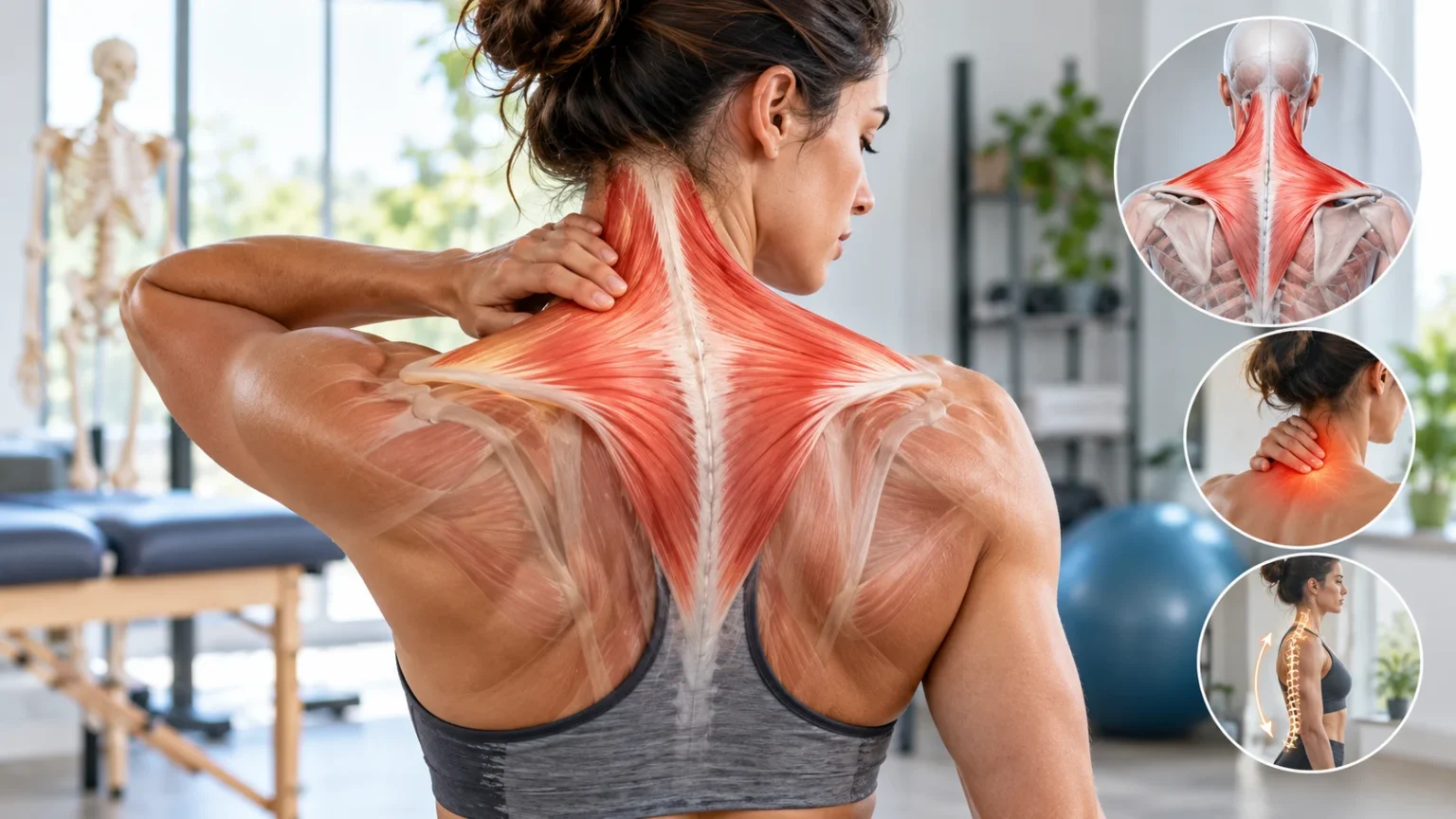
The traps muscle is a large, flat muscle that covers much of the upper back and extends into the neck and shoulders. It gets its name from its roughly trapezoid-like shape. The muscle spans from the base of the skull and cervical spine down toward the middle of the back and outward toward the shoulders.
The trapezius works closely with the shoulder blades, also called the scapulae. It helps position these bones so the arms can move efficiently during reaching, lifting, pushing, pulling, and overhead activity. Because shoulder function depends heavily on proper scapular movement, the traps play a major role in upper-body mechanics.
The muscle is divided into upper, middle, and lower portions based on the direction of its fibers. Each region has slightly different responsibilities, although they often work together. Understanding these sections helps explain why trapezius pain can appear in the neck, between the shoulder blades, or along the upper shoulders.
Where Is the Trapezius Muscle Located?
The trapezius begins around the back of the skull and continues along the neck and upper spine. From there, its fibers spread outward toward the shoulder blades and collarbones. This broad attachment area allows the muscle to influence both head position and shoulder blade movement during many different activities.
The upper trapezius is the area people often refer to when they talk about tight shoulders. It runs from the neck toward the outer shoulder and becomes active during shrugging and certain overhead movements. This region commonly feels tense after prolonged computer work, stressful periods, or repetitive activities involving the arms.
The middle and lower portions sit farther down the upper back. They attach to the shoulder blades and help control their position during arm movements. These sections are especially important for pulling the shoulder blades backward, supporting overhead motion, and maintaining balanced movement around the shoulder girdle.
What Does the Trapezius Muscle Do?
One major function of the trapezius is controlling the shoulder blades. The upper fibers help elevate and upwardly rotate the scapula, while the middle fibers help pull it toward the spine. The lower fibers contribute to downward movement and upward rotation, allowing different parts of the muscle to coordinate complex shoulder motions.
The traps are especially important when you raise your arms overhead. As the arm moves upward, the shoulder blade must rotate smoothly on the rib cage to maintain comfortable motion. The upper and lower trapezius work with other muscles, particularly the serratus anterior, to create this coordinated movement.
The trapezius also contributes to neck movement and postural control. Certain fibers assist with extending, rotating, or side bending the neck depending on which side is active. During daily activities, the muscle often works at a low level simply to support the weight and position of the shoulder girdle.
Upper, Middle, and Lower Traps Explained
The upper traps extend from the skull and upper cervical area toward the collarbone and upper shoulder blade. These fibers are involved in elevating the shoulders and assisting with upward scapular rotation. They are frequently active during carrying, overhead work, shrugging movements, and tasks that require prolonged stabilization of the shoulders.
The middle traps run more horizontally across the upper back. Their primary role is scapular retraction, meaning they help pull the shoulder blades toward the spine. Exercises involving rowing motions commonly activate this portion of the trapezius, especially when the movement focuses on controlled shoulder blade positioning.
The lower traps run diagonally from the middle spine toward the lower area of the shoulder blade. They assist with scapular depression and upward rotation, particularly during overhead movements. Strong lower traps can contribute to balanced shoulder mechanics by working alongside the upper traps rather than allowing one region to dominate every movement.
Common Causes of Trapezius Muscle Pain
Trapezius pain can develop after unfamiliar exercise, heavy lifting, repetitive work, or prolonged muscle use. Carrying bags, performing repeated overhead movements, or suddenly increasing strength-training volume can fatigue the muscle. In many cases, discomfort reflects temporary overload rather than significant structural damage.
Long periods in one position can also make the traps feel tight or sore. Sitting at a desk, looking at a screen, driving, or holding the shoulders elevated may create sustained muscle activity. The problem is often less about one supposedly bad posture and more about remaining in the same position for too long.
Stress may increase muscle tension around the neck and shoulders as well. Some people unconsciously shrug or brace the shoulders when concentrating or feeling anxious. Poor sleep, fatigue, and limited recovery can also make ordinary muscular discomfort feel more noticeable, especially when several contributing factors occur together.
Trapezius Strain and Overuse
A trapezius strain occurs when muscle fibers are overloaded beyond what they can comfortably tolerate. This can happen suddenly during lifting or sports, or gradually through repeated physical demands. Symptoms may include localized pain, tenderness, stiffness, or discomfort when moving the neck or shoulders.
Mild strains generally improve with sensible activity modification and gradual return to movement. Completely avoiding all upper-body activity for long periods may lead to additional stiffness, so comfortable motion is usually encouraged when tolerated. The key is reducing movements that clearly aggravate symptoms while allowing the muscle time to recover.
More significant strains may produce stronger pain, weakness, or difficulty performing normal activities. If symptoms follow a major injury or fail to improve over time, professional assessment can help rule out other causes. Shoulder, cervical spine, nerve, and joint problems can sometimes create symptoms that feel similar to a trapezius strain.
Why Do the Traps Feel Tight or Knotted?
People often describe the trapezius as feeling tight, hard, or full of knots. These sensations can develop after prolonged static positions, repetitive lifting, exercise, stress, or lack of movement. Localized tender areas are sometimes called trigger points, although the exact mechanisms behind these sensitive spots can be complex.
A feeling of tightness does not always mean the muscle is physically shortened. Muscles can feel tense because they are fatigued, sensitive, working continuously, or protecting an uncomfortable region. This is why aggressive stretching alone does not always provide lasting relief, especially when strength or activity habits also need attention.
Changing position, gentle movement, massage, heat, and gradual strengthening may all help depending on the cause. Some people benefit from short movement breaks during desk work rather than trying to maintain one rigid posture. Long-term improvement often comes from combining symptom relief with better tolerance for everyday physical demands.
How Traps Problems Affect the Neck and Shoulders
Because the trapezius connects the neck and shoulders, problems in one area can influence the other. Upper trap soreness may make turning the head uncomfortable or create a pulling sensation along the side of the neck. Shoulder movement can also feel limited when the muscle is particularly irritated or fatigued.
Shoulder blade mechanics can change when the trapezius is weak, painful, or poorly coordinated with surrounding muscles. Some people notice discomfort during overhead reaching, pulling movements, or prolonged arm use. However, shoulder symptoms rarely come from one muscle alone, so other structures should also be considered when pain persists.
Musculoskeletal symptoms can occur in multiple body regions for unrelated reasons. For example, a person dealing with upper-body muscle tension may also notice a knee lump that requires separate evaluation. Matching each symptom to its own location and likely cause helps avoid assuming that unrelated problems have the same explanation.
Exercises for Stronger Trapezius Muscles
Rows are a useful exercise for strengthening the middle trapezius and surrounding upper-back muscles. Using a resistance band, cable, or weights, pull the arms backward while controlling the shoulder blades. Avoid aggressively squeezing them together; instead, aim for smooth movement and a comfortable range.
Shrugs can strengthen the upper traps when performed with control. Raise the shoulders toward the ears, pause briefly, and lower them slowly rather than rolling the shoulders in large circles. Weight can be added gradually once bodyweight movement feels easy and does not produce uncomfortable neck symptoms.
Lower trap exercises often involve controlled arm raises, wall movements, or prone positions where the arms move overhead. These exercises should emphasize quality rather than heavy resistance because shoulder blade control matters. Combining upper, middle, and lower trap exercises generally provides more balanced development than focusing only on shrugging movements.
Stretching and Mobility for Tight Traps
Gentle neck stretches may temporarily reduce the sensation of tightness around the upper traps. Tilting the head slightly away from the uncomfortable side can create a mild stretch, but there is no need to pull aggressively. Stretching should feel comfortable and should not cause sharp pain, dizziness, numbness, or tingling down the arm.
Shoulder rolls and controlled neck movements can also help after prolonged sitting. Slowly moving through comfortable ranges gives muscles and joints a break from static positions. Frequent short movement sessions are often easier to tolerate than one long stretching routine performed only after significant stiffness has already developed.
Upper-back mobility is worth considering as well because the thoracic spine and shoulder blades work closely with the traps. Gentle rotations, wall slides, or arm movements can encourage broader upper-body motion. Mobility exercises work best when combined with strengthening and regular activity rather than being treated as the only solution.
Tips for Preventing Trapezius Pain
Varying your position during the day can reduce sustained loading on the trapezius. If you work at a computer, alternate sitting positions, stand periodically, and take brief movement breaks when possible. The goal is not maintaining a perfect posture every minute but avoiding long periods where the muscles remain unnecessarily tense.
Progress exercise gradually, especially when adding overhead presses, rows, carries, or shrugs. Large increases in weight, volume, or frequency can overload muscles that are not prepared for the new demand. Consistent progression allows the trapezius and surrounding tissues to adapt without making every workout excessively challenging.
Sleep, recovery, and general physical activity matter as well. Muscles tend to tolerate everyday demands better when overall conditioning is good and adequate recovery is available. A balanced program that includes upper-body strength, aerobic activity, and regular movement can be more useful than trying to prevent pain through stretching alone.
When to Seek Medical Attention
Most mild trapezius soreness after exercise or prolonged activity improves with time and sensible movement. Medical assessment may be appropriate when pain remains severe, continues worsening, or repeatedly interferes with sleep and everyday activities. Persistent symptoms can sometimes come from the shoulder joint, cervical spine, or nerves rather than the trapezius itself.
Seek more prompt attention if pain follows a major accident, fall, or direct injury. Significant arm weakness, persistent numbness, loss of coordination, or severe radiating pain should also be evaluated. These symptoms may indicate nerve involvement or another condition that requires more than simple muscle care.
Chest pain, difficulty breathing, fever, unexplained illness, or other unusual symptoms occurring with upper-back or shoulder discomfort should not automatically be blamed on muscle tension. These situations deserve appropriate medical evaluation. Recognizing warning signs makes it easier to manage ordinary muscular soreness without overlooking problems that require specific treatment.
Conclusion
The traps muscle is a large upper-back muscle that plays an essential role in neck movement, shoulder blade control, and upper-body stability. Its upper, middle, and lower regions perform different but coordinated functions. Because the trapezius is involved in so many everyday movements, soreness and tightness in this area are relatively common.
Most mild trap problems are associated with overuse, unfamiliar exercise, prolonged positions, or temporary muscle tension. Gentle movement, gradual strengthening, mobility work, and sensible activity adjustments can often improve comfort. Building strength throughout the upper back and shoulders may also make the area more tolerant of daily demands.
Persistent pain, significant weakness, neurological symptoms, or discomfort following major trauma should be assessed rather than treated as routine muscle tightness. Understanding the trapezius and its role in movement can help you choose more appropriate exercises, recognize common issues, and maintain stronger, more comfortable shoulders and upper back.
FAQs
Where exactly is the traps muscle?
The trapezius extends from the base of the skull and neck across the shoulders and down the upper back. It connects to the shoulder blades, collarbones, and several spinal structures.
What causes tight trapezius muscles?
Common contributors include prolonged sitting, repetitive work, exercise overload, stress, fatigue, and staying in one position for extended periods. Tightness can reflect muscle sensitivity or fatigue rather than true muscle shortening.
What exercise works the traps best?
Rows, shrugs, carries, wall raises, and controlled overhead movements can all strengthen different areas of the trapezius. A balanced program should target the upper, middle, and lower fibers rather than only one section.
Can trapezius pain cause headaches?
Upper trapezius and neck muscle tension can sometimes occur alongside headaches, particularly around the base of the skull or neck. Persistent, severe, or unusual headaches should be evaluated for other potential causes.
How long does a trapezius strain take to heal?
Mild muscle strains may improve over several days or weeks, depending on severity and activity demands. More significant injuries can take longer and may benefit from professional assessment and structured rehabilitation.