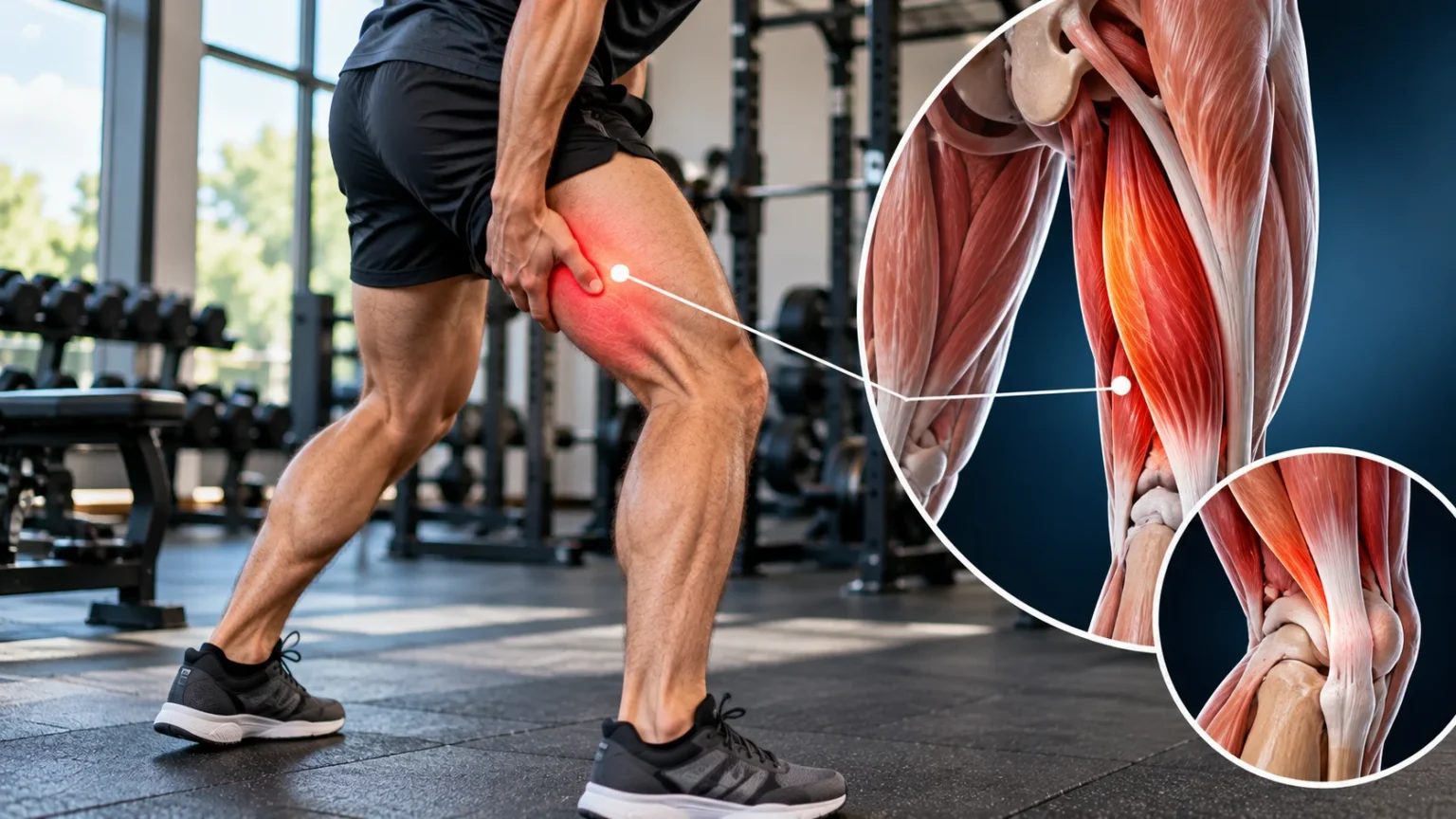

The biceps femoris tendon is an important structure at the back and outer side of the thigh and knee. It connects part of the hamstring muscle group to bone and helps transfer force during walking, running, bending the knee, and extending the hip. Because it is active in many lower-body movements, the tendon can become irritated or injured through overuse, sudden acceleration, or excessive strain.
Understanding the location and function of the biceps femoris tendon can make it easier to recognize why pain sometimes develops near the outer knee or back of the thigh. Symptoms may range from mild tightness and tenderness to sharper pain during sprinting, climbing stairs, or bending the knee. The exact pattern depends on whether the problem involves the tendon, muscle, nearby joint, or another structure.
This guide explains where the biceps femoris tendon is located, what it does, common injuries and symptoms, possible causes, and practical ways to manage mild irritation. It also covers strengthening, stretching, prevention, and signs that suggest you should seek professional medical assessment.
What Is the Biceps Femoris Tendon?
The biceps femoris is one of the three main muscles that make up the hamstring group. It has two parts, called the long head and short head, which join as they travel toward the outer side of the knee. Their tendon helps attach the muscle to the fibula, one of the bones of the lower leg.
Like other tendons, the biceps femoris tendon is made from strong connective tissue designed to transfer muscular force to bone. When the hamstring contracts, the tendon helps transmit that force so the knee can bend and the hip can move effectively. It also contributes to stability during weight-bearing activities.
Although the tendon is strong, repetitive loading or sudden excessive force can irritate or damage it. Athletes who sprint, jump, kick, or change direction quickly may place greater stress on the structure. However, tendon discomfort can also occur in recreational exercisers or people who increase activity too quickly.
Where Is the Biceps Femoris Tendon Located?
The biceps femoris runs along the back and outer portion of the thigh. As the muscle travels downward, it narrows into a tendon that passes along the outside of the knee. The tendon primarily attaches to the head of the fibula, which can be felt as a small bony area below the outer side of the knee.
Because of this location, biceps femoris tendon pain is often felt toward the posterolateral knee, meaning the back and outer side of the joint. Some people may also feel tenderness slightly higher in the lower hamstring. The discomfort can sometimes be mistaken for pain coming from the knee joint itself.
The tendon sits close to other important structures, including ligaments, nerves, and the lateral knee tissues. This makes self-diagnosis difficult when pain develops in the area. A physical examination can help determine whether the symptoms are actually coming from the biceps femoris tendon or a nearby structure.
What Does the Biceps Femoris Tendon Do?
One of the main functions of the biceps femoris is knee flexion. This means it helps bend the knee, such as when you bring your heel toward the back of your thigh. The tendon transfers force from the muscle so this movement can occur efficiently during walking, running, and exercise.
The long head of the biceps femoris also assists with hip extension. Hip extension occurs when the thigh moves backward or when you rise from a bent position. This action is important during sprinting, climbing, deadlifting, and many everyday activities involving the hips.
The biceps femoris also contributes to external rotation of the lower leg when the knee is bent. In addition, it helps stabilize the outside of the knee during movement. These combined roles make the muscle-tendon unit important for lower-body coordination, balance, and powerful athletic actions.
How the Biceps Femoris Works With the Hamstrings
The biceps femoris works alongside the semitendinosus and semimembranosus, the other major hamstring muscles. Together, these muscles help bend the knee and extend the hip. They also control the leg during running, especially when the lower leg swings forward before the foot contacts the ground.
Each hamstring muscle has a slightly different anatomical position and function. The biceps femoris lies more toward the outer side of the thigh, while the semitendinosus and semimembranosus lie more toward the inner side. This arrangement allows the hamstrings to support movement from several directions.
Balanced strength across the hamstring group is important because one muscle should not be forced to handle excessive workload repeatedly. Weakness, fatigue, or poor coordination can alter how force is distributed. Over time, this may contribute to irritation around the muscle or tendon during demanding activities.
Common Biceps Femoris Tendon Problems
One common problem is tendinopathy, which develops when a tendon becomes sensitive and less tolerant of repeated loading. Symptoms may appear gradually rather than after one obvious injury. Running, sprinting, jumping, or repeated knee flexion can become uncomfortable as irritation increases.
Acute tendon strains can also occur during sudden movements. A powerful sprint, rapid direction change, or forceful stretch may overload the tissue beyond what it can tolerate. The injury may involve the muscle, tendon, or the area where the muscle transitions into the tendon.
Less commonly, severe trauma can cause partial or complete tearing. This is more serious and may produce sudden sharp pain, swelling, bruising, or weakness. An inability to walk normally or bend the knee effectively after an injury should be assessed promptly by a healthcare professional.
Symptoms of Biceps Femoris Tendon Irritation
Pain near the outer back portion of the knee is a common symptom. The area may feel tender when pressed, especially near the fibular head where the tendon attaches. Some people describe the discomfort as aching, pulling, sharp, or tight depending on the severity and type of injury.
Symptoms often become more noticeable during activities that load the hamstrings. Running, climbing stairs, bending the knee against resistance, or performing hamstring curls may reproduce discomfort. Sprinting and explosive movement can be particularly irritating because they place high forces through the tendon.
Pain can also be felt higher in the thigh when the muscle-tendon region is involved. Since many conditions can cause discomfort in this area, it helps to consider the broader symptom pattern. This guide on thigh pain explains other common causes and warning signs associated with discomfort in the thigh.
What Causes Biceps Femoris Tendon Pain?
Sudden increases in training volume are a frequent cause of tendon irritation. For example, someone who quickly adds more sprinting, hill running, or hamstring exercises may expose the tendon to more stress than it has adapted to handle. The tissue may become painful even without a specific traumatic event.
Muscle fatigue can also increase the risk of overload. When the hamstrings become tired, movement control may decline and stress may shift unevenly between tissues. This can be particularly relevant during sports involving repeated accelerations, jumps, or changes of direction.
Other contributing factors may include previous hamstring injury, limited strength, poor load management, or returning to sport too quickly. No single factor explains every case. Tendon pain usually develops from a combination of tissue capacity, training demands, movement patterns, and recovery.
Biceps Femoris Tendinopathy
Tendinopathy is a condition in which a tendon becomes painful and less able to tolerate normal loading. It often develops gradually and may be associated with repetitive use rather than a single injury. Biceps femoris tendinopathy can affect the tendon near the knee or sometimes closer to the upper hamstring.
Pain from tendinopathy may initially appear only during exercise and improve afterward. As the condition becomes more irritated, symptoms can begin earlier in activity or remain uncomfortable afterward. Stiffness may also be noticeable after rest or at the beginning of a workout.
Complete rest is not always the best long-term approach for tendinopathy because tendons need appropriate loading to regain strength. However, continuing the exact activity that repeatedly aggravates symptoms may also delay improvement. A gradual rehabilitation program is often used to rebuild tolerance.
Biceps Femoris Strain
A biceps femoris strain occurs when muscle fibers or the muscle-tendon area are overstretched or overloaded. Strains are common in activities that involve high-speed running. The biceps femoris is frequently involved in hamstring injuries because of the demands placed on it during sprinting.
Mild strains may cause localized soreness, tightness, or discomfort when stretching or contracting the hamstring. More significant injuries can produce sudden sharp pain, weakness, swelling, and bruising. Some people describe feeling a pulling or snapping sensation at the moment of injury.
The recovery period depends on the severity and exact location of the strain. Mild injuries may improve relatively quickly, while larger tears can require substantially longer rehabilitation. Returning to sprinting or demanding exercise too early may increase the chance of reinjury.
How Biceps Femoris Tendon Problems Are Diagnosed
A healthcare professional typically begins by asking about your symptoms, activity level, and how the pain started. The location of tenderness and the movements that reproduce symptoms can provide useful clues. Strength and range of motion may also be compared between both legs.
Physical tests may involve resisted knee bending, hip movement, or gentle stretching of the hamstring. The examiner may also assess the knee, lower back, and nearby nerves because these areas can produce symptoms that resemble tendon pain.
Imaging is not always necessary for mild cases. However, ultrasound or magnetic resonance imaging may be considered when a significant tear is suspected, symptoms are unusual, or pain does not improve as expected. Imaging should be interpreted alongside the physical examination rather than used alone.
How to Relieve Mild Biceps Femoris Tendon Pain
Begin by reducing activities that clearly aggravate the tendon. This does not necessarily mean stopping all movement, but sprinting, jumping, or heavy hamstring exercises may need temporary modification. Low-intensity walking or other comfortable activities may still be possible depending on your symptoms.
Cold packs can sometimes provide short-term comfort after a recent painful episode, while warmth may feel better for stiffness. These methods primarily help with symptoms and do not directly restore tendon strength. Protect the skin and keep application times moderate.
As pain settles, gradual exercise becomes important for rebuilding capacity. The goal is to progressively expose the tendon to manageable resistance without creating a major increase in symptoms. A physical therapist can help design an appropriate progression when pain is persistent or activity demands are high.
Strengthening Exercises for the Biceps Femoris
Hamstring bridges are a simple starting exercise for some people. Lie on your back with your knees bent and heels on the floor, then lift your hips under control. Moving the feet slightly farther away can increase hamstring involvement, although the position should remain comfortable.
Hamstring curls can also strengthen the biceps femoris and related muscles. These can be performed using a machine, resistance band, or exercise ball depending on your equipment. Start with light resistance and focus on a slow lowering phase rather than rushing through repetitions.
More advanced rehabilitation may include Romanian deadlifts, sliding leg curls, or Nordic hamstring exercises. These movements can create substantial load, so they should be introduced gradually. Progress should depend on strength, pain response, and your ability to maintain proper technique.
Should You Stretch the Biceps Femoris Tendon?
Gentle hamstring stretching can help maintain flexibility, but stretching is not always the solution to tendon pain. Aggressive stretching may increase irritation when the tendon is already sensitive. This is particularly important if discomfort appears near a tendon attachment rather than in the middle of the muscle.
If you stretch, move slowly until you feel mild tension through the back of the thigh. Avoid bouncing or forcing the knee completely straight when that increases pain. A comfortable stretch should not create sharp, burning, or lingering symptoms afterward.
Mobility work should be combined with strength and load management rather than used as the only treatment. A flexible tendon that cannot tolerate force can still remain painful. Gradually improving strength and activity tolerance is often more useful for long-term recovery.
How Long Does Recovery Take?
Recovery time varies significantly depending on whether the problem involves mild irritation, tendinopathy, a muscle strain, or a substantial tear. Minor symptoms may improve within days or weeks, while more persistent tendon problems can take considerably longer.
Pain reduction does not always mean the tendon has fully regained its previous capacity. You may feel comfortable during daily activities before you are ready for maximum sprinting or heavy resistance training. Returning gradually allows the tissue to adapt to increasing levels of force.
A useful recovery plan considers both symptoms and performance. Strength, flexibility, running tolerance, and confidence should improve before returning fully to demanding activity. Severe injuries require individualized timelines because healing can vary greatly from one person to another.
How to Prevent Biceps Femoris Injuries
Gradual training progression is one of the most practical prevention strategies. Avoid suddenly increasing sprint volume, running speed, or the amount of hamstring resistance work you perform. Small increases give muscles and tendons time to adapt to greater demands.
Regular hamstring strengthening can also improve the ability of the muscle-tendon unit to tolerate force. Exercises that emphasize controlled lengthening, such as Romanian deadlifts or appropriately progressed Nordic curls, may be particularly useful within a balanced program.
Warm-ups should prepare your body for the specific activity ahead. Light movement, dynamic mobility, and gradually faster running drills can help transition the hamstrings into more demanding work. Adequate recovery between intense sessions is equally important for maintaining tissue capacity.
When Should You See a Healthcare Professional?
Seek professional assessment if pain is severe, follows a sudden traumatic movement, or prevents you from walking normally. Significant swelling, bruising, or weakness can indicate a more substantial strain or tear that should not be managed solely with home exercises.
You should also arrange an evaluation if symptoms remain persistent despite reducing aggravating activities and gradually modifying exercise. Recurring hamstring injuries may indicate that strength, rehabilitation, or return-to-sport progression needs to be reviewed more carefully.
Prompt care is important if pain occurs with major numbness, worsening weakness, or symptoms that suggest nerve involvement. Discomfort around the outer knee can sometimes come from nearby structures, so persistent or unusual symptoms deserve a clear diagnosis.
Conclusion
The biceps femoris tendon is an important part of the hamstring system and helps connect muscle to bone near the outer side of the knee. It supports knee bending, hip extension, leg rotation, and lower-body stability during everyday movement and exercise.
Common problems include tendinopathy, strains, overuse irritation, and less commonly significant tears. Symptoms often involve pain or tenderness near the outer back of the knee or lower hamstring and may become worse during running, knee flexion, or explosive activity.
Mild problems may improve with temporary activity modification and gradual strengthening, but persistent or severe symptoms should be assessed professionally. Building hamstring strength, progressing training gradually, and allowing adequate recovery can help reduce the likelihood of future biceps femoris tendon problems.
FAQs
Where is the biceps femoris tendon located?
The biceps femoris tendon runs along the outer back portion of the knee and attaches mainly to the head of the fibula. It connects the biceps femoris muscle to the lower leg.
What does biceps femoris tendon pain feel like?
Pain may feel aching, sharp, tight, or tender near the outer back of the knee or lower hamstring. Running, bending the knee, or resisted hamstring exercises may increase symptoms.
Can you walk with a biceps femoris tendon injury?
Mild irritation may still allow comfortable walking, while more significant strains can make walking painful or difficult. Avoid pushing through severe pain, weakness, or a noticeable limp.
How do you strengthen the biceps femoris?
Bridges, hamstring curls, Romanian deadlifts, and progressively introduced Nordic hamstring exercises can strengthen the biceps femoris. Begin with manageable resistance and increase the load gradually as strength improves.
How long does a biceps femoris injury take to heal?
Recovery depends on the severity and type of injury. Mild irritation may settle within weeks, while significant strains or persistent tendon problems can require a longer, structured rehabilitation period.