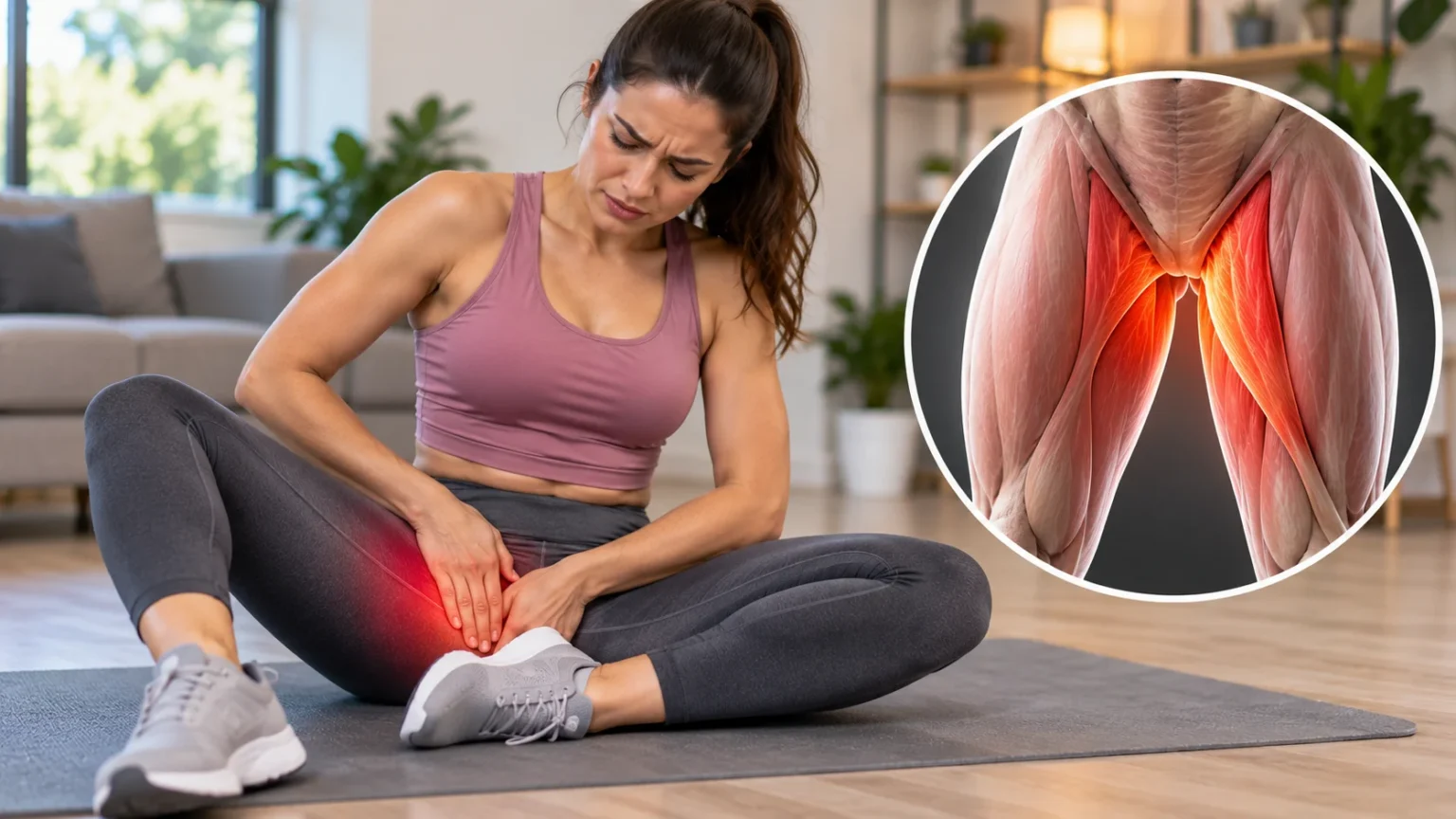

Pain in the inner thigh can range from a mild pulling sensation to sharp discomfort that affects walking, exercise, or everyday movement. The inner thigh contains several muscles, tendons, nerves, and nearby joints, so discomfort in this area can develop for different reasons. Muscle strains are common, but hip problems, nerve irritation, overuse, and other conditions may also contribute.
The location and type of pain can provide useful clues. Some people notice soreness after exercise, while others develop burning, aching, cramping, or sudden pain without an obvious injury. Symptoms may remain near the groin or extend farther down the leg depending on which structures are irritated.
Most mild inner thigh problems improve with activity modification and gradual recovery, but persistent or severe pain deserves proper evaluation. Understanding common causes can help you decide how to manage symptoms safely. This guide explains possible reasons for inner thigh pain, practical relief strategies, helpful exercises, and signs that medical attention may be needed.
What Causes Pain in the Inner Thigh?
Inner thigh pain commonly develops when the muscles or tendons around the groin are overloaded. Activities involving running, kicking, sudden changes of direction, or wide leg movements can place substantial stress on these tissues. An awkward step or unexpected stretch can also cause a strain, particularly when the muscles are tight or insufficiently warmed up.
Pain does not always originate directly from the inner thigh muscles. Problems involving the hip joint, lower back, pelvis, or nearby nerves can sometimes create discomfort that is felt in the groin or upper inner leg. This is known as referred pain because the source of the problem may be located somewhere else.
The cause can also depend on your recent activity and overall health. Increased training volume, repetitive movements, prolonged sitting, previous injuries, and reduced hip mobility may all influence symptoms. Because several conditions can produce similar sensations, persistent pain should not automatically be assumed to be a simple muscle strain.
Inner Thigh Muscle Strain
A muscle strain is one of the most common reasons for sudden pain in the inner thigh. It usually occurs when the adductor muscles are stretched or loaded beyond what they can tolerate. Sprinting, changing direction quickly, kicking a ball, or slipping unexpectedly may cause fibers within these muscles to become irritated or damaged.
Symptoms can include tenderness, tightness, swelling, or pain when bringing the legs together. Mild strains may produce soreness that allows you to continue walking, while more significant strains can make movement difficult. Bruising may occasionally appear when more muscle fibers have been injured.
Early management usually involves reducing activities that clearly aggravate the pain. Gentle movement can often be maintained if it does not worsen symptoms significantly. As discomfort settles, gradually rebuilding hip strength and flexibility can help restore normal movement and reduce the chance of returning to demanding activities too quickly.
Groin Pain and Adductor Problems
The adductor muscles run along the inner thigh and help pull the leg toward the center of the body. They also contribute to hip stability during walking, running, and directional changes. Because these muscles work repeatedly during athletic activity, they can become sore from overuse even without a sudden injury.
Adductor-related pain is often felt close to the groin and may become more noticeable when squeezing the knees together. Running, side lunges, climbing stairs, and rapid lateral movements can sometimes aggravate symptoms. Tightness may also be noticeable after sitting for extended periods or when taking wider steps.
Not every groin symptom comes from the adductor muscles, however. Hip joint problems, hernias, pelvic conditions, and other causes can create discomfort in a similar area. If pain repeatedly returns, becomes severe, or is accompanied by swelling or another unusual symptom, professional assessment is sensible.
Hip Problems That Can Cause Inner Thigh Pain
The hip joint sits close to the groin, which means some hip conditions can produce pain that feels like it is coming from the inner thigh. Irritation within the joint may cause aching, stiffness, or discomfort during walking and hip rotation. Some people also notice reduced range of motion or difficulty putting on shoes and socks.
Hip discomfort can become more noticeable after long periods of sitting or during activities that involve deep bending. Squats, getting into a low chair, climbing stairs, or turning the leg inward may trigger symptoms depending on the underlying issue. The pain may stay around the groin or spread into the front or inner thigh.
Because the hip supports much of the body’s weight during standing and walking, persistent symptoms can affect movement patterns. People may shorten their stride or shift weight toward the opposite side. If hip stiffness and inner thigh pain continue despite reducing aggravating activities, evaluation can help determine what is contributing.
Can Nerve Problems Cause Inner Thigh Pain?
Nerves traveling from the lower spine and pelvis supply sensation to different parts of the thigh. Irritation or compression of one of these nerves can sometimes create burning, tingling, numbness, or unusual sensitivity along the inner leg. Nerve-related discomfort may feel different from the localized soreness associated with a muscle strain.
Certain spinal problems can also produce referred symptoms into the thigh. The exact location depends on which nerve structures are involved, and symptoms may occur alongside lower-back pain or weakness. Some people notice discomfort only during certain positions, while others experience symptoms during walking or prolonged standing.
Nerve symptoms should be monitored carefully, especially when they become progressively worse. Significant weakness, persistent numbness, or difficulty controlling the leg deserves professional assessment. Exercises that help ordinary muscle tightness may not be appropriate when symptoms are primarily caused by nerve irritation.
Inner Thigh Pain After Exercise
Inner thigh soreness after exercise may simply reflect muscles adapting to unfamiliar activity. Starting a new workout, increasing running distance, or performing exercises such as lunges and lateral movements can challenge the adductors more than usual. Delayed muscle soreness often develops several hours later and tends to improve gradually over a few days.
Sharp pain occurring during a particular movement is different from ordinary post-workout soreness. Sudden discomfort may indicate that a muscle or tendon has been overloaded. Continuing the same exercise at high intensity can worsen irritation, so reducing the load and monitoring symptoms is generally more appropriate.
Balanced training can help reduce excessive stress on one area of the leg. The hamstrings also contribute to hip and knee movement, and understanding structures such as the biceps femoris tendon can help explain how different muscle groups work together during lower-body exercise. Strengthening the entire lower body may support better movement control.
How to Relieve Mild Inner Thigh Pain
For mild muscle-related pain, reducing the activity that triggered symptoms is often a useful first step. You do not necessarily need to stop all movement, but running, jumping, or deep lateral exercises may need to be limited temporarily. Gentle walking can often be continued when it does not cause pain to increase.
Cold or warm treatments may feel soothing depending on the situation and personal preference. Cooling the area may be helpful shortly after an acute strain, while gentle warmth can sometimes make tight muscles feel more comfortable later. Avoid placing extreme heat or ice directly against the skin for prolonged periods.
Recovery should focus on gradual improvement rather than trying to eliminate discomfort immediately. As symptoms settle, comfortable movement can be increased little by little. If pain worsens despite rest and basic self-care, or keeps returning whenever activity resumes, further evaluation may be appropriate.
Gentle Stretches for Inner Thigh Tightness
A gentle seated adductor stretch can help when tightness is present without an acute injury. Sit with the soles of your feet facing each other and allow your knees to move outward naturally. Keep your back comfortable and avoid pushing the knees downward aggressively with your hands.
A wide-stance side shift is another option for improving inner thigh mobility. Stand with your feet wider than hip-width and slowly bend one knee while keeping the opposite leg relatively straight. Shift only until you feel mild tension along the inner thigh, then return to the center and repeat on the other side.
Stretching should never produce sharp or increasing pain. A mild pulling sensation may be appropriate, but intense discomfort is a reason to reduce the range or stop. If a recent strain is still painful during normal walking, aggressive stretching may irritate the area rather than speed recovery.
Strengthening Exercises for the Inner Thigh
Strengthening the adductors gradually can improve their ability to tolerate everyday and athletic demands. One simple exercise involves lying on your side and lifting the lower leg slowly toward the ceiling. Keep the movement small and controlled rather than trying to lift the leg as high as possible.
Another option is placing a soft ball or pillow between the knees while sitting or lying down. Gently squeeze the object for several seconds, relax, and repeat. This creates an isometric contraction, which allows the inner thigh muscles to work without requiring a large range of hip movement.
Progress should be gradual, particularly after pain or injury. Begin with light effort and fewer repetitions before increasing resistance or adding more challenging movements such as lateral lunges. Exercises should leave the muscles feeling worked without producing sharp pain, worsening limping, or significant increases in symptoms afterward.
How to Prevent Inner Thigh Pain
A proper warm-up can prepare the hips and legs for activities involving running, kicking, or rapid changes of direction. Begin with several minutes of easy movement before gradually introducing more dynamic exercises. Suddenly performing explosive movements while the muscles are cold may place unnecessary stress on the adductors.
Increasing training intensity gradually is equally important. A sudden jump in running distance, sports practice, or lower-body workout volume can overload tissues that have not adapted to the demand. Small increases give muscles and tendons time to build strength and endurance without being pushed beyond their current capacity.
Balanced lower-body training may also support prevention. Strengthening the glutes, quadriceps, hamstrings, calves, and inner thigh muscles helps distribute forces throughout the legs. Mobility, adequate recovery, and appropriate footwear can further support comfortable movement during exercise and everyday activities.
When Should You See a Doctor for Inner Thigh Pain?
Professional assessment may be helpful when inner thigh pain does not improve after several days of reduced activity or repeatedly returns. Significant swelling, bruising, inability to bear weight, or severe pain after an injury may indicate more than a mild strain. A clinician can examine the area and determine whether further testing is needed.
Seek prompt medical attention if leg pain is accompanied by substantial swelling, warmth, redness, or unusual tenderness, particularly when symptoms develop without a clear muscle injury. These signs can occasionally be associated with problems requiring urgent evaluation rather than ordinary exercise-related soreness.
Emergency care may be appropriate if severe leg symptoms occur alongside breathing difficulty, chest pain, fainting, or sudden serious weakness. These symptoms should not be treated with stretching or home exercise. When the cause of inner thigh pain is uncertain, getting an appropriate assessment is safer than repeatedly exercising through worsening symptoms.
Conclusion
Pain in the inner thigh can result from muscle strain, adductor overuse, hip problems, nerve irritation, or several other causes. The way symptoms begin and the movements that aggravate them can provide useful information. Mild muscular pain often improves gradually with activity modification, comfortable movement, and appropriate recovery.
Gentle stretching and strengthening may help restore mobility once acute discomfort begins to settle. Focus on controlled exercises rather than forcing the leg through painful ranges. Gradually rebuilding strength throughout the hips and legs can also make returning to walking, running, or sports more comfortable.
Persistent, severe, or unexplained inner thigh pain deserves closer attention. Symptoms involving major swelling, weakness, numbness, or difficulty bearing weight should not simply be pushed through. Understanding your symptoms and responding early can help you choose a safer and more appropriate path toward relief.
FAQs
Why does my inner thigh hurt when I walk?
Inner thigh pain while walking may result from an adductor strain, hip irritation, muscle tightness, or another musculoskeletal issue. Persistent pain, limping, swelling, or worsening symptoms should be evaluated professionally.
How do I know if I strained my inner thigh?
A strain often causes pain after sudden stretching, running, kicking, or changing direction. Tenderness and discomfort when squeezing the legs together may also occur, although an examination may be needed for confirmation.
Should I stretch an injured inner thigh?
Gentle mobility may be appropriate once symptoms allow, but aggressive stretching can irritate a recent muscle injury. Stay within a comfortable range and avoid movements that create sharp or increasing pain.
How long does inner thigh pain take to go away?
Recovery time varies depending on the cause and severity. Mild muscular soreness may settle within days, while more significant strains or other conditions can take considerably longer and may require rehabilitation.
Can inner thigh pain come from the hip?
Yes. Hip joint problems can sometimes cause pain that is felt in the groin or upper inner thigh. Hip stiffness, reduced motion, or pain during rotation may provide additional clues.