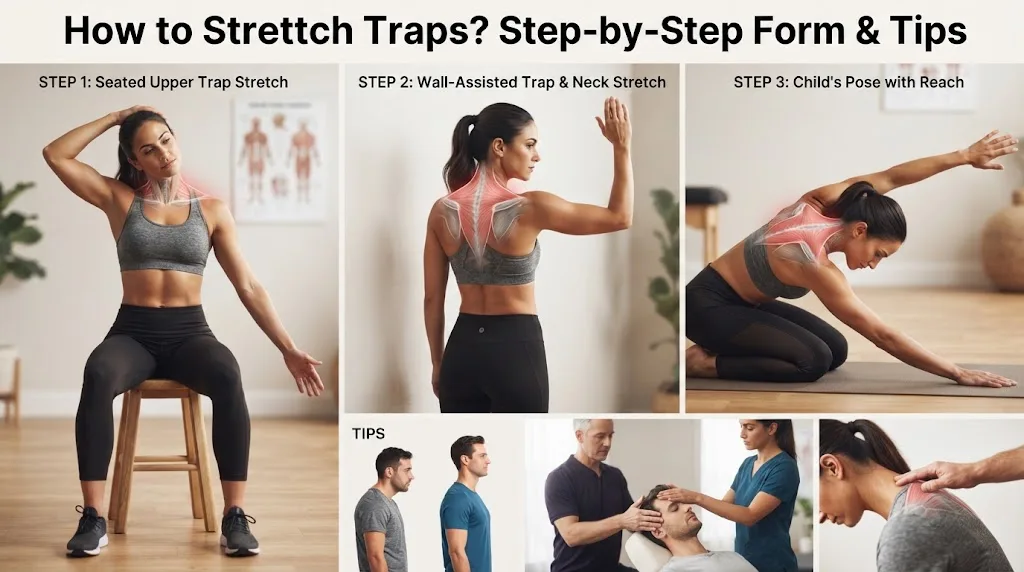

The trapezius is a large, broad muscle that covers much of the upper back and extends from the neck toward the shoulders and middle spine. It is usually divided into upper, middle, and lower sections. Together, these fibers help control the shoulder blades, support neck movement, and stabilize the upper body during lifting, carrying, and everyday activities.
The upper trapezius helps elevate the shoulders and contributes to neck movement, while the middle fibers help pull the shoulder blades toward the spine. The lower trapezius assists with downward and upward rotation of the shoulder blades. Because these sections perform different jobs, one single trap stretch may not target every part of the muscle equally.
Tightness is most commonly noticed around the upper traps near the base of the neck and tops of the shoulders. Long hours at a computer, stress, repetitive lifting, overhead exercise, or poor recovery can make this area feel stiff. Gentle stretching combined with movement and strengthening can often improve comfort more effectively than aggressive stretching alone.
Why Do Your Traps Feel Tight?
Long periods of sitting can contribute to upper trapezius discomfort, particularly when your head remains forward and your shoulders stay elevated. Computer work, phone use, and driving can all encourage these positions. The muscle may remain active for extended periods, leaving the neck and shoulder region feeling tired, stiff, or sensitive by the end of the day.
Stress may also contribute to trap tightness because many people unconsciously raise or tense their shoulders when they feel anxious or under pressure. This constant low-level muscle activity can create a sensation of tightness even without a specific injury. Relaxed breathing, regular movement breaks, and changing posture can sometimes help as much as stretching.
Exercise can be another reason the trapezius feels tight. Shrugs, deadlifts, rows, overhead presses, and carrying exercises all involve the traps, particularly when resistance or training volume increases suddenly. Post-workout muscle fatigue is usually temporary, but sharp pain, weakness, numbness, or persistent symptoms may require assessment rather than repeated stretching.
How to Do a Basic Upper Trap Stretch
Start by sitting or standing tall with your shoulders relaxed and your head facing forward. Slowly tilt your right ear toward your right shoulder without rotating your head or lifting the shoulder upward. You should feel a mild stretch along the left side of your neck and upper shoulder rather than sharp pressure or pain.
To increase the stretch slightly, place your right hand gently over the left side of your head. Apply only light pressure and allow the weight of your arm to guide the movement rather than pulling forcefully. Keep the left shoulder relaxed or reach the left hand toward the floor to create a little more distance between the shoulder and ear.
Hold the position for about 15 to 30 seconds while breathing slowly and naturally. Return your head to the center before repeating on the other side. One or two gentle repetitions per side may be enough initially, especially if your neck feels sensitive or you are new to stretching the upper trapezius.
Seated Trap Stretch Step by Step
A seated version can make it easier to keep your torso stable while stretching the upper traps. Sit toward the front of a sturdy chair with both feet flat on the floor. Hold the edge of the chair lightly with your left hand, which helps keep the left shoulder from rising as you move your head.
Tilt your right ear toward your right shoulder until you feel a comfortable stretch on the opposite side. If needed, place your right hand over your head and add very gentle pressure. Avoid twisting your chin toward your chest unless you are intentionally trying to target a slightly different area around the back and side of the neck.
Keep your back upright and avoid collapsing sideways through the torso. The movement should come mainly from the neck while the shoulder stays relaxed and low. This seated trap stretch can be useful during work breaks because it requires little space and can be performed without changing clothes or using exercise equipment.
How to Stretch the Traps With an Arm Reach
An arm reach can increase the stretch by gently depressing the shoulder while the neck moves in the opposite direction. Stand or sit tall and reach your left hand down toward the floor as though you are trying to make your arm slightly longer. Keep the shoulder relaxed instead of forcefully pushing it downward.
Next, tilt your head slowly toward the right until you feel tension through the left upper trap. You can turn your nose slightly downward if that position feels more comfortable, but avoid forcing the neck into a large rotation. Hold the stretch while maintaining an easy breathing pattern and keeping your jaw and shoulders relaxed.
Return slowly to the starting position and repeat on the other side. This version can be helpful when one shoulder tends to remain elevated during regular neck stretches. Keep the movement controlled because stronger pulling does not automatically produce a better result and may irritate sensitive neck muscles or joints.
Stretches for the Middle and Lower Traps
The middle and lower trapezius fibers are not usually stretched in exactly the same way as the upper traps. A gentle upper-back reach can create movement through the area by allowing the shoulder blades to spread apart. Clasp your hands in front of you, reach forward, and gently round the upper back while keeping the movement comfortable.
You can also use a supported child’s pose or similar overhead reach to lengthen tissues around the shoulders and upper back. Place your hands on a stable surface, step backward, and allow your chest to lower slightly between your arms. Avoid forcing the shoulders into a painful overhead position, especially if you have limited shoulder mobility.
For many people, the middle and lower traps benefit as much from strengthening as from stretching. Exercises such as rows, wall slides, and controlled shoulder-blade movements can improve support around the upper back. A balanced routine should therefore include both mobility and strength rather than treating every feeling of tightness as something that needs aggressive stretching.
When Is the Best Time to Stretch Your Traps?
Trap stretches can be performed after long periods of sitting, computer work, driving, or other activities that leave your shoulders feeling tense. Short movement breaks throughout the day may be more useful than waiting until the end of the evening. Even one or two gentle stretches combined with shoulder rolls can help interrupt prolonged static posture.
Stretching after exercise can also feel comfortable when the upper back and shoulders are warm. Keep post-workout stretches gentle because fatigued muscles do not need to be forced into extreme positions. If your traps feel sore after heavy lifting, light movement and recovery may be more appropriate than trying to stretch as deeply as possible.
People returning to activity after surgery or a medical procedure should follow their clinician’s restrictions before introducing new stretches or upper-body exercise. Recovery timelines can vary considerably depending on the procedure. For example, someone researching activity after gynecologic surgery may also find guidance about sex after hysterectomy useful when understanding the broader importance of gradual recovery and medical clearance.
Common Trap Stretching Mistakes
Pulling too hard on the head is one of the most common mistakes. The neck contains sensitive joints, nerves, and small muscles, so a strong manual pull is unnecessary. Your hand should provide only light guidance, and the stretch should remain comfortable enough that you can breathe normally without tightening your jaw or shoulders.
Another mistake is lifting the shoulder toward the ear while trying to stretch the opposite side. This shortens the very area you are attempting to lengthen and can reduce the effectiveness of the movement. Focus on keeping both shoulders relaxed and use a seated position or chair grip if you have difficulty preventing one side from rising.
Holding your breath can also make the stretch feel more intense than necessary. Slow breathing encourages relaxation and makes it easier to notice whether the tension is muscular or painful. If the sensation becomes sharp, burning, electrical, or begins traveling into the arm, stop the stretch rather than trying to push through the discomfort.
How Often Should You Stretch Your Traps?
Gentle trap stretching can often be performed daily when it feels comfortable and does not aggravate symptoms. People who work at desks may benefit from brief stretches several times throughout the day instead of one long session. The goal is to restore comfortable movement, not to repeatedly pull the muscle as far as possible.
You do not need long stretching sessions to get started. Holding a comfortable position for roughly 15 to 30 seconds and repeating it once or twice can be enough for many people. Consistency usually matters more than intensity, so short regular sessions may be easier to maintain than occasional aggressive stretching routines.
Stretching frequency should also depend on how your body responds. If your neck becomes more sensitive after repeated stretching, reduce the frequency or pressure and include more gentle movement instead. Persistent tightness may sometimes be related to weakness, workload, or posture habits, meaning additional stretching alone may not fully solve the problem.
How to Prevent Tight Traps
Regular movement is one of the simplest ways to reduce prolonged tension around the neck and shoulders. If you work at a desk, change position regularly, stand up, walk briefly, and move your shoulders through a comfortable range. There is no need to maintain one perfectly upright posture all day because staying still for too long can itself become uncomfortable.
Strengthening the upper back and shoulders can also improve how these muscles handle everyday demands. Rows, wall slides, light carries, and controlled pulling exercises may build endurance around the shoulder blades. Better muscular capacity can help prevent the traps from becoming overly fatigued during tasks such as computer work, carrying bags, or lifting objects.
Pay attention to recovery as well. Poor sleep, excessive training volume, and constant shoulder tension can all contribute to soreness. Adjust your workload when necessary, use comfortable workstation positions, and avoid repeatedly shrugging your shoulders while typing or exercising unless the movement is specifically part of the exercise you are performing.
When Trap Pain Needs Medical Attention
Muscle tightness usually improves with movement, stretching, rest, and sensible changes to activity. However, persistent or severe neck and shoulder pain should not automatically be treated as a tight trapezius. Other structures in the neck, shoulder, and upper back can produce similar symptoms and may require different treatment.
Seek professional evaluation if pain follows a significant accident, fall, or direct impact. Numbness, tingling, weakness, severe headaches, loss of coordination, or pain traveling down the arm can also suggest nerve or joint involvement rather than simple muscle stiffness. These symptoms deserve assessment instead of increasingly intense stretching.
You should also consider seeing a healthcare professional if discomfort continues for several weeks or repeatedly interferes with sleep, work, or normal movement. A physical therapist or other qualified clinician can assess neck motion, shoulder strength, posture, and neurological symptoms. This can help identify whether stretching is appropriate or whether another rehabilitation approach would be more useful.
Conclusion
Stretching the trapezius can help reduce temporary tightness around the neck, shoulders, and upper back when it is performed gently. A basic upper trap stretch involves tilting the head to one side while keeping the opposite shoulder relaxed. Light hand pressure can increase the stretch, but forceful pulling is unnecessary and may make symptoms worse.
For the best results, combine stretching with regular movement, comfortable posture changes, and upper-back strengthening. Short sessions performed consistently are often more practical than long or intense stretches. Remember that the middle and lower trapezius muscles may benefit more from strengthening and shoulder-blade mobility than from trying to stretch them aggressively.
Pay attention to the type of sensation you feel while stretching. Mild muscle tension is expected, but sharp pain, weakness, numbness, or symptoms traveling into the arm should not be ignored. If your trap discomfort persists or follows an injury, professional evaluation can help determine the cause and guide a safer recovery plan.
FAQs
How long should I hold a trap stretch?
A gentle trap stretch can usually be held for about 15 to 30 seconds. Keep breathing normally and stop sooner if you experience sharp pain, tingling, numbness, or increasing discomfort.
Can I stretch my traps every day?
Yes, gentle trap stretches can often be performed daily when they feel comfortable. If repeated stretching makes the area more sensitive, reduce the frequency and add light movement or strengthening instead.
Why are my traps always tight?
Common reasons include prolonged sitting, stress, repetitive lifting, heavy workouts, limited movement, and poor muscular endurance. Persistent tightness may also have other causes, so recurring symptoms can benefit from professional assessment.
Should I massage or stretch tight traps?
Both gentle massage and stretching may provide temporary relief for some people. Neither should be painful, and long-term improvement may also require movement changes, strength training, workload adjustments, and better recovery.
Can tight traps cause headaches?
Tension around the neck and upper shoulders can sometimes be associated with certain headaches. However, headaches have many possible causes, so frequent, severe, sudden, or unusual headaches should be medically evaluated.