
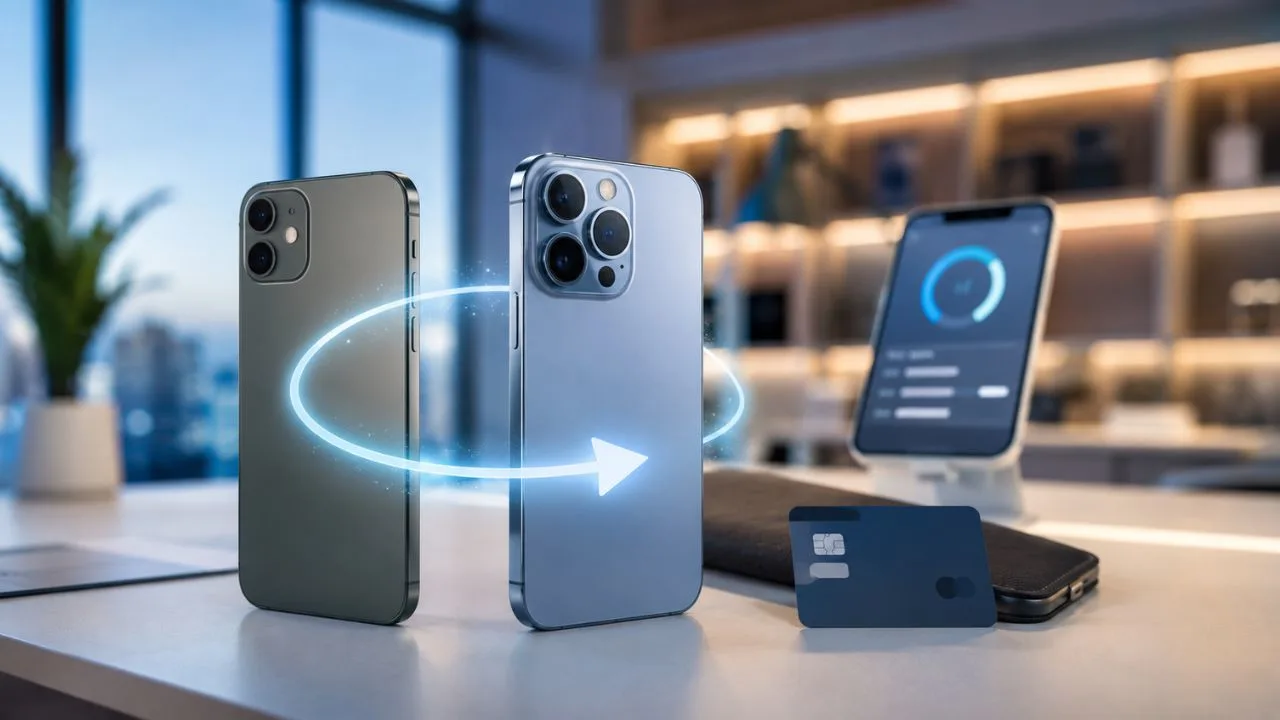

Buying a new iPhone often requires a significant financial commitment, especially when choosing a Pro model or additional storage. Apple’s iPhone Upgrade Program offers an alternative by dividing the cost of an eligible iPhone and AppleCare+ coverage into predictable monthly payments rather than requiring the full amount upfront.
The program is mainly designed for customers who enjoy getting a recent iPhone regularly. After making the equivalent of 12 monthly payments, an eligible member can return the current device, apply for a new installment loan and upgrade to another qualifying iPhone without first paying the entire original loan balance.
However, the iPhone Upgrade Program is not a simple phone subscription or free annual replacement plan. Customers enter a 24-month financing agreement, complete a credit application and remain responsible for monthly payments until they upgrade successfully or finish paying off the financed device.
Understanding the total iPhone Upgrade Program cost is important before joining. This guide explains how the program works, what AppleCare+ includes, who qualifies, when you can upgrade and how it compares with carrier financing, Apple Trade In and Apple Card Monthly Installments.
What Is the iPhone Upgrade Program?
The iPhone Upgrade Program is an Apple financing option that allows qualified customers to purchase an eligible iPhone through a 24-month installment loan. The loan currently has a 0% annual percentage rate and is provided through Apple’s banking partner, Citizens One.
Instead of paying the entire price of the iPhone at checkout, customers make one scheduled payment each month. The financed amount includes the eligible iPhone and the chosen AppleCare+ plan, giving members device protection alongside the monthly phone payment.
The program includes an annual upgrade option once the customer has made the equivalent of 12 installment payments. To use this option, the member returns the financed iPhone in acceptable condition and applies for a new 24-month loan for the replacement device.
Members are not required to upgrade every year. A customer can continue making payments for the full 24-month term, complete the loan and keep the iPhone. The annual upgrade is an available benefit rather than a compulsory part of the agreement.
How Does the iPhone Upgrade Program Work?
The process begins when a customer selects an eligible iPhone from Apple and chooses the iPhone Upgrade Program as the payment method. The applicant then submits personal and financial information so Citizens One can perform a credit check and evaluate the financing request.
Once approved, the retail cost of the iPhone and AppleCare+ coverage is divided into 24 monthly installments. The first payment is normally authorized when the phone is purchased, collected or shipped, while future payments are automatically charged to the registered credit or debit card.
After making 12 equivalent payments, the customer becomes eligible to request an annual upgrade. Apple requires the current financed phone to be returned, while the customer must complete another application for a new loan connected with the selected replacement iPhone.
When the return is accepted, Apple pays the remaining balance of the original installment loan. The customer then begins making payments under the new 24-month agreement, and the next annual upgrade period starts from the date of the new financing plan.
How Much Does the iPhone Upgrade Program Cost?
The iPhone Upgrade Program currently starts at $42.41 per month in the United States. This starting price applies to an eligible entry-level configuration, while the actual payment increases when the customer selects a more expensive model or chooses additional internal storage.
For example, monthly prices are higher for the iPhone Air, iPhone 17 Pro and iPhone 17 Pro Max than for the standard iPhone 17. Apple currently lists some premium configurations at more than $90 per month when the customer chooses the largest available storage capacity.
The quoted monthly payment includes both the iPhone and AppleCare+ with Theft and Loss. It does not include the cost of the customer’s wireless plan, so users must add their monthly AT&T, T-Mobile or Verizon bill when calculating the complete cost of ownership.
Applicable sales tax and fees must also be considered. For online purchases, taxes and fees may be charged separately rather than included in the loan. In-store purchases may handle those costs differently, so customers should review the final checkout breakdown before accepting the agreement.
What Is Included in the Monthly Payment?
The monthly installment covers the retail cost of the selected iPhone and the AppleCare+ plan attached to the program. Apple currently promotes AppleCare+ with Theft and Loss as part of the monthly payment, giving customers broader protection than the standard manufacturer warranty alone.
AppleCare+ covers eligible hardware problems and provides battery service when the battery holds less than the required percentage of its original capacity. It also provides access to Apple-certified repairs, replacement services and priority support from Apple specialists.
Accidental damage protection is included, which can help when the iPhone is dropped or exposed to liquid. However, AppleCare+ does not make every repair free. Customers must usually pay an applicable service fee depending on whether the damage affects the screen, back glass or other components.
The Theft and Loss plan also covers qualifying stolen or missing iPhones, subject to a deductible and claim requirements. Find My must be enabled when the phone is lost or stolen and must remain active throughout the claim process for the request to remain eligible.
Which iPhone Models Are Eligible?
The program is available only for iPhone models that Apple specifically designates as eligible. The current lineup includes the iPhone 17, iPhone Air and iPhone 17 Pro family, including available Pro Max configurations offered through the program.
Not every iPhone sold by Apple is automatically included. Lower-priced models, older generations, refurbished phones or certain special configurations may need to be purchased through another payment method, even when they are still available from Apple.
Available models can also change after a new iPhone generation is introduced. When Apple updates its product lineup, older devices may leave the program while new models become eligible for monthly financing and the annual upgrade option.
Customers should check Apple’s current program page before making a decision. Monthly payments, storage choices, colors and delivery availability can change, especially around a major iPhone release when popular configurations may sell out quickly.
Who Is Eligible for the iPhone Upgrade Program?
The program is available to qualified customers in the United States who meet Apple’s and Citizens One’s requirements. Applicants must be at least 18 years old or have reached the legal age of majority in their state or jurisdiction.
A valid and eligible U.S.-issued credit or debit card is required for enrollment and automatic monthly payments. Apple accepts certain personal, small-business and corporate cards, but prepaid cards cannot normally be used to join the program.
Applicants must provide the information required for the installment loan. This may include their full legal name, date of birth, Social Security number, annual income, residential address and other details used to confirm identity and determine creditworthiness.
The iPhone must also be activated with a supported national carrier. The current program supports AT&T, T-Mobile and Verizon, although carrier account requirements, activation charges and service plan costs remain separate from the Apple financing agreement.
Does the Program Require a Credit Check?
Yes, enrolling in the iPhone Upgrade Program requires a credit check because the customer is applying for a 24-month installment loan. Citizens One reviews the application and decides whether the applicant qualifies for the requested financing.
Apple does not publish one guaranteed minimum credit score for approval. A decision may depend on several factors, including payment history, outstanding debt, credit utilization, reported income and the information available in the applicant’s credit file.
Existing members may also face a new credit check when upgrading because each new iPhone requires a separate installment loan. Approval for the previous phone does not guarantee automatic approval for the next device or storage configuration.
Applicants should avoid treating the program as an ordinary monthly subscription. It is a credit agreement, and missed payments may lead to fees or negative financial consequences. Customers should confirm that the payment fits comfortably within their budget before applying.
When Can You Upgrade to a New iPhone?
A member normally becomes eligible to upgrade after making the equivalent of 12 installment payments. This is why Apple markets the program as a way to receive a new iPhone every year, even though the underlying loan lasts for 24 months.
Once eligible, the customer selects another qualifying iPhone and applies for a new installment agreement. The new device may have a different monthly cost depending on its retail price, storage capacity and AppleCare+ coverage at that time.
The existing financed iPhone must be returned to Apple or its approved trade-in provider. If the phone meets the program requirements, Apple closes the remaining balance on the original loan after the new upgrade process has been completed.
Upgrading is optional rather than automatic. Customers who do not want a new phone can continue making the scheduled payments. Once all 24 installments are paid, the original loan ends and the customer keeps the iPhone without returning it.
Can You Upgrade Before Making 12 Payments?
Apple provides an early upgrade option for members who have completed at least six regularly scheduled payments. However, the customer must pay enough money in advance to reach the equivalent of 12 total installment payments.
For example, someone who has made eight monthly payments would generally need to pay the equivalent of four additional installments before becoming eligible. This accelerated payment does not reduce the price of the new iPhone or remove the need for another loan application.
Early upgrading may be useful when a desired iPhone becomes available before the customer’s normal eligibility date. It can also help someone who joined the program several months after the previous iPhone launch and wants to align future upgrades with Apple’s release schedule.
However, paying several installments early can be expensive. Customers should compare the additional cost with the actual improvements offered by the new model. Waiting a few more months may be more sensible when the current iPhone still performs well.
What Condition Must the Old iPhone Be In?
The financed iPhone must be in good physical and operational condition when the customer exercises the annual upgrade option. Apple or its approved trade-in provider makes the final decision after examining the device.
The phone must power on, hold a charge and have a functioning display. It cannot have serious cracks, breaks or other physical damage that prevents it from satisfying the standard return conditions stated in the program agreement.
Small signs of normal use may not automatically prevent an upgrade, but significant damage may require repair before the phone is accepted. Customers should inspect the screen, back glass, cameras, buttons and charging functions before beginning the upgrade process.
Any necessary repairs should be completed through Apple, an Apple Authorized Service Provider or the applicable AppleCare+ process. Unapproved repairs or non-genuine replacement parts could create problems when Apple evaluates the returned device.
What Happens If the iPhone Is Damaged?
A damaged iPhone may still be eligible for the program after it has been repaired through the appropriate AppleCare+ service. Customers normally need to pay the applicable service fee based on the type and extent of the damage.
Screen or back-glass damage may have a lower service fee than other accidental damage. More serious problems, including liquid damage or damage affecting several parts of the phone, can require a higher fee or a replacement device.
Customers upgrading in an Apple Store can have the phone examined during the process. Online upgraders may have the device assessed after it is returned, which means unresolved damage could delay the completion of the trade-in.
If the phone cannot be accepted and eligible repair service is unavailable, the original installment loan may remain active. The customer could then become responsible for payments on both the old and new loans, making it important to address damage before upgrading.
What Happens If the iPhone Is Lost or Stolen?
Customers enrolled with AppleCare+ with Theft and Loss can submit a claim when the financed iPhone is lost or stolen. The claim must meet the coverage requirements, and the customer must pay the applicable deductible before receiving a replacement device.
Find My must be activated on the missing iPhone when the loss or theft occurs. It must also remain enabled throughout the claim process, so customers should not remove the device from their Apple Account before receiving instructions.
After an approved claim, the replacement phone normally becomes the device associated with the financing agreement. The customer can continue making payments and later return that replacement when exercising the annual upgrade option.
Customers who selected standard AppleCare+ without Theft and Loss do not receive the same protection. If their phone disappears, they may remain responsible for the loan balance and may be unable to use the normal annual upgrade option.
What Are the Main Benefits of the Program?
The biggest benefit is predictable access to a recent iPhone. Customers who regularly upgrade can divide the cost into monthly payments and avoid paying the entire retail price at the beginning of each release cycle.
AppleCare+ protection is included within the monthly financing plan. This simplifies device support because customers can manage repairs, accidental damage, replacement service and theft or loss claims through Apple rather than using an unrelated protection company.
The program also separates phone financing from the customer’s carrier contract. Although the device must initially be activated with AT&T, T-Mobile or Verizon, the installment loan is managed through Citizens One rather than added to the wireless bill.
Members also have flexibility after the first year. They can upgrade and return the phone, continue paying until the 24-month term ends or keep using the same device after completing all required payments.
What Are the Disadvantages?
The main disadvantage is the possibility of continuous phone payments. A customer who upgrades every year begins a new 24-month loan each time, so the monthly charge may continue indefinitely as long as they remain in the program.
Customers also give up the current iPhone when they use the annual upgrade option. They do not receive a separate cash payment or ordinary trade-in credit because the phone’s value is used to settle the remaining balance of the original loan.
The program may not deliver the lowest total cost. Carriers sometimes offer large promotional credits, while customers who sell an iPhone privately may receive more money than they would through an organized trade-in process.
Credit approval is another limitation. Joining and upgrading may involve credit checks, and a customer can be denied even after previously participating successfully. The program therefore offers convenience, but it is not available automatically to every iPhone buyer.
Do You Own the iPhone?
The program uses a financing agreement rather than a traditional rental arrangement. The customer is responsible for the financed price, but there is still an outstanding loan balance until the device is fully paid off or returned through an approved upgrade.
When a member upgrades after 12 payments, ownership of the returned phone transfers to Apple or its trade-in provider. Apple then pays the remaining balance of the original installment agreement on behalf of the customer.
When the customer makes all 24 scheduled payments without upgrading, the loan is completed. The iPhone can then be kept, sold, given away or traded through another service without an outstanding program balance.
Selling the phone before completing the loan does not cancel the financial agreement. A customer who trades or sells the financed iPhone outside the official upgrade process remains responsible for paying the amount still owed to Citizens One.
iPhone Upgrade Program vs. Apple Trade In
Apple Trade In is designed for customers who already own an eligible device and want to apply its estimated value toward another purchase. The amount depends on the model, age, configuration and physical condition of the phone.
The Upgrade Program uses the returned device differently. After 12 payments, the customer gives the financed iPhone back to Apple so the remaining balance of the associated installment loan can be closed.
Apple Trade In may suit customers who keep their phones for several years and own them outright. They can decide when to upgrade and may receive a meaningful credit after completing the original purchase.
The Upgrade Program is more convenient for yearly replacements. However, it does not guarantee the highest possible return for the old phone, because the main benefit is settling the unfinished loan rather than producing additional trade-in cash.
iPhone Upgrade Program vs. Carrier Financing
Carrier financing places the phone payment on the customer’s wireless bill. Companies such as AT&T, T-Mobile and Verizon may offer promotional credits when customers trade in a qualifying device, add a line or choose an eligible service plan.
These promotions can provide substantial savings, but the credits are often divided across a long period. Leaving the carrier, cancelling the line or changing to an ineligible plan may cause the remaining promotional credits to stop.
The iPhone Upgrade Program keeps the device loan separate from the carrier bill. Customers still need service from an eligible network at activation, but they are not financing the phone directly through that wireless provider.
Carrier financing may be better when the promotional discount is large and the customer plans to remain with the company. Apple’s program may be more suitable for people who value yearly upgrades, AppleCare+ protection and greater carrier flexibility.
iPhone Upgrade Program vs. Apple Card Installments
Apple Card Monthly Installments allows eligible customers to divide the price of an iPhone into interest-free payments using Apple Card. This option provides a different route to monthly ownership but does not automatically include the Upgrade Program’s annual return process.
AppleCare+ is not automatically bundled in the same way. Customers must add the desired coverage separately and include that amount when comparing the true monthly cost of the two financing options.
With Apple Card Monthly Installments, customers generally manage their own future trade-in or resale. They may have more control over the value of the old phone, but they must still handle any remaining Apple Card balance.
The Upgrade Program is usually more convenient for people committed to annual upgrades. Apple Card financing may be better for buyers who want to own the phone, keep it longer or choose independently when and where to sell it.
How to Join the iPhone Upgrade Program
Customers can join through Apple’s website, the Apple Store app or a physical Apple Store. The first step is selecting an eligible iPhone model, storage capacity, color, supported carrier and preferred AppleCare+ option.
At checkout, choose the iPhone Upgrade Program rather than paying in full or selecting another installment method. Apple will request the personal, payment and financial information required for the Citizens One application.
Review the complete agreement before accepting it. Pay attention to the financed amount, monthly installment, tax treatment, AppleCare+ coverage, carrier activation requirements and automatic payment date.
After approval, the customer completes the purchase and activates the iPhone with an eligible carrier. The first installment is processed around the purchase, shipment or pickup date, while later payments are charged automatically each month.
How to Upgrade Through the Program
Existing members should begin by checking their upgrade eligibility through Apple’s website or the Apple Store app. The account should show whether 12 equivalent payments have been completed or whether an additional early-upgrade payment is required.
Next, choose the replacement iPhone and submit the new financing application. Approval is required because every upgrade creates a separate 24-month loan with its own payment amount and starting date.
Before returning the old device, create a complete backup through iCloud or a computer. Transfer important photos, messages, contacts and application data to the replacement phone, then confirm that the information is accessible.
Erase the original iPhone, disable Activation Lock and follow Apple’s return instructions carefully. Online customers normally have a limited return period, and failing to return the old device on time can cause the original loan to be reinstated.
Is the iPhone Upgrade Program Worth It?
The program can be worthwhile for someone who buys a new iPhone every year and normally purchases AppleCare+ with Theft and Loss. It combines financing, protection and trade-in handling into one predictable process.
It may also suit customers who value convenience more than maximizing the resale value of their previous phone. There is no need to advertise the device, negotiate with buyers or manage a separate private sale.
The program is less attractive for people who keep their phones for three, four or five years. Long-term users may spend less by purchasing an iPhone outright, using a different installment option or waiting for a valuable carrier promotion.
The right decision depends on personal habits rather than the monthly price alone. Customers should compare total costs, upgrade frequency, insurance needs, carrier plans and the value they place on owning their phone outright.
Who Should Consider the Program?
The ideal member is someone who consistently wants Apple’s newest iPhone and plans to upgrade around every annual release. For this type of buyer, the program creates a repeatable process and removes much of the work involved in selling the old device.
People who already purchase AppleCare+ with Theft and Loss may also find the bundled payment useful. They receive protection without managing a separate monthly plan or paying the complete coverage cost upfront.
The program may appeal to customers who prefer buying directly from Apple rather than financing through a wireless provider. This approach can reduce dependence on carrier promotions that require a specific service plan for several years.
However, participants should have stable income and sufficient room in their budgets. A new iPhone is a discretionary purchase, and the monthly payment should not interfere with rent, essential bills, emergency savings or debt repayment.
Who Should Avoid the Program?
People who are happy using the same iPhone for several years may not benefit from the annual upgrade option. They can complete a normal purchase, keep the device longer and avoid beginning a new loan every year.
Customers who frequently change jobs or have unpredictable income should also be careful. The installment agreement continues even when financial circumstances change, and missed payments could lead to fees or credit problems.
The program may not suit buyers who want the absolute lowest possible price. A strong carrier promotion, refurbished iPhone or independently sold trade-in device may provide better overall value.
It may also be unsuitable for people who dislike credit checks or automatic monthly charges. Although the loan carries 0% APR, the customer is still entering a formal financial agreement that requires responsible repayment.
Tips for Getting Better Value
Choose the storage capacity carefully rather than automatically selecting the largest option. Review your current iPhone storage usage and consider whether iCloud storage could meet your needs at a lower monthly cost.
Protect the device with a reliable case and screen protector. Avoiding physical damage reduces the chance of repair fees and makes the annual trade-in inspection smoother and less stressful.
Check upgrade eligibility before a major iPhone launch. Completing preapproval and confirming carrier information early may improve your chances of ordering a popular model, color or storage option before delivery dates become longer.
Keep regular backups throughout the year instead of waiting until upgrade day. A current iCloud or computer backup protects your information if the device is damaged, lost or unavailable when the next iPhone arrives.
Final Thoughts
The iPhone Upgrade Program offers a convenient method of financing a new iPhone while including AppleCare+ protection. Current monthly payments start at $42.41, although the final amount depends on the chosen model and storage capacity.
Members enter a 24-month, 0% APR installment agreement but can normally upgrade after making 12 equivalent payments. The existing phone must be returned in acceptable condition, and the customer must qualify for another loan.
Its main benefits include predictable payments, yearly upgrade access, AppleCare+ coverage and financing that remains separate from the wireless carrier. Its disadvantages include ongoing monthly costs, repeated credit applications and the need to return the phone when upgrading early.
Before joining, compare the program with carrier deals, Apple Trade In, Apple Card Monthly Installments and private resale. The best choice depends on how often you upgrade, how long you keep your devices and how much you value convenience.
Frequently Asked Questions
How much is the iPhone Upgrade Program per month?
The program currently starts at $42.41 per month in the United States. The exact payment depends on the iPhone model, storage capacity and AppleCare+ coverage included in the agreement.
Can I upgrade my iPhone before 12 months?
You can request an early upgrade after making six scheduled payments, but you must pay enough in advance to reach the equivalent of 12 payments before becoming eligible.
Does the iPhone Upgrade Program require a credit check?
Yes. Citizens One performs a credit check because the customer is applying for a 24-month installment loan. A new credit review may also be required when upgrading.
Is AppleCare+ included in the monthly payment?
Yes. The financed cost includes an eligible AppleCare+ plan, and Apple currently advertises AppleCare+ with Theft and Loss as part of the monthly program payment.
What happens after all 24 payments are completed?
Once all 24 installments are paid, the loan agreement is complete and you keep the iPhone. You can continue using it, sell it or trade it without returning it to Apple.



