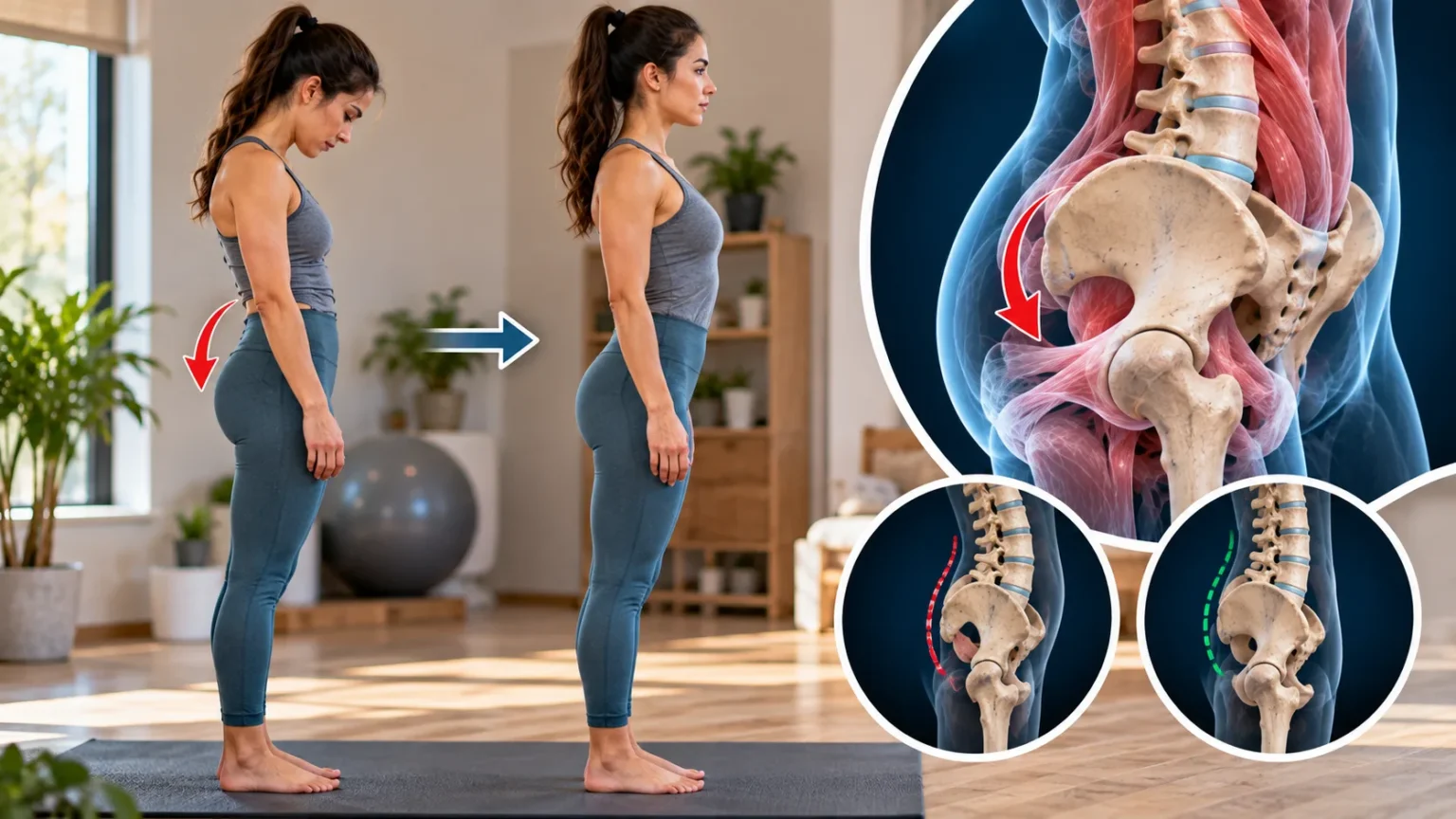

What Is a Posterior Pelvic Tilt?
A posterior pelvic tilt happens when the pelvis rotates backward, causing the front of the pelvis to rise and the back to tuck underneath the body. This position can reduce the natural curve of the lower back and make the hips appear slightly tucked forward. Some degree of pelvic movement is normal, but a consistently held posterior tilt may influence posture and movement.
The pelvis acts as a central connection point between the spine and lower body, so changes in its position can affect several surrounding areas. A posterior tilt may influence the lumbar spine, hips, hamstrings, abdominal muscles, and glutes. For some people, it causes no noticeable problems, while others may experience stiffness, discomfort, or difficulty maintaining certain postures.
It is important to understand that posture varies naturally between individuals. A posterior pelvic tilt is not automatically a medical problem or something that always needs correction. The key question is whether the position is associated with pain, restricted movement, weakness, or difficulty performing normal daily activities and exercises.
What Causes a Posterior Pelvic Tilt?
A posterior pelvic tilt can develop for several reasons, including prolonged sitting, movement habits, muscle tightness, weakness, or a combination of these factors. People who spend many hours seated may become accustomed to tucking the pelvis under and rounding the lower back. Over time, that position can begin to feel normal even when standing.
Muscle balance can also influence pelvic position. Tight hamstrings and abdominal muscles may encourage the pelvis to rotate backward, while weak or poorly coordinated hip flexors and lower-back muscles may make it harder to maintain a more neutral position. However, muscle relationships are complex, and no single tight or weak muscle explains every case.
In some people, structural factors, previous injuries, pain-avoidance patterns, or movement habits may contribute. The body often adapts its posture to whatever feels stable or comfortable. Because several factors can be involved at once, improving posterior pelvic tilt usually requires more than simply stretching one muscle or strengthening another.
Common Signs of Posterior Pelvic Tilt
One visible sign is a flattened appearance of the lower back. The natural inward curve of the lumbar spine may look reduced when the pelvis remains tucked underneath the body. Some people also notice that their hips appear pushed forward while the upper back rounds slightly to compensate for the change in pelvic position.
Another common sign is tension through the hamstrings, glutes, or lower back. You may feel stiff when trying to stand fully upright, extend the hips, or arch the lower back slightly. Sitting for long periods can also make the position more noticeable because the pelvis may naturally roll backward when the body becomes tired.
Some people experience difficulty performing exercises that require controlled spinal and pelvic positioning. Squats, deadlifts, hip hinges, and overhead movements may feel awkward if the pelvis moves excessively backward. However, movement limitations should be assessed carefully because similar symptoms can also come from hip mobility, back pain, weakness, or technique issues.
How Posterior Pelvic Tilt Affects the Lower Back
The lower back normally has a gentle inward curve known as lumbar lordosis. A posterior pelvic tilt can reduce this curve by rotating the pelvis backward and flattening the lumbar spine. A temporary reduction in the curve is normal during many movements, but holding this position continuously may change how load is distributed through the back.
Some people may experience lower-back stiffness or aching, especially after prolonged sitting or standing. When the pelvis remains tucked, certain muscles may stay shortened while others remain under constant tension. The body may then compensate through the upper back, hips, or knees to maintain balance and continue normal movement.
That does not mean every person with a flatter lower back will develop pain. Posture alone does not determine whether discomfort occurs. Pain is influenced by many factors, including activity level, strength, sleep, stress, previous injuries, work demands, and individual sensitivity, so pelvic position should be considered as only one part of the picture.
Posterior Pelvic Tilt and Tight Hamstrings
The hamstrings attach to the lower part of the pelvis and can influence pelvic movement. When they remain shortened or highly active, they may pull downward on the back of the pelvis and encourage posterior rotation. This is one reason tight hamstrings are often discussed when evaluating someone who consistently stands or sits with a tucked pelvis.
However, hamstring tightness is not always caused by physically shortened muscles. Sometimes the sensation of tightness comes from overuse, weakness, nerve sensitivity, or the body trying to create stability. Stretching repeatedly may therefore provide only temporary relief if the underlying issue involves poor movement control or insufficient strength.
A balanced approach usually works better than aggressive stretching alone. Gentle mobility, strengthening, and improved hip control may help the hamstrings work through a more comfortable range. If stretching causes tingling, numbness, or symptoms traveling down the leg, stop and consider professional assessment because nerve irritation may be involved.
Posterior Pelvic Tilt and Core Muscles
The abdominal muscles help control the position of the pelvis and trunk. When they contract, they can contribute to posterior pelvic rotation by drawing the pelvis upward in front. This action is useful during many exercises, especially when bracing the core, but constantly holding the pelvis tucked may create unnecessary tension in some situations.
Strong abdominal muscles are not the problem by themselves. The issue is usually whether the core can contract and relax appropriately while coordinating with the hips and lower back. Effective movement requires control in multiple directions rather than maintaining one rigid pelvic position throughout every activity.
Core training can still be valuable for someone with posterior pelvic tilt, but exercise selection matters. Instead of focusing only on movements that reinforce constant flexion, it may help to include exercises that improve breathing, trunk control, hip extension, and neutral pelvic awareness. The goal is adaptability rather than forcing a perfectly fixed posture.
Posterior Pelvic Tilt and Hip Mobility
Hip mobility can be affected when the pelvis remains tucked for long periods. Some people may find it difficult to fully extend the hips during walking, running, or standing because the pelvis begins in a more backward-rotated position. This can create compensations through the lower back, knees, or upper body during movement.
The hip flexors may also behave differently depending on posture and activity. Although they are sometimes described as weak in posterior pelvic tilt, that is not always accurate. A muscle can feel weak, tight, or poorly coordinated depending on how it is being used, so assessment should focus on function rather than assumptions.
Improving hip mobility usually involves controlled movement rather than forcing large stretches. Gentle hip extension drills, lunges, supported mobility exercises, and strengthening through comfortable ranges can all be useful. Progress should remain gradual, especially if you have pain, because mobility work should improve movement quality rather than create more irritation.
Can Posterior Pelvic Tilt Cause Pain?
Posterior pelvic tilt may be associated with discomfort in some people, but it is not always the direct cause. Pain may develop when the position contributes to reduced movement variety, excessive muscle tension, or repeated loading in uncomfortable ranges. Other factors such as inactivity, poor sleep, previous injuries, and general conditioning can also influence symptoms.
Common areas of discomfort may include the lower back, hips, hamstrings, or buttocks. Some people also report stiffness after sitting for long periods or difficulty standing upright comfortably. If you begin exercising to improve these symptoms, temporary muscle soreness can occur as your body adapts to new movements and strengthening work.
Pain that is severe, persistent, or associated with numbness, weakness, or symptoms traveling down the leg needs broader assessment. These signs may involve nerves, joints, discs, or other structures rather than pelvic posture alone. Avoid assuming that every episode of back or hip pain can be corrected simply by changing pelvic alignment.
How to Check for Posterior Pelvic Tilt
You can begin by observing your posture from the side in a mirror or photo. A noticeably flattened lower back, tucked pelvis, and forward-positioned hips may suggest posterior pelvic positioning. However, visual posture checks are not perfectly reliable because clothing, body shape, and natural anatomical differences can affect how the pelvis appears.
Another simple method is to practice pelvic tilting while lying on your back with your knees bent. Gently press your lower back toward the floor and then allow a small arch to form. Learning to move between these positions can help you understand how posterior and anterior pelvic tilt feel without deciding that one position is always correct.
If you have pain or difficulty identifying your pelvic position, a physiotherapist can provide a more useful assessment. They may examine hip mobility, spinal movement, strength, breathing, balance, and movement patterns. This broader evaluation is usually more informative than judging posture based on a single photograph or isolated alignment test.
Exercises That May Help Posterior Pelvic Tilt
Exercises should focus on restoring movement options rather than forcing the pelvis into one position. Hip extension work, gentle back extension, glute strengthening, and controlled core exercises can all be useful depending on your needs. The best program should help you move comfortably through different positions instead of creating more stiffness.
Bridges can be useful when performed with control and without excessive tucking. Hip hinges may also help teach the relationship between the pelvis, hips, and spine. Light resistance exercises for the lower back and hip flexors can support better control when weakness or poor coordination contributes to posture changes.
Start with simple movements and gradually progress the range or resistance. Quality matters more than performing a large number of repetitions. If an exercise causes sharp pain, tingling, numbness, or worsening symptoms, stop and seek guidance rather than assuming discomfort is necessary for correcting your posture.
Stretching for Posterior Pelvic Tilt
Hamstring stretching is commonly recommended, but it should be performed gently and only when it feels appropriate. A mild stretch along the back of the thigh is usually enough. Avoid forcing the leg into extreme positions because aggressive stretching can irritate sensitive tissues and may not solve the reason the hamstrings feel tight.
The abdominal region can also benefit from gentle extension-based movement if you spend long periods sitting in a flexed posture. Standing tall, reaching overhead, or using a comfortable prone press-up may help restore movement variety. These movements should remain pain-free and should not be pushed beyond a range your body can comfortably tolerate.
Stretching works best when combined with strengthening and everyday movement. A muscle that repeatedly tightens because it lacks control may not improve through stretching alone. Regular walking, changing sitting positions, and practicing comfortable pelvic movement throughout the day can be just as important as a formal stretching routine.
How Long Does It Take to Improve Posterior Pelvic Tilt?
There is no fixed timeline because posterior pelvic tilt can develop from different combinations of posture, strength, flexibility, and movement habits. Some people notice better awareness and comfort within a few weeks of consistent exercise. Others may need several months to change long-standing movement patterns or improve strength through a meaningful range.
Progress should be measured by function rather than appearance alone. Better hip movement, easier standing, improved exercise technique, reduced stiffness, and greater comfort can all indicate useful improvement. Your pelvis does not need to look perfectly neutral at every moment for your movement to become healthier and more efficient.
Consistency usually matters more than intensity. Short mobility sessions, regular walking, strength training, and changes in sitting habits can create gradual improvements without overwhelming the body. Trying to force rapid postural correction may increase tension and make you more aware of every small movement instead of helping you move naturally.
Everyday Habits That Can Make a Difference
Long periods of sitting can encourage the pelvis to roll backward, especially when the chair provides little support. Try changing position regularly rather than searching for one perfect sitting posture. Standing, walking, or gently moving your hips every hour can reduce stiffness and give your spine and pelvis more movement variety.
When standing, avoid aggressively squeezing your glutes or pulling your stomach inward all day. Constant bracing can reinforce a tucked pelvis and create unnecessary fatigue. Instead, aim for a relaxed upright position that allows you to breathe comfortably while distributing your weight evenly through both feet.
Your exercise and lifestyle habits also matter. Regular strength training, walking, adequate sleep, and gradual exposure to different movements can improve overall resilience. Posture is only one part of musculoskeletal health, so a balanced routine is usually more useful than spending the entire day consciously trying to hold your pelvis in a specific position.
When Should You See a Healthcare Professional?
Consider seeking professional assessment if pelvic or lower-back discomfort continues despite several weeks of sensible activity changes. A physiotherapist can evaluate whether posterior pelvic tilt is actually contributing to your symptoms or whether another issue is more important. This helps avoid spending time correcting a posture that may not be the primary problem.
Medical assessment is more important when pain is severe, follows a major injury, or limits normal walking and daily activity. Persistent numbness, weakness, tingling, loss of coordination, or pain traveling below the knee may suggest nerve involvement. These symptoms should not be treated as a simple postural imbalance without proper evaluation.
Urgent medical attention is appropriate for sudden bowel or bladder changes, numbness around the groin or saddle area, rapidly worsening weakness, or other serious neurological symptoms. These signs are not typical of ordinary posterior pelvic tilt. Early assessment is important when symptoms suggest something beyond routine muscular stiffness or posture-related discomfort.
Conclusion
Posterior pelvic tilt describes a backward rotation of the pelvis that can reduce the natural curve of the lower back. It may be influenced by prolonged sitting, muscle tension, movement habits, weakness, or individual anatomy. For many people, the position itself is not harmful unless it contributes to pain, stiffness, or limited movement.
Improvement usually involves increasing movement variety rather than trying to force the pelvis into a perfect position. Gentle mobility, strength training, hip control, core coordination, and regular changes in posture can all help. The goal is to move comfortably between different pelvic positions while maintaining confidence and control during everyday activities.
If you experience persistent pain, weakness, numbness, or difficulty performing normal activities, professional assessment can help identify the real cause. Posterior pelvic tilt should be considered as one part of overall movement rather than a diagnosis by itself. A balanced approach is usually more effective than constantly monitoring or correcting posture.
FAQs
Is posterior pelvic tilt bad?
Not necessarily. A posterior pelvic tilt is a normal movement of the pelvis and may not cause any symptoms. It becomes more relevant when it is associated with pain, stiffness, reduced mobility, or difficulty performing everyday movements.
What muscles cause posterior pelvic tilt?
The hamstrings and abdominal muscles can contribute to posterior pelvic rotation, while hip and lower-back muscles also influence pelvic control. However, posture usually results from several interacting factors rather than one muscle alone.
Can posterior pelvic tilt cause lower-back pain?
It may contribute to lower-back discomfort in some people by changing spinal position and movement patterns. However, back pain has many possible causes, so pelvic posture should not automatically be considered the main source.
How do you fix posterior pelvic tilt?
Improvement may involve strengthening, mobility work, better hip control, regular movement, and changing prolonged sitting habits. The most useful approach depends on whether stiffness, weakness, poor coordination, pain, or another factor is involved.
How long does posterior pelvic tilt take to correct?
Timelines vary widely. Some people notice better movement within weeks, while longer-standing patterns may take months of consistent mobility, strengthening, and daily habit changes to improve comfortably.