
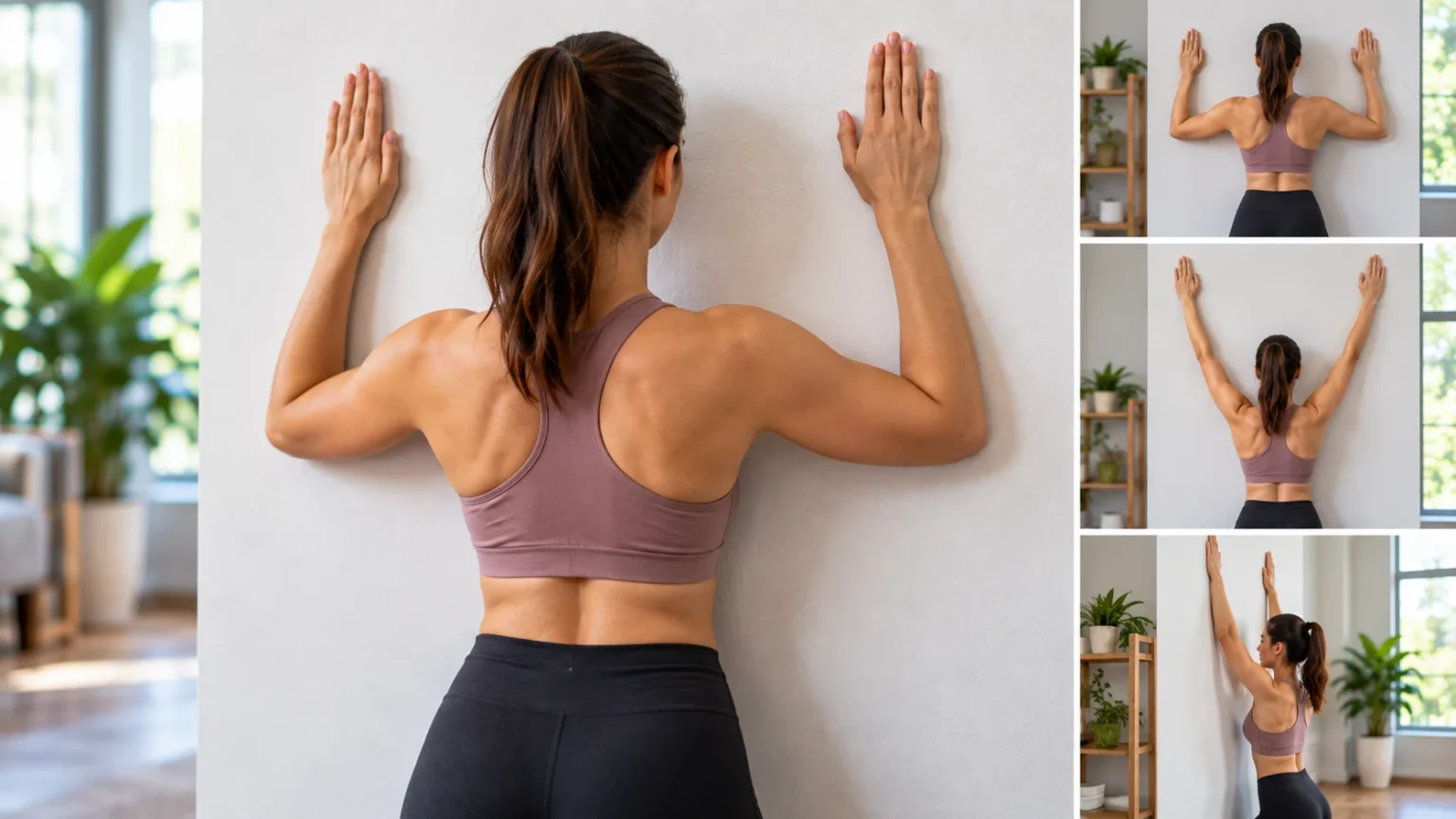

Wall slides are a simple shoulder mobility and strengthening exercise that can be performed almost anywhere with a clear wall. They are commonly used to improve shoulder blade control, overhead movement, and upper-back awareness. Although the exercise looks easy, proper technique matters because compensating through the lower back, neck, or ribs can reduce its effectiveness.
The movement is especially useful for people who spend long hours at a desk, train their upper body regularly, or feel restricted when lifting their arms overhead. Wall slides encourage the shoulder blades to rotate and move along the rib cage while the arms travel upward. They can be included in warm-ups, mobility routines, or rehabilitation programs when appropriate.
You do not need heavy weights to benefit from wall slides. The challenge comes from maintaining controlled alignment while moving your arms through a comfortable range. This guide explains how to perform wall slides correctly, what muscles they work, their main benefits, common mistakes, useful progressions, and when you may need to modify the exercise.
What Are Wall Slides?
Wall slides are an upper-body exercise performed while standing or sitting with your back near a wall. You begin with your arms bent and gradually slide them upward while maintaining control through the shoulders and upper back. The movement resembles raising your arms overhead while using the wall as feedback for posture and alignment.
The exercise is sometimes called a shoulder wall slide, wall angel variation, or scapular wall slide. Although these movements have slight differences, they generally focus on coordinated motion between the shoulder blades, upper arms, and thoracic spine. The wall provides a reference point that can make compensations easier to notice.
Wall slides should not be confused with wall sits or wall squats, which primarily train the legs. Shoulder wall slides target upper-body mobility and scapular mechanics rather than quadriceps endurance. Understanding this distinction is useful because both exercises may appear under similar names in workout programs or rehabilitation routines.
What Muscles Do Wall Slides Work?
Wall slides primarily involve muscles that control the shoulder blades. The serratus anterior plays an important role because it helps the scapula rotate upward and stay connected to the rib cage as the arms rise. The upper and lower portions of the trapezius also contribute to smooth shoulder blade movement.
The rotator cuff muscles help stabilize the shoulder joint while your arms travel overhead. These smaller muscles work together to keep the head of the upper-arm bone controlled inside the shoulder socket. Deltoids and other shoulder muscles also contribute, although wall slides are usually more focused on control than heavy muscle loading.
Upper-back and core muscles participate as stabilizers. Your abdominal muscles help prevent excessive arching through the lower back, while thoracic muscles help maintain a comfortable upright position. When performed correctly, wall slides train several muscle groups to coordinate rather than isolating one muscle completely.
Key Benefits of Wall Slides
One important benefit of wall slides is improved shoulder mobility. The exercise encourages controlled overhead motion without requiring heavy resistance. If your shoulders feel stiff when reaching above your head, regular wall slides may help you explore a more comfortable range while maintaining awareness of your rib and shoulder position.
Wall slides can also improve scapular control. Your shoulder blades need to move smoothly during reaching, pressing, throwing, and many everyday activities. Practicing controlled upward rotation can help you become more aware of how your shoulder blades move instead of relying on excessive shrugging or compensating through the lower back.
Another benefit is that wall slides are easy to modify. You can shorten the range, move farther away from the wall, or add light resistance depending on your ability. This makes the exercise suitable for many warm-ups and mobility routines, although painful shoulder conditions may require individualized guidance from a healthcare professional.
How to Do Wall Slides Correctly
Stand with your back facing a wall and place your feet a short distance forward so you can remain comfortable. Gently bring your upper back toward the wall without forcing your entire spine completely flat. Bend your elbows to roughly 90 degrees and position your arms where they can comfortably contact or approach the wall.
Slowly slide your arms upward while keeping your shoulders relaxed away from your ears. Allow your shoulder blades to rotate naturally as your hands travel overhead. Stop before your lower back begins to arch excessively, your ribs flare forward, or you feel sharp pain in the shoulder.
Pause briefly at your highest comfortable position, then slowly return your arms to the starting point. Keep the movement controlled throughout both directions rather than dropping your arms quickly. Begin with several smooth repetitions and increase volume gradually as the movement becomes easier and more consistent.
Proper Wall Slide Form and Alignment
Good wall slide form begins with a comfortable rib and pelvis position. Avoid forcefully pressing your lower back flat against the wall, because the spine naturally has curves. Instead, lightly engage your abdominal muscles and keep your rib cage from dramatically lifting as your arms move overhead.
Your shoulders should move without excessive shrugging. Some upward movement of the shoulder blades is normal and necessary, but the neck should remain relatively relaxed. Think about reaching upward smoothly rather than pulling your shoulders down aggressively, which can interfere with normal scapular upward rotation.
Do not worry if your wrists, elbows, or hands cannot stay fully against the wall. Individual shoulder mobility and anatomy vary, and forcing contact may create unnecessary strain. Focus on controlled movement through a pain-free range and let your mobility improve gradually rather than trying to achieve a perfect-looking position immediately.
Common Wall Slide Mistakes to Avoid
One common mistake is arching the lower back to create the appearance of greater shoulder mobility. When the arms reach overhead, the ribs may flare forward and the lumbar spine may extend excessively. Reducing your range slightly can help keep more of the movement focused on the shoulders and upper back.
Another mistake is forcing the elbows and wrists into the wall. If your mobility does not currently allow full contact, pushing harder may create discomfort without improving movement quality. Let the arms remain slightly away from the wall if necessary and focus on gradually improving control over time.
Moving too quickly is also common. Fast repetitions make it harder to notice shoulder shrugging, rib movement, or uneven motion between sides. Perform wall slides slowly enough that you can identify where movement becomes difficult and adjust your range before technique begins to break down.
Wall Slides for Shoulder and Upper-Back Mobility
Wall slides can be useful for people who feel stiff after extended desk work or prolonged sitting. Remaining in one position for hours may make the shoulders and upper back feel temporarily restricted. A few controlled wall slides can introduce overhead movement and provide a simple break from a mostly seated posture.
The exercise also encourages movement through the thoracic spine and rib cage. Comfortable upper-back positioning can make overhead shoulder motion feel easier because the shoulder blades move across the rib cage. Wall slides therefore work best when you avoid trying to keep the upper body completely rigid.
Wall slides should be combined with other movement when needed. Thoracic rotations, gentle chest mobility, rows, and regular walking breaks can complement the exercise. A varied routine generally provides more benefit than repeatedly performing one mobility drill and expecting it to solve every source of shoulder stiffness.
Wall Slides for Scapular Control and Serratus Strength
The serratus anterior is important for keeping the shoulder blade stable against the rib cage during arm movement. Wall slides can challenge this muscle without requiring heavy weights. Reaching gently into the wall while sliding upward may increase serratus involvement and help improve awareness of scapular movement.
A useful variation involves placing your forearms on the wall rather than your hands. Apply light pressure through the forearms and slowly slide them upward while maintaining comfortable shoulder alignment. You may feel the muscles along the sides of your rib cage working as your shoulder blades rotate upward.
Do not turn the movement into an aggressive push. Excessive pressure can make you tense your neck, shoulders, or arms unnecessarily. Use enough pressure to create controlled engagement while keeping the movement smooth, and stop if you experience pinching, sharp pain, numbness, or tingling.
Wall Slide Variations and Progressions
A basic forearm wall slide is a good starting variation. Place both forearms against the wall with your elbows bent and slowly slide upward while maintaining gentle pressure. This variation can make it easier to feel the shoulder blades moving around the rib cage without worrying about keeping the hands flat.
Once basic wall slides become comfortable, you can add a light resistance band around your wrists. Gently press outward against the band while sliding your arms upward. This adds extra demand to the shoulder muscles, but resistance should remain light enough that you can maintain your normal range and avoid excessive shrugging.
More advanced versions can include lift-offs at the top of the movement. After sliding upward, carefully move your hands or forearms slightly away from the wall before returning them. This requires additional shoulder control and should only be added when standard wall slides can be performed comfortably and consistently.
How Many Wall Slides Should You Do?
For mobility or warm-up purposes, one to three sets of approximately eight to fifteen controlled repetitions may be reasonable for many people. You do not need to chase muscular exhaustion. The priority should be consistent form, comfortable range, and smooth shoulder blade movement from the beginning of each repetition to the end.
Wall slides can be performed several times per week, and some people include gentle versions in daily mobility routines. Frequency depends on your goals, training program, and how your shoulders respond. If you become unusually sore or irritated afterward, reduce the volume rather than automatically adding more repetitions.
When wall slides are part of rehabilitation, exercise dosage may need to be more specific. A physical therapist can adjust repetitions, resistance, and range based on your shoulder condition and current strength. Rehabilitation exercises should be progressed according to function and symptoms rather than following a generic high-volume routine.
When to Modify or Avoid Wall Slides
Wall slides should feel controlled and should not create sharp or worsening shoulder pain. If you feel strong pinching, sudden weakness, numbness, tingling, or pain that travels into the arm, stop the exercise and consider professional assessment. Reducing the range may help mild stiffness, but significant neurological or injury-related symptoms deserve more caution.
You should also avoid forcing wall slides when another health issue makes standing, bracing, or exercise uncomfortable. Exercise should not be used to push through unrelated pelvic or bowel-area symptoms. For example, persistent or severe rectal pain should be addressed according to its own cause rather than ignored while continuing a workout.
Recent shoulder surgery, dislocation, fracture, or significant injury may require specific movement restrictions. In those situations, follow guidance from your healthcare provider before adding overhead exercises. Even a low-load movement like a wall slide can be inappropriate during certain stages of recovery if tissues still need protection.
Tips to Get More From Wall Slides
Start with a range you can control rather than trying to touch your hands overhead immediately. Mobility usually improves more effectively when you repeat comfortable, high-quality movement. If your ribs lift, your lower back arches dramatically, or your shoulders become painful, shorten the range and rebuild from there.
Use wall slides as part of a broader shoulder routine. Rows, external rotation exercises, thoracic mobility work, and appropriate strength training can all support better shoulder function. No single exercise can fully address every limitation, particularly when stiffness or pain has several contributing factors.
Consistency matters more than performing large numbers of repetitions at once. A small number of controlled wall slides several times per week may be more useful than one exhausting session. Monitor how your shoulders feel during daily activities and gradually progress resistance, range, or complexity when basic repetitions become easy.
Conclusion
Wall slides are a practical exercise for improving shoulder mobility, scapular control, and awareness of overhead movement. They involve the serratus anterior, trapezius, rotator cuff, and other muscles that help coordinate the shoulder blades and arms. The exercise can fit easily into warm-ups, mobility sessions, or appropriate rehabilitation programs.
Good form depends on controlled movement rather than forcing your arms against the wall. Keep your ribs relatively stable, avoid excessive lower-back arching, allow natural shoulder blade rotation, and stop before pain develops. Your current range does not need to match someone else’s for the exercise to be useful.
Progress wall slides gradually through additional range, light resistance, or more challenging variations. If you experience persistent shoulder pain, weakness, numbness, tingling, or symptoms after an injury, seek professional assessment before continuing. A well-performed wall slide should improve movement quality without requiring you to push through significant discomfort.
FAQs
What Are Wall Slides Good For?
Wall slides can improve shoulder mobility, scapular control, and overhead movement. They are commonly used in warm-ups, upper-body mobility routines, and some rehabilitation programs because they require little equipment.
Do Wall Slides Improve Posture?
Wall slides may improve awareness of shoulder and upper-back positioning, but they do not automatically correct posture. Regular movement, strength training, workstation habits, and position changes also influence how your body feels.
Should Your Arms Touch the Wall During Wall Slides?
Not necessarily. Your elbows, wrists, or hands may stay slightly away from the wall if mobility is limited. Forcing contact can create compensation or discomfort, so prioritize controlled pain-free movement.
How Often Should You Do Wall Slides?
Gentle wall slides can often be performed several times per week. Start with a manageable number of repetitions and increase gradually based on comfort, mobility goals, and how your shoulders respond afterward.
Why Do Wall Slides Feel Difficult?
Wall slides can expose limitations in shoulder mobility, thoracic movement, scapular control, or muscle coordination. Difficulty does not automatically mean something is wrong, but sharp pain or significant weakness should be professionally assessed.



